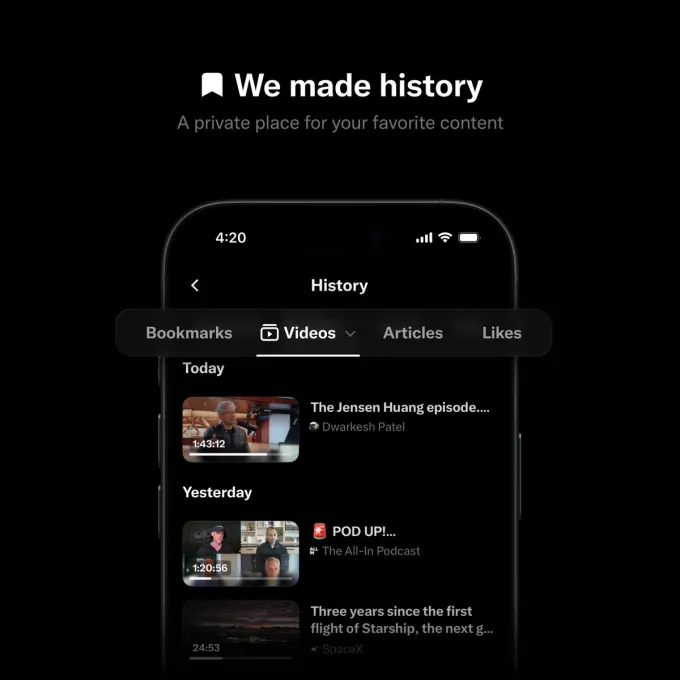
X is turning itself into more of a “save-it-for-later” app with the launch of a new History tab that collects your bookmarks, likes, videos, and articles all in one place for easy access.
Initially available on iOS, X head of product, Nikitia Bier, describes the new resource as a better way to keep track of all your favorite content and return to things you want to finish reading or watching later.

With the update, the Bookmarks button in X’s left-side menu of the mobile app has been renamed History. The new page separates your saved content into four tabs — bookmarks, likes, videos, and articles — making it easy to dive back in at any time. While bookmarks and likes are intentional saves, the videos and articles tabs will be populated based on what you watch or read on X. The History section remains private to you,
Bier’s announcement notes.
The addition makes X feel a bit more like a web browser, where users can return to things they’ve previously viewed, even if they didn’t explicitly click a button to save the content. It consolidates features that were previously found in different places within the app, with bookmarks housed in the main menu and likes buried away as a tab on your user profile.
The move could also encourage greater use of X’s long-form article format, which the company has been positioning as a way for businesses and creators to share updates that go beyond the platform’s standard post length of 280 characters. X users track the articles they find as they scroll, creating a personalized news reader for themselves within the app.
The update comes as web publishers have seen a decline in referral traffic from platforms like Facebook and Google, driven by shifting algorithms and AI-powered experiences that reduced clicks to external sites. X sees that shift as an opportunity to attract more publishers and creators to write directly on its platform instead, where distribution and discovery are built in.
When you purchase through links in our articles, we may earn a small commission. This doesn’t affect our editorial independence.