The ocean does not wait for anyone. Global sea level rise has doubled in pace since the early 1990s, with consequences already measurable. In Bangladesh, roughly 80% of the land is floodplain, leaving over 174 million people exposed to storm surges and rising tides.
Across West Africa, the Gulf of Guinea remains biogeochemically understudied, even as Ghana and Nigeria depend on its fisheries for food security and economic stability. Environmental scientists tracking sediment flux warn that current coastal erosion models significantly underestimate projected timelines for land loss.
Meeting the scale of these challenges demands trained specialists who can turn field data into policy. That is precisely what Ocean and Environmental Sciences programmes are built for, with pathways spanning marine biology, coastal engineering, fisheries economics and climate modelling – each equipping graduates to tackle a different dimension of the same crisis.
Whether you’re coming from a landlocked city or a coastline already in need of mitigation, pursuing this field at one of the three universities is a necessity. You’ll step into research networks already engaged with the most pressing ocean and environmental challenges of our time and build the credentials to lead the response.
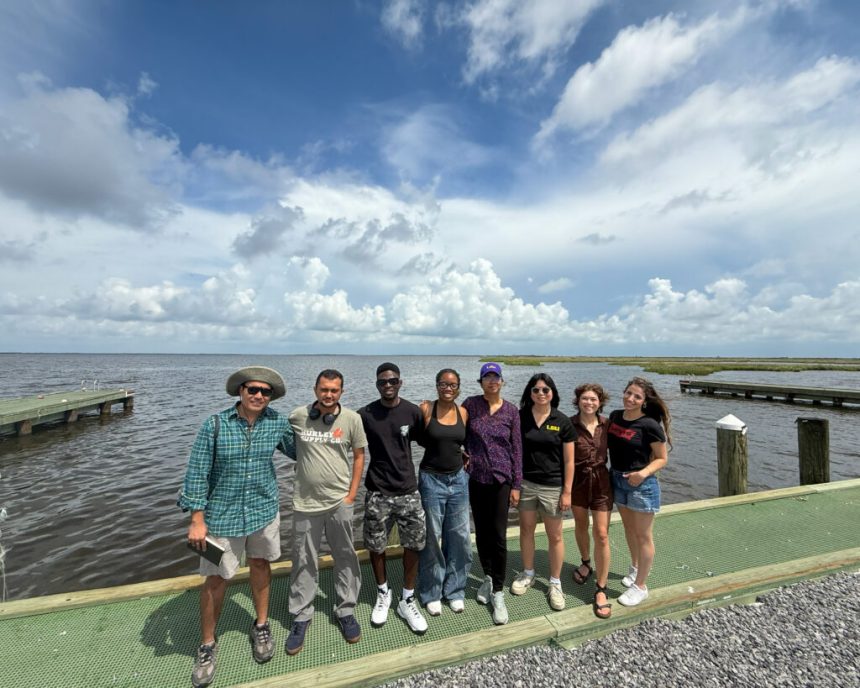
Louisiana State University’s College of the Coast & Environment prepares communities in Louisiana and worldwide for environmental change through innovative research and interdisciplinary education. Source: Louisiana State University
Louisiana State University
Situated mere steps from the Mississippi River and 160 km from its delta, the Louisiana State University (LSU) College of the Coast & Environment (CC&E) occupies one of the most consequential environmental addresses in North America. Louisiana experiences greater coastal wetland loss than all other states in the contiguous US combined — a crisis that makes CC&E’s location both operationally key and symbolic.
Since the 1930s, Louisiana’s coastline has shrunk by over 5,000 square km. The land is slowly sinking while sea levels are rising, and the Mississippi River no longer carries enough sediment to maintain it. For CC&E students, that loss is visible from campus, and the college responds by placing students directly in this landscape – fusing field research with coursework across programmes spanning Coastal Meteorology, Environmental Sciences, Oceanography & Coastal Sciences, and specialities in Environmental Health, and Environmental Law.
CC&E has the infrastructure to support such deep learning. Baton Rouge — a hub drawing scientists and engineers from across the world to develop solutions for deltaic resilience — is home to the and CC&E’s research feeds directly into that collaboration. With over 200 LSU faculty dedicated to coastal research, it holds the largest concentration of coast-and-environment expertise on the northern Gulf Coast.
Indeed, the state’s coast is a huge part of its identity – its fisheries, culture, public health, and industry all depend on a shoreline that is actively receding. CC&E rose to meet that challenge, with scientists developing a curriculum that transforms students into successful researchers. That is, one who can think critically across a range of disciplines, pairing natural science foundations with environmental policy and applied research.
If you bring curiosity, a grounding in math and science, and a genuine stake in what happens to coastal communities, CC&E can give you one of the most meaningful offerings in education today: a degree that’ll make a difference.
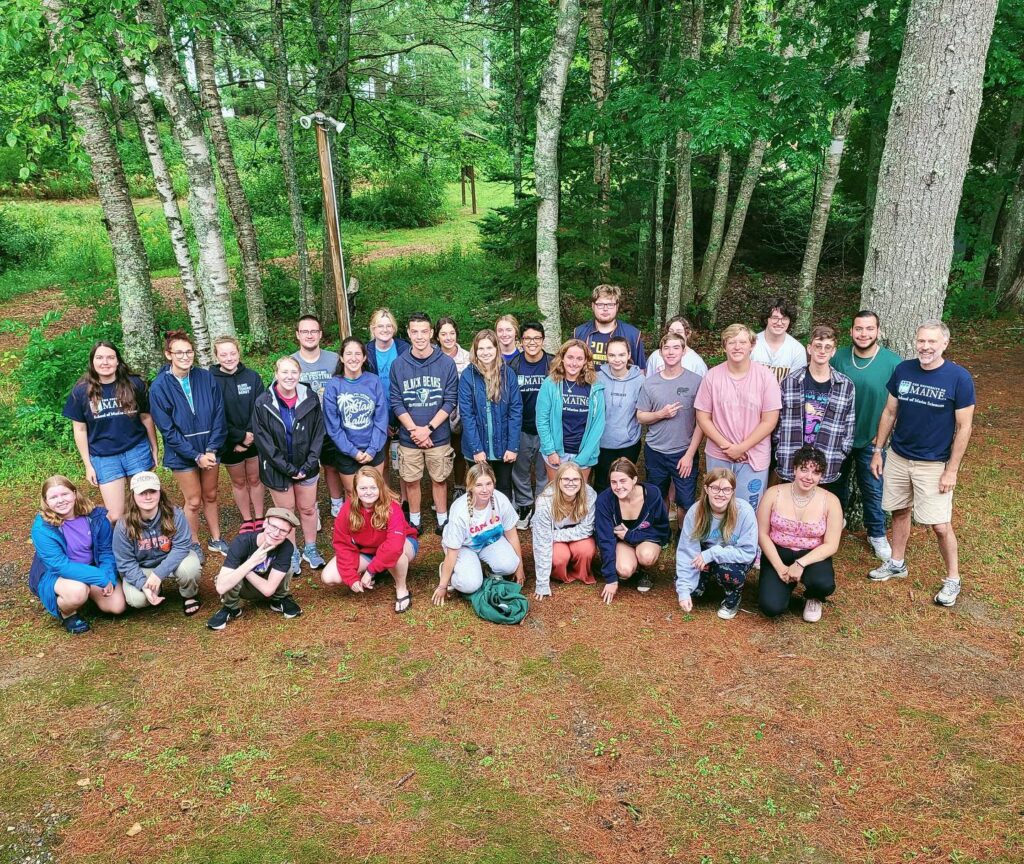
The University of Maine’s School of Marine Sciences offers a hands-on fall Semester by the Sea programme focused on field-based learning. Source: The University of Maine/Facebook
The University of Maine
Set in Orono – a small town along the Penobscot River in central Maine – the School of Marine Sciences at The University of Maine is known as the state’s foremost hub for marine research, education and public service. With over 30 faculty members, it holds the distinction of being home to the largest concentration of marine expertise in the state. Programmes are amongst the highest ranked in the US.
Research here is as wide-ranging as the expertise here is deep. Research clusters span molecular biology, fisheries economics, coastal engineering, aquaculture and oceanography. Faculty regularly cross into freshwater and terrestrial collaborations – sometimes as far as Chile or China. Graduate students rarely slot into pre-existing frameworks too. More often, they build new ones, assembling supervisory committees that connect separate fields and pushing the boundary between research and teaching in the process.
In terms of programmes, undergraduate students can pursue a Marine Sciences degree with specialisations in aquaculture, marine biology or physical ocean sciences, while graduate offerings include Marine Biology and Oceanography. Both produce researchers and practitioners capable of working across the full scope of marine and coastal systems.
In fact, some have already developed new methods to track toxic algae threatening shellfish industries, while others have been monitoring bluefin tuna in the Gulf of Maine – research with direct consequences for commercial fishing and the long-term health of the northeastern seaboard.
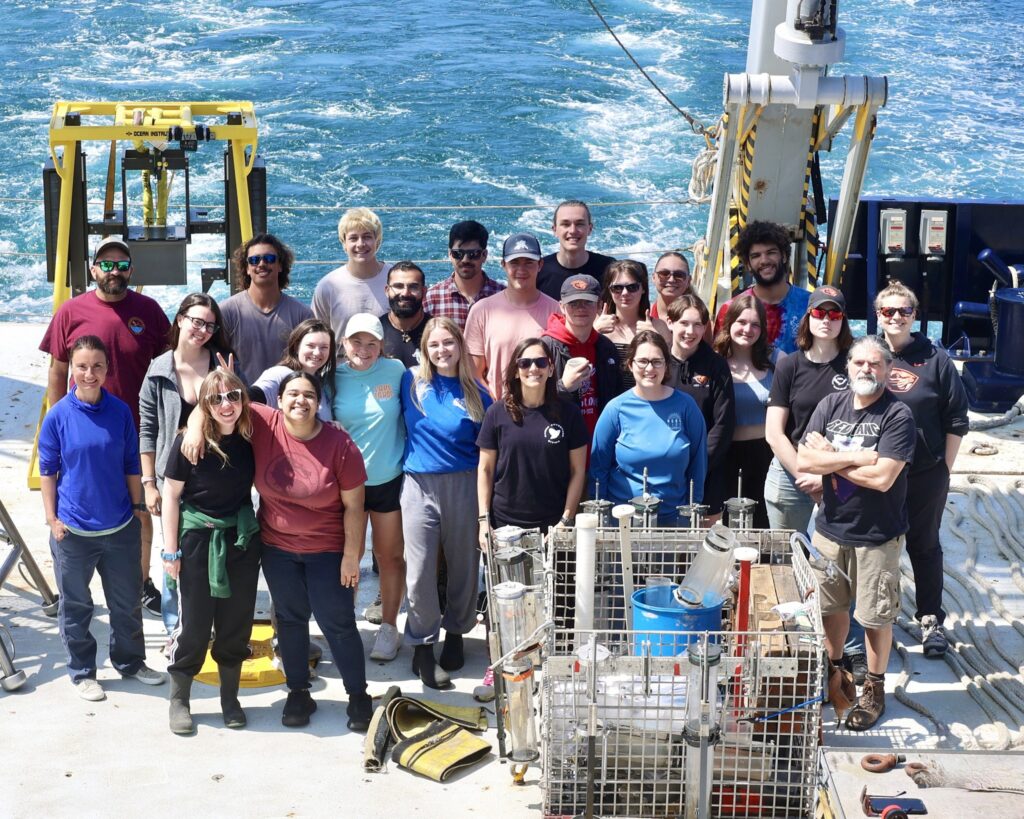
Oregon State University’s College of Earth, Ocean, and Atmospheric Sciences leads Earth science research and education, driving discovery from the oceans to the mountains, and from labs to global communities. Source: Oregon State University/Facebook
Oregon State University
The College of Earth, Ocean, and Atmospheric Sciences (CEOAS) at Oregon State University is a hub of groundbreaking research and education. Whether it’s exploring the deepest ocean trenches or studying the impacts of climate change, CEOAS is at the forefront of discovery. The college’s scientists and students are committed to understanding the Earth’s complex systems, and their work spans from state-of-the-art laboratories to the communities that benefit from their findings.
CEOAS is playing a vital role in preparing for the future. They are leading projects like building new ships for academic research and studying what could happen if a major earthquake strikes the Pacific Northwest. The college is working with coastal communities to help them prepare for natural hazards, all while contributing to US energy independence by developing wave energy devices.
In addition to their research, CEOAS is deeply committed to education. The college is home to Oregon’s only comprehensive oceanographic and atmospheric research programmes, offering top-tier education in geology, geography, geospatial studies, environmental sciences, and marine resource management. As a student, you’ll actively participate in research with real-world impact – whether collecting ice cores in Antarctica or developing sustainable practices for local fishing communities – gaining hands-on experience that prepares you for diverse career paths.
CEOAS is a community dedicated to advancing our understanding of the Earth and its systems. Their work connects cutting-edge science to pressing societal issues, making a tangible difference in the world today and for future generations.
*Some of the institutions featured in this article are commercial partners of Study International