Texas A&M University has long been a global leader in agricultural and environmental sciences. They have the world’s leading experts in sustainable food and fibre systems, soil and water conservation, AI-driven research shaping the future of farming, and more. Now, the Department of Soil and Crop Sciences is making that same world-class expertise and education accessible no matter where you live or work.
Ranked #1 in the US for Agricultural Sciences and Natural Resources research expenditures, Texas A&M offers fully remote research graduate degrees in agronomy, plant breeding, and soil science. You’ll take the same courses as on-campus students, taught by the same international faculty, through Zoom, Teams, Skype, and Canvas. When it’s time for thesis or dissertation research, you can partner with a local research entity close to home. Prefer coursework only? The non-research MS gets you across the finish line without ever setting foot on campus.
Here are four students who’ve been through the format and what it looked like for them.
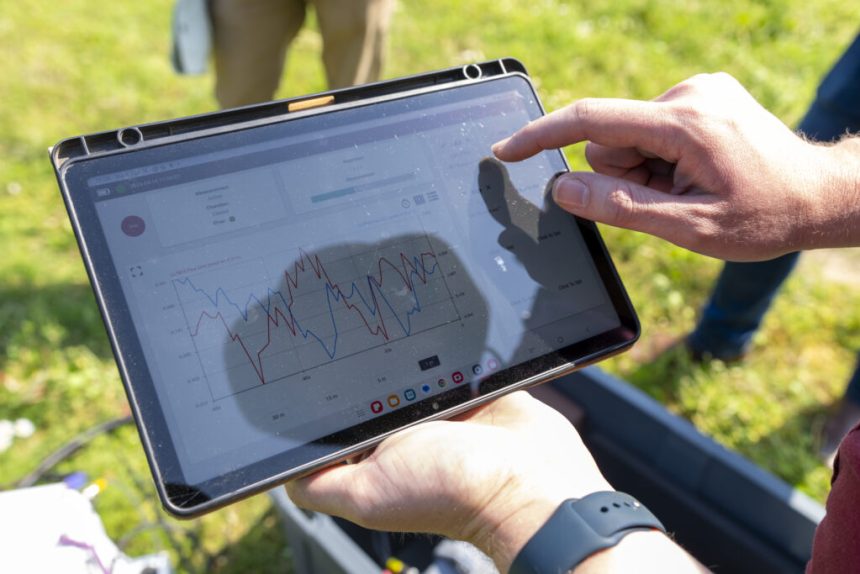
Soil and Crop Sciences trains future innovators to secure the future of food and fibre through hands-on work in agriculture and environmental stewardship. Source: Texas A&M University
Wayne Swink, PhD in Plant Breeding and Genetics, Class of 2026
Wayne Swink served as a US Coast Guard before moving into agricultural research. Today, he works full-time with the USDA on hemp fibre and sustainable agriculture in Louisiana – a career shift driven by the belief that agriculture would always matter.
Texas A&M’s 100% remote PhD let him keep that career and stay with his family – all while growing his expertise and contributing new knowledge to the field. The plant breeding and genetics courses were where everything clicked for him. “They gave me tools to understand everything from classical breeding to genome-wide sequencing,” Swink says. “That knowledge translates directly into my hemp research, helping me explore how to create stronger, more sustainable crops.”
That connection between the classroom and the field was immediate. Louisiana is actively exploring hemp as a new crop, and his coursework puts him in a position to contribute directly to public and private hemp crop trials across the state. “What I learn in class, I can apply to my research almost at once,” Swink says.
Ellen Melson, PhD in Plant Breeding, Class of 2023
Ellen Melson taught students from early school through the end of high school for 11 years before switching to agricultural research. With a family farm in rural Texas keeping her location-bound, Texas A&M’s 100% remote Plant Breeding PhD was the only option for her to get a doctoral education.
She treated the remote format exactly like an in-person degree – active in classes and always reaching out to professors directly. She did not want to miss the opportunity of building relationships that extended well beyond the coursework.
That investment paid off: hands-on breeding work with a local research scientist, arranged through faculty connections she built remotely, led her straight to her postdoctoral position after graduation. “Completing the distance PhD while working full-time showed I was capable of working efficiently under pressure,” Melson says. “I think continuing to accrue work experience while completing the programme made me more competitive.”
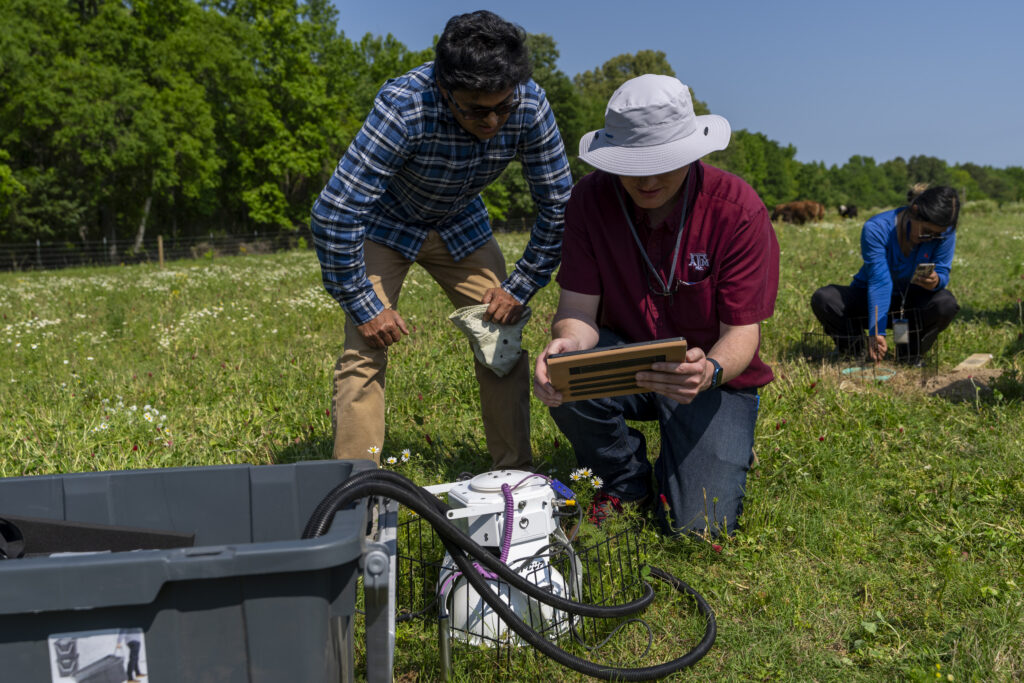
The Department of Soil and Crop Sciences has over 200 students and over 90 faculty and staff specialising in biological, agronomic, crop, soil, turfgrass, and weed science. Source: Texas A&M University
Heber Aquino, PhD in Plant Breeding, Class of 2026
Heber Aquino has spent 25 years in crop breeding and currently works as a research scientist at Corteva Agriscience. With a demanding global role and his life rooted in Argentina, he needed advanced academic training that could work around both, and Texas A&M’s 100% remote doctoral programme delivered exactly that.
Courses like Plant Breeding II and Molecular Quantitative Genetics combine rigorous theory with practical, collaborative problem-solving in a virtual format. That classroom foundation feeds directly into his doctoral research, where he applies genomics and envirotyping to develop climate-resilient sorghum hybrids – work that maps onto the global food security challenges he tackles at Corteva. “The expertise I’ve gained aligns closely with our mission of enriching the lives of producers and consumers worldwide,” Aquino says.
The degree has also broadened his career outlook beyond his current role at Corteva. The skills and knowledge he’s built have made him more competitive for whatever comes next.
Nicholas Shepard, PhD in Molecular & Environmental Plant Sciences
Nicholas Shepard’s interest in plant science took shape during his undergraduate years at Cornell, where he worked on disease resistance in potatoes and tomatoes. That early exposure to the challenges growers face brought him to the 100% remote MS in Plant Breeding.
His thesis then focused on Near-Infrared Spectroscopy (NIR)-based selection in hemp, and that thesis defence became a turning point. A conversation with advisor Dr. David Stelly opened the door to cotton genomics and phenomics research on campus, and he entered the PhD programme in 2024.
Molecular Quantitative Genetics taught him statistical genetics and how to think scientifically, while Plant Breeding I & II walked him through the full scope of a breeding programme, from germplasm development to selection strategies.
Those skills have translated into career momentum. “My thesis work taught me how to design experiments, analyse data, and prepare manuscripts,” Shepard says.
Learn more about Texas A&M University’s Department of Soil and Crop Sciences.
Follow Texas A&M University on Facebook, X, Instagram, LinkedIn, and YouTube