Five years ago, the world witnessed the spread of one of its deadliest viruses. Cities quietened, streets emptied, and114 million people losing their jobs.Among those impacted were Thabo Mngomezulu from South Africa, who had been working as a jazz session vocalist for a decade.
“It was very difficult, because at first I felt like I didn’t know what I was doing,” he says. “But I knew that I needed to do something other than music.”
And that “something” turned out to be using biogas to combat energy poverty in rural South Africa.
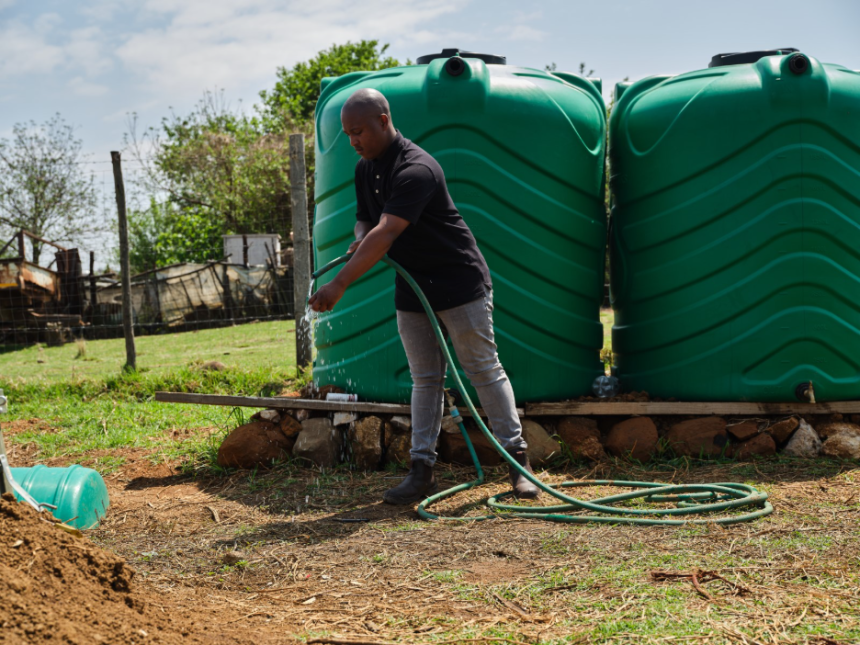
Mngomezulu’s startup, Kasi Gas, converts organic waste into biogas, which can be used for cooking and heating. Source: Thabo Mngomezulu
Using biogas to solve energy poverty in rural South Africa
Mngomezulu grew up in a village where he used to farm crops with his grandmother.
“During the planting phase, I discovered there’s a lot of waste that we produce in the farm, and I started asking, ‘What can we do with it?” he says.
Many global challenges existed before the pandemic, and many continue to persist in the years after. In South Africa, inequality manifests in several different forms, including “skewed income distribution, unequal access to opportunities, and regional disparities.”
One challenge many rural communities face is a lack of sufficient energy for cooking and heating. This is referred to as energy poverty.
And this energy poverty affects a great many people across Sub-Saharan African countries, with65% lacking access to electricity.
Due to this, some opt for open-fire cookstoves, which increases therisk of pollution.About 700 million people in Sub-Saharan Africa rely on traditional biomass — primarily fuelwood, charcoal, and agricultural residues. Butexposure to biomass smoke leads to the deaths of around 600,000 people every year.
Through his startup, Kasi Gas, Mngomezulu and his team are producing a better alternative.
Their rural revolution converts organic community waste (food scraps and farm waste) into affordable, clean biogas for cooking. So, where biomass is the raw, organic material (like wood, crops, or animal waste), biogas is the combustible gas (primarily methane) generated when bacteria break down that organic matter without oxygen.
By capturing methane that would normally escape from landfills and manure lagoons, biogas actively reduces harmful greenhouse gas emissions.
Plus, their work is somewhat of a win-win: they’re repurposing organic waste instead of sending it to landfills, and, on top of that, the byproduct of biogas production is a nutrient-rich fertiliser that helps rehabilitate dead soil used by small-scale and subsistence farmers.
The startup itself is based in a rural South African community, targeting low-income areas across the country.
“Mostly, there’s no waste management services, and so we harness those organic wastes from restaurants, schools, and a lot of households,” says Mngomezulu. “So we collect from all these points, then we take it to our site for processing, and then we deliver the gas and the fertiliser to our consumers.”
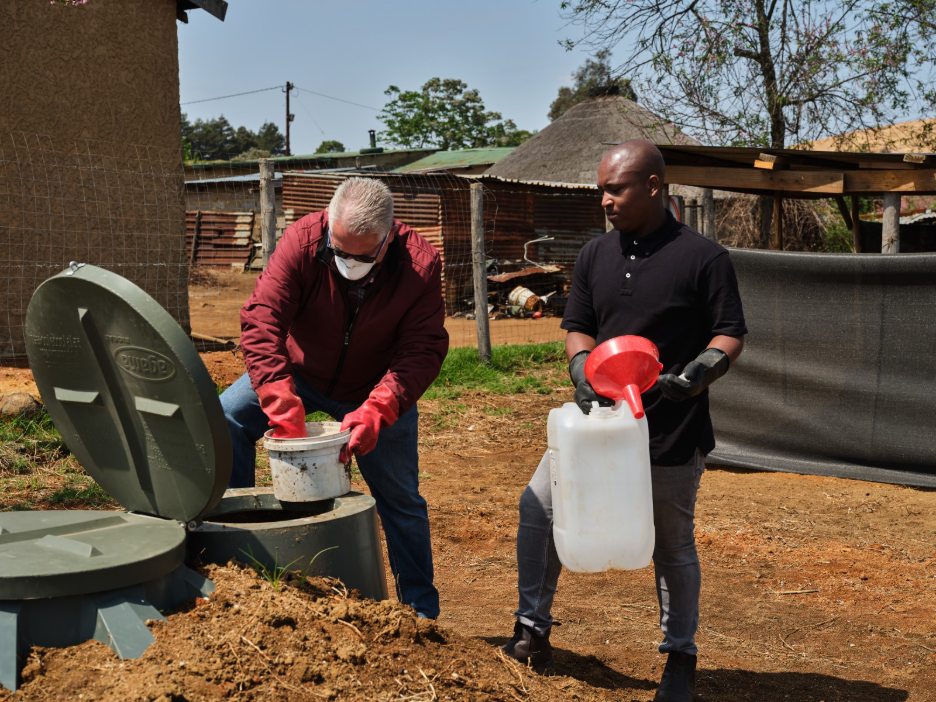
Kasi Gas is based in a rural community in South Africa and targets other low-income areas lacking access to energy resources. Source: Thabo Mngomezulu
Starting a social enterprise with zero experience
Of course, actually turning an idea into a startup took lots of trial and error. Mngomezulu was lucky to have a business partner who’d been in the game for more than 20 years, so he wasn’t diving headfirst into a new venture completely blind. Still, there was much that was new to him.
It was especially difficult for him to find investors to fund his startup, even with a clear-cut business plan in place and no prototype to prove his idea worked — and that put him in a bind.
Yet, through time and rigorous search, Mngomezulu would encounter a key opportunity in his entrepreneurial journey: the Mercedes-Benz Fellowship, known as beVisioneers.
beVisioneers is a global fellowship that equips young innovators (ages 16 to 28) with the training, mentorship, and resources to launch and scale planet-positive environmental projects.
Funded by charitable donations from Mercedes-Benz and run by the non-profit The DO School Fellowships, it supports thousands of changemakers across 55 countries. And one of those changemakers is none other than Mngomezulu.
“[It] was very crucial for me because they said, ‘You know what? It’s a great business.’ They validated it, checked my progress and then gave me the funding to prototype,” he says. “Once I was able to prototype and prove to the local organisations here in South Africa that this actually works, that’s when they started accepting my applications.”
With that kind of validation and support, Mngomezulu has been able to further grow Kasi Gas. The startup was recently recognized as a finalist in the 2026 Global Cleantech Innovation Programme – South Africa, a major initiative by the United Nations Industrial Development Organization (UNIDO) and the Global Environment Facility.
It’s incredible that all this started from a jazz musician who just wanted to make a change in his community. It goes to show that a little bit of faith, conviction, and an initiative such as beVisioneers that brings you international exposure can truly kickstart a meaningful startup.
Today, Mngomezulu still takes bookings as a musician as a fun side hustle, but he’s made a complete pivot as an entrepreneur, tackling energy poverty and supporting crop farmers in rural South African communities at the same time.
In the future, he plans to own at least three to five company plants, venturing into a micro-franchise across rural South Africa — but he’s taking those steps one day at a time.