Every year, Louisiana loses a piece of itself to the sea. Land that once anchored communities, sustained fisheries, and buffered cities from storms quietly disappears – and no one in the continental US is losing it faster. For most of the world, that is a headline. At Louisiana State University‘s (LSU) College of the Coast & Environment (CC&E), it is your research site.
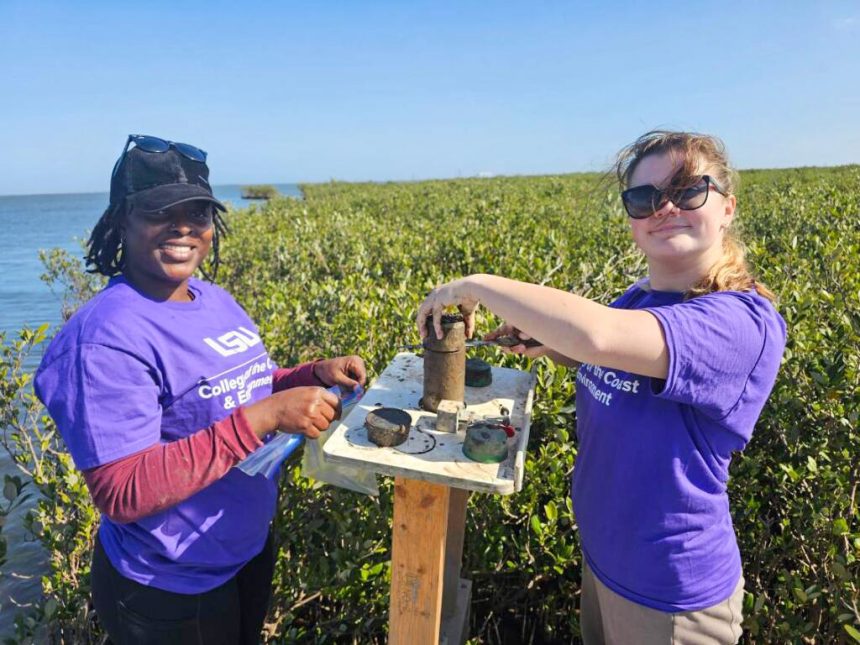
Sitting on the Mississippi River in Baton Rouge, just 160 kilometres from the river’s delta, CC&E puts you at the centre of one of the most environmentally significant regions on Earth. The coast here is under pressure from every direction – land loss, pollution, sea level rise, and increasingly severe storms. Most students read about challenges like these in textbooks. At CC&E, you’ll work on them directly, in the field, alongside researchers who have spent their careers trying to solve them.
That combination of location and urgency is rare. It makes CC&E a compelling place to study just as much as it is a genuinely powerful place to build a career.
Louisiana State University’s College of the Coast & Environment aims to advance research and education to help coastal communities adapt to environmental change. Source: Louisiana State University
A small college with a commanding research footprint
LSU is a Carnegie R-1 university – the highest tier of research activity in the country – and one of a handful of institutions to hold the triple designation of land-, sea-, and space-grant.
Since the 1950s, CC&E scientists have changed how the world understands coastal systems – identifying the causes of deltaic growth and decline, establishing the role of hurricanes in coastal erosion, and building global delta databases that are now the international benchmark for deltaic science.
Techniques developed here, including 137Cs dating for wetlands, became standard tools used by researchers worldwide. Today, the college leads projects in AI-powered wildfire prediction, hypoxia forecasting, large-scale ecosystem restoration, and the world’s first model built to identify regions most vulnerable to compound flooding. With over US$14 million in annual research spending, most graduate students are funded through active, sponsored projects – meaning you’ll be contributing to real work from day one.
Baton Rouge further strengthens that research environment. The capital city of Louisiana is home to the Water Campus, where scientists, engineers, and policymakers work side by side on water and coastal challenges facing Louisiana and the world. Research here moves quickly from the lab into policy decisions that affect real communities. Louisiana’s coast underpins the culture, economy, and public health of the entire state, and the people here are deeply invested in protecting it. That sense of purpose is built into how CC&E operates – and it’ll give your work a weight that is difficult to find anywhere else.
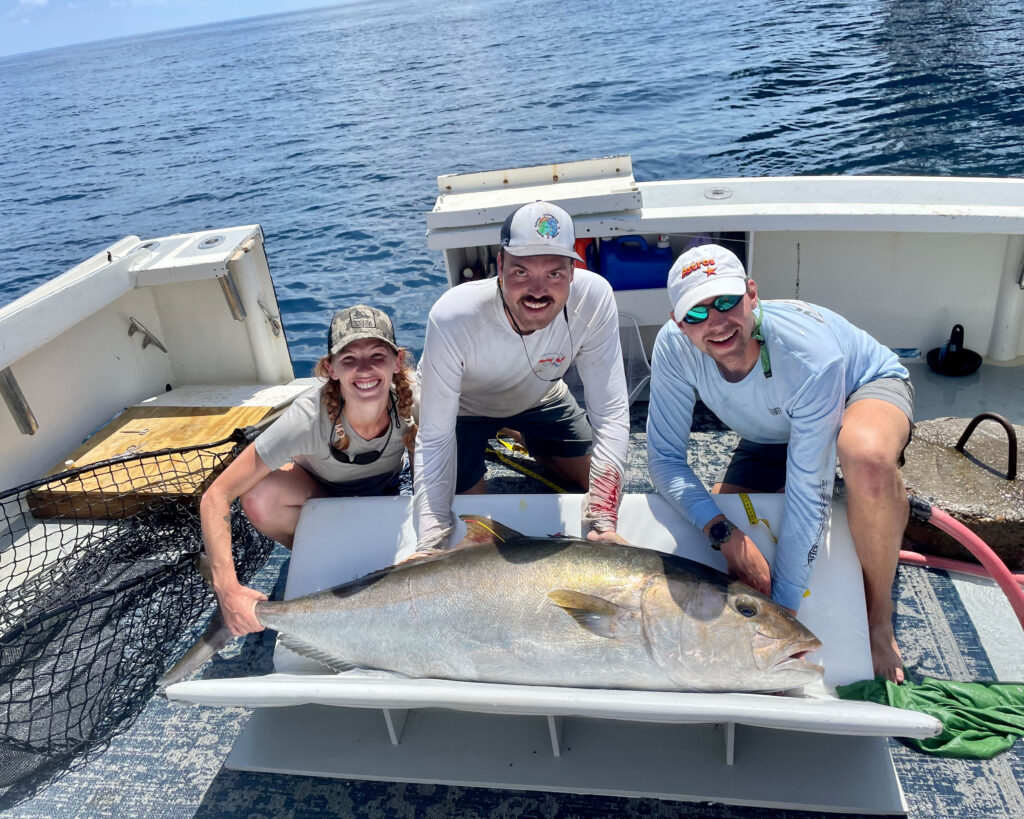
Faculty at Louisiana State University’s College of the Coast & Environment have earned top national and international honours, underscoring global leadership in coastal and environmental research. Source: Louisiana State University
Two graduate programmes, one clear path
CC&E offers two graduate programmes, both built around funded, hands-on research that will prepare you for a career at the forefront of coastal and environmental science.
The Oceanography & Coastal Sciences programme is the only one of its kind in Louisiana, and stands apart from similar programmes nationally for how it connects ocean science with coastal systems.
The Environmental Sciences programme takes a wider lens, covering the intersection of ecosystems, human health, and environmental policy. Faculty expertise spans water and air quality, environmental health, toxicology, law and policy, and remote sensing, among other areas.
At the master’s level in both programmes, you can choose between a research-focused thesis track and a professional track aimed at careers in areas like regulatory agencies and resource management, where broader knowledge of the field matters more than original research. The PhD is for those going deeper into scientific careers. You’ll work directly with faculty on impactful research, publish peer-reviewed work before you graduate, and build a professional network that carries into your career long after you leave Baton Rouge. A master’s typically takes two years. A PhD takes four.
Environmental Sciences also offers a fully online master’s track for working professionals who need a non-thesis route through the degree without stepping away from their careers.
In both programmes, getting in starts with a conversation. Most students are admitted to work on a specific funded project, so the most effective first step is to identify CC&E faculty whose research aligns with yours and reach out directly. Once a faculty member confirms a position, you can apply through the LSU Graduate School. The process is straightforward — the key is finding the right fit before you apply.
When you’re in the right programme, you can become a leading voice in your field. Graduates work as marine data specialists, research scientists, environmental advisors, university professors, regulatory affairs specialists, and project managers – across government, academia, industry, and nonprofits, in the US and internationally.
Learn more about Louisiana State University’s College of the Coast & Environment.Follow Louisiana State University on Facebook, X, Instagram, LinkedIn, TikTok, and YouTube