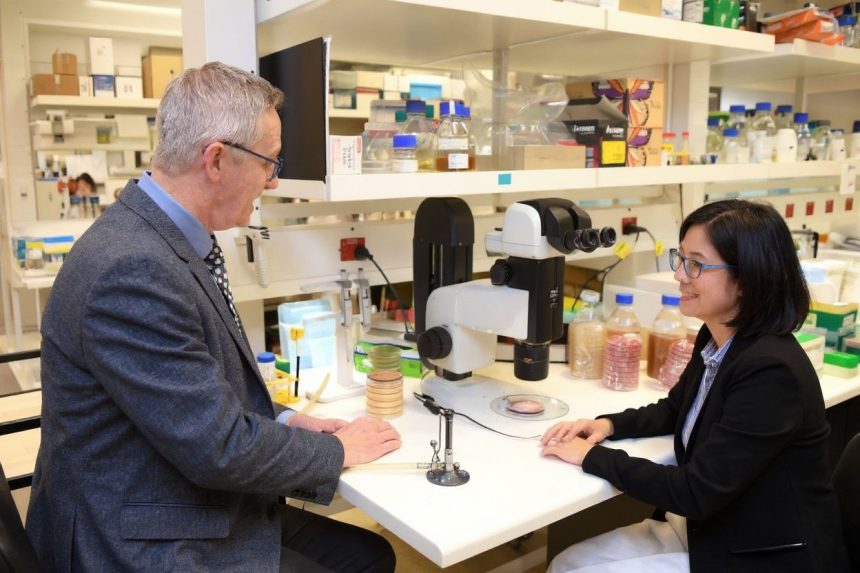
If you’ve completed your degree and your area of interest is research-intensive, pursuing a PhD is a natural next step.
As the highest level of education, a Doctor of Philosophy or PhD can take anywhere from four to 12 years to complete.
But while a PhD is intellectually rewarding, it often comes with financial challenges. And that’s where PhD stipends come in.
As a PhD student, you can expect to receive a salary when you carry out your research work. You’ll be hired by schools and universities to carry out jobs such as leading a class, running lab work, or visiting patients. There are even employee benefits like subsidised healthcare or compensation.
However, there is a difference between receiving a salary for your efforts, and a stipend. This is just one of the many things you should know when deciding to do a PhD.
Let’s explore.
TL;DR? Here’s the summary:
- This article lists 12 countries offering the highest PhD stipends.
- PhD stipends provide financial support for living expenses, tuition, and research costs during doctoral study.
- Stipend amounts vary by country, with STEM PhDs generally receiving higher funding.
You’ll work closely with professors and lecturers during the course of your PhD.
An introduction to PhD stipends
What’s a PhD stipend?
PhD stipends are financial support systems for doctoral students to cover living expenses, tuition, and research costs during their academic journey. This means that your accommodation, utilities, transport, and even food will be covered to a certain extent.
Your field of choice will usually determine the stipend you get. Education, arts, or business will grant stipends of around US$20,000 a year, while STEM-related fields like biomedical engineering would be significantly higher, possibly around US$30,000 and above.
Traditionally, universities will provide PhD stipends if you pursue a full-time doctoral programme with them.
There are three types of PhD stipends:
- Graduate Teaching Assistantships (GTAs): For this, you are required to assist by delivering one or more courses over a number of years. You would also need to take on other responsibilities, such as marking student tutorials, supervising lab experiments, and providing support to undergraduates during office hours.
- Research Assistantships (RAs): In this role, you will assist a departmental professor with their research. If you are lucky, the professor will be your PhD supervisor, and their research (and the support you give) will relate to your own doctoral project.
- Stipend via Studentship: This is a non-repayable grant for doctoral students. Unlike the other two stipends, this one rarely has additional suits, but you must progress with your degree.
PhD stipends have a rich history that mirrors the evolution of higher education.
Our current understanding of a PhD originated in 19th-century Germany, but doctoral degrees were awarded long before this.
Over time, PhD stipends have evolved into a cornerstone of doctoral education, ensuring that financial constraints do not hinder the pursuit of advanced knowledge.
But are they enough?
Things to take into consideration with PhD stipends
Regardless of which stipend applies to you, how you benefit from it ultimately also depends on where you stay.
In places like New York, it’s difficult to find a place to rent that’s US$2000 a month; for example, cheaper accommodation will free up more resources for things like food, transport, and other miscellaneous things.
In January 2023, The Guardian reported about how PhD students in Australia were barely earning enough to survive.
“Through Melbourne’s winter, I know people forced into less than suitable housing who weren’t turning on their heat,” said Tara-Lyn Camilleri, who lobbied to raise the stipend at Monash University from 30,000 AUD to A$37,000 while completing her PhD last year.
It was eventually raised to A$33,000, about A$4,500 less than the minimum wage after tax.
In this Reddit post from 2024, a commenter says, “A lot of PhD students have a hard time getting by financially. Good universities are generally in metro areas where housing demand and prices are very high, and student support and compensation have not kept up.”
On the other hand, another commenter in the same post says, “I lived in a college town, so the cost of living was cheap. We got paid minimum wage in my department, which was enough for me to live in a 2-bedroom apartment by myself. PhD students from other departments got paid half, or even a third, as much as I did. They often had to pick up a job on the side to make ends meet.”
In short, it’s great to have a high PhD stipend, but how you choose to use it also matters.
As PhDs can take years to complete, it is always easier to do one when you have money saved away instead of relying entirely on the PhD stipend, or cut costs by living in cheaper areas.
In fact, some universities around the world have increased their stipends recently to attract more talent.
Now, if you’re a promising PhD student hoping to secure your stipend, try checking out these countries with some of the best offers:

The University of Vienna is a public research university located in Austria. Source: University of Vienna
Top 7 countries with the highest PhD stipends
Austria
Boasting over 50 institutions of higher education, it is no surprise that Austria is a top choice for a PhD.
Its rich cultural and academic heritage offers competitive stipends, with institutions like the University of Vienna leading the way.
This is because of the country’s commitment to academic excellence and research; universities often collaborate with international partners, contributing to a vibrant research community.
Government funding and a focus on supporting doctoral research contribute to the attractiveness of stipends in Austria.
Here are some of the best universities in Austria to pursue higher education:
- University of Vienna
- Vienna University of Technology
- University of Innsbruck
- Medical University of Graz
- Salzburg University
Netherlands
The Netherlands, known for its innovation and research-driven culture, offers competitive stipends, with institutions like Delft University of Technology providing substantial financial support.
In Times Higher Education’s World University Rankings 2025, the 12 universities in the Netherlands all feature among the top 300, with five Dutch institutions ranking among the top 100.
The Netherlands is also highly ranked internationally for the number of publications per researcher (second) and for the impact of research publication (fourth).
“The PhD salary in the Netherlands is one of the best in the world,” a former PhD student says to Dutch News.
“In the UK, the salaries are just 1,000 pounds and PhD students need to work at weekends. I was able to buy a house while being a PhD student here.”
Here are some of the top universities in the Netherlands to pursue higher education:
- University of Amsterdam
- Leiden University
- University of Groningen
- Delft University of Technology (TU Delft)
- Erasmus University Rotterdam
Finland
Finland is renowned for its high-quality education system, starting from the early years up till their doctoral offerings. It’s also known as the happiest country in the world!
The country offers competitive stipends, with institutions like the University of Helsinki providing substantial financial support.
Government funding often supports stipends in Finland, reflecting the country’s commitment to nurturing the next generation of researchers.
Students are also encouraged to take ownership of the research in Finland.
Here are the top universities in Finland:
- University of Helsinki
- Aalto University
- University of Oulu
- Tampere University
- University of Turku

Universities in Denmark often offer industrial PhDs. Source: University of Copenhagen
Denmark
Denmark strongly emphasises education and research, and the country’s social welfare system ensures that stipends are sufficient to cover living expenses.
The country also offers an Industrial PhD option if you want to conduct a research project with commercial perspectives.
Denmark is also popular for the balance of robust academics and a great living standard, giving international students the best of both worlds.
Here are the best universities in Denmark:
- University of Copenhagen
- Technical University of Denmark
- Aarhus University
- University of Southern Denmark (SDU)
- Aalborg University
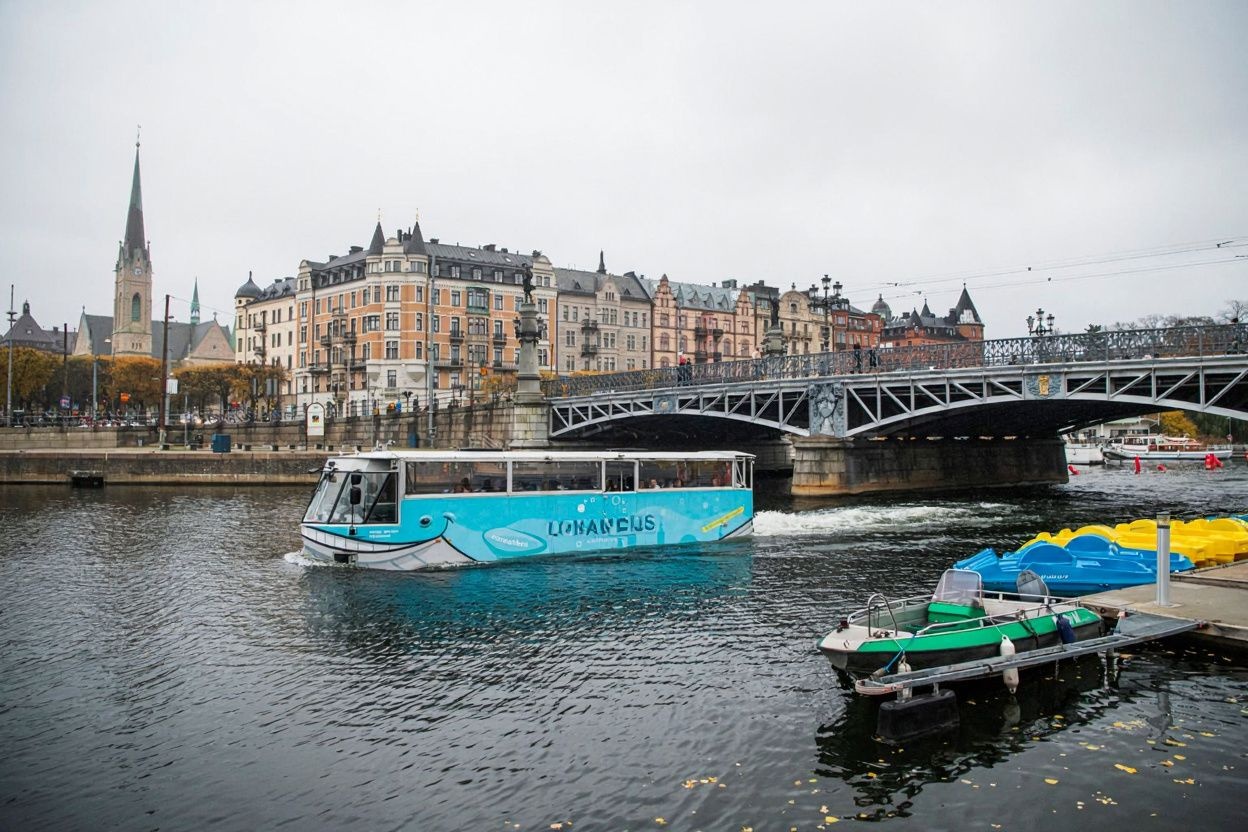
While Swedish is the official language, over 90% of locals speak in English, making it a great place for international students.
While Swedish is the official language, over 90% of locals speak English, making it a great place for international students.
Sweden
The land of innovation and Vikings beckons ambitious scholars with competitive stipends and one institution that stands out is the renowned Karolinska Institute.
Sweden’s commitment to pioneering research and its unique blend of modernity and tradition make it an alluring destination for those pursuing a PhD.
Most universities in Sweden offer salaries instead of stipends.
Here are some of the leading institutions in Sweden:
- Blekinge Institute of Technology
- Chalmers University of Technology
- Dalarna University
- Halmstad University
- Jönköping University
Norway
- Average PhD stipend: US$53,486.13
- Average cost of living: US$16,394.23
In Norway, PhD stipends for international students are structured as employment contracts. You are hired as a PhD candidate and paid a full salary.
Because PhD candidates are employees, you also qualify for benefits such as paid holidays, pension contributions, and social security.
You do not pay tuition fees at most public universities, since you are an employee of the university and earning a doctoral salary.
Interested? Here are some of the top universities in Norway to check out:
- University of Oslo
- Norwegian University of Science and Technology (NTNU)
- University of Bergen
Switzerland
- Average PhD stipend: CHF 48,000 to 70,000 (US$59,957.18 to US$87,447.54) per year
- Average cost of living: CHF 3,000 to CHF 5,000 (US$3,747.13 to US$6,245.21) per month
In Switzerland, many PhD students are actually employed as research assistants, which means they receive a salary rather than just a scholarship.
For example, PhD students at universities likeETH Zurich orEPFL can earn a salary ranging from CHF 48,000 to 70,000 (US$59,957.18 to US$87,447.54) per year, which is much higher than in many other countries.
Here are the top universities in Switzerland to check out:
- ETH Zurich
- EPFL (École polytechnique fédérale de Lausanne)
- University of Zurich
Germany
Average PhD stipend:€1,300 (US$1,508)/month
Average cost of living:€900 (US$1,043) – €1,200 (US$1,390)/month
Germany is one of the best places to do a PhD. Public universities charge no tuition fees, andmost doctoral candidates are hired as paid research employees under the TV-L E13 salary scale, which comes with health insurance, pension contributions, and paid leave.
STEM fields, particularly engineering and medicine, tend to pay more due to stronger industry and grant funding. Germany also invests more in research and development than any other country in Europe, which means opportunities are abundant across both academia and industry-linked doctoral projects.
Top universities for doctoral study:
- Technical University of Munich (TUM)
- Ludwig Maximilian University of Munich
- Heidelberg University
- RWTH Aachen University

Most stipends in the US come paired with full tuition waivers and subsidised health insurance. Source: Pexels
US
Average PhD stipend:US$25,000/year
Average cost of living:US$18,048 to US$22,200/year
The US runs the world’s largest doctoral ecosystem, backed by federal agencies like the National Science Foundation (NSF) and the Department of Energy (DOE). The NSF Graduate Research Fellowshippays US$37,000/year for three years. STEM students are typically funded through Research Assistantships while humanities students rely more on Teaching Assistantships.
Stipends at elite institutions run much higher —Yale’s 2025–26 minimum amount is US$50,777. The same stipend goes much further in a small college town than in New York or San Francisco, making location the biggest variable in how comfortable PhD life feels.
Top universities for doctoral research:
- Massachusetts Institute of Technology (MIT)
- Stanford University
- Harvard University
- Yale University
Canada
Average PhD stipend:CA$24,000 (US$17,171) – CA$40,000 (US$28,618)/year
Average cost of living:CAD 15,000 (US$10,734) to CAD 30,000 (US$ 21,468) per year
Canada’s PhD stipends had been frozen for over two decades, leaving most students at around CA$24,000 a year — a level that pushed many toward food banks.The 2024 federal budget pledged CA$825 million over five years to fix this, raising Tri-Council doctoral scholarships to CA$40,000/year.
Canada’s research strengths lie in AI, clean energy, and life sciences, with major hubs in Toronto and Montreal.
Check out these universities for doctoral study:
- University of Toronto
- University of British Columbia
- McGill University
- University of Waterloo

In Australia, tuition fees and the living stipend are covered through separate funding streams. Source: Pexels
Australia
Average PhD stipend:AUD$34,315 (US$24,256)/year
Average cost of living:AUD $1,400 (US$989) to AUD $2,500 (US$1,767)/month
Australia’s PhD funding runs through the federal Research Training Programme (RTP), which sets the national base stipend at AUD$34,315/year for 2026. Universities can top this up, with the ceiling sitting at AUD$53,608. Tuition is separately covered by the RTP, so the stipend goes entirely toward living costs.
Research strengths include medical science, marine biology, agriculture, and quantum computing.
Here are some of the top universities for doctoral study:
- Australian National University (ANU)
- University of Melbourne
- University of Sydney
- University of Queensland
UK
Average PhD stipend:£20,780 (US$27,912)/year or 22,780 (US$30,599)/year in London
Average cost of living:£1300 (US$1,744) to £1400 (US$1,879) per month in London or £900 (US$1,208) – £1300 (US$1,744) in the rest of the UK
The UK is one of the best places in the world to do a PhD. Funding comes through UKRI, which supports doctoral students across seven research councils covering everything from engineering to the humanities.
Most funded places sit within Russell Group universities, where research in AI, biomedical science, and climate science is particularly strong. International students are fully eligible, with studentships covering tuition fees and a tax-free living stipend.
Among the top universities include:
- University of Oxford
- University of Cambridge
- Imperial College London
- University College London
At a glance: 12 countries offering the highest PhD stipends
| Country | Average PhD Funding |
| Austria | US$104,328/year |
| Netherlands | US$74,163/year |
| Finland | US$46,537/year |
| Denmark | US$53,436/year |
| Sweden | US$42,618/year |
| Norway | US$53,486/year |
| Switzerland | US$59,957–87,447/year |
| Germany | US$1,508/month |
| US | US$25,000–50,777/year |
| Canada | US$17,171 – US$28,618/ year |
| Australia | US$24,256/year |
| UK | US$27,912 – US$30,599/year |
Frequently asked questions (FAQ)
Can international students get PhD stipends?
Yes, in most countries. The US, UK, Germany, Australia, and Canada all offer stipends to international students, typically through university assistantships, government scholarships, or institutional fellowships. However, eligibility varies by programme and country, so always check on their websites.
What GPA do you need to get a PhD stipend?
There’s no universal GPA threshold, but most funded programmes expect a strong academic record. Generally, a 3.5/4.0 (US) or equivalent First/Upper Second Class Honours (UK/Australia). Crucially, your research output, publications, and supervisor endorsements carry more weight than just GPA.
What does a PhD stipend cover?
Stipends cover basic living costs such as rent, food, utilities, and transport. They do not typically cover personal savings or travel abroad expenses. Remember, it’s not a scholarship, so it doesn’t pay for your tuition fees.
Disclaimer: This article was last updated on June 15, 2026.