When Ryoji Amano first arrived at Chatsworth International School in Bukit Timah, Singapore, the first thing that struck him was how diverse it was. He already knew it was one of the top International Baccalaureate (IB) schools but what he didn’t expect was a community representing over 50 different nations. Even the teaching staff comprises more than 20 nationalities.
At the time, that was a foreign concept to Amano.
Even though he’d spent his whole life in cosmopolitan Singapore, Amano used to attend a Japanese primary andsecondary school. That school followed the Japanese education system, used the Japanese language, and had a student body that was mostly Japanese.
Chatsworth was different, in all the right ways. “Coming from a school that is very homogenous, switching to a school with a diverse student body allowed me to understand how different people from different cultural backgrounds think and interact with each other,” he says.
This exposure was as eye-opening as it was future-defining. We live in a world where people can connect in seconds, so the ability to collaborate across cultures, perspectives, and anything that makes someone different from us is critical. And that’s just what students at Chatsworth do every day.
A three-time gold winner of the “School Where Everybody Knows Your Name” title at the Singapore Education Awards, Chatsworth has created a community where belonging and global awareness go hand in hand. Class sizes are small so your child can truly connect with teachers and peers. It’s a foundation with an outsized impact, preparing students to thrive, no matter which city or country they may be in the future.
It’s fun too. “I very much enjoyed adapting to different perspectives and ways of thinking,” Amano says.
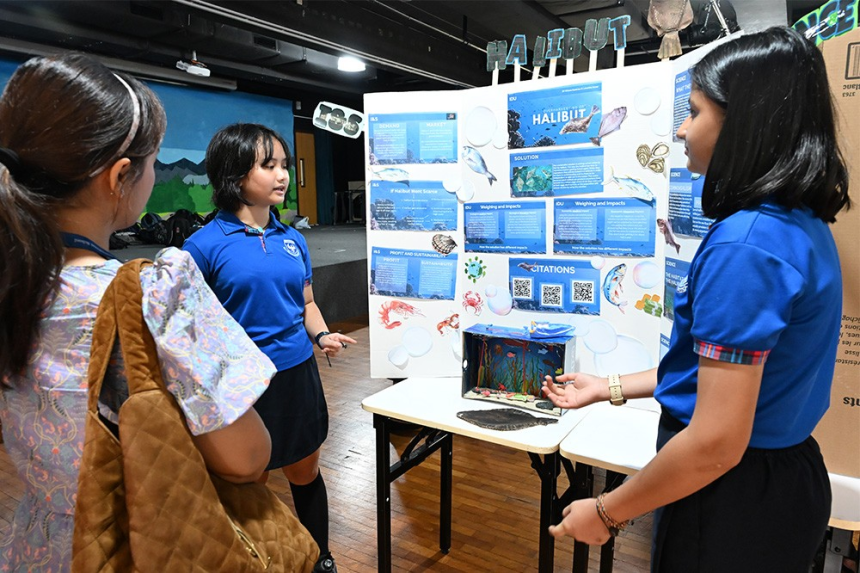
Through an interdisciplinary unit project combining the Sciences and Individual and Societies (I&S) disciplines, middle school students examine real-world issues through a multifaceted lens and develop creative solutions. Source: Chatsworth International School
Nurturing adaptable, future-ready thinkers
Though the student body has been known to always produce above world-average scores in the IB exams, the value of a Chatsworth education is more than just good grades. When visiting the campus, adjacent to Singapore’s only tropical rainforest, it’s common to see classrooms bustling with activity. Children in Early Childhood Education classes engage in highly stimulating play-based learning and student-initiated inquiry to develop a range of skills and physical health.
You’ll see students in upper primary school channel their entrepreneurial spirit as they learn to design and operate their own stores.
This is what future-ready education looks like: experiential and relevant across many contexts, be it geography, disciplines, and more.
Serving students from Kindergarten through the IB Diploma Programme, Chatsworth empowers students to take ownership of their own learning. With a wide range of IBDP subjects and a strong emphasis on soft skills, the school equips them with future-ready skills they will need to navigate and thrive in an ever-evolving world.
Chatsworth teachers impart more than academic knowledge and go beyond just instructing. They prepare students for the practicalities of adulthood. There are special sessions focused on life skills, such as sewing, ironing, tying a necktie, basic cooking for Year 13 students, and more. These may seem like small milestones and abilities that many of us often take for granted but they equip students with the confidence to live independently and cultivate true self-reliance.
Amano, for instance, has pursued his passion for music. It’s his favourite class, as playing the guitar is one of his hobbies. Chatsworth is known for encouraging students to learn through experience, and so that’s exactly what Amano did. He’d often perform with his guitar at school events and actively participates in Secondary Arts Night every single year. Along the way, he has built confidence and creativity – all essential for the future of work and life.

Amano is mapping out his next steps, attending multiple university fairs. He also plans to complete his National Service in Singapore. Source: Chatsworth International School
Supported every step towards the future
The Chatsworth curriculum centres on inquiry-based learning, where students explore, question, and discover specialised topics to develop the characteristics of an IB Learner Profile. The profile is a holistic vision of education that aims to develop students to be not only academically successful but also caring, principled, and globally aware.
As someone who’d only taken classes in Japanese prior, Amano thought he’d struggle to present his ideas. Quickly, he would learn that wasn’t the case. Instead, this transition drove him to grow as a student and person.
“Many of my friends were willing to understand, which made me more confident in presenting my ideas and participating in discussions,” he says. “Even though I did not ask for help, many teachers were willing to support me so that I was not left behind.”
Another challenge he’d encountered when he first arrived was adapting to using technology. “Although I had used computers frequently in my previous school, I had never used them for tests and exams, so I had to adjust how I would present my ideas, especially in math- and science-based subjects,” he says.
The school is committed to preparing students for a digital future. Chatsworth runs a 1:1 laptop programme for faculty and students from Years 3 to 13 to allow for a safe, yet meaningful integration of technology into the curriculum. While it’s one thing to help students develop transferable skills for the digital age, the programme also aims to promote a more balanced use of technology.
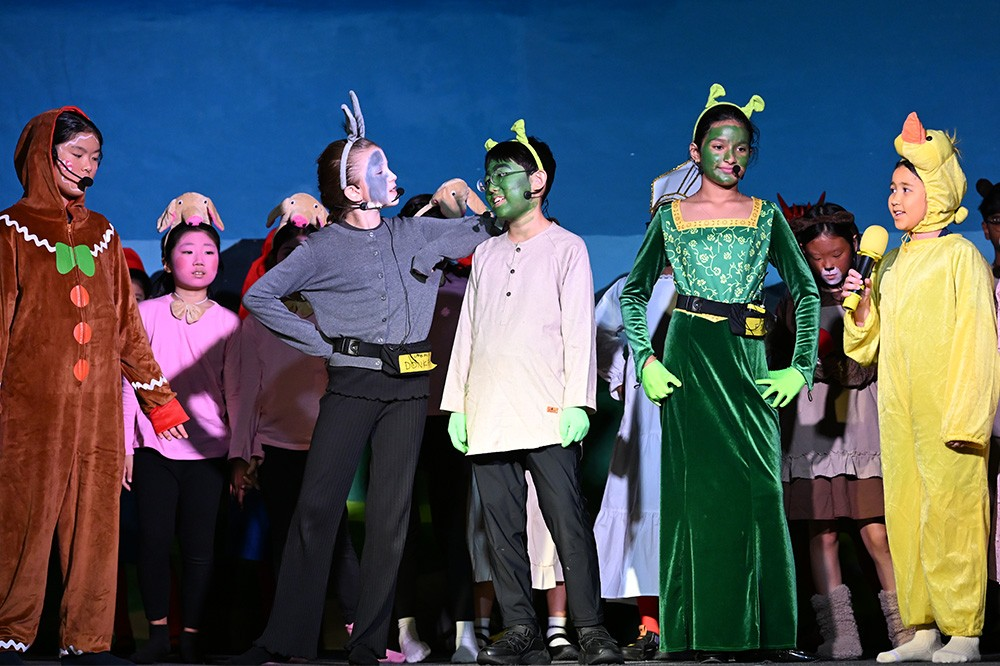
From English language support to over 70 co-curricular activities, extracurricular activities, and team-based sports, school life here is enriching and with no shortage of fun. Source: Chatsworth International School
For those who are in a similar boat to Amano, going through the process of acclimating to a new academic environment, there are many more support systems available. They can seek pastoral care, university advising, healthcare support, counselling, and more. If they need to improve their English language skills, they can study English as an Additional Language and take intensive courses to complement their mainstream subjects.
This support system ensures all students can adapt well and adapt fast. Now exploring university options and planning his next steps, Amano feels ready for what lies ahead, whatever that may be.
“I feel that I am well prepared to transition into a new academic or cultural environment,” Amano says. “I was able to fit in well with Chatsworth, which was already a large shift for me, considering the background of my previous school.”