For a Pakistani family, a student visa refusal is not simply an administrative outcome. It can mean savings committed, plans delayed and a young person beginning to doubt a future they have worked hard to build. This is why Australia’s recent visa reset has felt so personal in Pakistan.
The figures are sobering. According to the Australian Department of Home Affairs, student visa grants to Pakistani nationals fell from 19,011 in 2022/23 to 7,399 in 2023/24, and then to 4,978 in 2024/25.
There are, however, encouraging signs. In data covering the opening months of 2024/25, the higher education visa grant rate for Pakistani applicants rose from 44.6% to 59.4%, while the vocational education and training rate increased from 27.8% to 44.8%.
These figures should not be interpreted as a verdict on the quality or potential of Pakistani students. They reflect lower application volumes, more rigorous assessment and a market adapting to new requirements.
Students, families, institutions and education counsellors are developing a clearer understanding of what constitutes a credible and well-prepared application.
Since March 23 2024, the Genuine Student requirement has replaced the Genuine Temporary Entrant requirement. The principle is straightforward: an applicant’s choices must make sense.
Why this course? Why Australia? How does the programme connect with the student’s previous education or employment? What will it contribute to a realistic career plan? Are the proposed finances and living arrangements credible?
The strongest application is not necessarily the one with the most polished statement. It is the one in which the academic record, employment history, financial evidence, course selection and future plans tell a consistent story. A change in academic or professional direction should not automatically be treated as a weakness when it is honestly explained and properly supported.
Professional education counsellors in Pakistan play an important role in this process. They help students and families understand changing requirements, select suitable institutions and courses, prepare accurate documentation and approach interviews with confidence.
Responsible counsellors also help institutions understand the local market, communicate effectively with applicants and identify students whose academic ambitions are supported by genuine preparation.
Pakistan has a deep pool of ambitious, English-proficient and technically capable young people
Interviews, document verification and careful consideration of study gaps should therefore be viewed as part of a collaborative quality-assurance process. When institutions work closely with trusted local partners, these measures protect students, strengthen compliance and support sustainable recruitment.
They also help prevent applicants from making costly decisions without adequate information. Pakistan has a deep pool of ambitious, English-proficient and technically capable young people. Pakistani graduates already contribute to engineering, technology, business, healthcare, research and academia in Australia and around the world. Their contribution demonstrates what becomes possible when ability is matched with an appropriate course, reliable advice and sound preparation.
Pakistan’s education counselling sector has also matured considerably. Reputable advisers recognise that sustainable success depends on student outcomes, institutional trust and regulatory compliance – not simply application volume. Their long-term presence in the market gives them valuable insight into students’ backgrounds, family expectations and professional aspirations.
The answer is not to ask Australia to lower its standards. It is to ensure that capable Pakistani applicants are recognised on their merits and receive clear information about what those standards require.
Australia has changed the key, but the door remains open. If students, families, institutions and professional counsellors continue to focus on quality, transparency
and genuine academic progression, Pakistan can emerge from this period stronger and better represented by students who are ready to succeed.


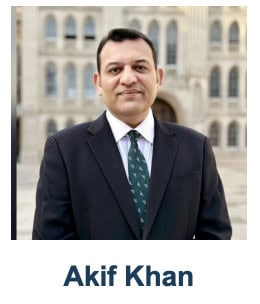
About the authors: Akif Khan and Tariq Malik are senior international education professionals with extensive experience in student recruitment and market development across Pakistan. They connect Australian and other global universities with a trusted network of professional education counsellors, supporting compliant recruitment, sustainable partnerships and better outcomes for Pakistani students.