Imagine sending out application after application, tailoring each personal statement, lining up recommenders — and watching every single one come back rejected. Now imagine doing that twice, a year apart, for a total of 14 straight rejections.
That’s the reality Amaan Tariq faced before he finally got into the PhD programme at Purdue University.
A head start in academia, and a leap of faith
I grew up in Roorkee, a small town in India. My father is a mechanical engineering professor at IIT Roorkee — one of the country’s top universities. I didn’t follow my father into engineering, though.
Encouraged by the urgency of COVID-19 and the sudden global spotlight on vaccines and mRNA research, I chose biotechnology instead, drawn by how underfunded and under-recognised the field still was in India at the time.
The choice paid off early. In my second year, I was mentored by a professor at IIT Roorkee, and by my third year, I’d landed one of just five spots nationwide on a fully funded summer internship at Johns Hopkins in Baltimore.
Seeing the scale of research funding and infrastructure in the US convinced me I wanted to study abroad — and convinced me, somewhat ambitiously, to skip the master’s degree most students take first and apply straight for PhD programmes.
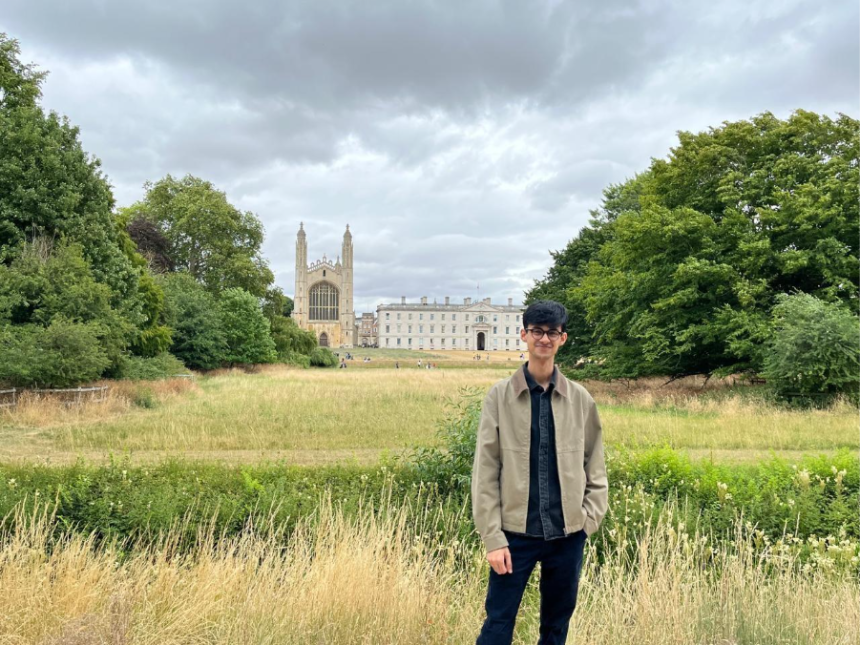
Amaan Tariq got his master’s degree from King’s College London. Source: Amaan Tariq
Ten rejections, then a detour
I applied to 10 PhD programmes. All 10 rejected me. It’s a sting that’s more common than it feels in the moment: according to the Council of Graduate Schools, the average acceptance rate across US doctoral programmes was around 20% in 2022, and at competitive research universities it can fall into the single digits.
Applying straight out of undergrad, without a master’s degree already signalling research maturity, put me up against exactly that kind of competition.
Rather than take it as a dead end, I pivoted to master’s applications instead — and because my personal statements, CV, and references were already prepared, the process moved fast.
I was accepted into the University of Manchester, the University of Leeds, Johns Hopkins, and King’s College London, eventually choosing King’s for its shorter, more focused Biomedical and Molecular Sciences Research programme.
Fourteen and counting
The rejections weren’t over. A few months into my master’s, in December 2024, I applied to four more PhD programmes. All four rejected me too, bringing my total to 14 straight PhD rejections across two application cycles.
I’ve described that January as cold, gloomy, still without a single acceptance. It was a low point by any means.
What changed my approach wasn’t another round of applications. It was reviewing the formal process entirely. I began emailing my CV and research interests directly to professors whose work I admired.
Several replied, and some got on Zoom calls with me — including one professor in Purdue’s Health and Kinesiology department, a field slightly removed from my original focus but one where my cross-disciplinary background stood out.
I applied for Purdue’s March deadline and, finally, got my first PhD acceptance.
Even then, a frozen US visa cycle meant another fortnight of checking the appointment portal every hour before I secured a slot.
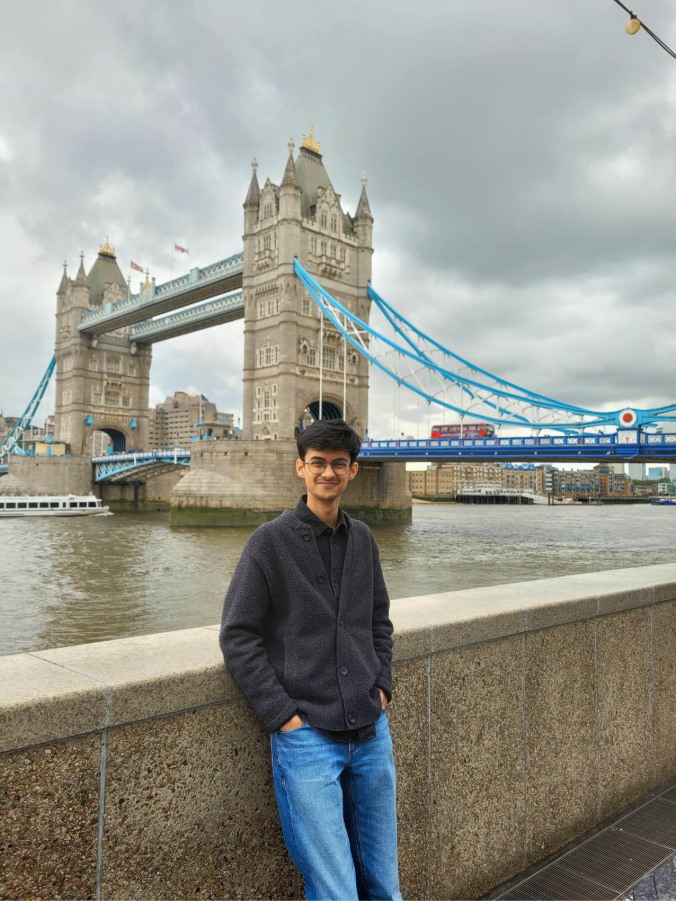
Amaan Tariq is pursuing his PhD in Health and Kinesiology. Source: Amaan Tariq
The lesson
As I know from watching my own father navigate academia, a PhD isn’t something you’re ever fully ready for — the point is to be resilient.
That reframing mattered more than any single acceptance letter. The 20% national average for PhD admission means rejection is closer to the norm than the exception, especially for students applying across borders and unfamiliar systems.
My master’s degree, taken as a “fallback,” ended up sharpening exactly the research profile that got me into Purdue in the end.
For anyone counting rejections instead of applications sent, my story is a reminder that your path rarely looks like the one you first planned. And that the detour can be the thing that gets you there.
If you’re also interested in getting a PhD as well, here are nine options with the highest stipends for your consideration.