If you’re considering a career in sports, you could be entering the industry at an important time for women. Serena Williams is stepping into sports business as part-owner of the Canadian professional basketball team, Toronto Tempo. Kim Ng also broke new ground as the first female general manager in Major League Baseball (MLB). But they are still the exception rather than the rule.
123 years. That’s how long the World Economic Forum’s Global Gender Gap Report predicts it will take for us to reach gender parity.
But with Felician University, you can help speed things up. Its Bachelor of Science in Sports Management pairs a traditional business foundation with sports analytics and data-driven decision-making, while the Master of Business Administration in Innovation and Entrepreneurship (MBA) prepares graduates for career advancement with leadership skills, problem-solving abilities, and strategic adaptability.
And through its new Women’s Sports Management and Leadership concentration, Felician is taking another step toward creating more pathways for women in sports. Below, two faculty members share how the university equips you to lead the next chapter of women’s sports leadership.
Dr. La Quita Frederick has experience in college athletics, professional sports, consulting, and teaching. She is passionate about using that experience to help prepare the next generation of sports leaders. Source: Felician University
Dr. La Quita Frederick
What inspired you to join Felician University?
Originally, I’m from a small town in North Carolina but I’ve lived here for the past decade. I earned my undergraduate degrees in Communication and English from North Carolina State University, my master’s in Sport Administration and Management from The Ohio State University, and my doctorate in Sport Leadership and Management from the United States Sports Academy.
A former colleague who is still a dear friend and industry peer, Dr. Marilu Marcillo, asked me to work with her to bring some new ideas and opportunities emerging to Felician. We worked together at a prior university, but she was also aware of my extensive background in the sports business. I have more than 25 years of hands-on experience across Division I athletics and professional sports, including work inside the NBA and MLB systems. Additionally, for almost five years, I led Georgetown University’s Sports Industry Management programme, working with graduate students entering sports business careers.
Felician is an opportunity to build something new rather than teach from an existing playbook. I was brought in to help develop a concentration that would sit alongside an already-strong sports analytics programme, and that meant designing a curriculum from the ground up. I’ve spent my career watching capable women in sports business get passed over for leadership because no formal pipeline existed to develop and credential that leadership specifically for women’s sports.
Given that I have worked in college athletics as well as professional sports plus consulting and teaching, every seat taught me something different. So, when I talk to students now, I’m describing rooms I’ve been in, and that’s exactly why I wanted to help build the pipeline producing the next generation of leaders.
What do you see as the biggest opportunities shaping women’s sports over the next decade?
The biggest opportunities shaping women’s sports include:
- Recognising women’s sports as a standalone business, rather than managing them as a charitable extension of men’s sports. This shift changes how media rights get negotiated, how franchises get valued, and how leadership pipelines get developed.
- Growing media rights and franchise values. Higher broadcast deals are driving franchise valuations and attracting greater investment across the industry.
- Greater use of data and analytics. Women’s sports are finally benefiting from the same data-driven approach long applied to men’s sports. For years, these properties were undervalued because nobody built rigorous models proving their commercial potential. Students who understand both the numbers and the strategic story behind them will be in high demand.
- International growth. Leagues and events are expanding globally, and organisations need talent that understands cross-border partnerships and international broadcast strategy. My own work as a guest professor in Spain and a keynote speaker in France showed me how much global appetite exists for this expertise.
- Increasing private investment. Investors want professionals fluent in both sports operations and finance.
Despite this momentum, what leadership and business challenges still exist within women’s sports, and how can education help address them?
Momentum without infrastructure is fragile, and that’s the honest challenge right now. The industry is growing faster than the leadership pipeline built to sustain it.
Governance is the first issue. Many organisations still run on structures built for a smaller budget and lesser resourced era. As stakes rise, they need leaders fluent in:
- Board structure
- Compliance
- Title IX implications
- Equity policy
- Multimedia rights
- Sponsorship
- Private equity
Education addresses this by teaching governance through real case studies, not abstract theory.
Capital literacy is the second challenge. Too many talented people in this space come from a passion-first background and struggle to build a financial model or pitch investors. That’s a training gap, and it’s exactly what a well-designed concentration exists to close by teaching financial modelling and deal structures specific to women’s sports economics.
Leadership readiness at scale is the third. As properties grow, organisations need more leaders faster than the current pipeline produces, so they either promote people before they’re ready or bring in outside leaders who don’t understand the sport’s unique dynamics.
The fourth underdiscussed challenge is confidence. I’ve watched brilliant women undersell themselves in rooms where they were clearly the most qualified person present, simply because no one had formally credentialed their expertise as executive level.
That’s precisely the gap this concentration is built to close. Education turns momentum into permanence by building governance literacy, financial fluency, and leadership pipelines that let students walk into rooms already knowing they belong there.
For students who want to build careers in women’s sports, what will they learn from the new Women’s Sports Management and Leadership concentration that will make them stand out to employers?
Graduates leave with a combination built around the specific leadership and management dynamics of women’s sports. This concentration will build fluency across:
- Strategic and financial fluency specific to women’s sports economics, such as media rights, sponsorship, and franchise valuation.
- Governance and compliance expertise, including Title IX implications, organisational governance, and equity.
- Leadership readiness built through real scenarios, with coursework structured around real decision points so students graduate having already practised the judgment calls the job requires.
Experiential learning is a major part of the concentration. Can you share how internships, industry partnerships, capstone projects, or executive engagement help students develop professionally?
Internships expose students to how decisions actually get made inside organisations, which is always messier and faster than any case study captures. That exposure builds instincts no syllabus can teach.
Industry partnerships extend that exposure by giving students access to professionals actively working inside the organisations they hope to join. I bring my own network across the National Basketball Association, Major League Baseball, collegiate athletics, and international sports education directly into the classroom through guest speakers and structured mentorship, so students hear from people navigating the exact challenges we discuss.
Capstone projects bring it together. Students tackle a real strategic problem, often tied to an actual organisation, and build recommendations the way they would inside a leadership team. I want every student graduating with completed applied work they can point to in an interview, not just a transcript.
How does Felician’s sports analytics curriculum prepare students to work in an increasingly data-driven sports industry?
What makes Felician’s analytics curriculum effective is that data is being taught in synthesis with strategy. Students learn to interpret data in service of a decision:
- How should ticket pricing shift based on demand?
- How should sponsorship packages be structured based on engagement metrics?
- How should a media rights negotiation be approached based on viewership trends?
Organisations don’t just need people who can run a model. They need people who can explain what it means for a real decision and communicate that to leadership.
This is exactly where analytics and the Women’s Sport Management and Leadership concentration complement each other. A student fluent in both the technical work and the governance and strategy dimensions is significantly more valuable than one with only half the equation. Employers want professionals who move fluidly between a spreadsheet and a boardroom.
Practically, students work with real datasets and real organisational scenarios, learning to ask the right strategic questions of the data, not just the technical ones. That distinction separates an entry-level analyst from someone trusted with strategic recommendations early.
Sports professionals today are expected to make strategic decisions backed by data. How does the MBA’s Business Analytics concentration complement what students learn in sports management?
The Business Analytics concentration complements sports management by giving students the technical rigour to back up the strategic instincts built in sports management coursework, and employers increasingly want both in the same person, not split across two hires.
Here’s why it matters. A sports management graduate might sense, conceptually, that a media rights deal undervalues real audience growth. A Business Analytics background gives that same graduate the modelling skills to build financial projections to support the case and present a forecast that a board can act on. Without that layer, strategic instinct stays an opinion. With it, it becomes a defensible business case.
This shows up across nearly every function: sponsorship valuation, ticket pricing, fan engagement forecasting, salary cap modelling, enrolment and revenue forecasting in collegiate athletics. A student who understands strategy without quantitative grounding can only execute decisions someone else modelled. A student with both can build the model, interpret it, and present the recommendation that follows.
This matters especially for women’s sports right now, given how much capital is entering the space. Investors want rigorous modelling before committing resources, not just advocacy. A graduate who pairs deep market understanding with real analytical modelling is an enormously valuable and rare hire.
In your opinion, what is the ideal balance between analytical skills and leadership skills for today’s sports professionals?
The ideal balance depends on the day, the project, and the organisation while sustaining full fluency that is synchronised, so a professional moves between data and decision without friction.
Analytical skill without leadership is just information sitting in a spreadsheet until someone with authority acts on it. Leadership without analytical grounding is just instinct, an increasingly risky foundation when investors and boards expect data-backed reasoning. The professionals advancing fastest right now hold both and move fluidly between them depending on what the room requires.
The industry needs people comfortable with numbers and decisions and can do both, credibly, in the same breath.
Felician’s sports students can continue their education with the university’s MBA. What advantages do you see in them doing so?
An MBA signals executive readiness in a way that a sports-specific degree alone doesn’t always fully communicate. Sports knowledge gets a student in the door. Business fluency gets them promoted once they’re inside. This matters especially in women’s sports right now, given how much private capital is entering the space. Organisations negotiating with investors need leaders who can speak credibly about valuation and growth strategy, not just the on-court product. An MBA gives students that credibility.
There’s also a career arc advantage. Students who complete the concentration and continue into the MBA will position themselves for a faster path into leadership than those who stop at one specialised degree. Growing organisations want leaders who can eventually run a department or division, not just execute a single function indefinitely.
My advice: think of this as sequencing, not duplication. The concentration gives deep, specific industry fluency. The MBA gives broad, transferable leadership skills applicable whether a graduate runs a franchise, an athletics department, or eventually pivots industries entirely. That combination keeps a career expanding rather than plateauing.
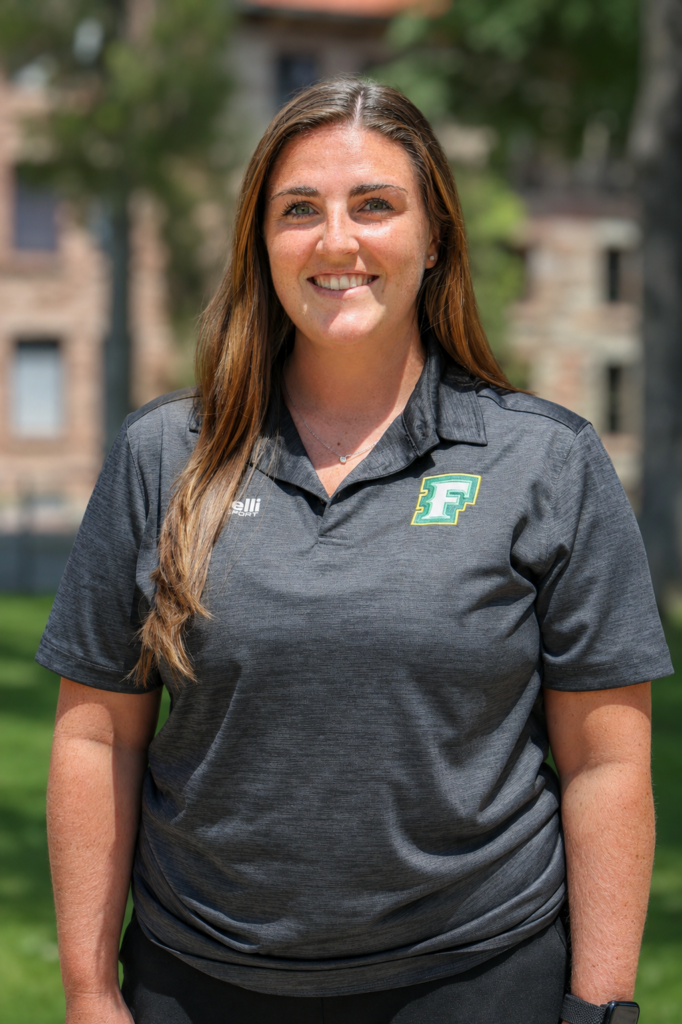
Assistant Director of Athletics Nicole Aumack believes that combining classroom learning with real-world experience and leadership development prepares you for today’s evolving sports industry. Source: Felician University
Assistant Director of Athletics Nicole Aumack
What led you to pursue your studies and teach at Felician University?
I came to Felician from Brick, New Jersey, in 2016 as a student-athlete on the women’s bowling team, and I have been here in different capacities ever since. After earning my bachelor’s degree, I completed my master’s degree at Felician while working as a Graduate Assistant. Since then, I have had the opportunity to grow into my current roles as Assistant Director of Athletics for Compliance and Student-Athlete Welfare, Senior Woman Administrator, and now a faculty member.
I chose Felician because of its welcoming, close-knit environment, but I stayed because of the relationships I built here. Throughout my time as a student and now as an administrator, I have been surrounded by people who genuinely care about one another and invest in each other’s success. I love being someone our students can lean on, whether they need support personally, academically, athletically, or professionally. Helping students navigate challenges and celebrate their successes is one of the most rewarding parts of what I do.
How do your experiences as a student, graduate assistant, and administrator influence your approach to teaching?
One of the biggest advantages I can offer students is perspective. I have been in their shoes as a student-athlete, worked behind the scenes as a graduate assistant, and now I am part of the athletics leadership team making decisions that impact our student-athletes every day. That allows me to bring real examples into the classroom instead of only teaching theory.
I want my classes to feel practical and interactive. I encourage students to ask questions, think critically, and work through situations they may actually encounter in the sports industry. My goal is for students to leave with not only knowledge, but also a better understanding of what a career in athletics truly looks like.
Women’s sports are experiencing unprecedented growth. Is this an exciting time for students entering the industry?
Absolutely; women’s sports are experiencing incredible growth, with increased media coverage, investment, attendance, and opportunities for women in leadership roles. At the same time, the sports industry is evolving through technology, analytics, media, and fan engagement. This creates an exciting opportunity for students entering the field because they have the chance to be part of that growth and help shape the future of sports.
How can analytics help leaders make better decisions in areas like athlete development, fan engagement, business strategy, or organisational growth?
Because technology is changing how athletics operates, data can help leaders evaluate performance, understand fan engagement, and make strategic decisions. But the real value comes from knowing how to interpret that information and use it to identify opportunities, solve problems, and continue improving their programmes and organisations.
Why is it important for future sports leaders — even those not pursuing technical careers — to understand data and analytics?
Future sports leaders do not need to become data analysts, but they do need to understand how to interpret information and use it to make informed decisions. Today, leaders at every level use data to support student-athletes, assist coaches with decision-making, evaluate programmes, and plan for the future. Understanding analytics allows leaders to ask better questions and make decisions based on meaningful information.
How does Felician’s new Women’s Sports Management and Leadership concentration prepare students differently from a traditional sports management programme?
Unlike a traditional sports management programme, Felician’s Women’s Sports Management and Leadership concentration combines the business side of sports with leadership development. Students will learn how sports organisations operate, the importance of diverse perspectives, effective decision-making, and creating environments where people can succeed.
The concentration emphasises leadership, equity, and organisational strategy. Why are these competencies becoming increasingly important across the sports industry?
Leadership, equity, and organisational strategy are becoming increasingly important in today’s sports industry because it requires leaders who can listen, adapt, and create environments where student-athletes feel supported both personally and professionally. Today’s leaders need to understand that student-athletes are not just athletes. They are students, individuals, and future professionals.
How do the Women’s Sports Management and Leadership concentration and Felician’s MBA together prepare graduates for the future of the sports industry?
Felician’s Women’s Sports Management and Leadership concentration and MBA prepare students to approach challenges from both an athletics and business perspective, which is essential for future leaders in the industry. The concentration provides students with sport-specific knowledge, while the MBA strengthens skills in areas such as finance, strategic planning, organisational leadership, and decision-making.
How can students apply what they learn in the classroom to real-world challenges facing sports organisations?
Students can apply classroom learning to real-world challenges by connecting concepts to situations they may experience in the sports industry. Because I work in athletics every day, I can bring current examples into the classroom based on challenges we face within an athletics department, at the conference level, and within the National Collegiate Athletic Association (NCAA).
Hands-on experiences are also extremely valuable. Through projects, events, and practical assignments, students apply what they learn, problem-solve, and better understand what it takes to build their athletic careers.
Follow Felician University on Facebook, X, LinkedIn, YouTube, and Instagram