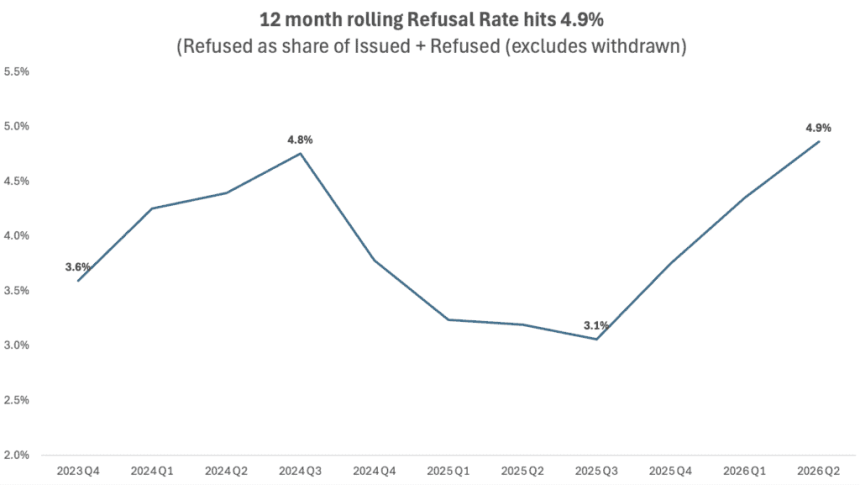
The rolling refusal rate, which measures the proportion of visa applications refused over the previous 12 months and is updated each month, reached 4.9% in the 12 months to June 2026, amid reports of widespread refusals in “high-risk” markets such as Pakistan, Bangladesh and Nigeria.
The current trajectory suggests that Q3 visa refusals are likely to sit at 5% or higher, The PIE News’s analysis of Home Office Q2 2026 visa data released yesterday reveals.

This takes into account that the visa rejection rate of Q3 2025 was 1.7%, with this cohort accounting for over 60% of visa issuances in the year to that quarter.
It comes as UK universities navigate tighter compliance requirements – meaning that they risk sanctions if their visa refusal rate goes beyond 5%. In the most serious cases, universities risk having their ability to recruit international students revoked.

The data suggests that the UK’s international education market is being affected not only by rising refusal rates (up 55% year on year in Q2 of this year) but also a steep drop in the number of visas issued – down 42% year on year.
To exacerbate the problem, the number of withdrawn visa applications has shot up by 405% in just a year, indicating that the market may be diversifying away from the UK.
Indeed, issuances are down across all major sending countries to the UK, with India down 51% year on year, China down 31% and Pakistan down a whopping 89%.

Analysis of rejection rates across these markets shows that while visa rejections have mostly increased across the board, refusals are particularly noticeable among so-called high-risk markets across South Asia and West Africa.
Today’s figures raise serious questions about the sustainability of current approaches to university funding
Vivienne Stern, Universities UK
It comes amid a government clampdown on immigration – including a complete brake on issuing visas to students from Afghanistan, Cameroon, Sudan and Myanmar over a rise in asylum claims.

Speaking about the figures, Universities UK chief executive Vivienne Stern highlighted stark concerns over university finances, with many relying on the income generated by international student fees.
“Given the extent to which successive governments have expected universities to cross-subsidise the UK’s higher education and research system from international student fees, today’s figures raise serious questions about the sustainability of current approaches to university funding,” she said.
And she raised further concerns over an incoming levy on international student fees for institutions in England, which are widely expected to result in a drop in international enrolments.
“A levy on international student recruitment would be demonstrably unstable and would further undermine our competitiveness,” said Stern. “It is not the best way to pay for this important policy, and we urge ministers to work with us to rethink the current approach.”