It would be great if we could live without feeling bad about the choices we made.
But sadly, that’s not how it works.
Of all the things to regret, what you choose to study for your degree might just be one of the most painful ones – for your wallet and perhaps also your career prospects.
Recently, I came across a report that has made quite the rounds before. It’s one that details the most regretted college majors.
The most regretted degree, with a mighty 15% lead, is journalism.
As someone with a Bachelor of Journalism from the University of Missouri (the OG J-school), I’m… hurt. I have the “most regretted degree.”
But as disappointed as I am, I get where people are coming from.
Growing up, many adults would ask me about my plans for university. I had set my mind on journalism at the age of 11.
Hearing this, they would often balk, remarking, to varying degrees of severity, that it was a “useless” degree.
“Anyone can be a journalist,” one relative said to me. “You should just study a more practical subject, like finance, which you can later write about anyway.”
It was frustrating, to be looked down upon for your chosen specialisation. But I understand her point.
Journalism has been dubbed the “most regretted degree” by surveys. Source: frank minjarez via Pexels
A misunderstood career and profession
The thing about journalism is that a lot of people might not be aware of the sheer rigour required to do it.
To be fair, I did as well. I thought it would just be a fun time filled with writing. As long as my language skills were good, I’d be fine, right?
Majoring in magazine writing specifically, I imagined myself to be some kind of Carrie Bradshaw romping around the big city, or Rebecca Bloomwood from “Confessions of a Shopaholic,” writing cute little pieces on financial literacy.
But off the screen, what does real journalism actually involve?
Well, in reality, the work that we do is a little less whimsical and a lot more intensive. You have to think about story ideas and angles all the time.
You have to really go out there and face rejection after rejection when it comes to interviews. You have to stand your ground and ask difficult questions that might ruffle feathers.
You have to fact-check and consider ethical implications constantly. You have to question your own beliefs.
You have to understand laws and work within their confines. You have to put your name on the byline, every time, and possibly read hate comments about your writing, your opinion, your approach.
All while being a good writer – which is a whole other ball game.
But the impact it makes, in my opinion, can be so worthwhile. The business you featured. The family you documented. The news you propagated. The information you spread.
These are all things that make real impacts in the world.
But, well, not everyone goes into this industry thinking that they would have to do all that. Like 11-year-old me, they might’ve just wanted to work an office job where they can write and read all day.
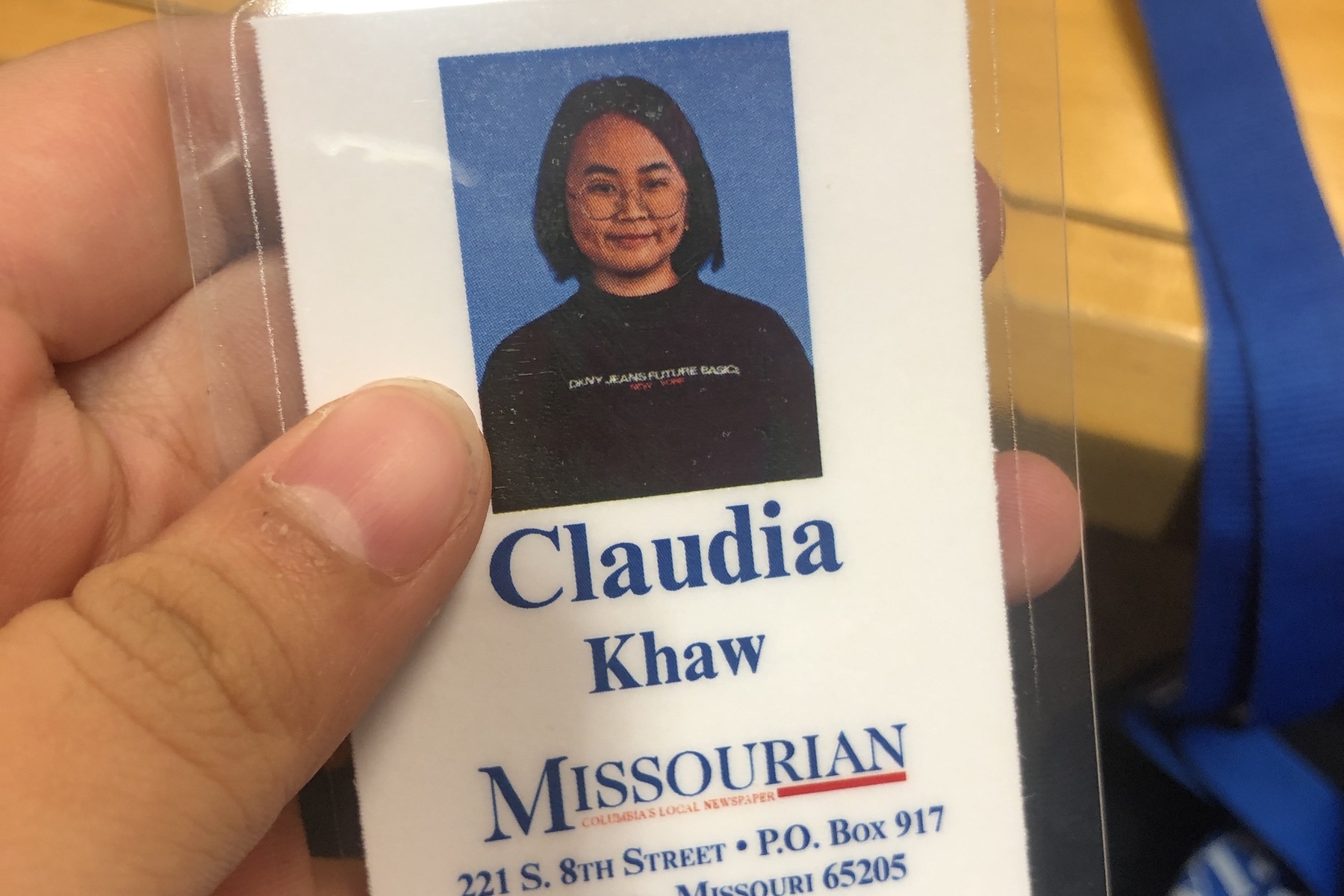
Thanks to my degree programme, I got to be a beat reporter for Columbia Missourian, a city newspaper. Source: Claudia Khaw
The pros and cons of the “most regretted degree”
Like I said, I have a Bachelor of Journalism degree from the University of Missouri Columbia, specialising in Magazine Writing. And I have zero regrets about my choice.
I learnt a lot during my time there. In terms of hard skills, I learnt how to use a range of software, from content management systems to Adobe ones, though those can arguably be self-taught. I deep dived into grammar and AP style
For soft skills, I got to work in two newsrooms that taught me lots about teamwork, brainstorming, and communication.
Being able to write for real publications with real journalists was a huge part of my education. Being taught by a bunch of industry professionals was imperative, too.
Facilities and opportunities were a huge part of my education too. We had awesome libraries to work out of with lots of inspiring works to reference. We could also borrow DSLR cameras and microphone equipment.
And one amazing thing is my network of peers. The Mizzou Mafia is strong, and so many of my classmates seem ceaselessly ambitious and inspiring. It’s incredibly motivating to be working and studying amongst such individuals.
As for the cons? Well. It comes down to the dollars and cents.
Let’s address the ROI of a journalism degree
If making millions of dollars is your number one objective, I am sorry to inform you that this career will not allow you to do that.
So, if you’re someone who regrets studying it because you expected a higher return on investment (ROI) and a bigger pay check, then… that’s too bad, I suppose.
Landing a job in a notable publication is really hard too. You might not be able to write for the specific beat you prefer, but that’s what J-school preps you for — reporting on a bunch of different things and digesting all sorts of information, rather than pigeonholing yourself into one subject of expertise.
But when you do get a job, journalism is one of those jobs where you can’t just coast – especially if you want to make it big. You do actually have to work really hard.
The benefit is that I tend to find it to be a rather merit-based job. Good writing, effortful research, and copious hustling seem to garner results.
Plus, all those duties that I mentioned above? They all tend to be transferable skills. Journalism teaches you a sort of diligence and hones your curiosity in a way that I find useful for many other jobs.
AI might change all this, though.
The most regretted degree in the digital age (and AI)
The truth is that the way people consume content has changed. And the way that people produce content has changed.
People don’t need journalists and media houses to amplify their voices anymore, when they can simply peddle out articles, photos, and videos on their own social media.
And at the same time, they don’t need journalists to “do their own research” when they can just read Google AI summaries, or better yet, watch a content creator talk about current events (complete with AI-generated B-roll and uncredited research done by a journalist).
But with that being the case, you could argue that (good) journalism’s role in society is now more important now than ever, considering how polarised and oversaturated the “media” landscape is.
Journalism degrees, therefore, are even more critical. How else would we learn how to report in a way that is more thorough, more insightful, and more impactful than machines?
And in any case, I argue that there is a lot of value to be extracted out of an education in journalism. It might be the most regretted degree, so you better make sure you know exactly what you’re getting into, and what you want out of it.
If you still want to get into journalism after knowing all this, I hope you don’t regret it.