Attending one of the cheapest universities in Asia is an experience of a lifetime.
Outside of the region being home to some of the world’s best institutions, there is plenty to experience in the east — much of which cannot be found elsewhere. This stems from the food, culture, to many, many more.
The best part? Every country in Asia is different in its own way — from climate to landscape.
Some countries may be lush with rainforests and natural beauty, for example. Others may be more renowned for their incredible skyscrapers and futuristic tech. Either way, this makes for a host of experiences begging for exploration.
More than that, Asia is home to many developing countries on their way to becoming the next global superpower.
China, for example, originates some of the world’s greatest tech — from Xiaomi devices to game-changing social media apps like TikTok. This makes Asia a great destination for students — especially if they’re paying attention to where the future market will take off.
Perhaps the greatest benefit of all is that attending a university in Asia is a much cheaper alternative than those in established higher education countries.
7 cheapest universities in Asia
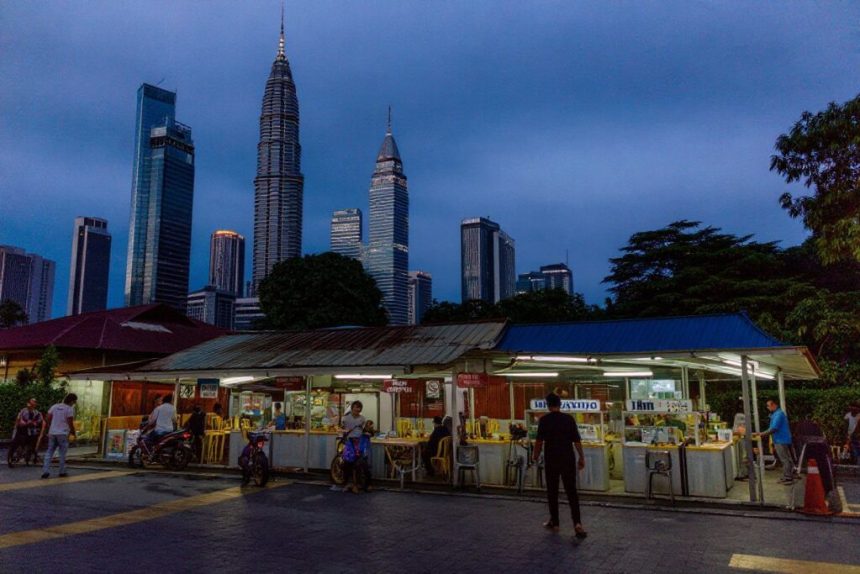
Aside from the cheapest university in Asia, you’ll find that Malaysia also boasts a rich local culture and mouthwatering food scene.
Universiti Putra Malaysia
It’s easy to see why expats and international students don’t have a hard time in Malaysia — English is widely spoken here, making getting around and doing business easy. A thriving food scene and natural beaches, rainforests, and landscapes beguile locals and foreigners alike.
If you’re looking for a cheap university in Asia, Universiti Putra Malaysia is a top choice. It’s built a reputation as one of the best research universities in the country, ranking within the top 200 of QS World University Rankings 2025 at #148.
The university’s veterinary science programme stands out especially, placing #40 on the QS World University Rankings by Subject.
Undergraduate fees for a three to four-year programme will cost approximately 65,000 to 80,000 Malaysian ringgit (US$14,513 to US$17,863).
Siam University
Thailand bustles with life, culture, glorious nature, and mouthwatering food.
Bangkok, its capital city, is modern and lavish, attracting opportunities for up-and-coming talents to explore their interests. It’s no wonder it made it onto TimeOut’s 50 best cities in the world in 2025 — placing high on the list as a runner-up and making it Asia’s best city too.
Siam University is a prime institution for international students. Founded in 1965, it began as Thailand’s first three-year private engineering school. Today, it has grown to accommodate over 15,000 students in eight schools — earning a reputation for being one of the top universities in Bangkok.
Fees at Siam University differ according to the programme you’re signing up for. A four-year bachelor’s in business administration costs around 360,600 Thai baht (US$10,592), while a bachelor’s in IT costs 400,000 Thai baht (approximately $11,750).


Shanghai University
Few in the world have not heard of Shanghai. The most populous urban area in China is home to over 24 million people. Known for its impressive skyscrapers, Shanghai rose in prominence as a trading hub for foreign nations. Today, it’s become China’s economic powerhouse — flush with cash, Ferraris, and opportunities.
Shanghai University is located in the heart of the city. According to the Shanghai Ranking, the university excels in its metallurgical engineering, instruments science and technology, and mechanical engineering programmes, ranking #16, #39, and #41, respectively, on the platform.
At Shanghai University, you can expect to pay around 36,000 Chinese Yuan (US$4,921) per year for a bachelor’s degree. As programmes here last three years, that will total to 10,8000 yuan (US$14,763) for a degree.
Udayana University
Bali, Indonesia, is a hotspot for tourists from all over the world. It’s home to one of the most attractive destinations for a beach holiday, with a legendary nightlife and laid-back lifestyle that makes it ideal for a memorable retreat.
In the same way, this makes it a great place to live and work.
For students looking to spend their next few years in an idyllic environment, consider Udayana University. It is one of the top public universities in Denpasar, Indonesia, placing among the 50 Promising Universities of Indonesia. It has a range of bachelor’s, master’s and doctorate degrees across several fields of study.
To attend Udayana University, you will have to pay an average tuition fee of US$5,000 per year.


Korea University
South Korea isn’t just about great music, amazing food, and really good technology, they boast some of the best universities in the world too. If you don’t believe that, believe the record high number of international students enrolled into universities across the country in 2024– 208,962, to be exact.
Ranking at #67 on the QS World University Rankings 2025 list, Korea University is one of the best places to pursue your studies. With 19 schools and colleges under its roof, there’s a place for everyone to forge their future here. Some of the university’s best-known programmes are those in marketing, modern languages, and social policy and administration.
Tuition here is affordable too.
Undergraduate programmes in humanities and social sciences are the cheapest, costing around 5,000,000 South Korean won (approximately US$3,600) per year, while natural sciences programmes cost 5,600,000 won (approximately US$4,000) per year. Engineering and art degrees cost the same — 6,500,000 won (US$4,700) annually.
Universiti Brunei Darussalam (UBD)
Brunei might be small and super peaceful, but don’t underestimate it; its universities maintain high enough standards to transfer students to the UK, Australia and Ireland.
Universiti Brunei Darussalam (ranked #367 worldwide) has come a long way since opening its doors in 1985 as the country’s premier national university.
Guided by its four core values — people, expertise, relevance, and leadership — UBD introduced the GenNext Programme in 2009 to transform how students learn.
The programme gives students greater flexibility to tailor their studies according to their individual learning styles.
UBD also offers diverse graduate studies with graduate research scholarships. The UBD Graduate Research Scholarship (UGRS) is one of them. It covers:
- Tuition fees, including registration and acceptance fees.
- Subsistence allowance of 2,200.00 Brunei Dollars (≈US$1,725) per month for 36 months.
- Free on-campus accommodation.
- A return economy-class air ticket for international students: one trip to Brunei when you begin, and one back home when you finish.
- 3,000 Brunei Dollars (≈US$2,353) or overseas research or conference travel.
- Visa fees.
Vietnam National University, Hanoi
Being one of the largest high education and research facilities in Vietnam, the Vietnam National University in Hanoi has a special place in the Vietnamese government.
Reorganised in 1993, the VNU reports directly to the Prime Minister of Vietnam, and the Prime Minister oversees some of its programmes and personnel too.
The university has grown a lot over the years, both in terms of programme variety and quality.
Every year, the university produces over 5,000 bachelors, 2,400 masters and 200 doctors graduating from 167 undergraduate, 185 master, and 114 doctoral programmes in natural sciences, technology, economics, social sciences and humanities, education and foreign studies, etc.
Another plus is the range of tuition fees. Regular programmes are quite affordable, typically costing between 9 and 12 million Vietnamese dong (≈US$341 to US$455) per year, while international or high-quality options range from 35 to 60 million Vietnamese dong (≈US$1,327 to US$2,276).
Disclaimer: This article was last updated on April 24, 2025.