Creating jaw-dropping movie effects takes both skill and imagination. FX (denoting “effects”) artists are the ones who make explosions, smoke, fire, and magical visuals look real on screen.
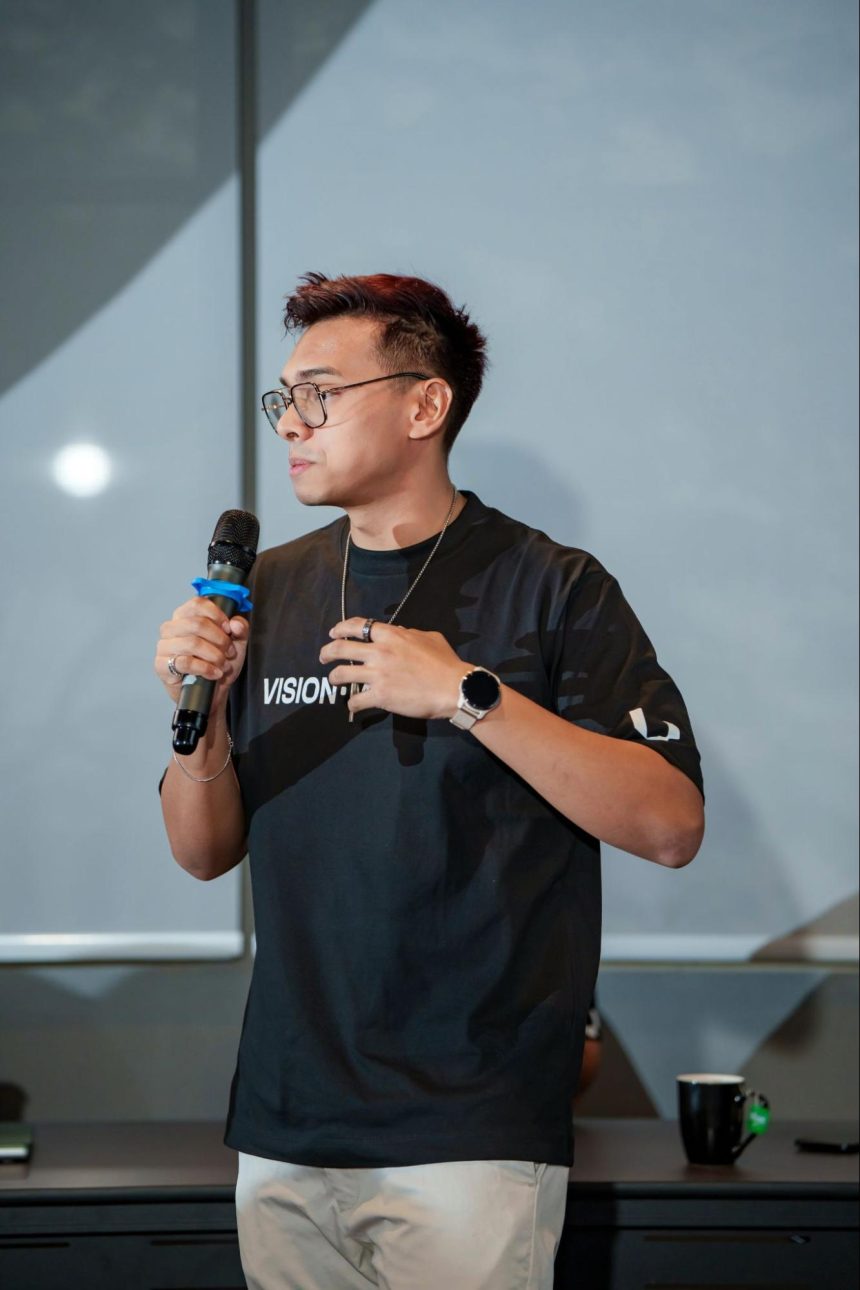
Kevin Pinga, a senior Houdini FX Artist with 10 years of experience working on Hollywood projects, is one of them.
Focusing on visual effects, he specialises in Houdini, a software used for simulations, dynamics, and similar processes.
He shares, “To give you an idea of what effects work is, it involves things that are dynamic on screen and very difficult to recreate when shot on set. For example, explosions, fire effects, smoke, water effects, tsunamis, and destruction. That’s what I specialise in.”
He has applied these skills to Marvel blockbusters such as Thunderbolts* and Spider-Man: Far From Home. In these films, he helped bring action and spectacle to life, turning complex effects into scenes that feel thrilling, dynamic, and believable for audiences.
“For example, in Spider-Man, there was this smoke monster we called Cyclone,” he says. “I did most of the Cyclone shots, but again, it’s a team effort.”
So, how did Kevin reach this level? It all began with a degree in visual arts.
As an FX artist, Kevin specialises in simulating fire, smoke, explosions, and destruction using Houdini, an industry-standard software for dynamic effects. Source: Kevin Pinga
Finding his path in visual effects
Creating a career in visual effects wasn’t something Kevin planned from the start. The FX artist was born in Malaysia and studied in the IT stream in high school, but had not chosen a specific career path.
Everything changed before his SPM, Malaysia’s national exam for secondary school, when he was asked to create school videos. In a short time, he learned software such as After Effects and Premiere Pro and realised that visual effects could be a career option.
But Kevin knew pursuing visual effects studies in Malaysia had its limits. The education options weren’t strong, so he knew he would need to study abroad. After SPM, he aimed for a full scholarship but only achieved straight A’s, not straight A’s pluses.
“There was no full scholarship available at that time, especially from companies willing to sponsor a degree in the arts,” the FX artist says. “So my parents decided to send me to The One Academy in Penang. Since I’m not from a well-off family, they told me they could pay for the first semester, but after that, I would need to take out a PTPTN loan, a government student loan for tuition.”
During that time, Kevin emailed many studios and organisations, sharing his portfolio and demo reel, along with his SPM results. One connection led him to a semi-government corporation which supports digital talent and technology development.
After an interview, that corporation offered him a full scholarship to study in the US. So, Kevin left The One Academy after one semester, and pursued a Bachelor of Fine Arts (BFA) in visual effects with a minor in technical direction at the Savannah College of Art and Design.


Kevin says visual effects aren’t a one-person job. Unlike ads, they require extensive teamwork. Source: Kevin Pinga
From music videos to Marvel blockbusters
A week after graduating, Kevin received his first job offer. It was not from the big studios he had hoped for. Instead, he accepted a position at a small company in Santa Monica and stayed there for only a month.
After leaving, the FX artist joined Ingenuity Studios, which he says shaped him the most as an artist. The studio was still finding its footing, leaving him room to carve out his own workflows. This environment allowed him to approach projects independently, refine his skills, and build experience that might have been harder to gain at a larger studio.
At Ingenuity, Kevin worked on simulating and rendering smoke, rigid body dynamics, and particle simulations for high-profile music videos. His contributions reached projects for artists such as Taylor Swift, Maroon 5, and Shawn Mendes. The experience at Ingenuity also opened doors to larger projects, including Marvel films.
Kevin’s Marvel work came through the studios he collaborated with. At Luma Pictures in Santa Monica, he worked on Spider-Man: Far from Home – each studio receives a set number of shots delegated to their artists, and among his were the voxelisation glitch effect for the Cyclone character and drone sequences. More recently, he worked on Thunderbolts with Framestore, remotely from Malaysia.
“For me, I’m not necessarily looking for who’s working on the next Marvel film,” he says. “Of course, it would be nice always to be able to work on a big Marvel film, but it’s not that simple. Sometimes the job comes, and you just take it, and you won’t even know what project you’re going to be on.”
In any case, the FX artist prefers a mix of work across films, TV shows, and music videos, enjoying the variety and opportunities each project offers.

When it comes to Houdini, Kevin urges one to take time – slow is smooth, smooth is fast. Source: Kevin Pinga
Staying relevant as an FX artist in the AI era
Kevin is currently a full-time FX Technical Director at DNEG – an Academy Award-winning VFX studio – based in Sydney.
In a fast-changing industry, he believes staying current is essential. “Right now, the latest and greatest thing in the industry is AI,” he says. “Everyone’s talking about it, and also about how AI is going to replace visual effects artists.
And the numbers back up those fears. A study commissioned by the Animation Guild and Concept Art Association projected that by 2026, roughly 118,500 entertainment industry jobs could be cut, with VFX and post-production ranked among the most vulnerable; some experts have estimated that AI automation could ultimately reduce the VFX headcount on a single major production by as much as 80%.
Some FX artists embrace it fully, while others are sceptical. Kevin sees AI as a helpful tool for concepting, quick sketches, or generating multiple versions. Even major tools like Houdini and Maya are integrating AI, and Kevin expects that in a few years, most studios will use it alongside traditional techniques rather than replacing human artists entirely.
So to him, the core of the work still relies on the artist’s creativity and skillset, which now includes AI.