International students shape the world in many ways — and that includes the new album ARIRANG by BTS , one of the biggest cultural icons today.
On March 20, 2026, “ARIRANG”, a 14-track project exploring the members’ identity, Korean roots, and the emotional journey of their careers, was released. It focuses on themes such as separation, personal growth, reunion, and rediscovery for each member.
But when it comes to the word “ARIRANG,” it’s more than just a title for their album — there’s a whole story behind it, the very kind we at Study International love: students.
And there’s another element to them that commands our deepest respect.
These students braved many, many odds to get into what was arguably one of the most important universities in the Western world at the time.
Source: Threads/@_angelobasco
The international students who influenced ‘ARIRANG’
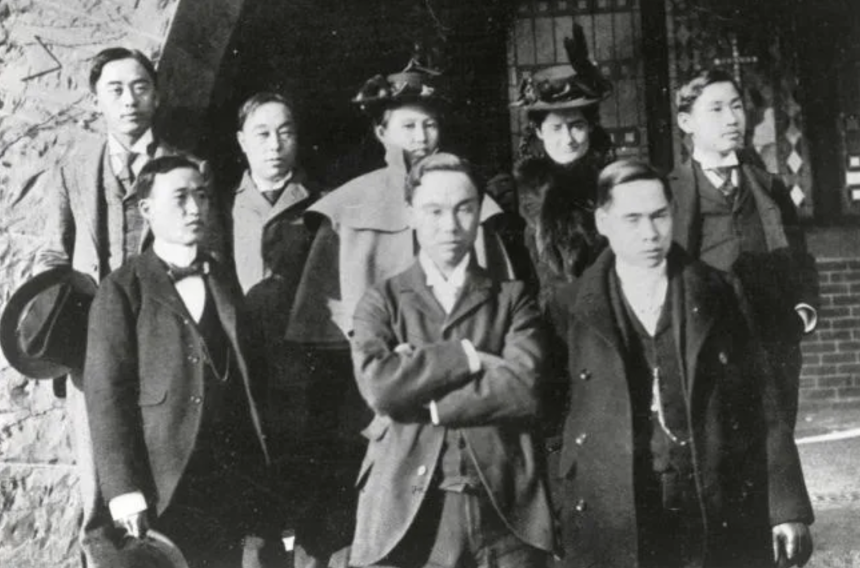
In the spring of 1896, seven Korean students found themselves stranded in Vancouver after running out of funds.
They were from noble families and were studying in Japan, but decided that what they really wanted to do was to study in the US.
With little funds remaining, they wrote to the Korean minister in Washington, Minister Suh Kwang Bum, for help.
Suh actually responded, and even paid for their journey with his own private funds.
How seven Koreans ended up in a historically Black university
Paying for the boys’ tickets to Washington was one thing. But Suh also bought them clothes, housed them for a month, and got Miss Annie Tolman Smith of the Bureau of Education to teach them English.
Then, Suh decided to enrol them at Howard University.
This university was built for people who weren’t allowed in anywhere else.
In 1867, Howard opened its doors to formerly enslaved African Americans.
At a time when most schools were segregated, it did the opposite.
Today, it’s home to approximately 11,000 students from every state in the US and more than 70 countries. It’s also ranked #88 in the National Universities category by US News & World Report.
Its mission hasn’t changed: fight inequality in race, power, and opportunity.
Howard has a list of world-changing professors.
- Alain LeRoy Locke (Writer, philosopher, critic, and educator who was the first African American to be selected as a Rhodes Scholar)
- Ruth Ella Moore (American bacteriologist and microbiologist, and first African American woman to be awarded a doctorate in a natural science)
- Ralph Johnson Bunche (Civil rights activist, scholar, educator, diplomat, and first African American to be awarded the Nobel Peace Prize)
That’s not all; the university has produced an impressive list of alumni:
- Kamala Harris (Vice President of the US)
- Chadwick Boseman (Actor)
- David Driskell (Artist and professor)
- Taraji P. Henson (Actress)
- Toni Morrison (Nobel and Pulitzer Prize-Winning Novelist)
- Elijah Cummings (House Representative, Orator, and Civil Rights Leader)
- Thurgood Marshall (Former US Supreme Court Justice)
Not bad for a school that started with the system tried to shut out.
The recordings that meant the world to Korea
Two months after the Washington Post article, an American ethnologist, Alice C. Fletcher, invited three of the students to her home to produce the first known audio recording of Korean voices and music in the US.
Six recordings were produced. One of them was labelled “Love Song: Ar-ra-rang” — and it was the first known recording of the folk song “Arirang”.
That’s not all; it held great significance as Korea was caught between imperial powers, China and Japan. Less than a year before the recording, the Korean Queen Min was assassinated by Japanese agents.
ARIRANG AT THE END OF BODY TO BODY😭 pic.twitter.com/MKrtQiq9Lq
— hopetan⁷ ⊙⊝⊜ 🪭 (@bt212008) March 21, 2026
But what does ‘Arirang’ really mean?
Well, there’s no single-agreed-upon meaning to “Arirang”, and it’s not part of the Korean language today.
“아리” or “Ari” derives from an old Korean word meaning “beautiful” or “aching,” according to some scholars. It’s paired with “rang” meaning “beloved”, though this remains a folk etymology.
However, legend has it that the song tells a story of a man and a woman separated at the Arirang Ridge, expressing themes of longing, separation, pain, and hope — and it was during the Japanese colonial rule of Korea from 1910 to 1945, where Koreans began to resonate deeply with the song.
It was the way Koreans showed perseverance and deep love for their nation. In the 1926 Korean film “Arirang,” directed by Na Woongyu, the film depicted the struggles of a freedom fighter against Japanese imperialism, further solidifying the song’s connection to independence.
The song has approximately 3,600 variations across 60 different regional versions.