Diplomacy. Global institutions. Perhaps the occasional trip to the United Nations (UN) in New York. That could be your life if you work in international relations.
But studying war, peacekeeping, and global security can also mean confronting some of the world’s most difficult truths.
For Tiril Høye Rahn, working in the field has been a lifelong dream since she was 14, and she has dedicated years of her life to making it come true. Today, she has secured a job at the Norwegian Ministry of Foreign Affairs — how she got it is a whole story in itself.
She has even completed a PhD in International Relations at the University of Oxford. It wasn’t a part of the plan, but there’s a reason why she decided to pursue it.
“I’ve actually never had one dream position,” she explains. “Instead, I’ve had topics that I really wanted to work on. And that changes everything because suddenly, the world becomes your oyster.”
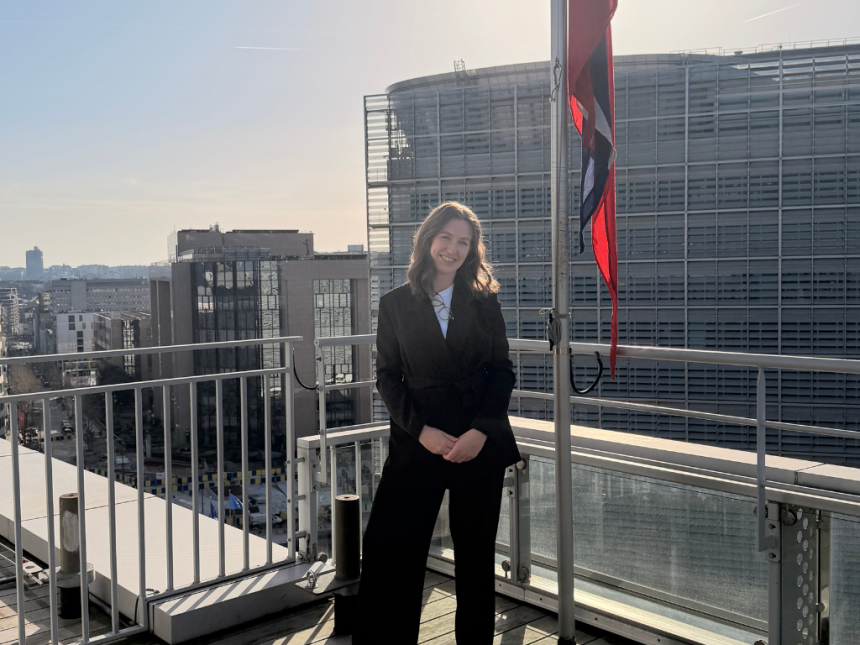
Tiril Høye Rahn attended the United World College (UWC) Robert Bosch College in Germany to pursue an International Baccalaureate. Source: Tiril Høye Rahn
Understanding access in UN peacekeeping missions through a PhD in International Relations
Throughout her years in politics, Tiril had a question she wanted answered: What happens after peacekeepers are allowed into a country?
“A lot of research looks at when states accept peacekeeping missions,” she explains. “But very little look at where those missions are actually allowed to go once they’re inside.”
So, she made that her PhD thesis.
To answer this, Tiril analysed 25 years of United Nations peacekeeping missions across Africa, using geospatial data to track where peacekeepers were able — or unable — to operate.
Her findings revealed clear patterns.
“When rebel groups commit violence, peacekeepers tend to get access to those areas,” she explains. “But when governments commit violence against their own civilians, access is often restricted.”
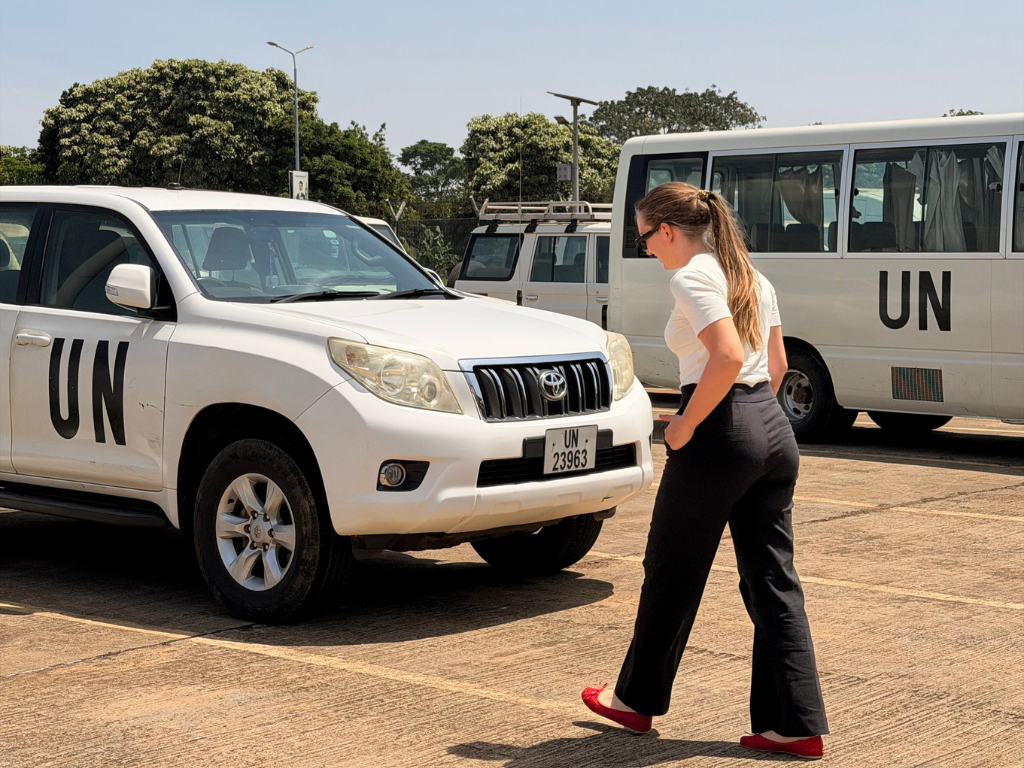
Tiril has worked for the Nobel Peace Centre, Hedayah, the Foreign and Commonwealth Office in New York City, NATO and PRIO. Source: Tiril Høye Rahn
In other words, host governments sometimes limit where international missions can travel and effectively control what the outside world can see.
“I called it, ‘The power of access,’” she says. “Access itself becomes a tool in war.”
The research adds an important layer to policymakers’ understanding of peacekeeping. While diplomats and practitioners often sense these patterns on the ground, academic research can systematically confirm them.
“Policymakers often know these things from experience,” Tiril explains. “However, research allows you to show that it’s not just one case — it’s a trend.”
She later presented her findings at the UN headquarters in New York to officials working directly on peacekeeping operations.
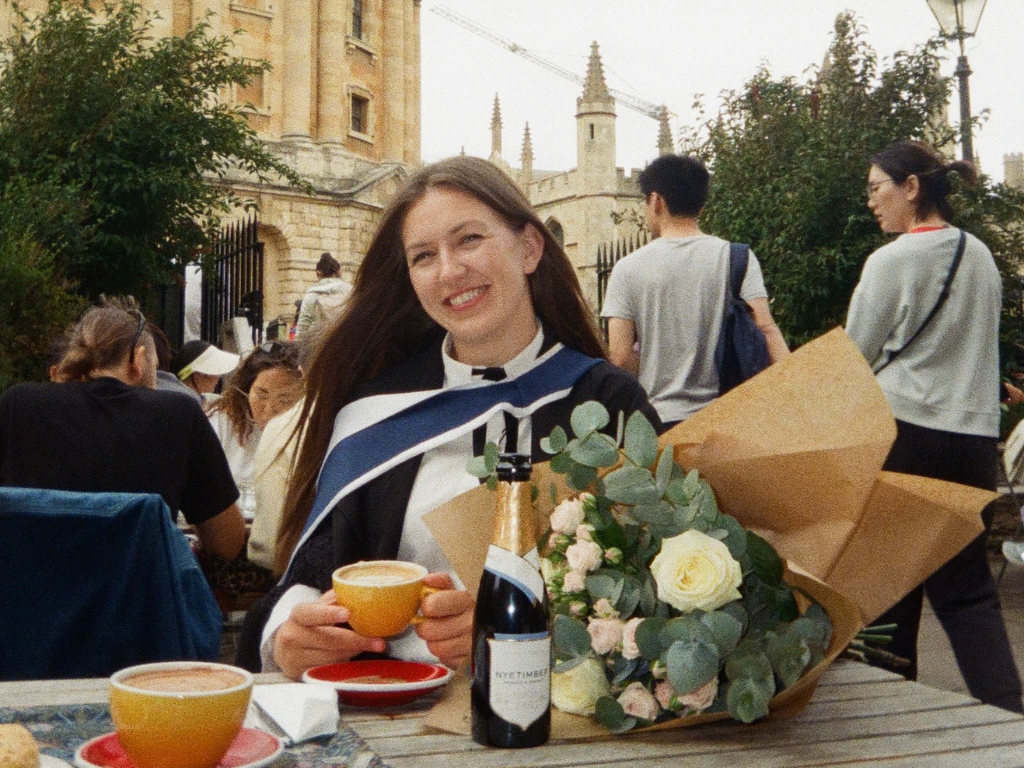
Tiril is a Master’s and PhD in International Relations graduate from the University of Oxford. Source: Tiril Høye Rahn
Here’s what it takes to work in her field
The thing is, working in international relations, politics, diplomacy, or peace and security can take a toll on oneself. It can get emotional, especially when you focus on triggering or heavy topics — war, violence, and humanitarian crises.
That’s not all; pursuing a career in the field takes years of dedication and sacrifice.
Protecting yourself is key
Tiril is aware that, with the internet and social media, consuming heavy topics 24/7 is almost the norm, but she believes it’s not healthy.
So, she treats it like a job with defined hours.
“I read the news during work hours, and once I end work, I try to disconnect,” she explains.
This approach also applies to conversations.
“These are sensitive issues,” she says. “Sometimes when people ask about them casually at a party, I’ll say, ‘That’s a really important question — let’s grab coffee tomorrow and talk about it properly.’”
For Tiril, it’s about respect — both for the topic and for her personal wellbeing.
Ask. Never be afraid to ask.
For students considering a career in her field, Tiril emphasises that the most important step is simply reaching out, just like she did when she was 14.
“One thing I always encourage people to do is talk to people who already have the jobs you’re interested in,” she says. “Ask for coffee. Ask for 15 minutes of their time. Just like how I called the Prime Minister’s office, the Ministry of Foreign Affairs, and the Nobel Peace Prize organisation.”
There’s no doubt it’s a powerful strategy.
“If you do it enough times, you forget the no’s and only remember the yeses,” Tiril explains. “And the worst thing that can happen is that someone doesn’t reply.
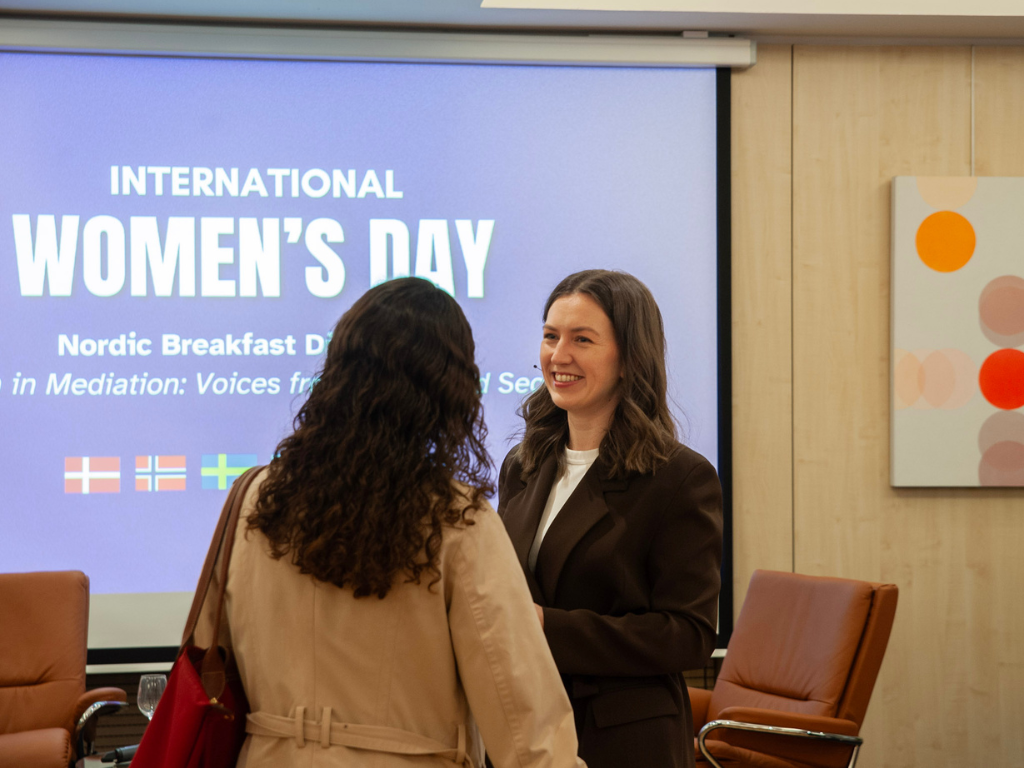
Tiril is currently an advisor and a diplomatic training officer for the section for security policy and North America at the Norwegian Ministry of Foreign Affairs. Source: Tiril Høye Rahn
Learn several languages, especially French
Beyond curiosity and initiative, Tiril highlights a few practical skills that can make a real difference — learning one or several languages.
Why? Well, languages remain hugely valuable, particularly in international organisations.
“French is much more important than I realised,” she shares. “I share that as someone who wishes she spoke better French.”
International exposure is key
That’s not all; international exposure helps, but it doesn’t have to mean expensive programmes.
“There are so many ways to experience other cultures,” Tiril explains. “Working abroad, staying with host families, volunteering — you don’t have to empty your pockets to do it.”
Build a society from scratch at your university
When Tiril arrived in Oxford, she noticed something was missing — a student society that fit her interests.
“I was very interested in peace, security, and diplomacy, but there were no associations for it,” she shares. “I went to my principal and asked how I could get involved, and he told me to create a new one.”
Tiril had only been at Oxford for a month, and she felt too new to the space to build a student association. However, over time, she heard that other students were also interested in the same field as she was.
So, she founded “Oxford Diplomatic Society”, one of Oxford’s largest international affairs networks. It helps foster dialogue among diplomats, academics, and policymakers, hosting 50+ high-level discussions, reaching an audience of 15,000, and growing to over 1,000 members.