Nokia’s fall and the collapse of traditional retail across Europe tell the same story: if you can’t adapt, you don’t survive. Today’s business environment is shaped by AI and global uncertainty. To stay competitive, you need to think analytically, move quickly, lead well, and work across cultures — skills highlighted by the World Economic Forum 2025 as top priorities for employers.
A master’s in business builds that foundation, but the best European programmes go a step further by adding something most can’t: real international experience. Studying in cities like Berlin, Lisbon, Lille, or St. Gallen means learning to navigate different regulations, markets, and ways of doing business. Group projects with multinational cohorts put you in real cross-border decision-making situations, while exchange tracks push you beyond familiar frameworks and ways of thinking.
That kind of exposure is what shapes professionals who can operate and make an impact anywhere in the world. The business schools below offer exactly that through their postgraduate programmes:
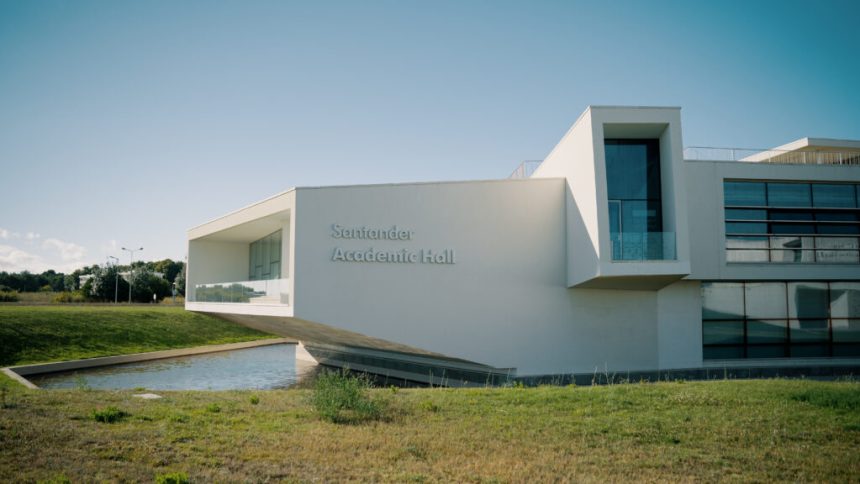
Nova School of Business & Economics master’s programmes combine applied expertise with advanced teaching methods and strong technical foundations. Source: Nova School of Business and Economics
Nova School of Business & Economics
Nestled in sunny and friendly Lisbon, Portugal, Nova School of Business and Economics (Nova SBE) is one of Europe’s most internationally recognised business schools, committed to developing talent that makes a genuine impact on the world.
That recognition is well-earned. Eduniversal ranks both the Master’s in Management and the Master’s in Finance #2 in Europe and Nova SBE holds the Triple Crown accreditation (AACSB, AMBA, EQUIS). As Portugal’s only member of the CEMS Alliance – a global network of 32 top business schools, 70 multinational companies, and seven NGOs – Nova SBE offers business education that cut across countries and continents.
That global ambition runs through every aspect of the MSc experience. All programmes – spanning Business Analytics, Economics, Finance, Impact Entrepreneurship and Innovation, International Development and Public Policy, Management, and more – are fully taught in English. With over 70% of master’s students drawn from over 50 countries, the classroom is as international as the careers it prepares students for. Exchange agreements with partner universities across 50+ countries extend that reach further, offering semester-abroad options in Europe, Asia, and the Americas.
These are connections that translate into career outcomes. Top recruiters include Accenture, Deloitte, McKinsey, L’Oréal, Microsoft, and Goldman Sachs, all of whom engage directly through career fairs and networking events embedded in the curriculum. This hands-on, practical approach pays off: 100% of graduates secure employment within six months of completing their degree.
Life between those milestones unfolds on a campus built for it. Nova SBE’s Carcavelos campus includes a co-working space, food court, healthcare hub, gym, student residence, and a dedicated Alumni Club – all connected to Carcavelos beach via a pedestrian crossing under the coastal road. That lifestyle comes at a price few European capitals can match: students typically spend 775 euros (US$912) on housing, 90 euros (US$105) on food, and 68 euros (US$80) on transport each month.
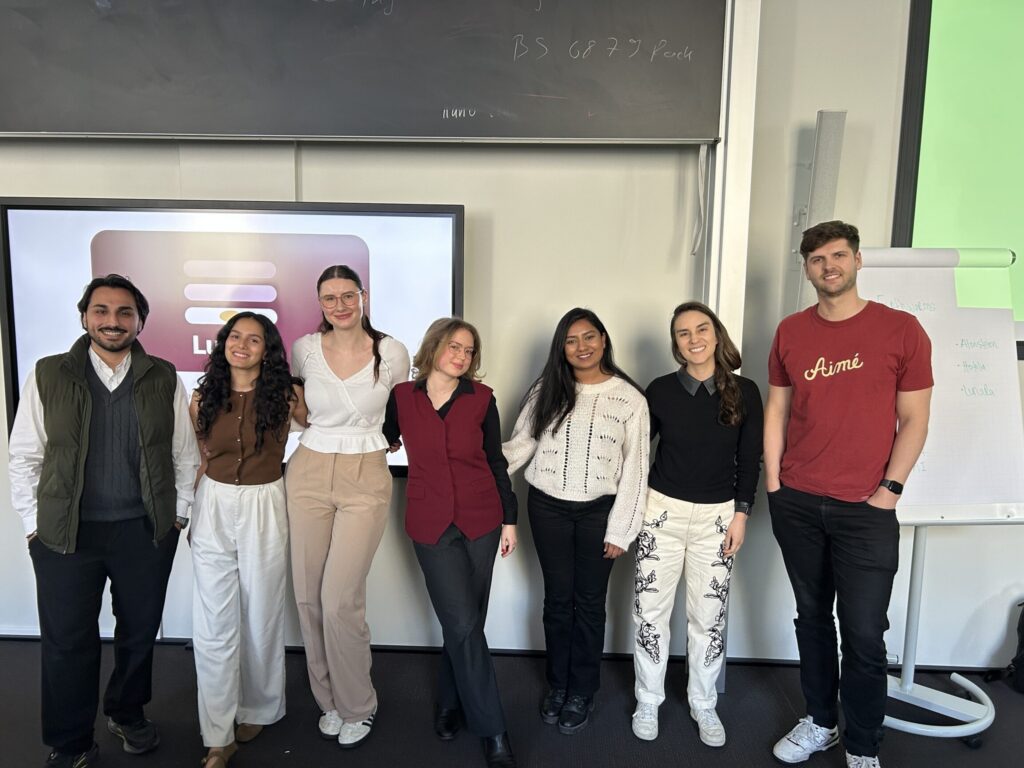
Located in Europe’s startup capital, ESMT Berlin is Germany’s leading international business school, offering degree programmes designed for the future of business. Source: ESMT Berlin/Facebook
ESMT Berlin
If you’re looking for a business school that fuses academic rigour with real-world impact, ESMT Berlin is worth considering. Founded by 25 global companies, ESMT is Germany’s #1 and Europe’s #12 business school (Financial Times 2025 rankings). Accredited by AACSB, AMBA, and EQUIS – the triple crown – its faculty publishes cutting-edge research while bringing genuine industry experience into the classroom.
The school offers three 24-month MSc programmes: Global Management, Innovation and Entrepreneurship, and Analytics & Artificial Intelligence. Each embeds a three-to-six-month internship in the curriculum, giving you hands-on exposure to the European economy before you graduate. If you’re on the Innovation and Entrepreneurship track, you can also opt for the Summer Entrepreneurship Programme instead.
The student community reflects that global ambition – 1,048 students from 95 countries, alongside an equally diverse group of faculty and staff. Networking is part of the whole experience: regular visits by companies to campus, plus one-on-one career coaching and skills workshops.
Then there’s Berlin itself. Ranked #7 Best Student City in the world by QS in 2026, it’s Europe’s largest startup ecosystem and a central hub for multinational firms. Every year, about half of ESMT students relocate to Berlin from abroad, whether they plan to return home or stay in Europe. Living in Berlin also means being in one of the world’s most culturally rich cities, consistently ranked among the most livable for its history and arts scene.
Being in Berlin pays off after graduation, too. Up to 90% of ESMT full-time graduates stay in Germany, and they automatically qualify for an 18-month extension of their residence permit to continue their job search.
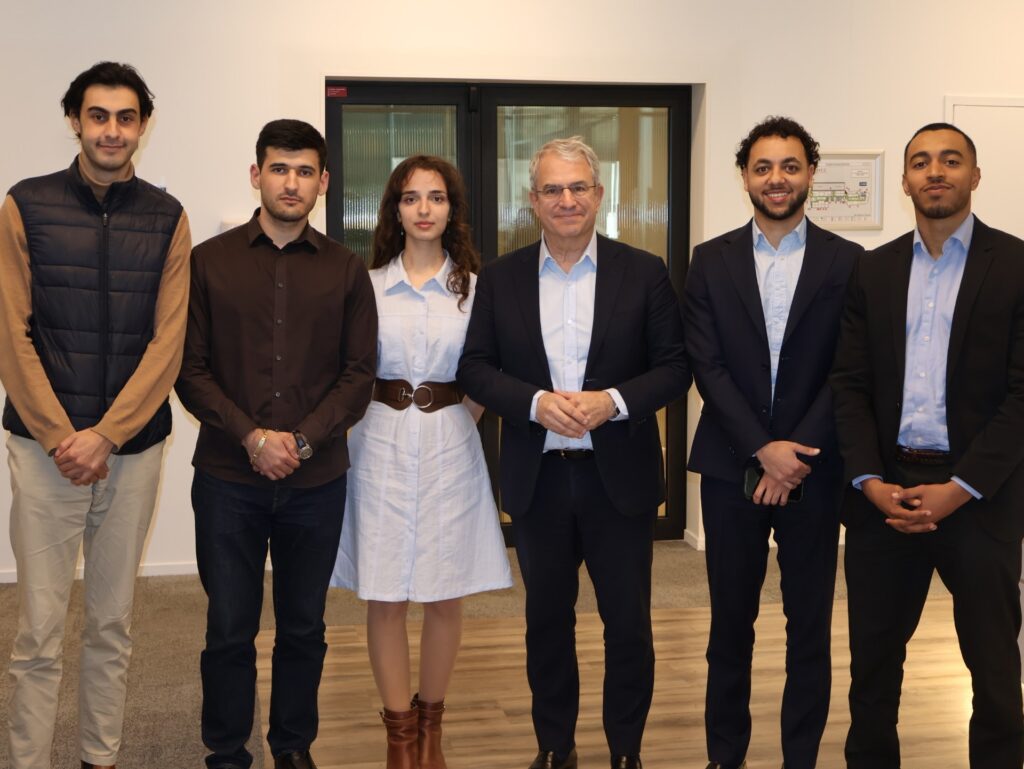
For over 100 years, EDHEC Business School has trained responsible leaders focused on driving positive change and transforming business practices worldwide. Source: EDHEC/Facebook
EDHEC
Founded in Lille in 1906, EDHEC Business School was built on humanist values and a deep tie with the business world. That founding spirit still shapes the school today – it ranks among the top 10 business schools in Europe (Financial Times, 2025) and sits within the top four in France, with a student body spanning 110 nationalities, 35% of whom are international.
That global mix matches the breadth of the school’s offerings. EDHEC’s seven MSc trackscover finance, business and management, marketing, sustainability, tech and data, innovation and entrepreneurship, and law. Students on the Master’s in Management (MiM) programme can also earn an MSc in their second year by selecting a specialisation. To go further, EDHEC has established over 300 academic partnerships worldwide, opening the door to exchanges, summer programmes, and double degrees.
Those connections extend well into career preparation. The EDHEC Career Centre – ranked #1 in France by the Financial Times MiM ranking – runs over 120 recruiting events each year, linking students with more than 350 companies through recruitment fairs and company treks to Paris, London, and Amsterdam. Every student gets a dedicated career advisor and access to 4,000 volunteer alumni across 22 professional clubs – support that begins in year one and continues long after graduation.
Life outside the school is just as practical. EDHEC’s main campuses are in Lille and Nice, and Lille is notably affordable by European standards – students typically budget 700 euros (US$824) to 1,000 euros(US$1,178) per month for rent, food, and transport.

The School of Management at the University of St.Gallen is its largest school, offering integrated, holistic education in business administration. Source: University of St.Gallen/Facebook
University of St.Gallen
Founded in 1898, the University of St.Gallen (HSG) has spent over a century building one of Europe’s most respected business schools. Its School of Management (SoM) is HSG’s largest school, built around an integrated approach that connects management, economics, and real-world application.
It’s an approach that works. In 2025, HSG’s Master’s in Strategy and International Management topped the Financial Times MiM Ranking for the 14th time, placing #1 among 137 global programmes. The school also ranked #8 in the FT European Business Schools Ranking – the highest in Switzerland and the DACH region.
The SoM offers programmes across every stage of a business career. The lineup includes the flagship Master in Strategy and International Management, Master in Banking and Finance, and Master in Business Innovation, among others. For working professionals, the Full-Time MBA, Executive MBA, and a joint EMBA with ETH Zurich offer flexible routes into senior leadership. Beyond campus, HSG has partnerships with 215 universities worldwide, covering student and lecturer exchanges and other academic collaborations.
With that global network comes serious career support. HSG Talents brought together 91 companies and 910 students across 26 events in 2026, while the HSG Career Days drew nearly 6,000 student applications. Individual coaching and CV support run throughout a student’s time at the school — and the results show: 98% of SIM graduates find employment within three months.
*Some of the institutions featured in this article are commercial partners of Study International