If you’re an international student weighing a graduate programme thousands of miles from home, you want to know the research you’re committing to will matter in the communities you care about.
The Department of Health and Kinesiology at the University of Illinois Urbana-Champaign (Illinois) offers that kind of environment. Its graduate programmes span health behaviour theory, epidemiology, rehabilitation, human movement, and health policy, with faculty running active research across specialised labs within the College of Applied Health Sciences.
We caught up with Babatope Ayokunle Ogunjesa – who moved from Lagos, Nigeria, to pursue his PhD in Community Health at the department – to give you an insight into what graduate study here is really like as an international student. He brought a background in statistics and biostatistics, spent his PhD years researching older adults and their unpaid caregivers, and graduated in 2025. He navigated the programme by identifying the right faculty before he even arrived and letting that shape everything after.
Below, he answers the questions you’re most likely to have.
Do I need to know my research topic before starting a PhD?
A clearly defined topic helps, but the programme does not require one at admission. The personal statement asks which faculty member you want to work with and why you are a good fit for their research — so knowing your general direction before you apply is more important than having a fully formed topic.
As Ogunjesa’s research interest is in older adults and their unpaid caregivers, he was attracted to the Ageing and Diversity Lab under Professor Andiara Schwingel. “I chose the Community Health track to gain a deeper understanding of the social and behavioural aspects of health,” he says. “What really stood out was how well-rounded the curriculum was – it combined health behaviour theory and epidemiology with health policy, so I could analyse public health issues at both the community and systems level.”
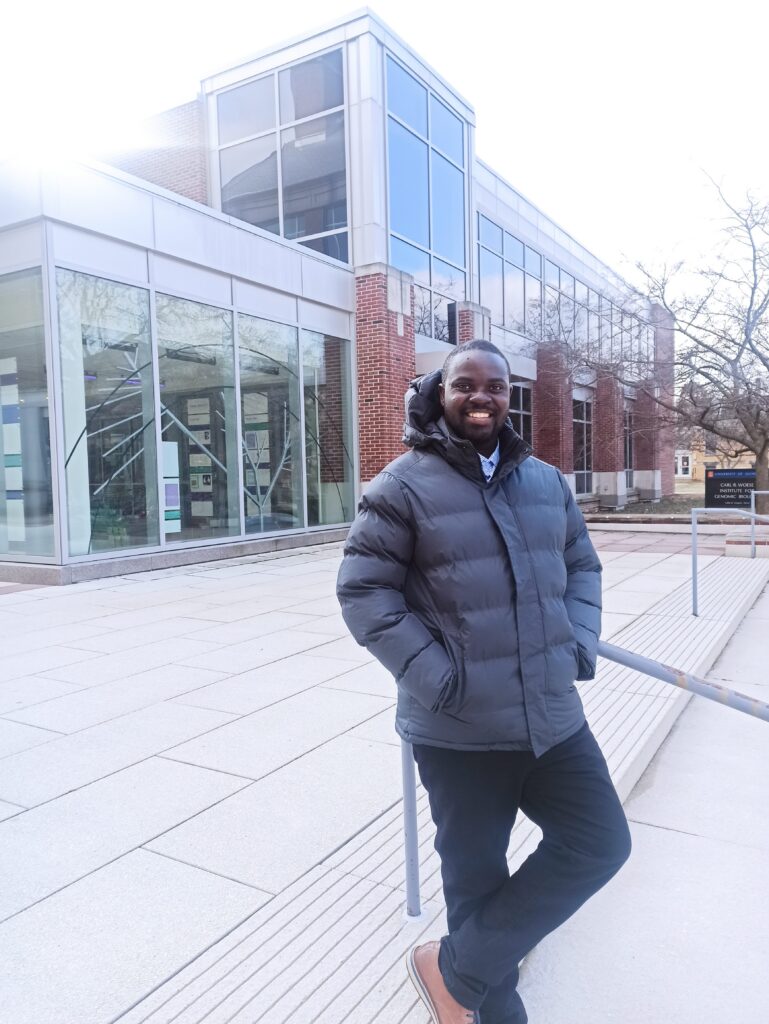
Ogunjesa is passionate about advancing public health and creating meaningful community impact, which led him to the University of Illinois at Urbana-Champaign programme. Source: University of Illinois at Urbana-Champaign
How welcoming is the Department of Health and Kinesiology community?
The Graduate College assigns every PhD student with a programme contact, a Director of Graduate Studies, and a faculty adviser — a structure designed to give students contact points for support from day one. Ogunjesa experienced this early, when he brought his dissertation ideas to the Ageing and Diversity Lab.
“They were incredibly supportive and engaged – they took the time to give thoughtful feedback and help me think through my direction more clearly,” he says. “That moment reflected the kind of environment HK creates, where people are genuinely invested in your growth and willing to support you.”
Does the diversity of the student body impact your learning?
Yes, in a programme centred on community health, diversity has a direct effect on the work. The Department of Health and Kinesiology draws students from varied racial, cultural, and academic backgrounds, and those differences are evident in how problems get discussed.
“In group projects and class discussions, people brought very different perspectives, especially regarding how health challenges are experienced across communities,” says Ogunjesa. “That pushed me to think beyond my own assumptions and approach problems more holistically.”
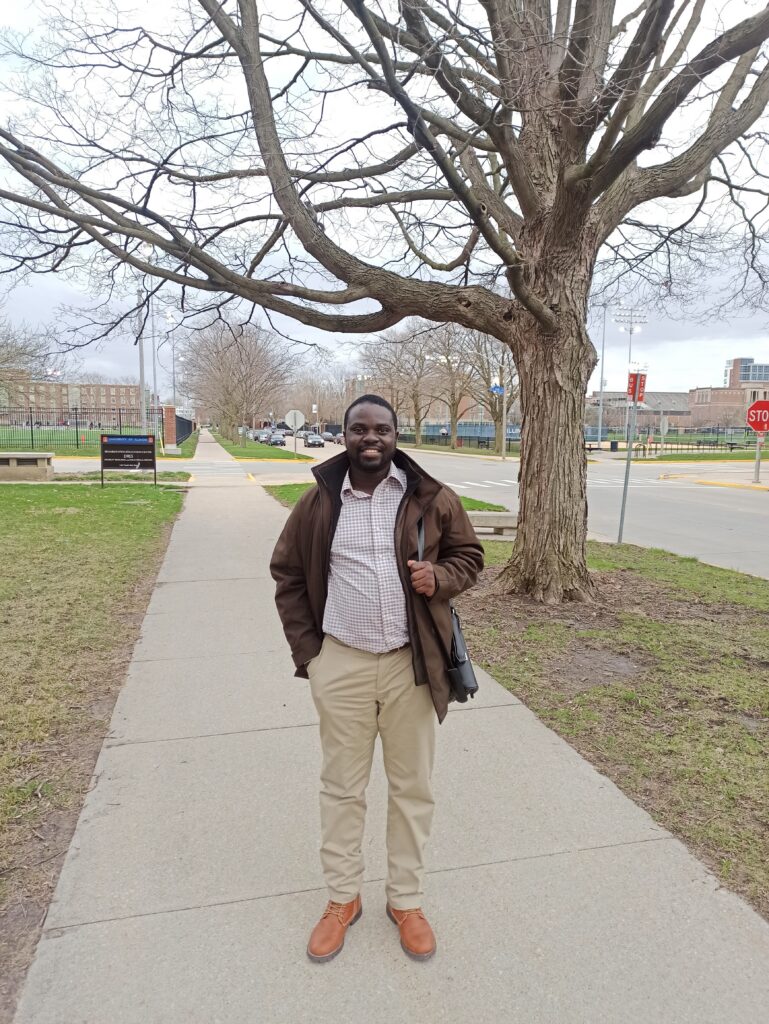
Ogunjesa was especially interested in learning to assess population needs and engage in community-based research. Source: University of Illinois at Urbana-Champaign
What is the curriculum like for a PhD in Community Health?
The PhD in Community Health explores health behaviour theory, epidemiology, and health policy to give students a view of public health from both the community and systems level.
When asked, which courses stood out to Ogunjesa, he lists “Health Behaviour Theory” with Professor Sandraluz Lara-Cinisomo, which deepened his understanding of the barriers shaping how communities access health resources. Another was “Health Policy” with Dr. Minakshi Raj which showed how political decision-making drives health outcomes at scale, with guest sessions from policy and health journalism professionals adding practical depth.
Are professors and advisors approachable outside of class?
Yes. Faculty members have an open-door policy and are flexible about scheduling. Ogunjesa found this markedly different from his undergraduate experience in Nigeria.
“For example, during my time at Illinois, I was able to reschedule meetings when needed, and the faculty were very accommodating,” he says. “That kind of accessibility made a big difference in terms of getting timely support and building strong mentoring relationships.”
Do international students really get the support they need after arriving?
Beyond orientation, the International Student and Scholar Services (ISSS) office works directly with departments on visa coordination for incoming students. The programme also has a documented record of flexibility for international students facing travel restrictions — during the pandemic, Illinois permitted graduate students like Ogunjesa to begin remotely before relocating to campus.
“I’d also say the mentorship was really valuable as the programme provided guidance not just academically but also on navigating the US job market,” he says. “That combination of flexibility and support really helped me transition smoothly and stay on track.”
What does life after graduation look like?
The department runs a monthly graduate symposium where guest speakers present their research and career paths — a structured pipeline from doctoral training into the field.
Ogunjesa secured a postdoctoral fellowship at the University of Chicago College of Medicine, Peoria, before defending his dissertation. “Overall, my training at HK prepared me with technical knowledge, critical thinking, and how to effectively communicate community health challenges during interviews,” he says.
Learn more about University of Illinois Urbana-Champaign’s Department of Health and Kinesiology.
Follow the University of Illinois Urbana-Champaign, College of Applied Health Sciences on Facebook, X, LinkedIn, and Instagram.