Milan is not a city that needs to sell itself. This is a metropolis where research laboratories and biotech startups occupy the same postcode as world-class opera houses. It is little surprise that within this environment one institution has steadily made its mark on the global stage: the University of Milan (La Statale).
That ambition is reflected in its English-taught offerings. La Statale already delivers four undergraduate degrees in English: Ancient Civilisations for the Contemporary World, Artificial Intelligence, Economics: Behaviour, Data and Policy, and International Politics, Law and Economics (IPLE). The portfolio is set to grow in the coming years.
Of these, Ancient Civilisations for the Contemporary World is worth singling out. It is a programme exploring the deep roots of human culture, taught in a city continuously inhabited since before the Roman Empire. There are few universities in the world that sit as naturally at the intersection of classical scholarship and modern European intellectual life, and La Statale is one of them. It draws international students precisely because it cannot be taught anywhere else.
That same approach – that where you learn shapes what you learn – runs through La Statale’s International Medical School. The six-year, English-taught programme carries one requirement: students must reach a functional level of Italian by the end of their second year to undertake clinical placements. Language instruction is embedded from day one, meaning students will gain fluency in Europe’s sixth-most-spoken language as part of their medical training. It is a design choice that produces clinicians ready to operate in the Italian healthcare system.
The University of Milan’s mission is to help students reach their full potential for themselves and for society at large. Source: University of Milan
Support that goes beyond the lecture hall
La Statale’s formal partnership with YesMilano – the agency dedicated to attracting and retaining international talent in Milan – means you will arrive with a network already in place. Housing support, career pathways, cultural orientation: YesMilano’s services are designed for students building a life in a new country, and La Statale works closely with them.
Once you are here, you will find that support inside the university, too. The university’s dedicated student success centre, COSP, will support you across the full arc of university life – academic coaching, mental health services, career mentoring, and job placement – so that whatever challenges arise, you are never navigating them alone. A newly launched Buddy Programme further helps new and international students find their footing.

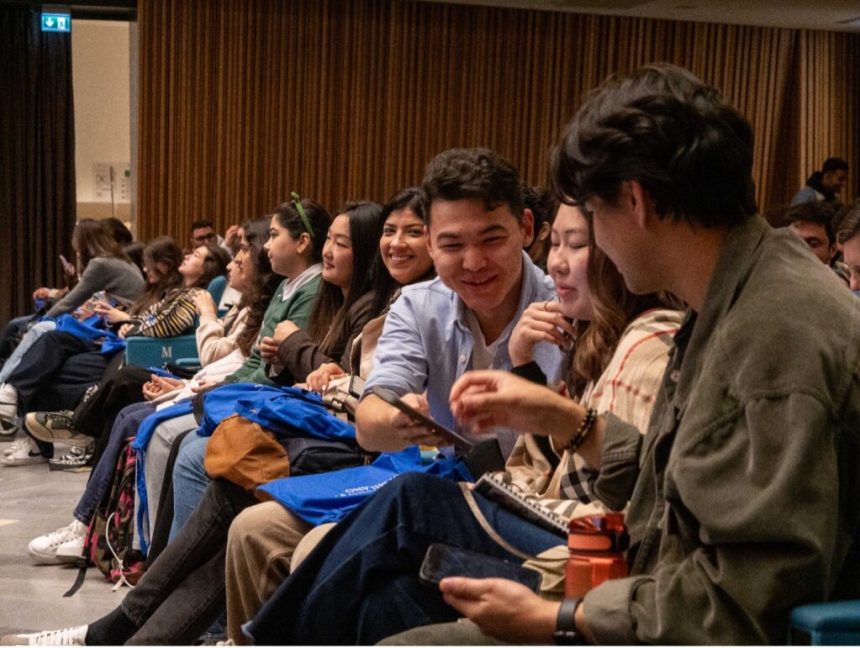
The University of Milan has a large international student population of over 4,000. Source: University of Milan
A university that earns its place in society
When you study at La Statale, you will join a university that takes its role in the world seriously. The university hosts scientific events, concerts, film screenings, and theatre productions open to the city. Students are often participants and contributors. Preferential rates are available, thanks to the university’s many partnerships with cultural organisations. Within campus, student groups get access to funding and resources as well, with the process designed to be transparent and open to all.
But nowhere is that commitment to inclusion more tangible than in its prison education initiative. There are 175 students supported by over 170 active tutors across 33-degree programmes spanning all 10 schools and faculties. It is likely the largest such programme in Italy and possibly in the world.
In 2024, students completed more than 250 exams, and 24 graduated. And since 2015, the university has launched 55 educational laboratories within prisons – a structural, long-term investment in access and social inclusion that tells you what this institution believes higher education is for.
That same commitment for openness shapes how sustainability is governed here. The Sustainability Observatory, chaired by Professor Alessandro Banterle, brings together faculty, administrative staff, and eight student representatives. Sustainability is a collective responsibility – the same view it holds for your success
Learn more about the University of Milan.
Follow University of Milan on Facebook, X, Instagram, LinkedIn, and YouTube