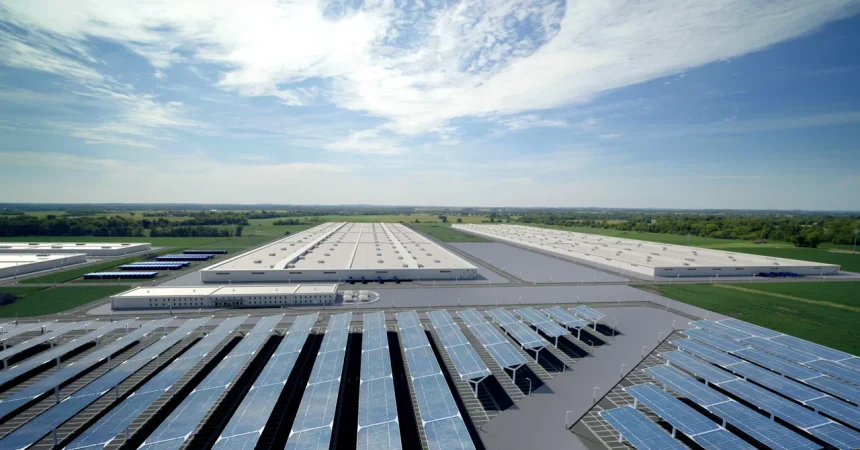
Tesla’s energy storage business is the elder statesman, at more than a decade old. Growth in its Powerwall (battery storage for homes) and Megapack (battery storage for utilities and commercial facilities) sales has, in recent years, helped to compensate for a drop in EV sales, though last quarter saw a sudden drop in energy revenue. Still, Tesla is moving forward with its plans to launch a Houston facility dedicated to a new, larger Megapack later this year.
In total, 11 battery cell manufacturing plants are being retooled for energy storage, according to a March count by BloombergNEF, with eight of those in the US.
Drive Time
One reason investors are so bullish about battery energy storage is their continued enthusiasm for AI. AI companies need data centers, and data centers need energy. Batteries are a great fit for data centers, says Shan Tomouk, who leads battery energy storage research at Benchmark Mineral Intelligence, a research firm focused on battery supply chains. Batteries can help directly power the very energy-hungry centers, which constantly run servers and other hardware, but also the cooling systems that keep them functioning.
The storage systems can also be a fit for data centers that mostly depend on other energy sources, like natural gas. Battery energy storage systems can serve as a backup power source if something goes down and can help data centers manage large and wild power fluctuations related to AI training. They can also kick in to help reduce demand on the grid, lowering costs not just for data centers, but everyone else who depends on the same system—an important upside in communities already hostile to the tech.
“If the huge market of data centers keeps growing every year, it does make sense for automakers to pivot,” Tomouk says. He expects it will. “In the US, there’s a real drive to build data centers, to keep the US as the number one in terms of AI.”
For automakers backing away from EVs, there’s another possible upside to battery storage, even if the pivot doesn’t completely work out. “If automakers aren’t making money from storage and not making money from EVs, they would prefer not to make money from storage because they’re not competing with their own gas car production,” says Gil Tal, who directs the EV Research Center at UC Davis’ Institute of Transportation Studies. “It makes perfect sense, unfortunately.”