The education of Donald Trump has shone some light on a few interesting takes.
Despite the US president attesting to the fact that he finished “top of his class” at Wharton Business School at the University of Pennsylvania, his former college professor, William T. Kelley, had another view.
After Kelley’s death, Frank DiPrima, a close friend of Kelley, revealed that the professor felt the president was a fool.
“Professor Kelley told me 100 times over three decades that ‘Donald Trump was the dumbest goddam student I ever had,’” DiPrima wrote for the Daily Kos. “I remember his emphasis and inflection — it went like this — ‘Donald Trump was the dumbest goddam student I ever had.”
DiPrima explained that Kelley told him this after Trump became a celebrity but “long before” he was deemed a political figure.
“Dr. Kelley often referred to Trump’s arrogance when he told of this — that Trump came to Wharton thinking he already knew everything,” Di Prima added.
TL;DR? Here’s a quick summary:
- Donald Trump’s name was not on the Wharton Dean’s List in 1968, putting into question the president’s own statements that he was “top of his class.”
- Wharton has produced many other famous figures such as Sunder Pichai, CEO of Alphabet Inc., and Elon Musk.
- Gwenda Blair, a biographer, wrote that Trump was admitted to Wharton on a “special favour” from a “friendly” admissions officer.
- Trump is renowned as a businessman, TV host, political figure, and overall a household name.
The education of Donald Trump, and what his professors had to say about it
DiPrima’s revelation raised questions about the US president’s academic record.
According to The Daily Pennsylvania, Trump’s name was not on the Wharton Dean’s List in 1968, the year he graduated, despite him allowing the media to report for years that he graduated first in his class at Wharton. If he had performed as exceptionally well as is commonly believed, his name would be present.
However, whenever his intellectual credibility was questioned or mocked, the current President of the US is quick to remind everyone where he attended college.
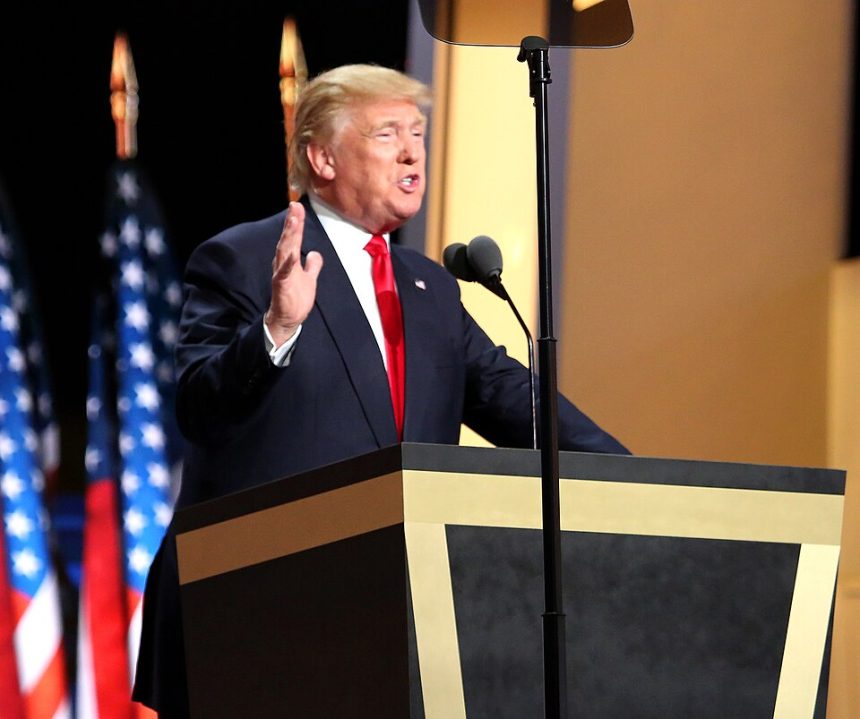
“I went to the Wharton School of Finance,” he said multiple times in a July 11 speech in Phoenix, Arizona. “I’m, like, a really smart person.”
Trump transferred into Wharton’s undergraduate programme — then known as the Wharton School of Finance and Commerce — after spending two years at Fordham University in New York. He graduated in 1968 and has embraced the school’s card-carrying prestige ever since.
In an August 16 television interview on NBC’s “Meet the Press,” he described the school as “probably the hardest there is to get into.” He added, “Some of the great business minds in the world have gone to Wharton.”
No matter what your views are on Trump, you have to agree with that statement. Wharton has produced several famous graduates, such as:
- Sunder Pichai, CEO of Alphabet Inc., the parent company of Google
- Elon Musk, founder, CEO and lead designer of SpaceX and Tesla, and co-founder of OpenAI
- John Sculley, CEO of Apple Inc. from 1983-1993, and former CEO of Pepsi
- Peter Lynch, investor, mutual fund manager and philanthropist
- Ruth Porat, CFO for Alphabet Inc. and its subsidiary, Google, until 2023, when she became president and CIO
Trump famously graduated from Penn’s Wharton School in 1968 — a fact he reminds audiences of over and over again. Source: Ali Shaker/VOA via Wiki Commons
The truth about Trump’s time at Wharton
Despite Trump’s repeated mention of Wharton, his own classmates hardly remember him, and he even describes the school’s high-flung reputation as overwrought in his 1986 book, “Trump: The Art of the Deal.”
Perhaps this fits the narrative that he was only enrolled based on a personal, special favour.
In 2001, Gwenda Blair, a biographer, wrote that Trump was admitted to Wharton on a “special favour” from a “friendly” admissions officer, allegedly known to Trump’s older brother, Freddy.
According to The Daily Kos, former classmates reported that Trump skipped classes and often spent his weekends in New York.
Louis Calomaris, who studied alongside Trump, claimed that the president was “loath to really study much.” He declared that Trump would come to seminars unprepared and did not “seem to care” about being ready for work.
“He was not in any kind of leadership. I certainly doubt he was the smartest guy in the class,” said Steve Perelman, a 1968 Wharton classmate and a former Daily Pennsylvanian news editor.
But no matter how well Trump did in school or what his IQ is now, he is still currently one of the most powerful people in the world.

Trump Tower is one of the most iconic buildings in Manhattan. Source: Kidfly182 via Wiki Commons
Beyond the classroom
Before he became a TV host, a political figure, and now a household name, Trump was a businessman.
He worked in real estate, starting his business with a “small” US$1 million loan from his father before joining the company. He helped manage his father’s extensive portfolio of residential housing projects in the New York City boroughs and took control of the company — which he renamed the Trump Organisation — in 1971.
For several years, Trump focused on renovating skyscrapers, hotels, casinos, and golf courses. Of course, not everything was sunshine and rainbows. His unsuccessful business ventures have included numerous casino and hotel bankruptcies, the folding of his New Jersey Generals football team, and the now-defunct Trump University.
However, in 2018, the New York Times published an exposé that revealed how Trump and his family engaged in sham financial schemes during the 1990s to avoid paying hundreds of millions in taxes on the real-estate fortune that they owned and managed.
The authors of the article, David Barstow, Susanne Craig and Russ Buettner, were awarded the 2019 Pulitzer Prize in Explanatory Reporting. For Barstow, this was one of his four Pulitzer Prizes, and he holds the record of being the first reporter in the history of the Pulitzers to be awarded this many.
“He simply asserted that his father’s empire was his empire,” says Barstow in an interview with Fresh Air.” And those claims, unfortunately, largely went unchallenged for many, many years by the reporters who were kind of swept up in the glamour of this young, swaggering, handsome guy who was so full of confidence and so full of big plans for the city of New York. And so that story was the thing that, I think, helped give birth to the myth of Donald Trump, self-made billionaire.”
Trump attempted to sue the authors, of course, but ultimately lost.

Donald Trump speaking at an immigration policy speech in Phoenix, Arizona. Source: Gage Skidmore via Wiki Commons
His legacy as a media figure and TV host
Trump was well-known for making cameos on popular sitcoms, such as “The Fresh Prince of Bel Air,” “The Nanny,” “Sex and the City,” and even in the movie “Home Alone 2.”
Back in the day, all of this was nothing more than brand-building. But these convinced US viewers — and then international ones — that Trump was an unequivocally successful businessman oozing with star quality.
It also served as his ticket to the NBC reality show “The Apprentice,” which made him a well-known public figure in American life for nearly half a century.
However, his time on “The Apprentice” came with its fair share of controversial allegations. One example was making racist remarks toward Black contestants — Gene Folkes, a former contestant, claims Trump insulted his intelligence and later made a racially charged remark at a bar in Trump Tower.
Ironically, in 2024, Trump Tower became the setting for his first appearance after being convicted of 34 felony counts in a hush-money scheme to influence the 2016 election.

As this is Trump’s second term as President, it will also be his last. Source: The Trump White House via Wiki Commons
What academics are saying about the President of the US
“Back in January 2024, I wrote a piece called ‘Another Trump Presidency Won’t Much Change US Foreign Policy,’” writes Stephan Walt, the Robert and Renée Belfer Professor of International Affairs at Harvard Kennedy School.” As of March 2025, that sounds pretty stupid.”
Walt previously published an article that suggested that Trump’s leadership flaws, such as impulsiveness and lack of strategic vision, have led to detrimental outcomes in international relations.
He wrote, “It’s hard to see Donald Trump as a truly tragic figure. Far from being heroic but flawed, he’s just the spoiled, self-indulgent scion of a wealthy and odious father, with more deficiencies of character than one can count.”
He wasn’t the only one. Daniel Drezner, a professor at The Fletcher School of Law and Diplomacy at Tufts University, published a piece in 2020 that called Trump immature.
“Trump’s lack of impulse control, short attention span and frequent temper tantrums have all undercut his effectiveness as president compared to his predecessors,” claims Drezner, who holds a master’s and PhD in political economy from Stanford University.
West Virginia University spokesperson April Kaull told The Wall Street Journal that “our nation’s research universities cannot maintain research programmes essential for continued national prosperity” without continued funding from federal agencies.
“It felt like all the work I’ve put in these last few years was worth nothing,” Gracie Hines, a prospective student at West Virginia University who had her pharmaceutical-sciences offer revoked by the university, told The Journal. “I was really heartbroken and sad about it.”
In a recent letter to Columbia University, Trump’s administration laid out a series of sweeping changes that the school must take to reverse the administration’s cancellation of US$400 million in federal funding.
We’re yet to see the end of what seems to be like a long battle for higher education.
“By attacking the important work of diversity, equity and inclusion offices at educational institutions, the order seeks to dismantle critical support systems for historically underrepresented students,” said NADOHE president Paulette Granberry Russell in an interview with Inside Higher Ed. “This would limit workforce preparation and stifle efforts to address systemic inequities. This order depicts diversity, equity and inclusion as divisive when, in reality, these initiatives aim to ensure opportunity for all.”
Disclaimer: This article was last updated on May 26, 2026.