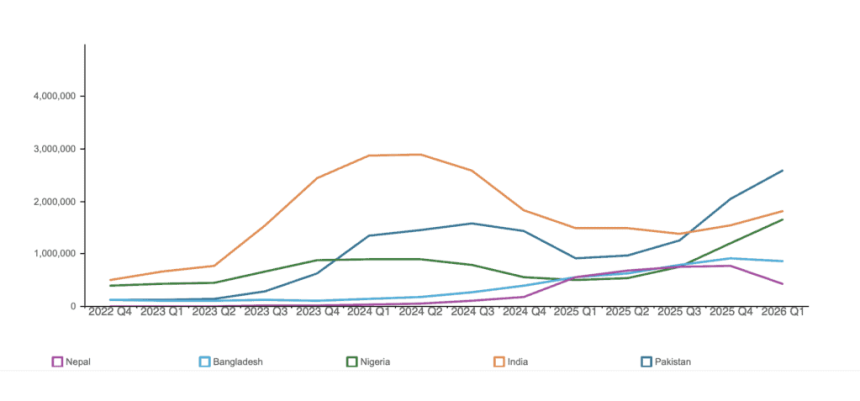
- The UK generated approximately £9.3m in visa fees from refused students over the last 12 months
- Visa records show refused Pakistani students paid over £2.5m in a year, including over £1m in fees during the last winter intake
- The cost of visa fees have increased by 60% over the last four and a half years, rising to £558 in 2026
- The UK lost out on approximately £8.8m in visa fees over the last two quarters compared to the same period in 2025, due to falling applications.
The PIE News continues to investigate the real cost of rejection for students who are vetted and accepted by British universities as genuine candidates but are subsequently refused a study visa by UK Visas & Immigration (UKVI).
The standard visa application fee for the UK is non-refundable even if a student is rejected. This is because the government processes applications regardless of the outcome, with the fee covering administrative costs.
We can reveal that over the 12 months prior to and including Q1 2026, the UK made approximately £9,348,684 in fees linked to rejected visas based on an extrapolation of Home Office data and the cost of visa applications.
This amount is the highest level of income recorded from visa refusals over a 12 month period since 2012. The figure was achieved despite a 2% decline in visa applications over the same period and does not include withdrawn students, or the additional income generated by students who wish to appeal refusal decision through the administrative review process, which costs an additional £80 per review.
The Home Office has been contacted for comment.
The PIE’s analysis shows that while India has historically received the highest number of visa rejections as the biggest source market since 2022, the situation has dramatically changed over the past 12 months, with Pakistan disproportionately taking over as the biggest income generator of visa fees from rejected students.
Pakistani nationals account for roughly a quarter (24%) of all visa-to-asylum switches in the UK, but the market has remained open for study visa applications despite the government applying a visa break to other countries citing “abuse” of visa routes by people who later claim asylum.
The country is a huge income generator of visa fees, with the Home Office charging approximately £2,572,316 in fees from rejected Pakistani applicants over the last year, including £1,028,088 during the January intake 2025/26 (Q4 2025). If Q1 2026 figures are included as a continuation of the January intake, the figure is close to £1.8m.
Visa refusals and the associated fee income from Nigeria has also been on a similar trajectory, almost rivalling the total number of visa rejections from India in the last quarter.

Visa fees for the UK have increased by 60% between 2022 (£348) and 2026 (£548), with three incremental price rises over that period.
Higher visa fees have been a tactic employed by multiple governments around the world to assist in reducing total net migration including students by making the process more expensive. The latest data shows that the UK is now at the lowest immigration level since 2012 excluding the pandemic, according to the Office for National Statistics (ONS).
The current study visa issuance rate is down 32% in Q1 2026 compared to the same period last year. The PIE’s analysis shows that the shortfall in visa applications year on year equates to approximately £5.3m in Q1 2026 and a further £3.5m in Q4 2025 in lost visa fee income.
Visa rejection rates, however, are not equal among the UK’s top 10 international student source markets.
While Pakistan and Nigeria are experiencing high rejection rates in the current quarter, other countries such as China (0.4%) and the United States (0.2%) experience very few rejections for their size, borne out in the lower levels of income generated from refusals over the past year.
Nepal continues to to buck the trend in South Asia for the UK, experiencing the lowest visa refusal rates of major source countries in the region despite countries like Australia deeming the country to be high risk for visa compliance issues.
| Country | Latest visa refusal rates (Q1 2026) | Total fee income from refusals (12 months) |
| India | 6.7% | £1,799,940 |
| China | 0.4% | £41,920 |
| Nigeria | 22.6% | £1,648,504 |
| Pakistan | 40.4% | £2,575,316 |
| United States | 0.2% | £24,104 |
| Bangladesh | 28.2% | £863,552 |
| Hong Kong | 0% | £1,572 |
| Malaysia | 1.2% | £3,668 |
| Nepal | 3.4% | £431,776 |
| Saudi Arabia | 3.1% | £39,824 |
The PIE has been investigating the real cost of rejection as UK universities grapple with tighter compliance requirements that came into effect from the beginning of this month.
It comes after months of reports that some universities are pulling out of certain high risk markets altogether over fears they could fall foul of the requirement to keep visa rejections under 5%.
However, tension between agents, prospective students and universities has emerged as students increasingly find themselves bearing the true cost of visa rejections.
Those who have already lost hundreds of pounds to the Home Office on visa fees may also not be able to recover their university deposit – despite having been issued a CAS. Some universities have a policy not to refund international students their tuition fee deposit if they are denied a study visa on credibility grounds.