Most people only think about taxation when they have to file a return. Bruce Liu started thinking about it much earlier. As a Bachelor of Commerce student at the University of Auckland, he grew curious about the systems that keep economies running.
A year later, while working as a government auditor, that curiosity evolved into bigger questions: How does a country generate the revenue that funds public services? Why do governments approach taxation differently? And in a global economy, who decides where tax should be paid?
The answers led him back to where his journey had begun. Today, Liu is completing the Master of Taxation Studies (MTaxS) at Auckland Law School – New Zealand’s largest law school, ranked 65th in the world by the 2026 QS Rankings by Subject. The decision has already paid off. Before graduation, he secured a role as a transfer pricing and international tax consultant at a Big Four firm.
“My career settlement here is a fortune from a series of choices I have made in my life, including my decision to pursue the MTaxS at the University of Auckland,” Liu says.
For Liu, pursuing a Master of Tax represents a turning point in his career. Source: University of Auckland
Learn from people influencing global tax policy
The MTaxS is New Zealand’s longest-running specialist postgraduate qualification in taxation and the only programme of its kind in the country. But what sets it apart is who teaches it.
Students learn from leading tax barristers, senior industry practitioners, policymakers, and specialists who bring current challenges, debates, and developments into the classroom. Professor Craig Elliffe is one such practitioner. Specialising in taxation at the Faculty of Law, he was appointed to a chair in 2008 following 14 years as a tax partner at KPMG and nine years in the same role at Chapman Tripp. His research spans international tax, corporate tax, and tax avoidance – areas that feed directly into how he structures his teaching.
Case studies drawn from real-world issues, some encountered in practice and others still unfolding, form a core part of both teaching and assessment. “The intention is for people to leave with both the intellectual framework and the practical skills needed to solve a wide range of problems,” he says.
Matt Andrew brings a similarly grounded perspective. A global transfer pricing specialist, he spent 13 years as a Big Four Partner across four countries before working in the Secretariat in the Centre for Tax Policy and Administration at the Organisation for Economic Co-operation and Development (OECD). For several years now, Matt has supported Craig, teach several papers in the MTaxS while he completed his PhD in International Taxation at the University of Auckland.
His experience shapes how he thinks about the subject. “Tax is one of the most powerful storytelling devices in global commerce,” he says. “From every multinational deal to every supply chain restructuring – they all have a tax story running underneath them.”
This is why his classes often begin with questions rather than legislation. Why did a tech giant restructure through Singapore? What happened when two governments disputed where a digital service was taxed?
Having presented to the OECD Inclusive Framework,DrFramework, Dr Andrew has a clear understanding of the conversations shaping the future of taxation, and that’s what he strives to bring into his classrooms.
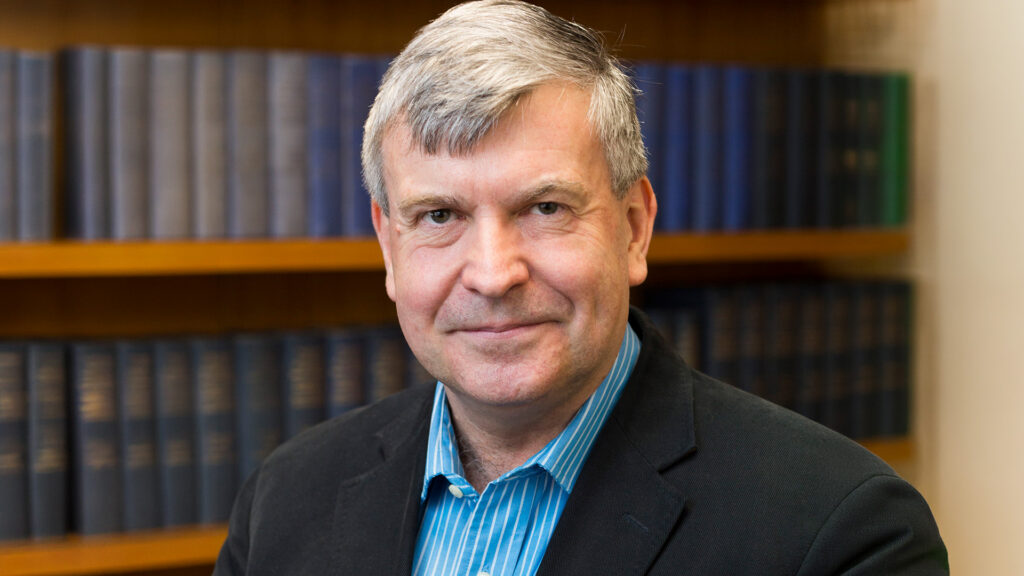
Professor Craig Elliffe is the Director of the MTaxS programme and a prolific author of tax publications in New Zealand. Source: University of Auckland
One of the fastest growing areas in international taxation
Transfer pricing governs how multinational companies price transactions between their own entities operating in different countries. Those decisions influence where profits are reported and where tax is paid, making transfer pricing one of the most scrutinised areas of international business. In response to growing concerns about profit shifting, governments worldwide have introduced major reforms through initiatives such as the OECD’s Base Erosion and Profit Shifting (BEPS) project and the global minimum tax framework.
“There are very few specialisations that open as many doors, in as many jurisdictions, as transfer pricing does right now,” Dr Andrew says.
Liu saw that opportunity first-hand. “Dr Andrew taught me the practical skills of this profession,” he says. “This provided a strong foundation of knowledge for my work next year.”
Designed for working professionals
Tax is an international profession, and the people drawn to it often have international ambitions. That’s reflected in the MTaxS classroom. While Liu balanced his studies with work as a graduate and research teaching assistant on an international tax research project, others arrived with experience in law, accounting, government, and industry.
Some were building careers. Others were changing direction. All brought different perspectives to the same discussions, supported by the programme’s flexible intensive course formats, full-time or part-time study options, and the choice of studying through coursework or a combination of coursework and research.
Regardless, all routes lead to enriching careers, and 2010 graduate Dr. Karl Broemel has the trajectory to prove it. Originally from Germany, he chose the MTaxS because it offered both breadth and depth. The programme exposed him to practical tax issues while also giving him the opportunity to engage with research and academic thinking.
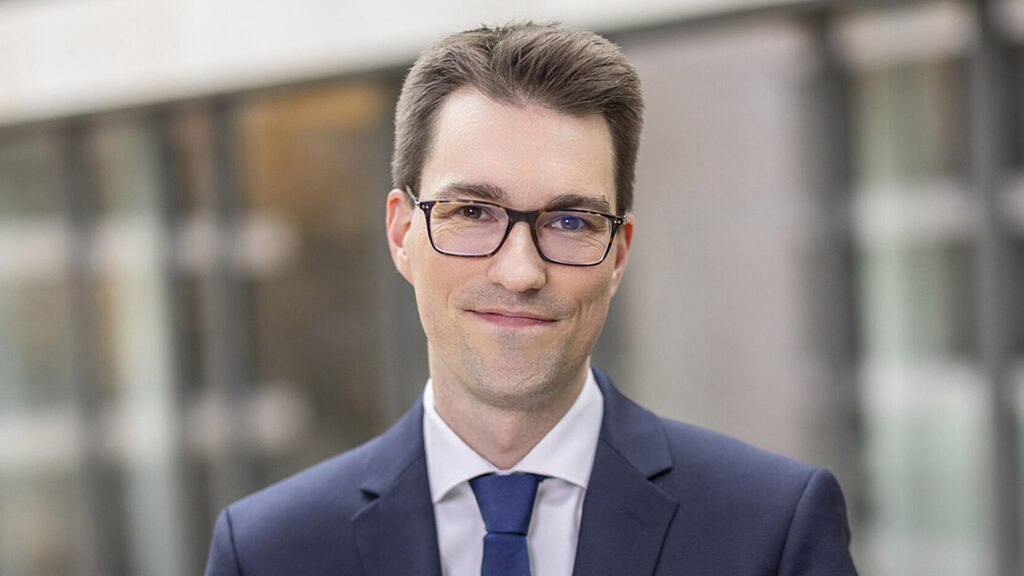
During his business studies, Dr. Karl Broemel chose to specialise in taxation because he was interested in law, economics, and business. Source: University of Auckland
After graduating, he returned to Germany and continued building on what he had started in Auckland. He went on to complete a PhD focused on international tax planning and is now a partner at Flick Gocke Schaumburg, one of Germany’s leading specialist tax advisory firms, advising private individuals, mid-sized businesses, and multinational corporations on complex domestic and cross-border tax matters.
“The programme built a strong understanding of international tax principles and, more importantly, trained me to think comparatively and analytically – skills that are essential in any global tax environment,” he says.
“Studying in New Zealand also broadened my perspective significantly. It was a great experience and one of the best decisions I made during my studies.”