When Isabella Favero graduated from Brock University in Canada, she had accomplished a great deal. Contributions to academic papers, participation in research projects, plus many other instances of collaborative work – these years gave her clarity that few other fresh graduates can say they have.
“Watching years of hard work, creative ideas, and dedication come to fruition gave me a deep sense of accomplishment and reinforced my passion for research and education,” says the Master of Education (MEd) graduate.
Her path is open to anyone with an interest in advancing their knowledge of education. You can choose up to two concentrations from five offered: Administration, Leadership, and Policy; Adult and Postsecondary Education; Curriculum and Pedagogy; Educational Psychology: Teaching, Learning, and Wellness; and Social Justice, Power and Politics in Education.
What follows is an experience that’s both flexible and transformative. You can complete your degree online, on campus, or through a mix of both. You can opt for the Course-based Pathway (CBP) or get more hands-on with a Major Research Paper (MRP) or Thesis, though securing spots for research-based pathways is more competitive.
Favero chose to go the Thesis route – and has no regrets.
“Seeing a research project from start to finish through my research was incredibly fulfilling,” she says. “I am incredibly grateful for the meaningful connections I built with the faculty and peers within the Brock University Faculty of Education.”
Located in the heart of the Niagara Peninsula, only an hour from Toronto, Brock’s Faculty of Education is consistently the first choice of aspiring teachers and those already working in the field. Source: Brock University
The value of learning, taught by experts
Brock’s Faculty of Education sees learning as a force for change.
They do this by putting learning at the centre of all they do and seeing learning as a force of positive change that builds civil, progressive societies. They have designed programmes around principles that respect differences, advance social justice, and expand global and community awareness. And they equip students with the skills that can make a maximum impact on their lives and their communities.
These are goals that play out in the everyday realities of the faculty. Professor Dolana Mogadime recently gave a talk at a national conference on Black youth experiences in the classroom. The Brock Learning Lab launched a SummerBoost programme to improve literacy and foundational numeracy skills for those who lived their toddler and preschool years during the pandemic. PhD student Muhammad Kiani is looking at how the ethical use of AI can help future teachers build their classroom skills in a “safe to fail” environment.
“The diverse backgrounds and experiences of faculty members provided me with unique perspectives and insights that I feel contributed to my learning and values as a future educator and scholar,” says Rachel Di Loreto, who, like Favero, graduated from the MEd programme.
If you’re looking to pursue a master’s degree and become part of this movement, the Brock Faculty of Education welcomes you. There are two flexible programmes to advance your skills and impact: the MEd, mentioned earlier, and the newly launched Master of Professional Education (MPEd).
They may sound similar, but each serves a different purpose — depending on where you are in your career, and where you want to go next.
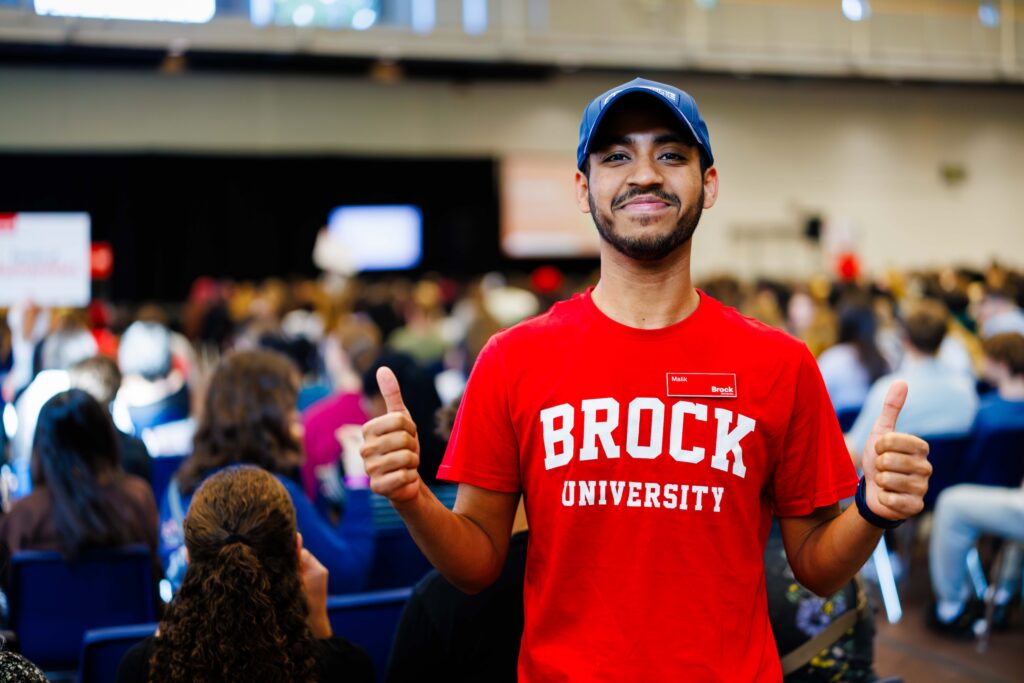
The Brock Faculty of Education offers graduate micro-programmes where students can pursue three half-credit courses in a concentration or general education stream. Source: Brock University
The MEd vs MPEd: Which should you choose?
The MEd programme is the perfect choice for students seeking the challenge of academic rigour or looking to conduct research.
During Di Loreto’s time here, she got to volunteer and work in various education settings. One of them was at the Brock Learning Lab, which provides individualised support in literacy and numeracy for K-12 learners.
“The close community that Brock fosters and the fun events they host afforded me the opportunity to get to know my professors and peers, making my time there enjoyable with memories that will last a lifetime,” she says.
What’s more, full-time students in the thesis pathway are eligible for numerous funding opportunities, whether through a scholarship, assistantship, or fellowship.
Now, let’s say you’re already an educator working in the field.
In that case, the MPEd is a better fit. Offered fully online — the first intake planned for Fall 2027 — the programme is designed specifically for working professionals to improve their practice and solve complex challenges across educational contexts.
Spanning two years of full-time study, its asynchronous courses allow you to study anywhere, at any time. The curriculum bridges theory with research and practice, covering three interdisciplinary fields: inclusive education, digital innovation, and leadership. You’ll be learning from the same expert faculty and world-class scholars who lead the faculty’s in-person courses.
Want to make a difference? Check out the Brock Faculty of Education here.
Follow Brock University on Facebook, X, Instagram, LinkedIn, YouTube, and TikTok.