In 2025, the United Nations celebrated the International Year of Quantum Science and Technology, marking the next 100 years of progress in quantum mechanics – but the field is already transforming industries today. Quantum technologies are emerging as powerful tools in an unpredictable world, offering new ways to improve manufacturing and make supply chains more resilient.
Across the world, governments have long recognised this shift. They are investing in the infrastructure and talent to drive the next phase of quantum computing, from the lab into real-world use.
For those looking to be part of that momentum — and to help shape a faster, more efficient future — these are three universities offering some of the most focused graduate programmes in the field today.
Brock University
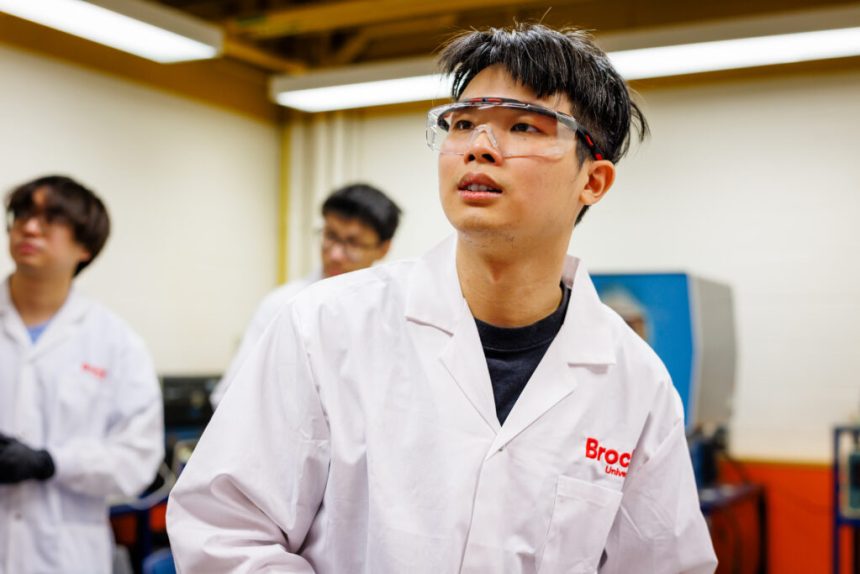
Brock University’s graduate programme focuses on students getting involved with research, scholarship, and professional development. Source: Brock University
When studying mathematics or physics at Brock University, you’ll gain advanced skills that translate beyond academia into fields like technology, finance, policy, and research. Professors renowned worldwide for their contributions to science at the Faculty of Mathematics and Science will guide you into becoming a published research expert in the world’s most prestigious journals. You can play a leading role in projects where you’re advancing quantum materials by studying the strange behaviour of ultra-cold lithium or developing new materials that could increase the efficiency of batteries and hybrid energy storage devices.
For international students seeking hands-on training in advanced experimental, theoretical, and computational techniques of modern materials science, the Master of Science in Material Physics (MSMP) is a great option. Set in one of the beautiful UNESCO Biosphere Regions of Canada, just a 20-minute drive to the iconic Niagara Falls, the MSMP lets you complete the degree in either 16 months or two years, the latter including a major research project within the curriculum. For those whose first language isn’t English, you can complete the Graduate Science Preparation Seminar prior to starting the programme to improve your technical language skills often required of professionals .
With this strong foundation, you’ll then be set to make the most of the programme’s advanced industry-standard instrumentation. These include a scanning electron microscope and physical property measurement systems, part of a wide range of industry-grade equipment geared to help you hit the ground running in your future role. Indeed, MSMP graduates have gone on to become materials technologists, data scientists, laboratory technicians, and more at companies like Accenture, Temenos, and L3Harris.
“I can confidently say that the diverse and challenging courses of the MSMP programme at Brock University played a pivotal role in preparing me for my current position as a quantitative finance researcher at BCA Research,” graduate Pratik Bhanuse says. “[Specialised physics courses] allowed me to approach problems with a purely quantitative perspective and utilise programming to find innovative solutions.”
If you’re freshly entering university, you can build your foundation from the ground up through programmes like the BSc in Physics or the BSc in Mathematics. You have the option to tailor these interdisciplinary degrees to your specific interests through pursuing a concentration, from Quantum Materials to Theoretical Physics to Applied Mathematics. This is where you’ll discover your potential as a researcher. Guiding students as advisors are award-winning faculty, such as Physics Professor Dr. Kirill Samokhin and Mathematics Professor Dr. Stephen Anco, both listed in Stanford University’s 2025 ranking of the 2% of international scientists in physics and mathematics.
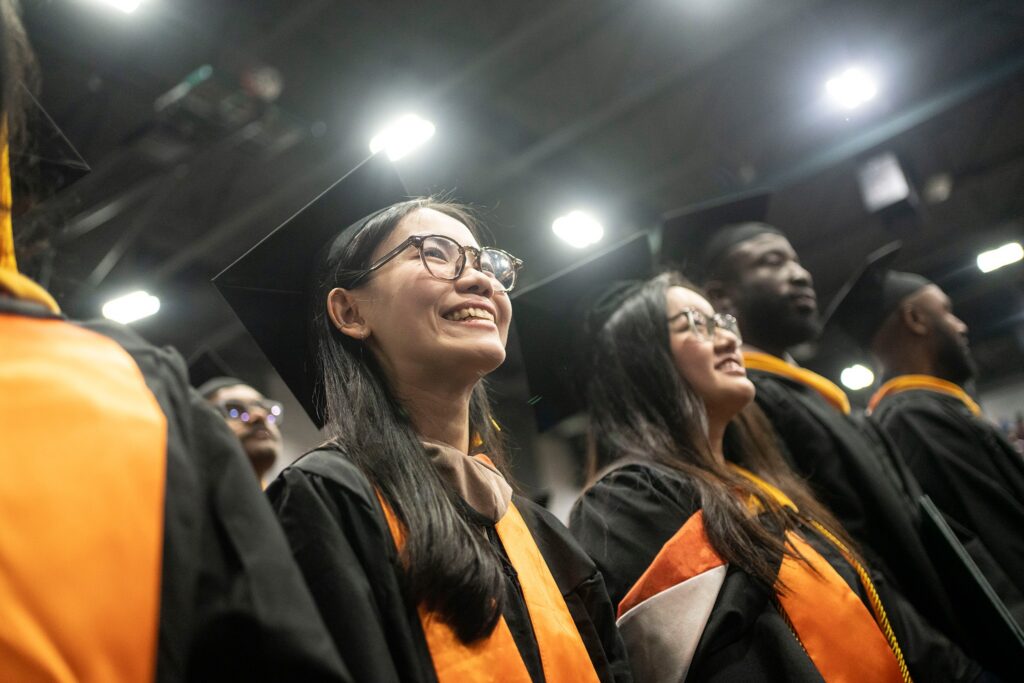
The University of Texas at Dallas was founded in 1961. Source: The University of Texas at Dallas/Facebook
The University of Texas at Dallas
Set in one of the fastest-growing metropolitan regions in the US, the School of Natural Sciences and Mathematics (NSM) at the University of Texas Dallas seeks to foster lifelong curiosity and innovation by responding to emerging global challenges. With 33 undergraduate and graduate programmes, as well as 40 research labs within the school, the NSM is where you can bring theory to practice as a doctor, scientist, or mathematician.
Graduate programmes at the Department of Physics offer a strong, professional-level foundation in classical mechanics, electrodynamics, quantum mechanics, and statistical mechanics. Students conduct cutting-edge research that gains them international respect, leading them to diverse careers in industry and academia. For those looking to get involved in research in quantum technologies, NSM also hosts the UTD Centre for Quantum Integrated Systems, which seeks to use quantum mechanics in advancing computation, communication, and sensing.
If you seek a programme to master the fundamentals and current applications of physics, the Master of Science in Physics will be right up your alley. With courses led by widely cited experts in their fields, the programme spans a minimum of 30 credit hours. Students will pursue four core courses, and later customise their curriculum based on their interests. They have the option to specialise in a specific field, with four unique tracks offered, from condensed matter physics/materials science to atmospheric and space physics.
Those entering university as freshman students can pursue either a Bachelor of Science or Bachelor of Arts in Physics to build their fundamental knowledge. Even at this early stage, you can start exploring research opportunities within the Natural Science and Engineering Research Laboratory, a high-tech 192,000-square-foot facility built in partnership with Texas Instruments scientists and engineers.

The Department of Physics and Astronomy at the University of California, Davis offers two master’s degree routes to choose from. The Department of Source: University of California, Davis/Facebook
University of California, Davis
Part of the University of California (UC), Davis – ranked #2 among public universities for graduate financial success – the Department of Physics and Astronomy raises graduates who do not hesitate to make a profound impact in the industry. They’ve built new medical devices in the healthcare industry, managed large scientific projects at national laboratories, invested in new small businesses, and more.
If you’re seeking that kind of career advancement in the field of quantum science, then you should sign up for the department’s master’s programmes, which spans between four to six quarters. The route you take depends on your specific goals: you can either choose to pursue Plan I, which comprises 32 quarter hours of graduate coursework and a thesis, or Plan II, which requires 36 quarter hours of coursework and an oral comprehensive exam.
Courses will cover topics like classical mechanics, electrodynamics, quantum mechanics, and statistical mechanics. They’re led by distinguished experts in their respective fields, giving students the opportunity to work in various multidisciplinary centres and labs, as well as international collaborations.
If you’re a soon-to-be undergraduate, the Bachelor of Arts or Bachelor of Science in Physics programmes will prepare you to tackle more advanced-level courses within the master’s programmes. Physics majors take on a mixture of classical and modern physics courses, alongside six quarters of calculus and other mathematics. This foundation will prepare you for more high-level areas like quantum mechanics and condensed matter physics.