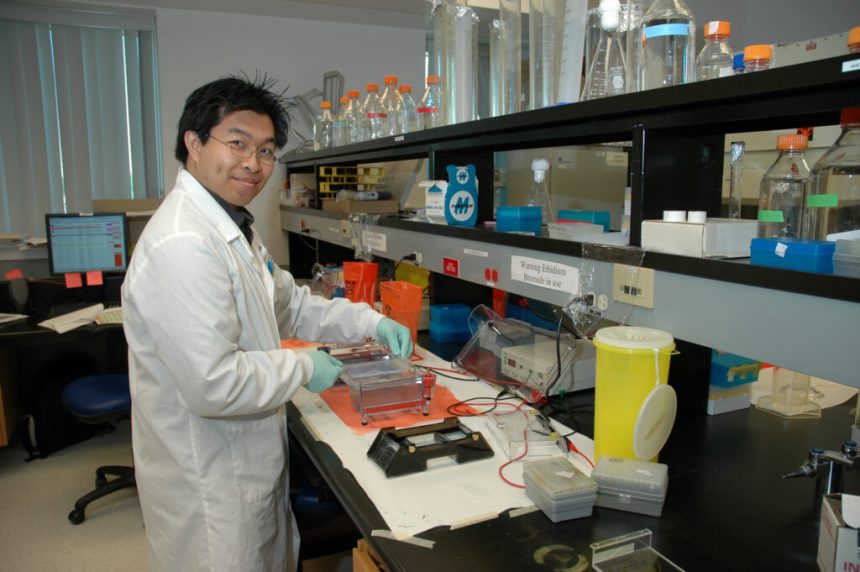
When Maria Baranowski’s son, Nick, was diagnosed with Down syndrome, she did what many parents would do: look for answers. But they weren’t easy to find.
Sonya Gill was motivated by a different question. She wanted to better understand the underlying factors that shape mental well-being.
As graduate students at the University of Manitoba (UM), ranked among the top 1.4% of universities globally (CWUR Centre for World University Rankings), Baranowski and Gill both pursued research that addressed important gaps in Canadian health knowledge.
Dr. Baranowski, now graduated, examined the nutrition-related health of children with Down syndrome, and master’s student Gill investigated how emotional abuse and neglect relate to disordered eating.
Work like theirs shows us what’s possible in one of the world’s leading research hubs. Canada is ranked #5 globally for research, ahead of G7 countries such as France, Germany, and Japan. This fifth-place finish reflects not only the global standing and reputation of its top institutions, but also the nation’s across-the-board strength in research, among other metrics.
UM, part of the U15, a group of leading research universities across Canada, focuses on research that improves lives and addresses real-world challenges. Its researchers are leading change through their explorations into Arctic climate change, human rights, high-performance materials in engineering, functional and sustainable food systems, and integrative research in health and well-being. It’s a wide range of areas but there’s a unifying theme across them all: behind many of these discoveries is the research being done by graduate students pursuing their degrees in the Faculty of Graduate and Postdoctoral Studies (FGPS).
You’ll find support wherever you are at UM, whether in class, student activities, or community projects. Source: University of Manitoba
Endless possibilities
UM professors know that success looks different for every graduate student and they foster a culture of collaboration and academic excellence.
“Our strategic research plan focuses on building a vibrant and thriving graduate and postdoctoral community, providing leadership, service and professional development opportunities and creating meaningful mentorship opportunities that are adaptable to the changing needs of our society,” shares Dean Dr. Kelley Main.
Baranowski worked with advisors from human nutritional sciences and education, including Dr. Shahin Shooshtari, who specialises in intellectual and developmental disabilities. Likewise, Gill found a supportive environment in Dr. Tracie Afifi’s lab. The mentorship they both received helped shape their professional training.
Graduate study at UM opens the door to a world of possibilities. There are over 150 programs and a research ecosystem with more than 500 partnerships that connect you with businesses and governments in Canada and around the world. The UM receives more funding from the Bill & Melinda Gates Foundation than any other university in Canada.
These collaborations help drive innovative solutions to complex challenges, while UM’s own 50 research centres, shared facilities, and institutes provide spaces to connect and explore new ideas.
Here, learning and research projects are led by world-class researchers committed to empowering students. Chamali Kodikara from Sri Lanka found this supportive environment especially rewarding during her doctoral studies in the Department of Food and Human Nutritional Sciences.
“The courses we learn at the university are really practical and the theory is easy to understand,” she says. “The supervisors, instructors and faculty members are very friendly. You can go and talk to them at any time, and they are always very helpful.”
Through experiential learning opportunities and co-curricular programmes, learning doesn’t stop in the classroom either. Kodikara, for example, visited the Canadian Grain Commission and Agriculture and Agri-Food Canada, where she saw how scientists regulate and innovates grain handling.
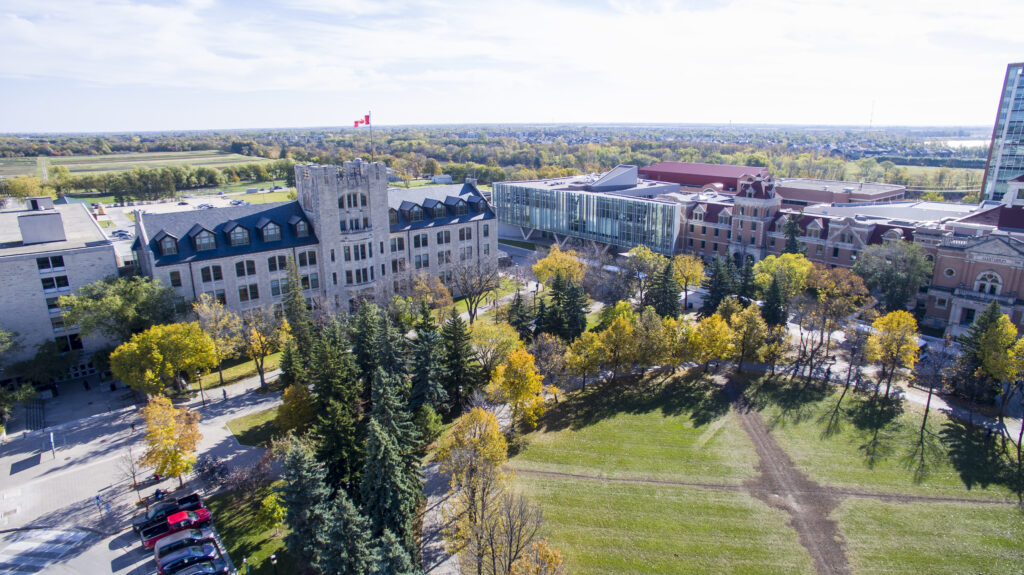
Studying in Winnipeg means enjoying a high-quality education in one of Canada’s most affordable cities. Source: University of Manitoba
Thrive together
Kodikara, Dr. Baranowski, and Gill are just three of the more than 3,600 graduate students (including over 1,200 international students) who call UM home and a community. The faculty’s events make it easy for everyone to get involved and meet new people.
PhD student Luma Clarindo Lopes, for instance, joined the Three Minute Thesis (3MT®) competition, an annual research communication competition. Later, she participated in the Falling Walls Lab, where she won first place for her entry titled “Breaking the wall of Antibiotic Resistance.” In events like these, she gets to connect with peers, professors, and leaders from within and beyond UM. Not only did she expand her network, but she also met experts who can help take her research to the next level.
But the faculty understands there’s another layer of support required to empower graduate students to succeed: fellowships. Here, eligible full-time master’s and PhD students may receive a University of Manitoba Graduate Fellowship (UMGF). They are awarded to those who have demonstrated superior intellectual ability and academic accomplishment. This support is part of UM’s commitment to making graduate study more accessible for all. International students pursuing a PhD are not charged international differential fees either, meaning they pay the same fees as domestic students.
This student-centred approach has created a generation of graduate students who go far. The university has produced 100 Rhodes Scholars — more than any university in Western Canada — and developed 400 patents covering 300-UM developed technologies.
“I’m so happy here,” Kodikara says. “There’s nothing that you can’t do.”
Interested? Explore your options, learn how to apply, and find out what happens next.
Follow the University of Manitoba on X, Facebook, Instagram, TikTok, YouTube, and LinkedIn