Going to university is an adventure full of new experiences, responsibilities — and no shortage of heavy, big and expensive textbooks.
Professors often use specific textbooks that align with the curriculum, ensuring you have the necessary resources to understand the subject matter.
However, securing these textbooks isn’t always easy or cheap.
Student Monitor’s Spring 2025 data found 48.6% of students spent more than US$301 on course materials in that term alone. That expense adds to a debt load already at breaking point: total US student loan debt hit US$1.81 trillion as of Q2 2025, according to ThinkImpact’s compilation of federal data.
Unfortunately, you can’t always use the textbooks passed down to you by your parents or family members as new editions of textbooks are frequently released.
These revisions include new information, and they also mean that last year’s edition might not align perfectly with the current course requirements.
So, securing the latest edition is essential for you to keep up in class — but the importance of purchasing textbooks goes beyond just this.
You need them as a reference for assignments too, as they provide in-depth explanations and examples that can help you get the grade you want.
Some exams are open book which means you not only need to remember information but have the books with you to show you understand how to find information and can apply and analyse them as well.
Not having the latest textbooks complicates an already stressful time, as you’ll need to always be aware if you have the most current information and are making the correct references.
While we all want to get As and pass exams, some textbooks can make big blow on your already-small student budget.
If this is you, here’s what you can do.
TL;DR? Here’s the summary:
- This article lists free textbook websites students absolutely love, and AI study tools worth checking out.
- 10 free textbook sites include OpenStax, LibreTexts, Open Textbook Library, and Project Gutenberg.
- There’s three AI study tools that students can use to further enhance their education
University libraries hold copies of required textbooks that students often overlook. Source: Pexels
Utilise your university library
The most obvious way to get around saving on books is to make full use of your university library.
If you’re already searching for extra materials in the library, you’re bound to come across the necessary books required of your programme. From there, it’s a matter of borrowing it and using it for your studies.
The downside of this method is that you’ll have to return the book to the library eventually so that other students can use it too.
However, you could turn this disadvantage to your advantage too by taking your own notes on a separate medium — be it on your laptop or in a physical notebook, though preferably the latter.
A 2025 review, led by Giuseppe Marano and colleagues at Sapienza University of Rome, synthesised neuroimaging research and found that handwriting activates a broader network of brain regions tied to motor control, sensory processing and higher-order cognition, while typing engages fewer of these circuits and produces more passive engagement with the material.
The study was built on earlier research conducted in 2014 by Pam Mueller and Daniel Oppenheimer. There, Mueller and Oppenheimer proved that those who wrote out their notes by hand had a stronger conceptual understanding and were more successful in applying and integrating the material than those who used took notes with their laptops.
So, not only will taking notes help you achieve better academic results, borrowing from the library makes sure that you’re using every bit of money you’re already paying for the university’s services.

A stack of new textbooks can cost more than a semester’s worth of groceries. Source: Pexels
Rent textbooks to save money
If you just can’t get your hands on the textbooks you need from your university library, many online platforms offer textbook rental services, allowing you to access the required books for a specific duration, usually a semester.
Choosing to rent also saves you space as you don’t have to worry about storing it after your semester ends.
Platforms like Chegg, Amazon Textbook Rental, and even campus bookstores often provide textbook rental options. Besides that, you can also explore secondhand bookstores, either online or locally.
These stores often carry used textbooks at discounted prices, providing an affordable alternative to purchasing new editions.
Many students sell their used textbooks after completing a course so that you can buy them and save some money. Again, it’s important to remember to check if it’s the correct edition.
10 best free textbook websites for students
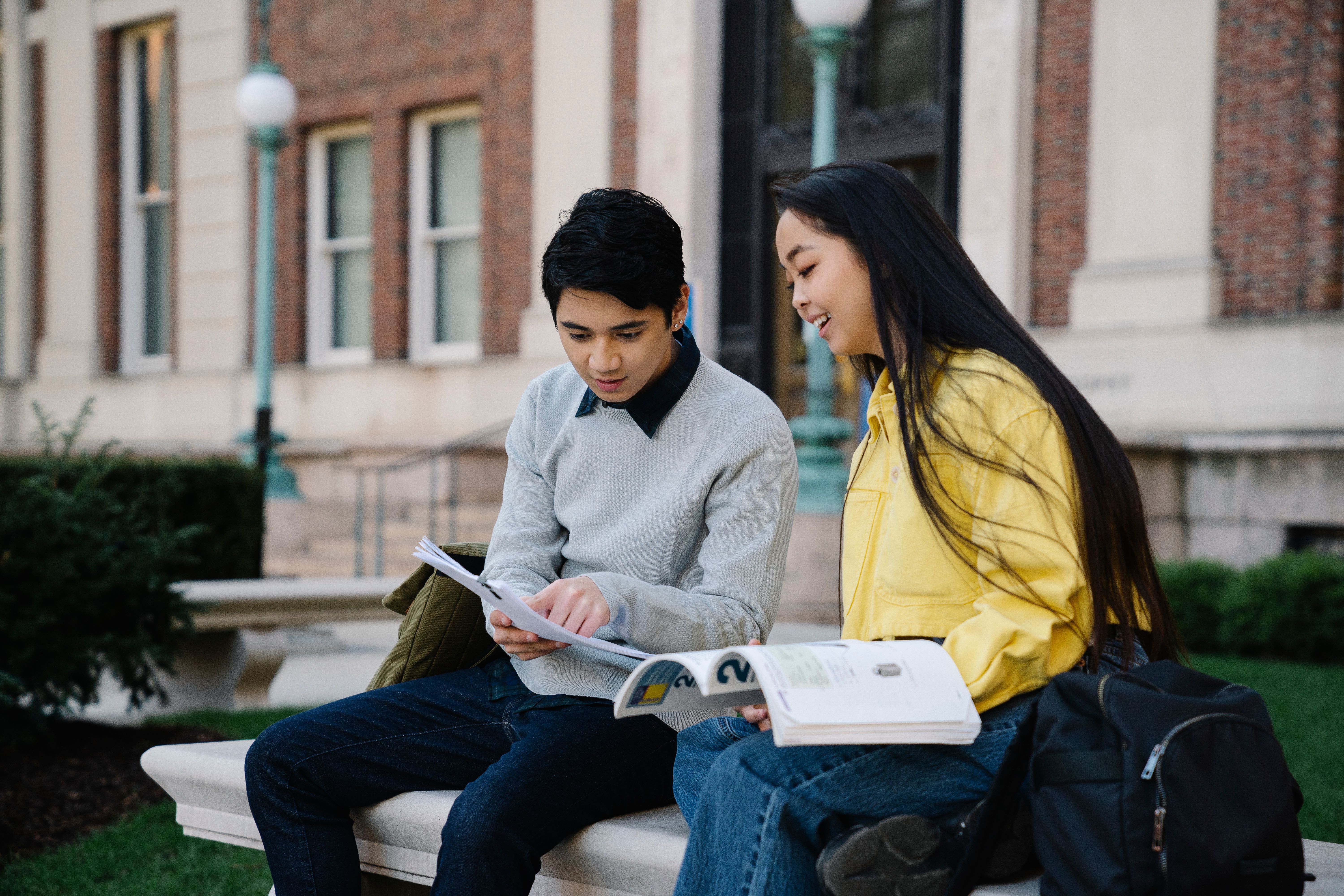
Secondhand textbooks carry discounted price tags but still need the correct edition to count. Source: Pexels
Saylor Academy
Saylor Academy is a trusted online resource that caters to university students looking for textbooks and courses.
And it is completely free.
With over 160 courses available, covering subjects such as accounting, business, marketing and leadership, it is an excellent tool for you.
The website is more commonly known for offering free courses that you can take online. There are more than 160 for you to choose from and you can even get tuition-free college credit for some.
Bookboon
Hit pause on your search for the best free textbook websites because Bookboon is exactly what you are looking for.
Though free, Bookboon doesn’t stinge on quality, ensuring you get the best. While there are plenty of options to download textbooks across many subject areas, the website is most useful for downloading STEM and business-related textbooks.
What sets Bookboon apart is its additional features, including audio learning resources, e-books and talks, making it a great platform for professional development.
Trusted by popular brands and businesses, utilising Bookboon can enhance your academic journey by giving you the extra edge when it comes to securing employment.
Open Textbook Library
Open Textbook Library was designed to reduce the financial burden of textbook expenses, making it a go-to for university students.
With 1,831 free textbooks available for download and supported by the Open Education Network, it is one of the best free textbook websites available.
Beyond course materials, it has a range of books available for self-help and student success — giving you many resources to improve your performance without breaking the bank.

University is already expensive, so save yourself the financial burden by using free textbook websites instead of buying new textbooks. Source: Pexels
Project Gutenberg
If you are looking for free textbook websites, Project Gutenberg is one you do not want to miss out on.
How could you when it is the oldest digital library and offers over 75,000 free e-books?
Project Gutenberg focuses on providing texts of old literature with expired copyrights. This means you can easily download texts without any fee or the hassle of downloading an app.
Whether you’re seeking textbooks or exploring classic literature, Project Gutenberg is a great resource, with the top 100 most downloaded books readily accessible on the site.
Library Genesis
Library Genesis, also known as LibGen, is one of the best free textbook websites. It offers free access to a huge collection of books, articles and magazines.
Say goodbye to worrying about paying for textbooks when you use LibGen, which lets you download the PDF format of every free college textbook you need.
It is easy to navigate, and the best part is that you can explore its resources without creating an account.
You can search the LibGen Library using keywords, ISBN, year of publication, authors, extensions, etc.
Perlego
While not free, Perlego deserves an honorary mention.
Imagine having a Netflix-like platform for your textbooks. That’s exactly what Perlego is.
Best known for its unparalleled offering of unrestricted access to over 1.5 million books, it is the go-to website for all your textbook needs.
The platform boasts an online library with academic resources and tools. For less than the price of a single book, you get unlimited access to over 1,000 topics and subtopics in English, Italian, Spanish, French and German.
The platform houses over 700,000 textbook PDFs that are cost-effective and convenient for all students around the world.
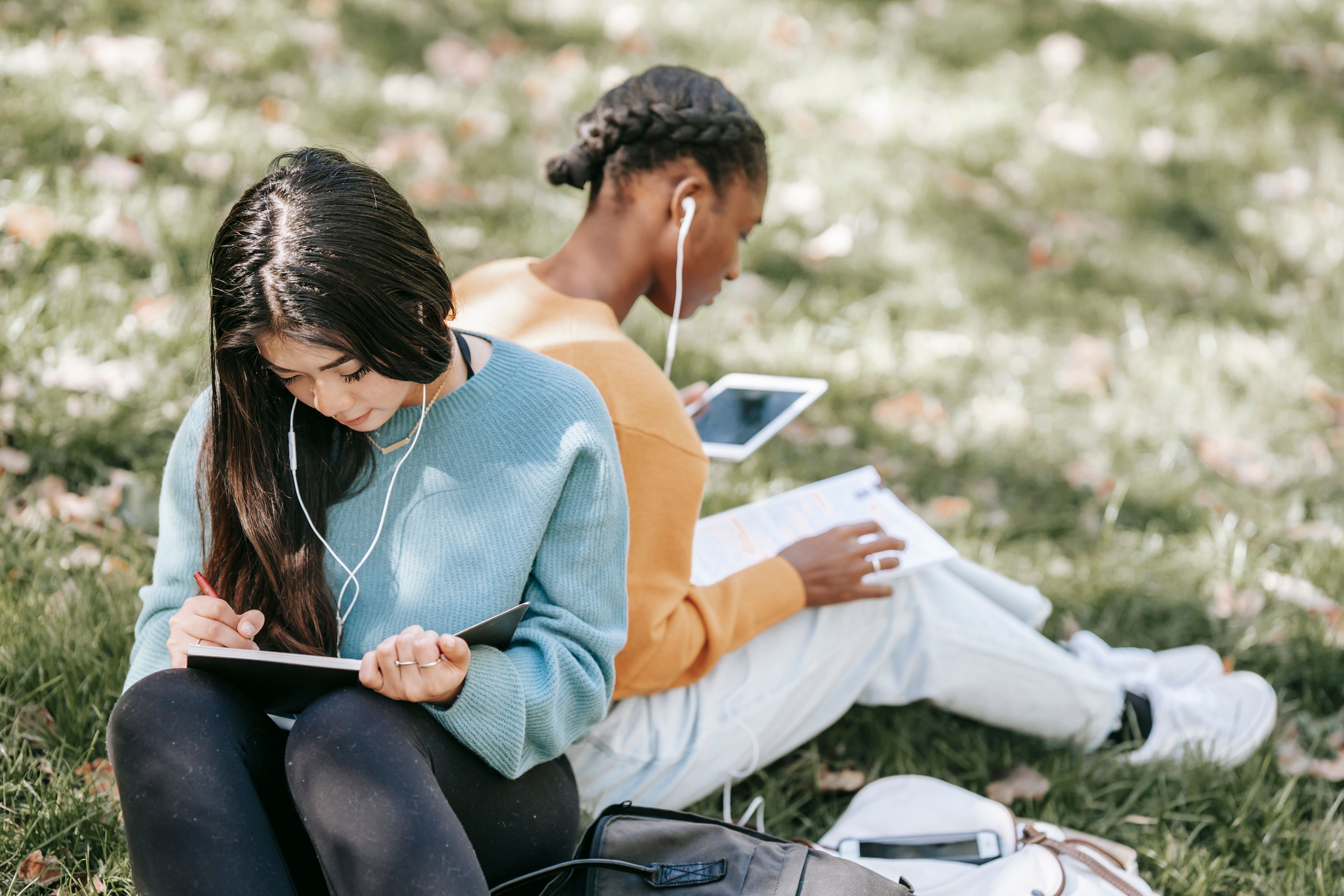
Some free textbook sites double as course providers, offering credit alongside reading material. Source: Pexels
OpenStax
OpenStax is a nonprofit platform that gives you completely free, high-quality textbooks for a ton of university subjects.
Instead of spending hundreds on course materials, you can just open the book online or download the PDF.
You can also use their tutor tools, which offer practice questions and feedback to help you understand the tougher topics.
The best part, it is easy to use. All you have to do is search for your subject, pick the textbook, and you’re good to go.
Whether you’re prepping for class or cramming for exams, OpenStax lets you learn without the stress of extra costs.
LibreTexts
LibreTexts has been used by over 223 million students, saving them an estimated US$75 million+ across its 3,000+ free textbooks.
LibreTexts specialises in STEM subjects — chemistry, physics, math, engineering — with textbooks built and maintained by university faculty.
Content is organised into modular chapters, so you can pull just the sections your course actually covers instead of downloading an entire book.
It also supports interactive tools, such as embedded Jupyter notebooks and 3D visualisations, for subjects that require them.
Internet Archive / Open Library
Internet Archive gives you access to millions of scanned books, including older textbook editions, through its lending library.
You borrow a copy for a set period, the same way you’d borrow a physical book from campus.
Use this as a backup when a required text isn’t available through OpenStax or Open Textbook Library, particularly for older editions that professors still reference or assign in syllabi.
MIT OpenCourseWare
MIT OpenCourseWare publishes real course materials from MIT classes at no cost, including textbooks, lecture notes, problem sets, and exam archives.
Coverage concentrates on math, computer science, and engineering, with less depth in the humanities or social sciences.
You get the same materials MIT students work through, without enrollment, application, or tuition.
Pair it with your own course syllabus for structure, since content isn’t organised around any external curriculum.

Language learning AI tools adjust difficulty based on how a student answers. Source: Pexels
AI study tools worth adding to your toolkit
NotebookLM
NotebookLM is Google’s free AI research tool built around your own uploaded material — lecture slides, textbook PDFs, readings — rather than open internet sources, so answers stay grounded in what you actually gave it.
Google added flashcard and quiz generation, plus a “Learning Guide” tutor mode, and partnered directly with OpenStax to turn popular free textbooks into ready-made interactive notebooks.
Audio Overviews let you listen to a two-voice summary of your material like a podcast, useful for reviewing between classes.
Access requires only a Google account, and everything traces back to your sources, reducing the risk of relying on fabricated information.
Quizlet
Quizlet has grown into a study platform used by over 60 million students and learners monthly.
Upload your notes or textbook content and it auto-generates flashcards, practice tests, and matching games, cutting out manual flashcard creation entirely.
Quizlet’s Q-Chat feature adds an AI tutor that explains concepts pulled directly from your study sets on request. Learn mode and full practice tests now sit behind Quizlet Plus, a paid tier, though basic flashcards and games remain free.
It’s most useful for memorisation-heavy coursework, such as vocabulary and definitions, rather than for conceptual problem-solving.
Claude
Claude works differently from NotebookLM and Quizlet in that it isn’t limited to pre-set study formats.
Paste in a textbook chapter or problem set and ask it to walk through a proof step by step, quiz you on a topic until you get it right, or explain a concept a professor’s textbook glossed over.
It handles open-ended reasoning better than fixed flashcard tools, which makes it useful for subjects like math, physics, or philosophy, where the “answer” depends on following logic rather than just recalling a term.
Treat it as a tutor to check your reasoning against, not as a source to copy answers directly from.
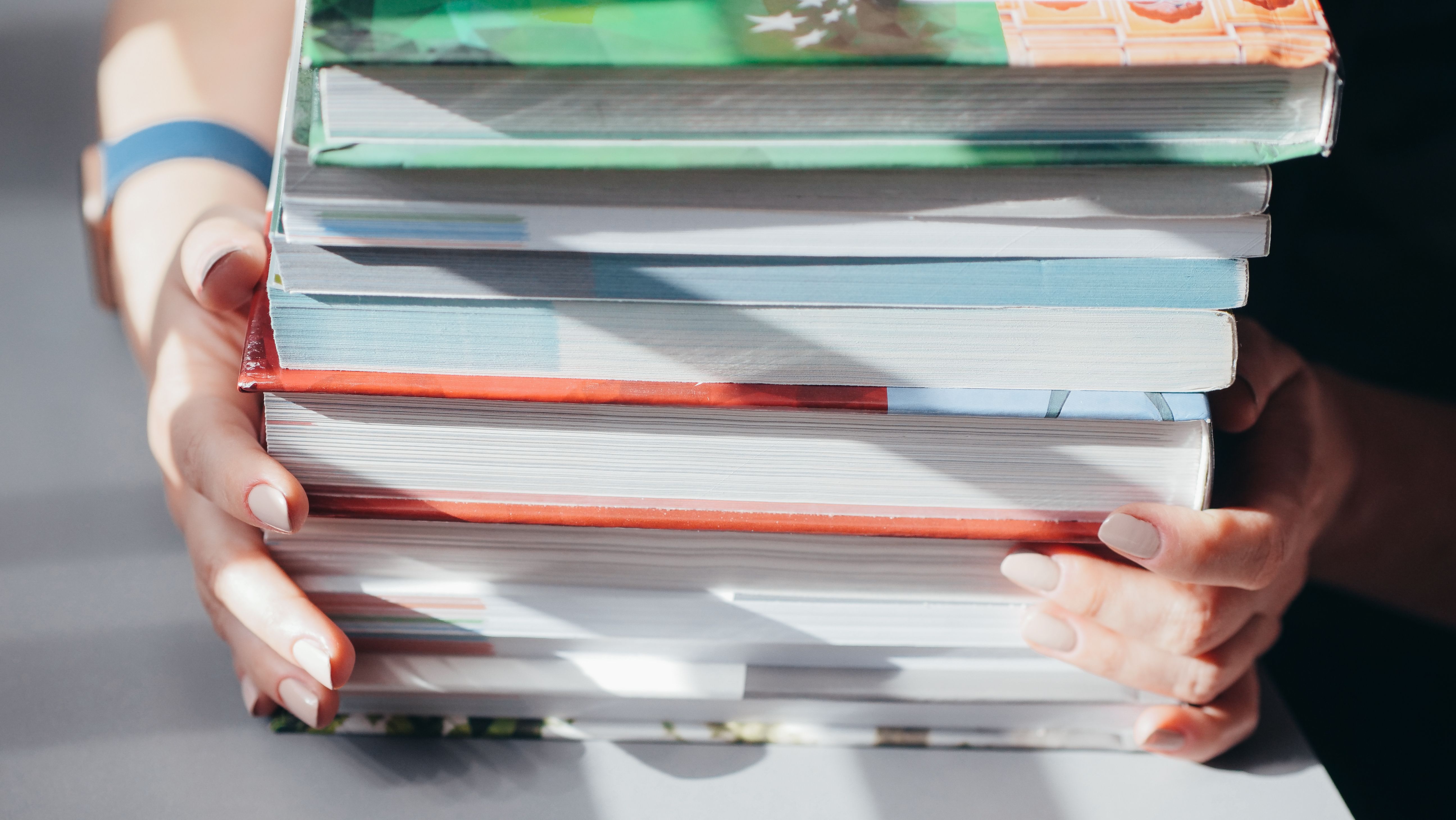
Selling textbooks back to campus bookstores means quick cash but lower payouts than the original price. Source: Pexels
Where to sell your used textbooks
If you do end up buying textbooks, don’t just chuck them once you are done with them. You could always sell your used textbooks in exchange for some extra cash.
There are several ways to sell your textbooks, but remember that when you sell them back, you won’t get as much as you initially paid.
Here are some options for where you could sell your textbooks:
- Your college bookstore: This is the easiest route if you bought your books on campus. You can get cash immediately, but be wary of potential lower resale values, especially if a newer edition of your book is available.
- Websites: Online platforms like Amazon, GoTextbooks, BookScouter, and Bookbyte are some websites to check out. Remember that demand often peaks around the start of the school year.
- Sell to classmates at a lower price: Not only will this help you earn back some money, you’ll also be very much appreciated by those who are scrambling together their finances to afford their own books.
- Auction-based sites: eBay and local platforms such as Craigslist and Facebook Marketplace also offer options for selling your textbooks online in exchange for cash.
Frequently asked questions (FAQ)
Is it legal to download free textbooks online?
Yes, if the source is legitimate — OpenStax, LibreTexts, Open Textbook Library, and MIT OpenCourseWare publish openly licensed or public domain content.
What’s the best free textbook website for college students?
OpenStax, for peer-reviewed textbooks across the most commonly required subjects — biology, business, psychology, statistics. LibreTexts wins for STEM-heavy courses.
Can AI tools replace textbooks for studying?
No. AI tools speed up summarising, generating practice questions, and clarifying specific concepts, but they don’t replace the depth you get from reading the full material — exams test that depth.
Disclaimer: This article was last updated on July 7, 2026.