Every graduation season, you probably hear about a number of celebrities receiving degrees. Honorary degrees, that is.
But have you ever wondered what those actually are, and why they exist? Because, as cool as it may be for your fave celeb to show up at your graduation ceremony, it actually creates headaches for university administrators, and even puts into question a university’s role in reinforcing and perpetuating social inequality.
Face it – an average person would never receive an honorary degree. Historically, these doctorates have only been awarded to influential, rich individuals, while regular individuals may stay neck-deep in debt years after graduating.
It can be said that this practice of awarding honorary degrees perpetuates a system where the rich get richer, and the poor only get poorer. On the other hand, institutes like to think that they’re awarding outstanding achievements in a particular field while reaping the benefits of being associated with a powerful individual.
But what exactly is an honorary degree, and do they mean anything other than associating universities with exceptional individuals?
What is an honorary degree?
An honorary PhD degree is the highest form of recognition a university can award to an individual. It recognises a recipient’s outstanding achievements despite not attending the awarding university, awarded to those who have made significant contributions to society or the academic or professional fields in general.
To put it plainly, an honorary doctoral degree is a degree given to someone who may not have pursued an education at a college or university.
Individuals who receive honorary PhD degrees have made a significant impact in their career or industry. They could have led impactful research initiatives or participated in financial, religious, governmental, literary, or artistic endeavours. Some individuals could have dedicated their lives and work to the university’s missions and values, bettering the lives of the common society.
Of course, honorary degrees are not recognised by employers, as they do not have the same stature as a corresponding earned doctorate degree. They should not be represented as such and don’t entail the status and title of an earned doctorate.
So, no, Usher cannot call himself Dr. Usher, for example.
In short, other than an academic qualification, think of honorary PhD degrees as ceremonial awards. Universities have committee boards that nominate individuals for these awards, who may or may not have an existing association with the university based on excellence in scholarship, creativity, leadership, humanitarian service, or public service.
But how exactly did the practice of awarding an honorary degree come about, and what do people even think of them?
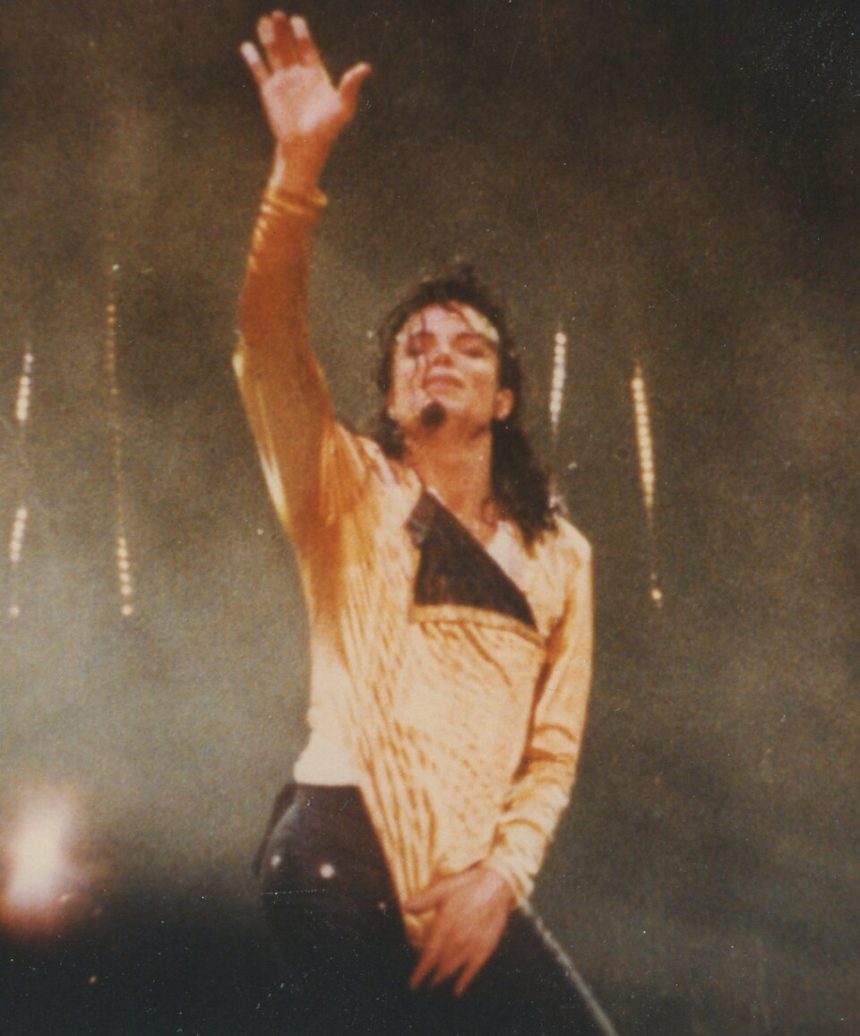
Michael Jackson was awarded an Honorary Doctor of Humanities degree from Fisk University for his service to the United Nego College Fund. Source: Daniele Dalledonne via Wiki Commons
Honorary PhD degrees throughout history
Honorary degrees have long been used to foster advantageous connections with individuals or even countries and organisations.
The easiest example – imagine awarding a famous actor with an honorary doctoral degree. Not only will their name be forever attached to the university’s history, but they will also most likely receive generous funding or support from the individual.
The first honorary PhD degree was awarded in 1478. It was a gift from the University of Oxford to Lionel Woodville, Dean of Exeter, Edward IV’s brother-in-law, and the future Bishop of Salisbury. As most people could tell, it was a clear attempt to obtain the favour of a man with great influence.
It then started as a form of mutual patronage, offering privileges to those who might return the favour to the institution through funding or political support. Over the next few centuries, it became clear that honorary PhD degrees were closer to an award show than actual academic achievement. After World War II, honorary doctorates actually became a hot topic for public debate and even protests in countries like Australia.
In August 1962, the Australian National University famously declined to award an honorary PhD degree to King Bhumibol of Thailand, the world’s longest-reigning monarch. The reason was reportedly that he lacked academic qualifications and could not “qualify” for an honorary degree. Needless to say, this created a lot of diplomatic embarrassment for the Australian government in the context of an impending royal visit.
Indeed, perhaps these honorary degrees are nothing more than cheap publicity stunts designed to forge connections between universities and powerful, influential individuals.
So should it even exist in the first place?
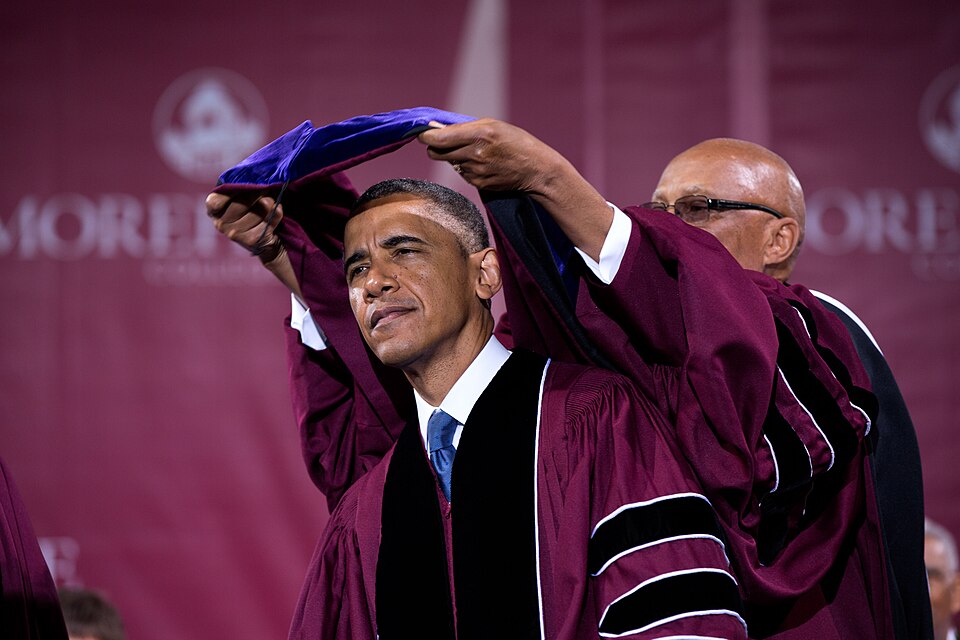
Dr. John Wilson Jr., President of Morehouse College, presents President Barack Obama with an honorary Doctor of Laws degree during the commencement ceremony at Morehouse College in Atlanta, Ga., May 19, 2013. Source: Pete Souza, Obama White House Archived via Wiki Commons
General consensus towards honorary PhD degrees
It sounds like an unpopular opinion, but people seem to agree that honorary degrees should not exist. To them, it’s a glorified piece of meaningless parchment with zero academic credentials.
This Reddit user said, “Don’t get me wrong. Many people who are awarded honorary degrees are deserving of some sort of recognition for their efforts and hardwork. However, a “degree” should be reserved specifically for academic accomplishments. Otherwise, we ruin the title of a degree.”
Their post was scattered with users who both agreed and disagreed.
- “Honorary degrees are like the little pin-on lapel wings a Delta pilot gave me when I was 7. They are not a substitute for actual degrees, and no one thinks they are or treats them as such.”
- “Nobody thinks honorary degrees are real.”
- “That’s why their title has the word ‘honorary’ in it. So that there is a distinction between the titles and the types of degrees.”
Another user shared similar sentiments, saying, “It seems like a slap in the face to anyone who has actually paid tuition, spent three to five years of their life devoted to attaining their degree and on top of that maybe even contributed to the university through societies or a part-time campus job. Any honorary degrees given out, to me, appears to be more like a PR stunt to associate themselves with a particular academic, or even celebrity, and seem just a little pathetic.”
Indeed, the concept may seem ridiculous to an average person. Most people spend a hefty amount of money just to get a degree, especially international students who come from countries with weaker currencies and visas.
Most of all, a doctorate degree is associated with years of rigorous academic pursuit — some people feel that handing out doctorates to people who do not earn them devalues the degrees people earn.
On the contrary, honorary degrees are free. They’re mostly awarded to celebrities, big-name tycoons, scientists, billionaire tech founders, presidents, and others who have made exceptional contributions to public service.
But what does it mean to make an exceptional contribution?
Is it all about making Nobel Prize-level discoveries, or is it releasing a song that hit Billboard #1? Or is it about buddying up to powerful tycoons and influential politicians in order to gain further recognition?
Awarding contributions that go beyond the academic field
In recent years, honorary PhD degrees have been awarded to many notable celebrities.
Meryl Streep has received four honorary doctorates, three of which come from prestigious institutes: Harvard, Yale, and Princeton. In 2014, the Academy Award-winning actress also received a Doctorate of Fine Arts from Indiana University at Bloomington for her cinematic talents and advocacy for women.
Hip-hop legend Missy Elliot received honorary doctorates from the prestigious Berklee College of Music and Norfolk State University for her innovative contributions to music, her career as a female trailblazer in a male-dominated genre, and her advocacy for mental health awareness.
But it’s also noteworthy to mention that honorary doctorates have also been revoked.
In 2015, Sean “Diddy” Combs received an honorary degree from Howard University, which he attended for two years before dropping out in 1990. He also donated US$1 million to the university to create a scholarship fund for undergraduate business students needing financial aid, which included internships and mentoring opportunities for his business and entertainment conglomerate.
But in 2024, Howard University revoked his degree and discontinued the scholarship programme after the rap mogul was revealed to have repeatedly abused his ex-girlfriend Cassie Ventura. Aside from frequent physical abuse, drugging, and rape allegations, a video was released showing Combs violently assaulting Ventura in the hallway of a Los Angeles hotel, ironically on the same year that he made his generous donation to Howard University.
“Mr Combs’ behaviour is so fundamentally incompatible with Howard University’s core values and beliefs that he is deemed no longer worthy to hold the institution’s highest honour,” the university said in a statement. “The university is unwavering in its opposition to all acts of interpersonal violence.”
That said, it’s important to look at honorary PhD degrees from another perspective.
Granted, they may be purely for building connections and gaining branding recognition, but it’s untrue that there is nothing to do with one’s achievement.
Taylor Swift, for example, never actually got to don a cap and gown before she was awarded an honorary doctoral degree from New York University in 2022.
She even joked about it, saying “I’m 90% sure that the reason I’m here is because I have a song called ’22.’”
“I never got to have a normal college experience per se. I went to public high school until 10th grade and then finished my education doing homeschool work on the floor of airport terminals,” Swift said in her commencement speech.
For Swift, education was different. At a young age, she had to learn to navigate an impossible industry, making sacrifices that most of us wouldn’t even dream of. She also learned how to fight for control over her career, making a highly publicised move that involved an ownership dispute, a tangle of multimillion-dollar recording contracts, and copyright claims.
As a result of her hard work, Swift is now the walking definition of influence, hard work, and accomplishment in her industry. She even became the first entertainer in history to receive the title of Time’s “Person of the Year.”
So, while she may not have toiled away writing a thesis, she definitely worked hard in her own industry and now has an honorary degree to prove it.
Impressive feats, no doubt. But does it merit a doctoral degree? We’ll leave that to you to ponder.
Celebrities with honorary degrees, at a glance
Honorary degree season peaks every spring, when commencement ceremonies across the US and UK line up a fresh crop of famous names. Here’s a snapshot of who’s received one, from whom, and why.
| Celebrity | Degree/Field | Awarding institution(s) | Reason cited |
|---|---|---|---|
| Meryl Streep | Doctorate of Fine Arts (x4) | Harvard, Yale, Princeton, Indiana University Bloomington | Cinematic talent and advocacy for women |
| Missy Elliott | Honorary doctorate | Berklee College of Music, Norfolk State University | Innovation in music; trailblazing career as a female rapper; mental health advocacy |
| Taylor Swift | Honorary Doctor of Fine Arts | New York University (2022) | Songwriting, cultural influence, entrepreneurship |
| Sean “Diddy” Combs | Honorary degree (revoked 2024) | Howard University | Originally: entrepreneurship and philanthropy; revoked following abuse allegations |
| Michael Jackson | Honorary Doctor of Humanities | Fisk University | Service to the United Negro College Fund |
| Chris “Ludacris” Bridges | Honorary degree | Georgia State University (2022) | Music career and entrepreneurship |
| Sarah Jessica Parker | Honorary Doctor of Arts | Northwestern University (2026) | Contributions to the arts and entertainment |
| Hugh Jackman | Honorary Doctor of Arts | Ball State University (2026) | Contributions to film and stage performance |
| Henry Winkler | Honorary doctorate | Emerson College (1978) | Contributions to acting and entertainment |
| Barack Obama | Honorary Doctor of Laws | Multiple institutions, including Arizona State University | Public service and leadership as US President |
Frequently asked questions about honorary degrees
Can someone with an honorary doctorate legally call themselves “Dr.”?
No. And doing so in a professional or medical context can even be misleading or, in some jurisdictions, illegal. Honorary degrees are ceremonial, not academic credentials, and reputable recipients and universities alike are usually careful to note the distinction. Some recipients do choose to use the title informally in entertainment or public-facing contexts, but it carries no legal or professional weight the way an earned doctorate does.
How does a university decide who gets an honorary degree?
Most universities have a dedicated committee — often made up of faculty, alumni, and board members — that reviews and votes on nominees, typically based on criteria like scholarship, creative achievement, leadership, humanitarian service, or public service. Candidates don’t need any prior connection to the university, though many honorees do have one (as an alumnus, donor, or previous speaker), which is part of what draws the “PR stunt” criticism the practice regularly attracts.
Have many people gotten honorary degree revoked?
Yes — it’s rare, but not unprecedented. Universities have historically stripped honorary degrees from recipients following major scandals or conduct seen as violating institutional values, ranging from fraud convictions to public disgrace. It typically requires a formal board vote, much like the original awarding process, and universities tend to frame the decision explicitly around a conflict with their stated values, as Howard University did in the Combs case.
Disclaimer: This article was last updated on July 21, 2026.