
What do the most successful people in the world have in common?
Money is probably the first thing that comes to mind, but success is how you define it — and it goes beyond how rich you are.
For some, success means finding something you’re deeply passionate about and pursuing it.
For others, success is finding the love of your life and starting a family together.
Who you are often determines what you deem successful, and yourpersonality type makes a difference.
However, when we look at successful role models, we often consider their net worth, passion, happiness and what they do in their free time.
No matter how you define success, having a role model can be important in your own journey.
They are vital as they give you something to aspire towards. The most successful people in the world can inspire you, provide you with insight, and motivate you to do better.
But there’s a dark side to copying your heroes blindly.
The truth behind the most successful people in the world
There are a couple of downsides to having a famous role model.
We tend to glamourise their existence, which can turn into a parasocial or one-sided relationship (often developed with celebrities or fictional characters).
Forbes reports that this can hinder “our ability to develop and maintain fulfilling real-life romantic relationships.”
Idolising celebrities can also harm your sense of self and lead to never thinking you are good enough.
For many,imposter syndrome — the internal psychological experience of feeling like a fraud in some area of your life despite any success you have achieved — can creep in.
How to overcome imposter syndrome like the most successful people in the world
While imposter syndrome is not a diagnosable mental health issue, it can happen if you are experiencing a lot of self-doubt or negative self-talk.
Imposter syndrome at university and workcan look like this:
- You feel like you “got lucky” when you actually prepared well and worked hard.
- You find it hard to accept praise.
- You apologise for yourself when you didn’t actually do something wrong.
- You hold yourself to incredibly —sometimes impossibly — high standards.
- You find the fear of failure paralysing.
- You avoid expressing confidence because you think people will see it as overcompensating or obnoxious.
- You’re convinced you’re not enough.
- People close to you say you’re not as confident as you used to be.
- You turn down opportunities for growth or visibility at work.
Imposter syndrome is an equal-opportunity intruder and can affect anyone. If you ever feel this way, remember you are not alone.
Harvard Business Review reports that aroundone-third of young people suffer from it, and 70% of everyone else is likely to experience it at some point in their lives.
From Lady Gaga and Emma Watson to Sanya Malhotra and Neelam Gill, manyhigh achievers have openly admitted tograppling with imposter syndrome.
Even some of the most successful people in the world have felt the crippling sense of doubt that this comes with.
This includes supermodel Bella Hadid, actress Lupita Nyong’o, celebrity chef Wolfgang Puck, and actor Tom Hanks.
Their admission of feeling this way sends a powerful message: it’s okay to admit uncertainty. Such transparency can inspire personal growth and encourage others to do the same.
So how do you overcome imposter syndrome? Do what the most successful people in the world do.
Recognise your accomplishments and celebrate even the smallest stuff. You got them by working hard and doing your best. Celebrating can help boost your self-esteem.
Successful people view challenges and mistakes not as threats but as learning opportunities. Use your self-doubt as a chance to grow and learn more.
Turn to friends, family, mentors and peers to reassure you. Ask for their help and guidance. They see a clearer picture of who you are and what you have accomplished so that they can reaffirm your successes.
Overcoming imposter syndrome is a journey towards self-acceptance. Successful individuals embrace their unique qualities and recognise that their differences make them extraordinary.
You must also remember that it is about the journey, not the destination. This feeling can go and come back, which does not mean that you have failed but rather that you need to work on it at your own pace.
Many accomplished individuals stress the significance of self-reflection and personal development in their fight against imposter syndrome.
They acknowledge that it’s an ongoing battle, but introspection, personal growth, and a commitment to self-improvement can help win the war.
The most successful people in the world in 2026
We’ve referred to Forbes’ real-time billionaires tracker for this update. Net worths are approximate and fluctuate daily with the markets; figures below reflect mid-July 2026.
2026 has been an extraordinary year for global wealth: Forbes’ annual World’s Billionaires List, published in March 2026, found a record 3,428 billionaires worth a combined US$20.1 trillion — up US$4 trillion from 2025, and roughly 400 more people than made the list the year before. A big driver: the AI boom has reshuffled the rankings, pushing chipmakers and cloud infrastructure leaders sharply up the list.
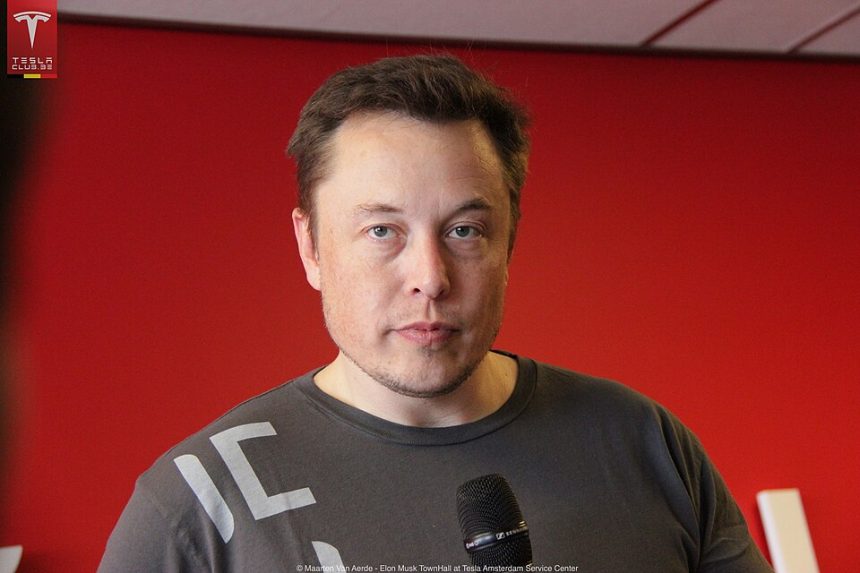
The first and currently only trillionaire. Source: Tesla Owners Club Belgium via Wiki Commons
1. Elon Musk
- Net worth: ~US$770–840 billion (fluctuates daily; Forbes says he briefly became the first trillionaire in history in June 2026, after SpaceX’s landmark IPO valued the rocket company at roughly US$1.8 trillion)
- Education: Bachelor’s degree in physics and economics, University of Pennsylvania
Musk remains, by a wide margin, the richest person on the planet — a title he’s held continuously since May 2024. Beyond Tesla and SpaceX, his AI company xAI merged into SpaceX in a deal valuing the combined company at over US$1 trillion, and Tesla shareholders approved a pay package that could hand him up to a further US$1 trillion in stock if the company hits extraordinarily ambitious growth targets over the next decade.
He’s also still known for his simple routines outside of work: relaxing with a drink, reading, and posting on X. He’s a firm believer in being efficient, actively discouraging unnecessary meetings.

The man behind Amazon. Source: Daniel Oberhaus via Wiki Commons
2 & 3. Larry Page and Sergey Brin
- Net worth: ~US$285–310 billion (Larry Page); ~US$265–285 billion (Sergey Brin)
- Education: Both hold degrees from Stanford University, where they met as PhD students
The Google cofounders re-entered the very top of the rich list in 2026, both crossing the US$300 billion mark at points this year — only the third and fourth people in history, after Musk and Larry Ellison, to reach that threshold.
Page stepped back from day-to-day Google/Alphabet operations years ago but remains a board member and controlling shareholder, reportedly now working on a manufacturing-focused AI startup. Brin came out of a long semi-retirement to help steer Alphabet’s Gemini AI strategy and was credited as a “core contributor” on its release.
4. Jeff Bezos
- Net worth: ~US$260–280 billion
- Education: Bachelor’s degree in electrical engineering and computer science, Princeton University
Bezos founded Amazon in his garage in 1994 after working at a Wall Street hedge fund. Though he stepped down as Amazon’s CEO in 2021, he’s back in an operational role as co-CEO of a new venture, Project Prometheus, an “artificial general engineer” company focused on physical AI for engineering design — reportedly valued at close to US$40 billion in an early funding round.

Larry Ellison on stage. Source: Oracle Corporate Communications via Wiki Commons
5. Larry Ellison
- Net worth: ~US$190–280 billion
- Education: Dropout, University of Chicago; dropout, University of Illinois Urbana-Champaign
Larry Ellison certainly isn’t the only billionaire college dropout to find success in Silicon Valley, but he was one of the first — before Bill Gates, before his friend Steve Jobs, and before Michael Dell.
He stayed in school long enough to learn about computer design, and a few years later invented a database by reading a paper written by an IBM scientist. Today, Oracle’s database and cloud infrastructure software power everything from credit card transactions to airline bookings. Ellison’s fortune has surged in 2026 on red-hot demand for AI data centres, and Oracle has also struck a deal to deploy its tools on U.S. government defence networks.
6 & 7. Mark Zuckerberg and Priscilla Chan
- Net worth: ~US$215–225 billion (Mark Zuckerberg)
- Education: Harvard University dropout (Mark Zuckerberg); Harvard University graduate and medical degree recipient from the University of California, San Francisco (Priscilla Chan)
The Meta CEO and his wife, a doctor, continue to run the Chan Zuckerberg Initiative (CZI), their philanthropic and advocacy organisation focused on curing, preventing, or managing all diseases within their children’s lifetimes. CZI has committed billions in grants since 2015 to scientific and medical research as well as education, and in recent years has extended its education focus to AI literacy initiatives for teachers.

Jensen Huang, founder and CEO of Nvidia, speaks in Stanford University’s CS 153 course on April 30, 2026. Source: Anderseidesvik via Wiki Commons
8. Jensen Huang
- Net worth: ~US$150–185 billion
- Education: Bachelor’s degree in electrical engineering, Oregon State University; master’s degree in electrical engineering, Stanford University
A new entrant to this list, Nvidia’s cofounder and CEO has become one of the defining figures of the AI era. Born in Taiwan, Huang moved to the US as a child, attended boarding school in Kentucky, and worked as a busboy and waiter at Denny’s before studying engineering at Oregon State — where he met his future wife in a lab class — and later earning a master’s from Stanford while working full-time at AMD.
He co-founded Nvidia at a Denny’s restaurant in 1993; the company’s GPUs, once built for gaming, now underpin the global AI infrastructure boom, and Nvidia became the first company ever valued at US$5 trillion in October 2025.

He leads the world’s largest luxury goods conglomerate. Source: Jérémy Barande via Wiki Commons
9. Bernard Arnault
- Net worth: ~US$145–170 billion
- Education: Bachelor’s degree in engineering from École Polytechnique
The French luxury goods tycoon behind LVMH Moët Hennessy Louis Vuitton — which owns Louis Vuitton, Christian Dior, Sephora and Tiffany & Co., among roughly 75 brands — held the title of world’s richest person for stretches of 2023 and 2024. He’s since dropped several places as AI and tech fortunes have outpaced luxury goods, but remains comfortably one of the wealthiest people alive, and the only non-American in the current top 10.
“My studies at École Polytechnique have given me an analytical and synthesis capacity that is inherent in the educational method of I’X and École Polytechnique’s training, which allows both to analyse the challenges you may meet in a factual and detailed way,” Arnault has said of his education.
10. Bill Gates
- Net worth: ~US$104–108 billion
- Education: Harvard University dropout
For the first time in 33 years, Bill Gates dropped out of the world’s top 10 richest people in 2025 — not because he’s earning less, but because he keeps giving so much away.
He does this through Gates Foundation, the vehicle for the vast majority of his philanthropic giving, which has distributed tens of billions of dollars in grants since it was founded.
12. Michael Bloomberg
- Net worth: ~US$105–110 billion
- Education: Bachelor of Science in electrical engineering, Johns Hopkins University; MBA, Harvard Business School
The former New York City mayor and Bloomberg LP co-founder has now given away more than US$21 billion over his lifetime through Bloomberg Philanthropies, topping the Chronicle of Philanthropy’s list of America’s biggest individual donors for multiple years running. In 2024, he pledged US$1 billion to Johns Hopkins University, his alma mater, to cover medical students’ tuition — on top of an earlier US$1.8 billion pledge to the school.
Frequently asked question about the most successful people in the world
Who is the richest person in the world right now?
Elon Musk, with a fortune that has swung between roughly US$770 billion and over US$1 trillion in 2026 depending on Tesla and SpaceX’s share performance. He’s held the top spot continuously since May 2024.
What do most of the people on this list have in common education-wise?
There’s no single formula. Some, like Jensen Huang, Priscilla Chan and Melinda French Gates, completed advanced degrees at highly selective universities. Others, like Bill Gates, Larry Ellison and Mark Zuckerberg, dropped out of college to build their companies. What they share isn’t a specific credential but a habit of continuous learning, risk-taking, and using whatever education they did get as a foundation to build on.
Why do so many billionaires still experience imposter syndrome?
Success doesn’t cancel out self-doubt — if anything, high achievers are often more exposed to situations where they feel out of their depth, whether that’s meeting more accomplished peers or taking on bigger challenges.
Research suggests the majority of people experience imposter syndrome at some point, regardless of how objectively successful they are.
Is net worth the only measure of success?
No. This list uses net worth simply because it’s measurable and easy to rank. Many people on it — and plenty of people not on it — would point to family, health, purpose, or contribution to others as the metrics that matter most to them.
Disclaimer: This article was last updated on July 22, 2026
