
Whether you want to become a professional musician or teach music, equipping yourself with an education from a music school is one of the best ways to enter the industry.
A music degree can help students develop interdisciplinary, useful skills that can be applied to several occupations, including performers, sound technicians, music directors, and composers.
The cheapest music schools offer something extra: affordable fees.
An education in music can be expensive. In the US alone, some of the top universities like Berklee College of Music or The Juilliard School can cost around US$50,000 a year. And if these music schools are in certain US cities, rent, food and transport can blow your budget as well.
Plus, we’ve not factored in the high cost of buying new instruments or servicing them either.
Thankfully, there are a number of music schools that offer top-tier programmes that are significantly less expensive than most private music schools.
Here is a list of the best and cheapest music schools for international students.
7 of the cheapest music schools around the world:
1. Norwegian Academy of Music, Norway
One of the cheapest music schools in Northern Europe is the Norwegian Academy of Music. It is renowned as the most prestigious music academy in the country, boasting the best instructors and internationally acclaimed musicians.
Here, you’ll find programmes at the bachelor’s, master’s, and doctoral levels. These include Conducting, Church Music, Composition, Music Education, Music Performance, Music Performance, Music Therapy, Music Theory, and many more.
The tuition fee per academic year is 220,000 Norwegian kroner (US$21,123) regardless of your level of study.
Studying in one of the cheapest music schools means being able to save up and spend on other musical events to expand your horizons.
2. Conservatory of Music of Brooklyn College, US
There’s no better value-for-money decision than studying at the Conservatory of Music of Brooklyn College. Here, you’ll learn from world-class faculty of Grammy and Guggenheim winners, composers and musicologists, conductors, and performers and have the chance to participate in more than 150 public concerts per year, alongside your peers, the faculty, and even with musical organisations from around the New York metropolitan area.
The conservatory offers undergraduate degrees in music, music composition, music education, and performance; graduate degrees in composition, media scoring, musicology, performance, and sonic arts; advanced certificates in music education and performance; and a post-master’s advanced diploma in performance.
Tuition per academic year is around US$8,370 to US$10,695 across a four-year programme.
3. Mahidol University, College of Music, Thailand
The College of Music at Mahidol University is Thailand’s first music institute offering comprehensive degree programmes and is now one of Southeast Asia’s leading music colleges, ranking within the top 50 in the QS World University Rankings by Subject for Performing Arts 2025.
As a complete conservatory of music, they offer programmes — all taught in English — from high school through the doctoral level in nearly every area of music. Majors here include Thai and Eastern Music, Popular Music, Musical Theatre, Music Technology, Music Education and Pedagogy, Music Composition, Music Business, Classical Performance, and Jazz.
Annual tuition fees vary from 183,500 to 209,700 Thai baht (US$5,537 to US$6,327) per year.
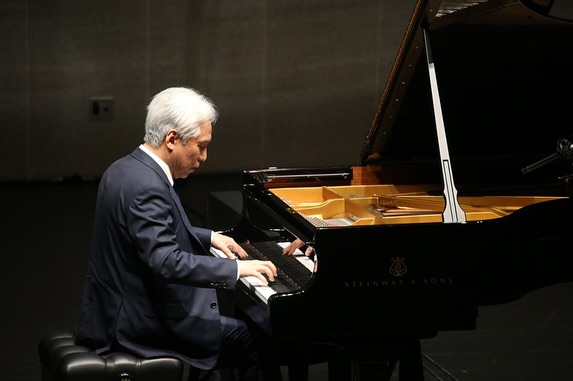
Daejin Kim is a Pianist & Professor at The Korean National University of Arts. Source: Korean National University of Arts
4. Korea National University of Arts, South Korea
Since its foundation, the K-Arts School of Music has sought to compete with schools such as The Juilliard School, Curtis School of Music, and the Paris National High Conservatory.
Here, students have a choice of joining undergraduate and postgraduate programmes in vocal music, instrumental music, composition, conducting, and musicology.
The annual tuition costs around 4.8 million South Korean won (US$3,444). International students can even check out the AMA+ (Art Major Asian Scholarship) Project, a Korean government scholarship for art major students from ODA recipient countries, as well as a handful of other governmental financial aid too.
5. University of Music and Performing Arts Vienna, Austria
The University of Music and Performing Arts Vienna (mdw) is among the world’s largest and most renowned universities specialised in the performing arts of music, theatre, and film. Here, you’ll find more than 3,000 students from 70 countries in over 150 programmes run by 25 departments.
Some offerings include bachelor’s, master’s, and doctoral level studies in Instrumental Studies (Performance), Voice (Performance) and Musical Theatre Direction, Chamber Music, Conducting, Music Therapy, and more.
Tuition and the compulsory Austrian Student Union (ÖH) membership fee for those from EU/EEA countries come up to 388.06 euros (US$440) per semester. Other international students can expect to pay around 751.42 euros (US$852) per semester.
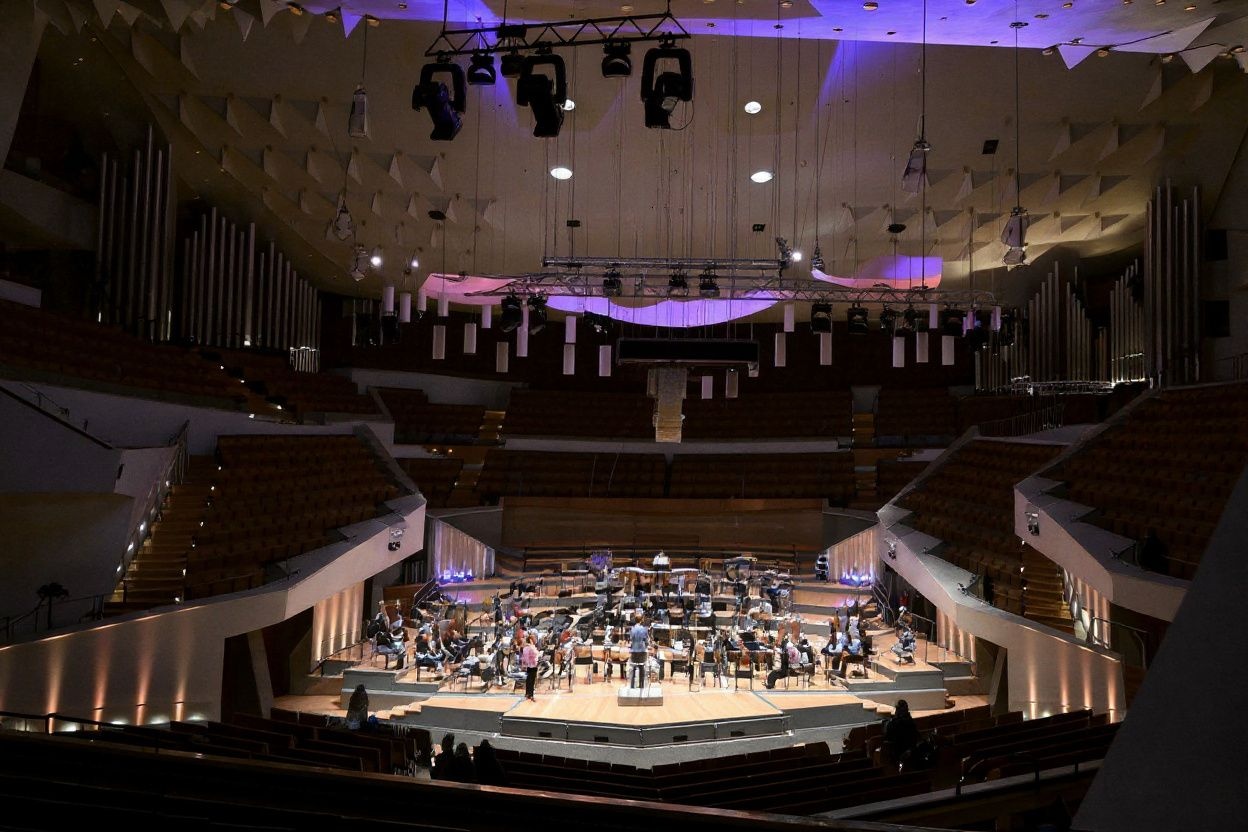
The cheapest music schools have more to offer than you think.
6. University of Music Würzburg, Germany
Germany is home to over 69 higher education institutions in the field of music. Among them is the University of Music Würzburg, one of the cheapest music schools in the world — so cheap, in fact, that it’s actually tuition-free. Students only need to pay the yearly semester fee of 337 euros (US$382).
However, all programmes are taught in German, and students must attain a C2 proficiency level to enrol in the degree programme.
The bachelor programmes offered include Voice Performance, Church Music, Orchestral Instruments, Jazz, Guitar, and Conducting. Postgraduate programmes include the Master in Music in Performance, Performance and Pedagogy, or Theory and Composition.
One of the best parts about studying here, beyond what you can find in the school, is what the city of Würzburg offers. From small improv-theatre groups, clubs for every musical style, youth centres, poetry and singer-songwriter slams, rehearsal rooms and art projects of all kinds, it’s no surprise that musicians of all kinds thrive here.
7. Curtis Institute of Music, US
With just a 4% acceptance rate and 160 students, only the best of the best make it into the Curtis Institute of Music. Here, students are selected based on merit and merit alone. Enrolling in the school means that you’ll find yourself among unparalleled peers, learning through doing and the personalised attention from a faculty of actively performing musicians.
Curtis charges no tuition to its students, regardless of their financial situation. For the 2025-26 school year, the annual value of this scholarship is US$54,364 for undergraduate students and US$67,502 for graduate students.
However, the school does estimate that students should prepare just under US$40,000 for potential living costs such as housing, food, miscellaneous bills, and instrument maintenance and supplies.
Frequently asked questions about the cheapest music schools
Is “tuition-free” really free, or are there hidden costs?
Not entirely free in practice — tuition-free schools like Würzburg and Curtis still charge separate fees, and living costs are usually the bigger expense regardless of tuition. At Curtis, for example, the full-tuition scholarship covers educational costs, but students still need to budget for comprehensive fees, health insurance, housing, food, and instrument upkeep, which can add up to a meaningful annual cost even with zero tuition. Always check the full cost of attendance, not just the tuition line, before assuming a school is affordable.
Do any of these schools require you to speak the local language fluently?
Yes, notably Würzburg, which teaches entirely in German and requires a C2 proficiency level (the highest level on the Common European Framework) just to enrol — a serious barrier if German isn’t already close to a working language for you. By contrast, Mahidol’s College of Music teaches entirely in English despite being in Thailand, and Curtis, Brooklyn College, and the Norwegian Academy of Music (for its international programmes) are also English-medium, making them more accessible if you’re not multilingual.
Are cheap music schools a compromise on quality or prestige?
Not necessarily — several schools on this list are prestigious specifically because they’re free or low-cost, not despite it. Curtis’s near-impossible 4% acceptance rate exists precisely because it offers a fully funded, elite conservatory education; similarly, Germany and Austria’s public conservatory model (low or no tuition, funded by the state) applies to genuinely well-regarded institutions, not backup options. Affordability and prestige aren’t mutually exclusive in the countries on this list — though acceptance rates at the most competitive ones, like Curtis, reflect how sought-after that combination is.
Disclaimer: This article was last updated on July 24, 2026.