Russia has plans to welcome 500,000 international students by 2030, and recent enrollment numbers are moving toward that goal.
Russian universities enrolled 422,000 international students in 2025, according to the Ministry of Education and Science of Russia. This marks continued growth from 389,000 in 2024 and 351,500 in 2022. Iranian enrollment alone jumped 42% to reach 9,210 students, while African student numbers climbed 6% to over 35,000.
This growth trajectory aligns with the Unified Plan for National Development Goals, approved by Russian Prime Minister Mikhail Mishustin, which sets foreign enrollment targets of 425,000 by 2026 and 440,000 by 2027 — roughly 20,000 additional students each year through 2030.
To support these numbers, the plan also introduces annual international youth forums and a Global Universities Association Olympiad, both aimed at expanding recruitment.
But why are so many international students eager to head to Russia despite the country’s political turmoil?
TL;DR? Here’s the summary:
- This article features the 15 best Russian universities for international students
- Russia aims to host 500,000 international students by 2030, with enrolment already reaching 422,000 in 2025.
- The article also features Russia’s top medical universities, covering tuition fees, English-taught programmes, and internationally recognised medical degrees.
Despite the ongoing conflict with Ukraine, international students continue to choose to study in Russia. Why?
Why study in Russia?
You may question the idea of studying in Russia, especially when the country has received negative publicity emanating from its invasion of Ukraine. The unprovoked and premeditated war has led to the deaths of thousands of people, and many have chosen to flee or seek refuge in other countries.
But despite that, many are willing to put aside prejudice, and political views – and maybe even personal values? – for affordable, high-quality education in Russia.
Visualise this – tuition fees in Russia range between US$1,570 and US$8,140 per year, and only a few study programmes cost more than USD$10,850. The cost of living is also low – most international students only have to spend US$325-US$650 a month.
It’s an appealing offer, especially when promised affordable fees, scholarships for international students, and cheap accommodation for the best Russian universities across the country. And if you’re lucky, you can be one of 15,000 international students who receive an annual grant for free tuition, and even boarding.
Other reasons include cheap internet services, expansive job opportunities, easy transportation, and good health services. Combined, this makes an attractive package.
Just ask African students in Russia – in August 2024, the journal Higher Education in Russian published a survey titled “The driving factors for the rise of African student migration to Russia”.
Participants, who were from Ghana, Nigeria and Sudan, cited that the high quality of education and life in Russia were the main reasons that drove African students to study at Russian universities. Another factor was that the entry processes were uncomplicated, and universities easily accepted recommendations for family and friends.
How to apply as an international student in 2026/2027
Most international students enter Russia one of two ways: as a self-funded applicant paying tuition directly to a university, or through the Russian Government Scholarship (quota), which covers 100% of tuition plus a monthly stipend for around 15,000 places a year.
Quota applications run through the official Education in Russia portal alongside Rossotrudnichestvo representatives and Russian embassies in each applicant’s home country.
Several universities, including RUDN and Saint Petersburg State University, also run their own Open International Olympiads as an alternate route to a state-funded place; St Petersburg State University’s 2026/2027 Olympiad window opened on 12 November 2025 and closed 6 February 2026.
Applicants should apply directly through the official university or government portals only.
If these prospects sound interesting to you, perhaps consider pursuing a degree at one of the best Russian universities.
Nine best Russian universities for international students
Lomonosov Moscow State University, Moscow
Based in the capital of Russia, Lomonosov Moscow State University is widely considered to be one of the best Russian universities for international students. It is one of the oldest educational institutions in the country, and also one of the best. It’s the highest-ranked public university in Russia, and #115 globally according to QS World University Ranking.
The university is home to over 4,000 international students, offering a vast array of English programmes. Foreign students will also enjoy the facilities; the university is home to a science park, four museums, 15 research centres, a publishing house, and one of the largest libraries in the world.
Bauman Moscow State Technical University, Moscow
Bauman Moscow State Technical University is ranked #318 globally, and is the oldest and largest Russian technical university in the country. It’s also prestigious – alumni are known to be headhunted by national and international companies.
The university is considered one of the best higher education institutions for engineering in Moscow. It’s part of several European Commission programmes and receives annual grants from countries such as Germany, Britain, France, Italy, and so on.
You’ll find international students from all over the world pursuing undergraduate, bachelor’s and postgraduate programmes here.
RUDN University, Moscow
Also known as the Peoples’ Friendship University of Russia, RUDN University is ranked #359 globally. True to its name, it’s home to 28,000 students from over 155 countries worldwide, offering a broad range of affordable programmes.
While it may rank lower than its prestigious partners, many consider it a fan-favourite for foreign students.
An active member of the government’s initiative to provide free education to 15,000 foreign students, the university goes a step further by hosting the Open Olympiad, a competition aimed at identifying talented international students to offer them scholarships.

While little has been officially confirmed about President Vladimir Putin’s family life, his eldest daughter also studied at his alma mater.
Saint Petersburg State University
St Petersburg University is one of the top public universities in the nation’s second-largest city, and it has been a leading centre of education, science and culture since 1724. Its most notable alumni would be Vladimir Putin, the president of Russia himself.
Ranked #390 globally, the university is home to over 5,300 international students from 121 countries. It offers over 1,200 courses taught in English and other foreign languages such as German, Chinese, Spanish, French and Italian; subject areas range from art and management to mathematics, physics and computer sciences disciplines.
Kazan Federal University
Kazan Federal University, located in the Tatarstan Republic in the east-central part of European Russia, is the second-oldest university in the country, and offers a number of undergraduate and postgraduate programmes taught in English. Ranked #468 globally, the university is home to as many as 10,500 students from 101 countries worldwide.
The university’s international outlook is also reflected in both research and exchange opportunities. KFU students and faculty members participate in bilateral research and exchange programmes with over 370 partners in 70 countries.
HSE University, Moscow
The National Research University Higher School of Economics (HSE University) is a major research and academic institution which regularly appears in high-profile global rankings such as QS and Times Higher Education.
The university ranks #423 on the QS World University Rankings, and is home to over 5000 international students.
Students can choose from 94 bachelor’s and 182 master’s degree programmes, which provide full and partial scholarships and cover numerous fields of study. Master’s scholarships aimed towards international students include seven scholarships that provide 25% to 70% tuition waiver.
Tomsk State University
Ranked #510, Tomsk State University (TSU) is the largest classical university in Russia’s Asian region, and the acknowledged centre of science, education, and innovation. There are currently more than 3,000 students from 70 countries.
TSU graduates and the university itself have significantly contributed to the progress in education, science, and culture in Russia and beyond. Research output is strong — the institute is affiliated with the Russian Academy of Sciences, the Russian Academy of Medical Sciences, the Academy of Sciences of the CIS, and even State Prize and Nobel Prize winners.
Students can pursue various levels of education here, ranging from a bachelor’s degree, a specialist degree, a master’s degree, and a PhD.Strong programme choices include engineering and medicine.
ITMO University, St. Petersburg
ITMO University sits in the historic centre of St. Petersburg and is ranked #711 globally in the QS World University Rankings 2026. It’s known for information technology, photonics, and robotics, with more than 15% of its student body made up of international students from a global mix of countries.
Tuition for international students starts around US$3,684 a year, among the more budget-friendly options on this list.
Programmes offered include 27 Bachelor’s majors and a wide range of Master’s programmes, spanning IT & Programming, Mechatronics and Robotics, Photonics, Biotechnology and Smart Materials, and Innovations Development.
Peter the Great St. Petersburg Polytechnic University (SPbPU)
Founded in 1899, SPbPU ranks among the top 100 universities in Russia and holds a top-3 spot among Russian technical universities by number of international students. More than 8,500 students come from over 120 countries, taught by 271 international faculty members.
Undergraduate tuition for international students for the 2026-2027 academic year starts from ₽322,000 (roughly US4,112) a year for non-visa regime countries, rising to ₽664,000 (US$8,480) for Design and other high-demand fields.
The university runs four Bachelor’s and 25 Master’s programmes taught fully in English, plus 48 double degree programmes and 85+ supplementary international educational programmes such as summer and winter schools.
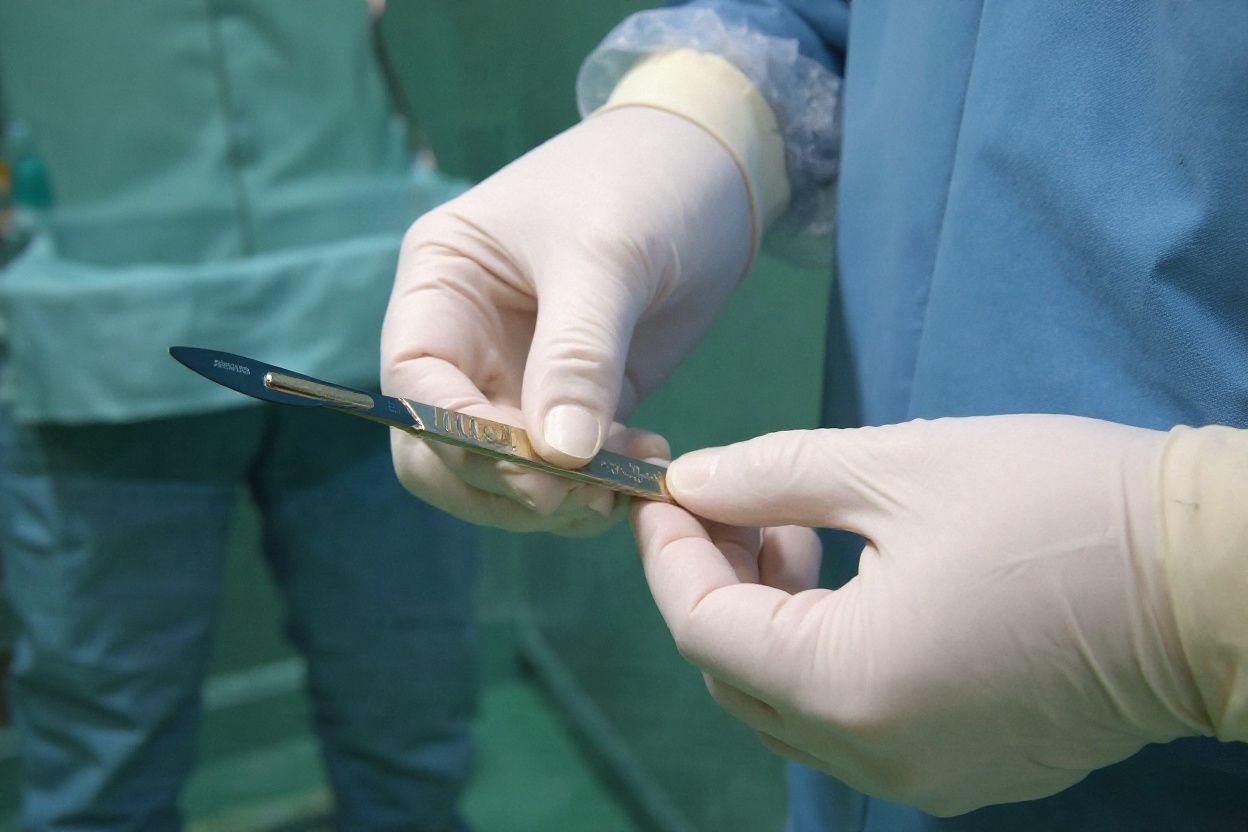
You’ll find high-quality medical programmes in Russia at a fraction of the cost of similar programmes in the US or UK.
Studying medicine? You should apply to the best Russian medical universities
Medicine has consistently been one of the most popular fields of study for international students in Russia.
Around 50 medical universities and colleges operate in Russia under the aegis of the Russian Federation’s Ministry of Public Health, and the degrees offered are internationally recognised by the WHO and UNESCO.
As a bonus, Russia’s government quota programme covers 100% of tuition, plus a monthly stipend, for around 15,000 international students a year across all fields including medicine, making it one of the most direct routes to affordable Russian medical education.
Here are our top picks:
Sechenov First Moscow State Medical University, Moscow
Sechenov First Moscow State Medical University is the oldest leading medical university in Russia, and is considered to be the best Russian university for MBBS (Bachelor of Medicine and Bachelor of Surgery) programmes.
Its history goes back to 1758, with many graduates going on to become leading physicians and scientists who contributed significantly to global progress in medicine. Think Nikolai Pirogov, who is considered to be the founder of field surgery, or Alexander Luria, the father of modern neuropsychology.
The clinical campus is one of the biggest and best teaching hospitals in Europe. For only US$9,300 a year, you’ll have access to research-based training and worldwide research networks to help you become part of the next generation of healthcare leaders.
Bashkir State Medical University, Ufa
Bashkir State Medical University is one of the best Russian medical universities for international students interested in medicine. Ranked among the top five medical universities in the country, this university, located in the capital of Bashkortostan, is fully government-funded, ensuring substantial funding to support its educational missions.
Accredited by the Ministry of Health of the Russian Federation, it offers over 1,000 clinical residences and PhD programmes, as well as 7,000 postgraduate professional trainings. BSMU has consistently upheld a reputation for providing exceptional medical education, especially for foreign students; 20% of its student body consists are from abroad.
You’ll find English-taught programmes here ranging from US$3,000 to US$8,000 a year.
Novosibirsk National Research State University, Novosibirsk
Ranked #488 globally, Novosibirsk National Research State University is known for its scientific research and cutting-edge technology. As many as 80% of NSU teachers are scientists from the Siberian Branch of the Russian Academy of Sciences, ensuring high-quality education.
The university offers several medical programmes in English for international students from 57 countries, along with intensive Russian language courses. This combination ensures students can thrive both locally and internationally after graduating. You’ll also find international joint programmes hosted with partner universities in 26 countries.
For such a comprehensive programme, you may be surprised at how much it costs. Fees are US$6,500 a year for six academic years, and students are not required to pay for their books or materials either. The only downside is you’ll be living in Siberia, where the temperature dropped to −62.1 °C in 2023, the lowest in two decades.
Bonus – Lomonosov Moscow State University
We know we mentioned Moscow State University earlier, but we just have to mention it again. After all, there are more than just a few reasons it’s known as one of the best Russian universities for international students; one of them is its training in broad branches of modern science and humanities.
Here, you can explore topics such as anatomy, physiology, biochemistry, pharmacology, pathology, internal medicine, surgery, and paediatrics – you’ll also have ample opportunities for hands-on experience in local hospitals and clinics. Fees start from US$7,000 a year.
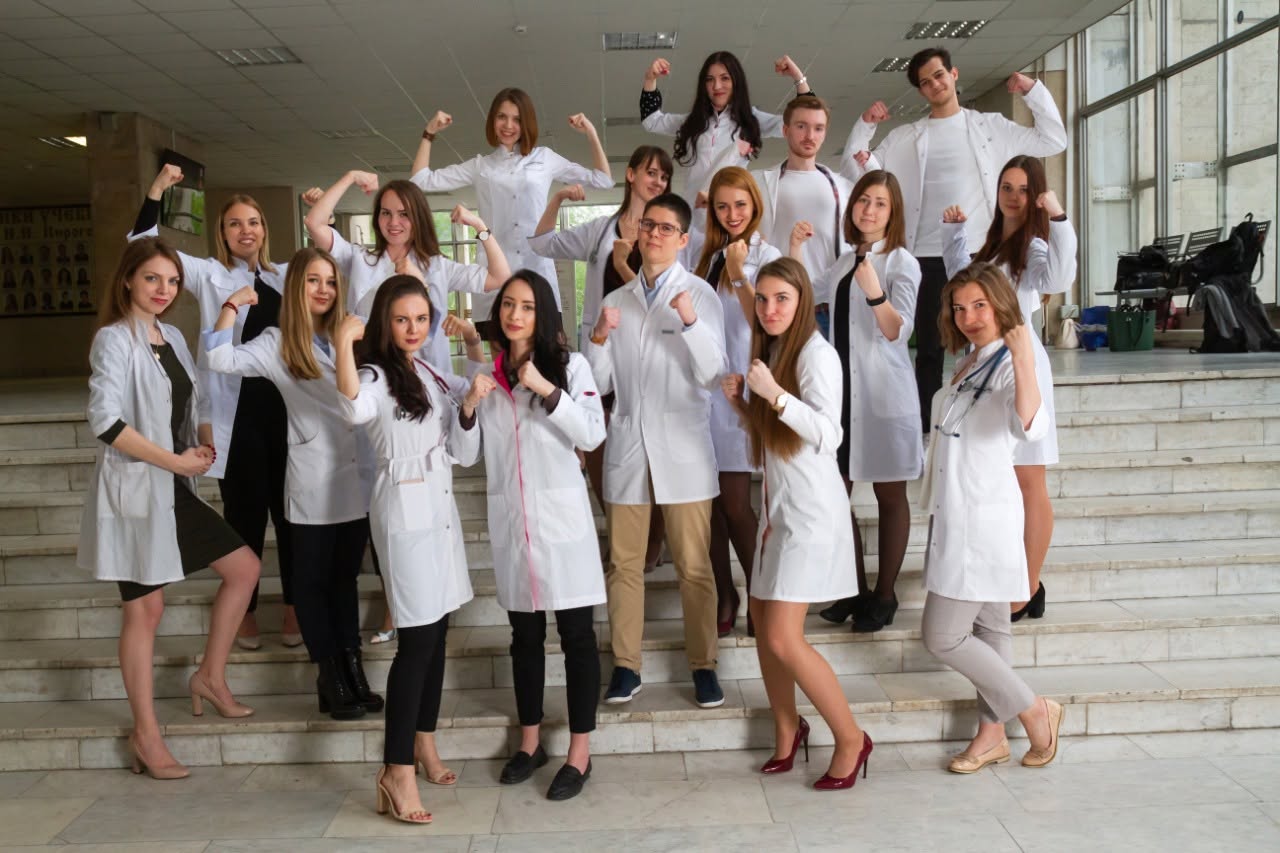
Pirogov Russian National Research Medical University is one of Russia’s longest-standing medical schools. Source: Pirogov Russian National Research Medical University/Facebook
Pirogov Russian National Research Medical University, Moscow
Ranked #401 globally, Pirogov RNRMU, the only medical university in Russia to hold “National Research University” status, and traces its history back over a century — it was the first Russian institution to offer women a path into higher medical education.
For the 2026-2027 academic year, tuition for foreign students in the English-taught General Medicine programme is ₽1,200,000 a year (roughly US$15,325), with Dentistry at ₽1,300,000 (US$16,602) and Pharmacy at ₽900,000 (US$11,494).
Beyond the programmes listed, the university also offers educational programmes at all levels in clinical medicine, biomedicine, psychology, social work, and more. These are delivered across its faculties, which include Therapeutic, Paediatric, Medicobiologic, International, Dentistry, Pharmaceutical, and Psycho-social.
Kazan State Medical University, Kazan
KSMU is Russia’s third-oldest medical university, founded in 1804, and is consistently ranked among the country’s top 10 medical schools.
For the 2026-2027 academic year, tuition for international students in the English-taught General Medicine programme is ₽636,000 (US$8,122) a year, with Dentistry at ₽720,000 (US$9,195) and Pharmacy at ₽312,000 (US$3,984)— with lower rates available for applicants from CIS countries
Beyond that, you can choose to pursue speciality and postgraduate programmes across nine faculties, spanning Clinical Medicine, Preventive Medicine, Pediatrics, Nursing, and Social Work.
Frequently asked questions
How many international students are studying in Russia in 2025/2026?
Russia enrolled 422,000 international students in 2025, and the government’s Unified Plan for National Development Goals targets 425,000 by 2026, with a goal of 500,000 by 2030. Growth isn’t even across regions — Iranian enrollment jumped 42% to 9,210 students, while African student numbers rose 6% to over 35,000.
How much does a medical degree cost in Russia in 2026?
For the 2026-2027 academic year, English-taught General Medicine runs ₽636,000 a year (US$8,122) at Kazan State Medical University and ₽1,200,000 a year (US$15,325) at Pirogov RNRMU in Moscow. Fees vary sharply by university and city. Applicants from CIS countries typically pay reduced rates at both universities, so it’s worth checking the exact fee tier before budgeting.
Can international students work part-time while studying in Russia in 2026?
Yes — since a 2020 law change, full-time international students at state-accredited Russian universities can work but need to apply for a separate work permit, which costs approximately ₽3,500 (US$44) and takes 10–14 days to process. The exception: work at your own university requires no permit. Work is limited to your free time outside class hours and to the same region as your university.
Disclaimer: This article was last updated on August 5, 2026.