Originally from Jordan, Yousef Abughneim was going through a list of Hungarian universities when Szeged came up. What stopped him had nothing to do with the course. It was the city itself: a riverside town built around wide open squares, sunnier than anywhere else in Hungary, and small enough to cross on foot. “I want to live there,” he says.
Only afterwards did he discover the University of Szeged (SZTE), and what he found sealed the decision: a highly respected institution in the very city he had already fallen for. “It felt like killing two birds with one stone,” he says.
Today, Abughneim is studying General Medicine at the Albert Szent-Györgyi Medical School, whose English-language programme has been running since 1985 and attracted a record number of applicants this year. He also serves as President of the International Student Union of Szeged (ISUS). His journey from prospective student to student leader says a lot about what SZTE offers: a place where academic excellence and a genuine sense of belonging go hand in hand.
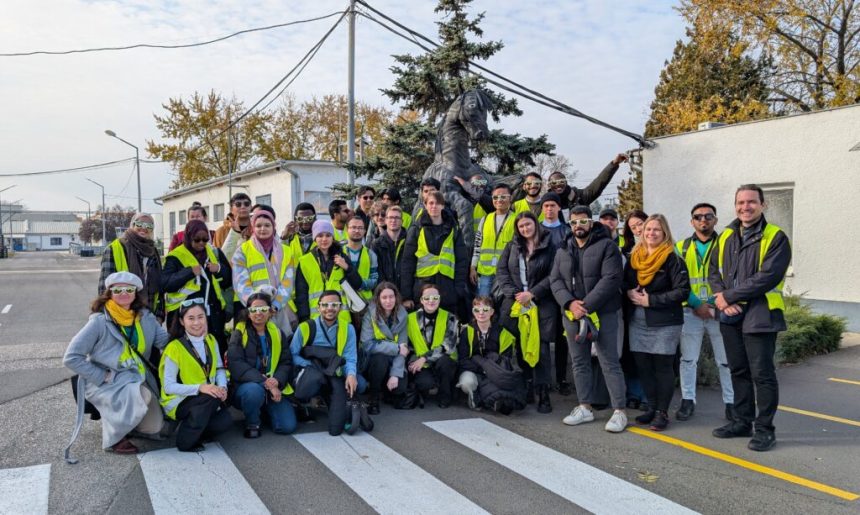
Szeged offers a welcoming environment with a lively culture, giving students a good balance between study and life. Source: University of Szeged
A city that feels smaller than it is
Szeged sits close to the point where Hungary meets Romania and Serbia, which puts three countries within reach of a long weekend. Budapest’s international airport is near enough that a weekend elsewhere in Europe is easy to pull off too. Szeged itself is the third biggest city in Hungary, though it doesn’t feel that way once you’re living there.
Many SZTE buildings are a short walk from the centre, and bike lanes cover the longer stretches. Dormitory rooms are mainly allocated to students holding a government scholarship such as the Stipendium Hungaricum. Everyone else rents privately, and the university helps with that too. Since inflation hit the country in the last couple of years, monthly rents for rooms range from 200 euros (US$230.62) to 500 euros (US$576.54), depending on location and comfort.
Wherever students end up living, most of what they need sits in the same few streets. Dóm Cathedral anchors the square that gives the medical school its address, with medical chemistry and pharmacology on Dóm tér alongside physiology. Minutes away on foot are Reök Palace, the Art Nouveau landmark that is now a regional art centre, and the National Theatre of Szeged. Both have shows year-round alongside festivals covering science through to gastronomy.
Thuy Duong loved all of this, convincing her to leave Vietnam to study a BA in Performance – Piano here. “The city is a perfect blend of a serene environment conducive to studying and a lively cultural scene that makes it easy to feel like being home,” she says.
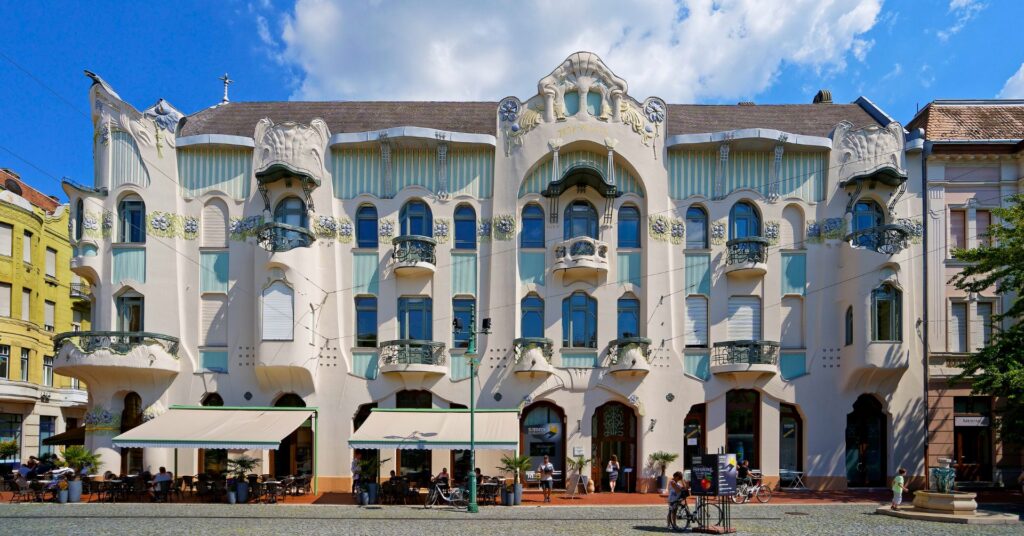
Szeged combines academic excellence with a vibrant cultural scene, hosting conferences, festivals and events spanning science, art, music, gastronomy and sports. Source: University of Szeged
Supporting students every step of the journey
Settling into a city is one thing; moving countries to get there is another. SZTE ensures that international students are supported throughout that journey, with tailored services covering everything from the application process through to adjusting to life in Szeged.
Much of that work happens before students board a plane. The university’s arrival pages lay out a checklist for freshmen, with separate guidance depending on whether you are travelling from a visa-free or a visa-restricted country. The same pages cover enrolment, airport shuttles and housing, so the practical questions get answered while there is still time to act on them. Once students land, the International Office and their faculty advisors take over.
The first week of September is when Orientation Days take place.
These are four days run by the Directorate for International Affairs and Public Relations to help new students find their feet in both the university and the city. Campus tours and information sessions cover the practicalities, games break the ice between students who arrived as strangers, and a Freshmen’s Party livens everyone up.
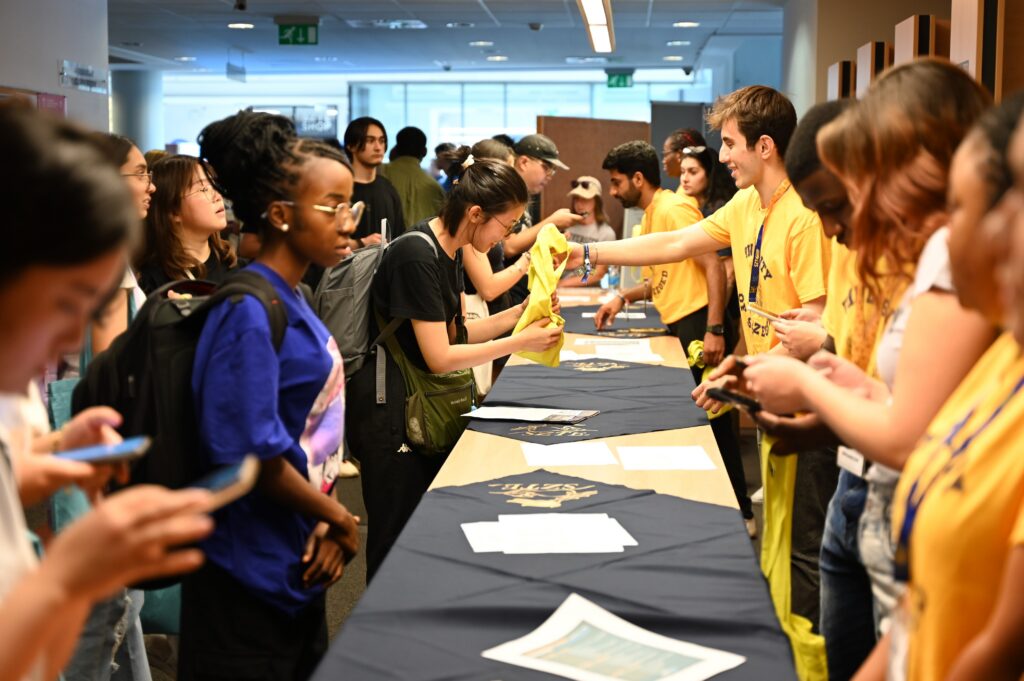
Adjusting to a new country can take time, but the University of Szeged offers international students support throughout their journey. Source: University of Szeged
Support extends well beyond that opening week. Throughout the year, SZTE organises events and programmes designed to help international students meet new people and feel part of the wider campus community.
Duong even got to take part in various mobility study programmes and extracurricular activities beyond her field. “For example, the experiences I have gained in mobility study programmes in Spain, France, and Serbia enhanced my skills and provided numerous networking opportunities and broadened my perspectives.”
Closer to home, student organisations keep things going when the university calendar quietens down. One of the most active is ISUS, which hosts an international food festival, overseas trips, a spring barbecue, and charity fundraisers — the kind of events that aim to make you feel at home.
“ISUS plays a vital role in supporting international students, from academic assistance to organising social and cultural events,” Abughneim says. “We aim to make every student feel integrated, supported and part of the Szeged community.”
For him, the city that caught his eye during his research on universities has come to mean considerably more than that. “Szeged has truly become a second home to me,” Abughneim says. “The experiences I’ve had here have shaped who I am today. I’m grateful for the friendships, the challenges, and the opportunities this university has given me.”
Learn more about University of Szeged.
Follow University of Szeged on Facebook, Instagram, YouTube and LinkedIn