When Ziga Bozic moved from Slovenia to the UK in 2019, he had a clear idea of what he wanted to study: medicine at Imperial College London, ranked first in the UK and seventh in the world for student experience in Medicine.
Six years later, Bozic graduated with an MBBS. But rather than following the traditional path towards becoming a doctor, the medical graduate took his career in a completely different direction: AI engineering.
Today, he works at Flight Story, the company behind The Diary of A CEO, Europe’s number one podcast.
The career switch may seem unexpected for someone who spent six years studying medicine. But his interest in technology and AI had been developing throughout medical school.
Alongside lectures and hospital placements, Bozic was experimenting with businesses, building side projects and looking for ways to use technology to solve problems.
Over time, his interest in AI became too strong to ignore.
“Sometimes you have a plan for where you want to go, but along the way you discover something you enjoy more,” he says. “When that happens, I think you should have the courage to pursue it and see where it takes you.”
Bozic says almost everyone knew he wouldn’t work as a doctor after graduating. Source: Ziga Bozic
Realising medicine was not the right fit
Bozic first began to question whether medicine was right for him in his second or third year at Imperial. Until then, much of his experience had been academic, with the first two years focused on lectures, where he learned the fundamentals and built a foundation in medicine.
That changed in the third year, when students spent more time in hospitals and gained hands-on clinical experience. For Bozic, this was when the reality of working in healthcare began to feel very different from studying medicine.
“It was during that time when I started thinking that medicine wasn’t really what I wanted to do,” he says.
As he gained a clearer understanding of the day-to-day realities of healthcare, he began questioning the wider working environment, including the pressures of hospital life and the conflicts that can arise between healthcare professionals.
He also started thinking more seriously about the long career path ahead. Graduating with an MBBS was only the beginning. He would still need to complete further training and spend years working his way towards becoming a consultant.
“Nobody really tells you much about what the actual career path looks like before you start medicine,” Bozic says. “You can research it, but it’s difficult to know which path you want to take because there are so many different ones.”
For him, the prospect of spending around 15 years progressing through medical training, alongside night shifts and the demands of hospital work, made him question whether that was the future he wanted.
The problem was that he did not yet have a clear alternative. Instead of immediately walking away from medicine, he began exploring other interests outside his degree.
During medical school, he experimented with sneaker reselling during COVID, then moved into crypto, started a newsletter and worked on fitness-related projects. These side ventures gave him a chance to explore different ways of working while he figured out what he actually enjoyed.
“I was doing a lot of different things on the side, so I thought that if I could make one of those work, I might consider not pursuing medicine,” Bozic says.
Those experiments eventually introduced him to something that would change the direction of his career: AI.
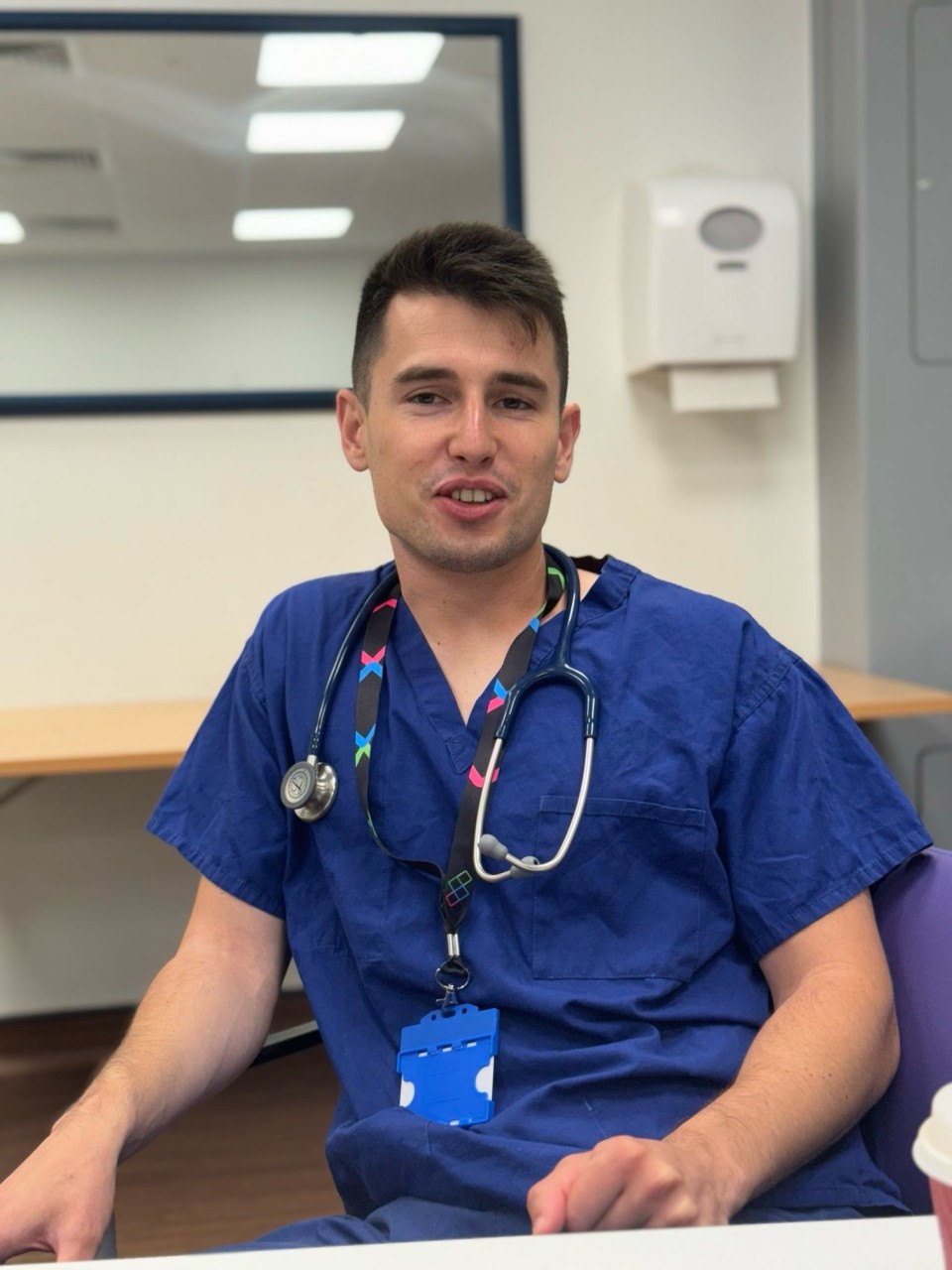
Bozic says he realised the hospital environment, particularly the dynamics between doctors and nurses, wasn’t the right fit for him. Source: Ziga Bozic
From experimenting with AI to building a new career
Bozic’s first serious experience with AI came through his interest in crypto. He and his brother had noticed that Bitcoin could move rapidly when US inflation figures were released, sometimes changing by 3–5% within seconds.
Rather than manually watching the markets, Bozic saw an opportunity to automate the process. Using the tools available to him, he built a system that could monitor when the figures were released and respond according to rules he had set in advance.
It was one of his first experiences of turning an idea into a working system. More importantly, it showed him what technology could allow him to do.
But at the time, he still viewed AI mainly as a tool for his own projects rather than something he could build a career around.
That changed as he began applying the technology to other businesses, including Busybody, a health and fitness project he had started as a mobile app.
Bozic and his team built their own database of around 12 million foods, which opened up new ways of using AI within the product. Users could take a picture of their food to estimate calories and macronutrients or photograph a restaurant menu to receive suggestions based on their nutritional goals.
Projects like Busybody gave him something more valuable than just technical experience: confidence that he could take an idea, build it, and improve it based on real feedback.

Among the many skills medicine taught him, Bozic says critical thinking has been the most valuable in his current AI engineering career. Source: Ziga Bozic
Why AI felt more rewarding
Bozic enjoys the way AI allows him to solve problems and experiment.
While working in the NHS should, in theory, feel rewarding because doctors are helping people, the reality of working in a hospital can be very different. “I have a lot of friends from medical school who work as doctors, and it all becomes very trivial,” he says.
Often, the satisfaction of helping patients can be overshadowed by the high stakes, from difficult patient interactions to conflicts with colleagues.
AI offered him a different kind of fulfilment and flexibility.
“It’s actually about starting projects, bringing them to life, getting a customer or two to give you feedback, and then iterating on them,” he says.
The experience of releasing products and improving them based on real feedback also helped Bozic develop confidence in his own abilities.
Eventually, those lessons convinced him that he could take the next step and work in AI professionally. “I never thought I’d actually go and work for somebody else to implement AI,” he says.
But after years of working on his own projects, he decided to apply for an AI role. That decision took him from medical school into his new career as an AI engineer at Flight Story.
At this creator media company, his work involves helping different departments automate tasks and improve the way they operate. As a result, he gets exposure to several areas ranging from content and marketing to sales and operations.
“It’s a much wider field that’s constantly changing, and it’s much more fulfilling to be learning new things all the time,” he says.

Ziga listened to The Diary of a CEO for years. Now, he works for the company behind the podcast. Source: Ziga Bozic
It is never too late to change direction
For students who realise halfway through a degree or even after graduating that they are interested in something completely different, Bozic has one piece of advice: do not let the time you have already invested stop you from changing direction.
“Halfway through a degree is still very, very early in your journey,” he says.
“If you realise that you’re more interested in something else, whether that’s mathematics, physics, engineering or whatever it might be, just go and change your degree. It’s not worth spending your entire career in a field that you don’t like just because you don’t want to start another degree.”
He believes that your qualification does not have to dictate what you do for the rest of your career. You can still explore a new field, learn new skills and start again if you find something that interests you more.
His own journey is an example of that.