What does it take to shape the places where people live? At Texas A&M University’s College of Architecture, one of the nation’s largest and most comprehensive colleges dedicated to the built environment, students explore that question from every angle. It’s an approach rooted in more than a century of experience but designed for the challenges they’ll encounter today and tomorrow.
As Lingqian “Ivy” Hu, Dean of the College of Architecture, shares: “Across our programmes, planners examine how land use, policy, and infrastructure help our world grow responsibly. Designers shape buildings and spaces that are functional, beautiful, and supportive of a healthy life. Builders manage the process of making those visions a reality through safe, innovative project delivery. We are united under one academic home with a shared mission — to plan, design, and build a better world.”
Here are four reasons your next step should start at Texas A&M’s College of Architecture.
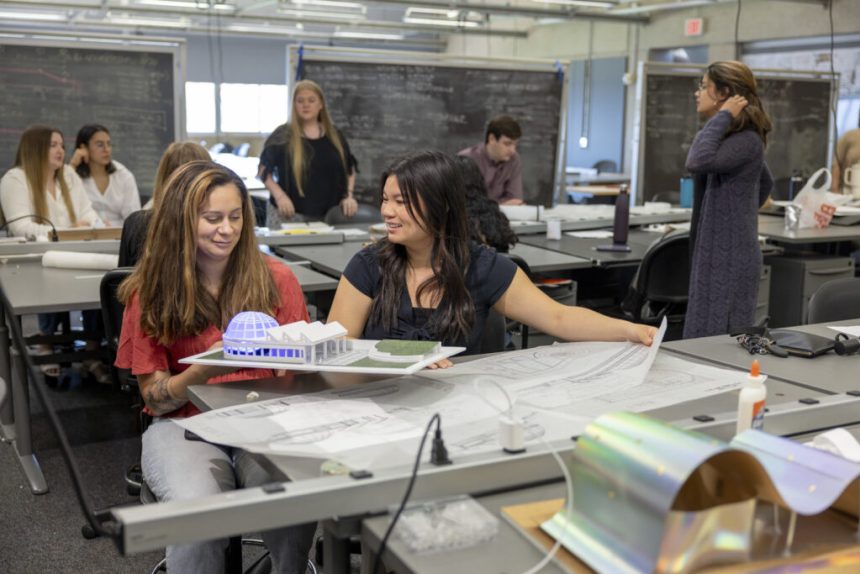
The college brings its research into its classrooms to prepare students for what’s next in their fields. Source: College of Architecture, Texas A&M University
Diverse cohort and courses
Architecture, engineering, and construction might be the obvious routes into the College of Architecture, but they’re far from the only ones. Here, students also come from business, finance, sociology, computer science, and more. Across three departments, these different perspectives contribute to one goal: finding innovative solutions for the built environment.
There’s no one type of student here, and there’s no one way forward either. What do you want from your next architecture degree? Professional preparation? More time to explore a research question? A chance to change careers? The college offers pathways for all three.
Ranked #1 in Texas by College Factual, its architecture graduate programmes combine design and theory with hands-on projects to prepare you for leadership roles. Meanwhile, the Department of Construction Science’s research-driven MS (available online) and PhD degrees emphasise innovation, smart construction, and sustainability to nurture leaders in construction management, safety, and technology.
If you’re interested in shaping better-planned cities, the Department of Landscape Architecture and Urban Planning offers several ways to get started. Some study people and nature through the Master of Landscape Architecture (MLA). Others explore real estate planning and business through the Master of Land and Property Development (MLPD) or sustainable communities through the Master of Urban Planning (MUP). And for those drawn to research, there’s the PhD in Urban and Regional Sciences.
Research meets reality
What you do at the College of Architecture can have an impact far beyond campus. “Each year, our students and faculty turn our social responsibility into action through award-winning design work, innovative research, and engaged community partnerships that address real needs across Texas and beyond,” shares Dean Hu.
You can see that impact in the research happening across the college’s five research centres: CRS Centre, Centre for Housing & Urban Development, Hazard Reduction & Recovery Centre, Centre for Health Systems and Design, and Centre for Heritage Conservation. Their work is funded by the National Science Foundation and more.
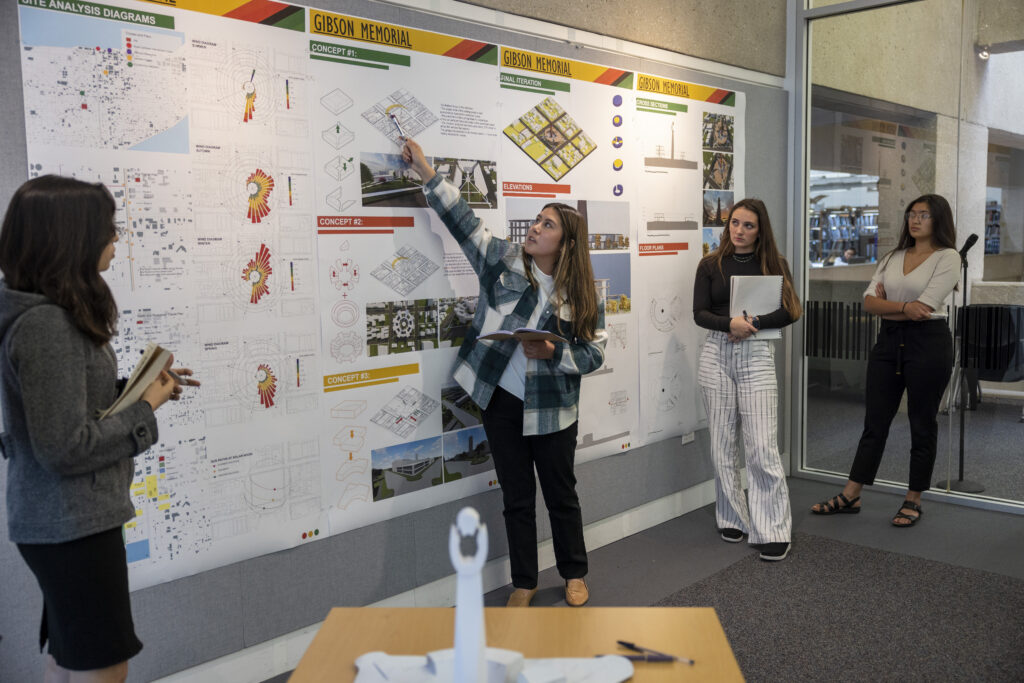
Faculty, alumni, industry professionals, and students regularly connect through colloquiums, showcases, tech demos, and seminars. Source: College of Architecture, Texas A&M University
Room to create
There’s plenty of room to create and collaborate at the College of Architecture. Among them are the Langford A, B, and C buildings which are home to design studios, research laboratories, lecture halls, and a Makerspace. Francis Hall is the first stand-alone facility in Texas dedicated to construction education. Plus, you can innovate across architecture, design, and planning in the Instructional Laboratory & Innovative Learning Building’s (ILSQ) state-of-the-art labs, collaborative classrooms, and interdisciplinary spaces.
And those opportunities aren’t limited to one campus either. At the RELLIS Campus, students have access to the Construction Field Lab and Energy Systems Lab, alongside Texas A&M University System agencies, universities, and industry partners.
Connections that count
You won’t have to wait until graduation to start building industry connections. Each department has its own Industry Advisory Council, made up of active alumni, business professionals, and industry leaders who can connect you with job opportunities.
Outside the classroom, 16 discipline-related student organisations give you even more opportunities to grow your network. “Earning a degree from Texas A&M not only reflects rigorous academic preparation but also opens doors to ongoing conversations across both academia and the construction industry,” says PhD in Construction Science graduate Suryeon Kim. “Many of my collaborators, mentors, and peers remain trusted colleagues who share insights, exchange research ideas, and offer guidance.”
Follow Texas A&M’s College of Architecture on Facebook, Instagram, LinkedIn, and YouTube