Lewis University’s Graduate School of Management offers industry-focused programmes designed to take you and your career further. The Master of Business Administration (MBA) and MS in Business Analytics, alongside a wide range of advanced degrees, professional certificates, and micro-credentials, are worth every minute and dollar spent on them. These are programmes that get the math on ROI right.
To learn more about the student experience and career outcomes, we spoke to a graduate and a current student to get their first-hand insights. Maxwell Mo, a Class of 2025 MS in Business Analytics graduate, worked as a graduate assistant in international admissions and is now a Business Data and Strategy Analyst at a Fortune 500 company. Meanwhile, current MBA student Avla Clarisse Tani, who has supported international enrollment at Lewis, shares her perspective on studying and working in the US.
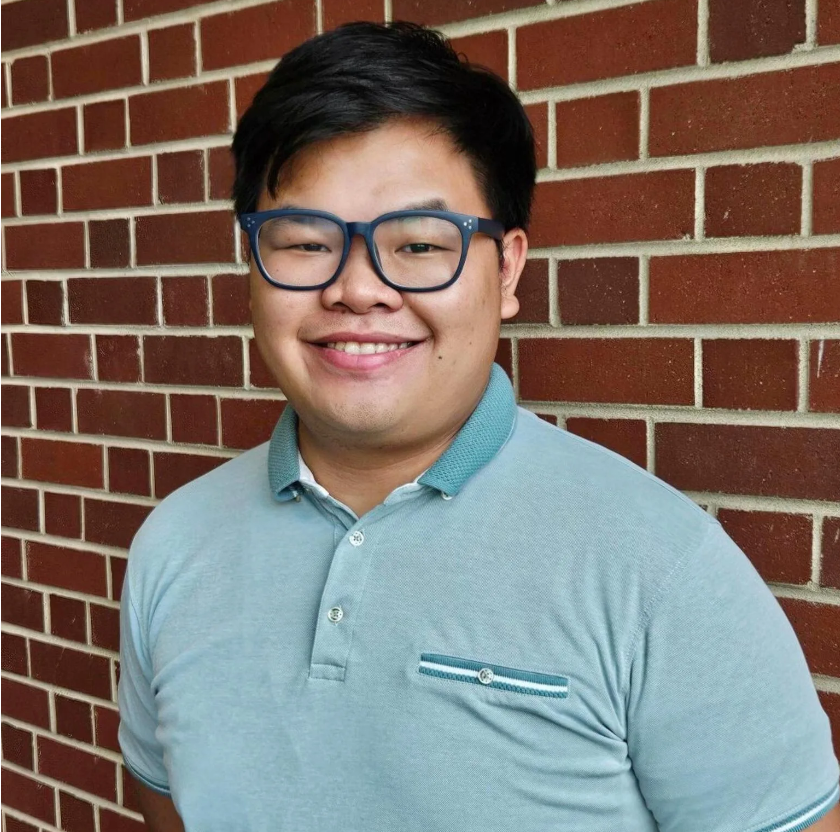
Maxwell Mo served as a Graduate Assistant in International Admissions, helping to recruit new students and answer academic, school, and visa-related questions. Source: Lewis University
Maxwell Mo, MS in Business Analytics, Class of 2025
What was your experience like during and after the programme, and what key roles have you taken on since?
During my time as a graduate student at Lewis University, I was the Graduate Assistant in the International Admissions department. I helped recruit prospective students to come study in the US, and to answer their questions on academic and visa-related matters.
Currently, I am a full-time Business Data and Strategy Analyst at a Fortune 500 company, where I focus on building enterprise-level data curations and providing high-quality datasets across the organisation.
Did you undergo any internship or placement? If yes, please describe your responsibilities and how they related to your programme.
Yes. While studying International Business as an undergraduate, my degree programme required me to complete an internship. I found an internship with the company where I currently work and completed the summer programme. The company later extended a return offer while I pursued my master’s degree at Lewis University. I continued working with the organisation throughout graduate school and, as I neared graduation, I landed a Data Analyst position with them. Following my graduation in May 2025, I started my current role at their corporate headquarters.
When I first started my internship, I gained valuable exposure to both sales and supply chain operations, which helped me develop a strong understanding of our business model and the different areas of data within the organisation. In my current role as a data analyst, I focus on transforming raw data into domain-focused data products that support downstream decision-making, improve business processes, and deliver actionable insights to stakeholders across the organisation.
What made you decide to get a master’s degree in business analytics?
I needed a STEM-designated degree that would make me a more competitive candidate in the current job market. Graduates of STEM-designated degrees may also apply for a 24-month extension of their post-completion optional practical training (OPT). This would allow me to stay in the company longer and gain more experience.
Is getting a master’s degree or going back to school really worth it?
Yes, it’s worth it. I had a good experience during my undergraduate studies at Lewis University. I got to continue my internship at the company, and it led me to my current position as a data analyst.
How does combining a business degree with specialised skills make a career change possible?
Yes. A strong foundation in business knowledge, combined with technical and analytical skills, can open many doors in a corporate environment. I was fortunate to learn about our business operations early in my career and gain familiarity with data from different areas of the organisation. Today, that knowledge helps me build domain-focused data products more effectively and quickly validate results because I understand the business context behind the data. This combination of business and technical expertise enables me to be more versatile in the organisation.
In your opinion, as someone who studied and is working in this field, what type of master’s degrees are set to become more valuable in the future?
Every organisation uses AI to different extents. In my view, the biggest challenge is ensuring that AI has access to clean, trustworthy data. No matter how advanced an AI solution is, its output is only as good as the data behind it. I believe there are more positions needed in the IT infrastructure fields.

Avla Clarisse Tani is pursuing an MBA in Finance at Lewis University, with a particular interest in using financial knowledge and data to support better business decisions. Source: Lewis University
Avla Clarisse Tani, MBA in Finance
Can you tell us more about your specialisation, role at the university, and experiences related to the programme?
I am currently pursuing an MBA in Finance at Lewis University, and I am particularly interested in how financial knowledge and data can support better business decisions. As a Graduate Assistant at Lewis University, I receive a 75% tuition waiver as part of my assistantship, which has been a major source of support in making my graduate education in the US more affordable.
I have been working as a Graduate Assistant in International Enrollment for the past three months, where I support international student applications, work with prospective international students, and help guide them through the admissions process. Before this role, I also worked as a student staff member in the Athletics Department at Lewis University, which gave me another opportunity to become involved in the university community.
Through my MBA courses, I have worked on projects using RStudio and Radiant for data analysis. I am currently taking a course that allows me to further develop and practise these analytical skills through hands-on projects and real-world business applications.
Are you currently undergoing any internship or placement? If yes, please describe your responsibilities and how they relate to your programme.
No, I am not currently completing an internship or placement. However, I am working as a Graduate Assistant in International Enrollment at Lewis University, a role that has given me valuable professional experience alongside my MBA studies. Working with prospective international students, guiding them through the admissions process, and managing enrollment data have allowed me to strengthen my communication, analytical, organisational, and problem-solving skills.
While my position is not directly focused on finance, I have found that many of the skills I use in my role are transferable to my field of study, particularly when working with data, understanding processes, and making informed decisions. This experience has also given me the opportunity to apply some of the skills I have developed through my MBA in a real-world university work environment.
Should I continue working or pursue an MBA full-time overseas?
For me, pursuing a full-time MBA overseas was the right decision because I wanted to build on my professional experience and continue developing my skills. Before coming to the US, I completed an internship in a professional environment, where I applied what I had learned during my undergraduate studies and gained a better understanding of finance in a real-world setting. That experience made me realise that I wanted to strengthen my knowledge and develop a broader range of skills before taking the next step in my career.
Moving to the US allowed me to focus on my MBA while gaining professional experience through my work at Lewis University. The experience has pushed me outside my comfort zone, helped me become more independent and confident, and given me a new perspective on my career. If you’re deciding between continuing to work and pursuing an MBA, I would encourage you to consider your long-term career goals and whether further education could help you achieve them.
Which country is best for someone who wants to pursue an MBA abroad?
I chose the US for my MBA because I wanted to experience a different academic environment while developing my professional skills. I was also attracted by the range of graduate programmes and opportunities to meet people from diverse backgrounds.
Studying in the US has allowed me to combine classroom learning with practical experience at Lewis University. I would encourage students to consider costs, financial aid, career opportunities, and the university environment. Most importantly, choose a country and university that align with your academic, professional, and personal goals.
How do people afford a master’s degree abroad?
My parents have been my main source of financial support throughout my MBA, covering my tuition and helping with my living expenses since I started my studies in the US. Their support has allowed me to focus on my education and make the most of my experience abroad.
In June, I started working as a Graduate Assistant at Lewis University, which has given me valuable professional experience while providing a 75% tuition waiver as part of my assistantship. I am very grateful for this opportunity, as the tuition waiver has significantly reduced the cost of my education and the financial commitment for my family.
I would encourage students planning to study abroad to have a clear financial plan and explore options such as scholarships, tuition waivers, and graduate assistantships. These opportunities can make a meaningful difference in the overall cost of a degree.
What’s it like studying for an MBA abroad?
It is a very rewarding experience, but it requires good time management and discipline. My weekday usually starts at 7:30 a.m. with breakfast before heading to campus. From 10:00 a.m. to 3:30 p.m., I work as a Graduate Assistant in International Enrollment. Afterwards, I attend classes, complete assignments, study, or work on group projects. Evenings are for dinner, relaxation, and finishing schoolwork before bed around 10 p.m. Although some days can be busy, I enjoy having a routine that allows me to balance my studies, work, and personal life.
I’m thinking about getting an MBA abroad. Do I really require 2+ years of work experience?
No, I don’t think two or more years of work experience are necessary to pursue an MBA abroad. I completed my Bachelor’s in Business Administration, specialising in Finance, followed by one year of internship experience before applying. This allowed me to apply my academic knowledge, develop practical skills, and clarify my career goals. I encourage students without two years of experience to check each programme’s requirements and highlight their academic achievements, internships, skills, and career objectives when applying.
Follow Lewis University on Facebook, X, Instagram, and YouTube