
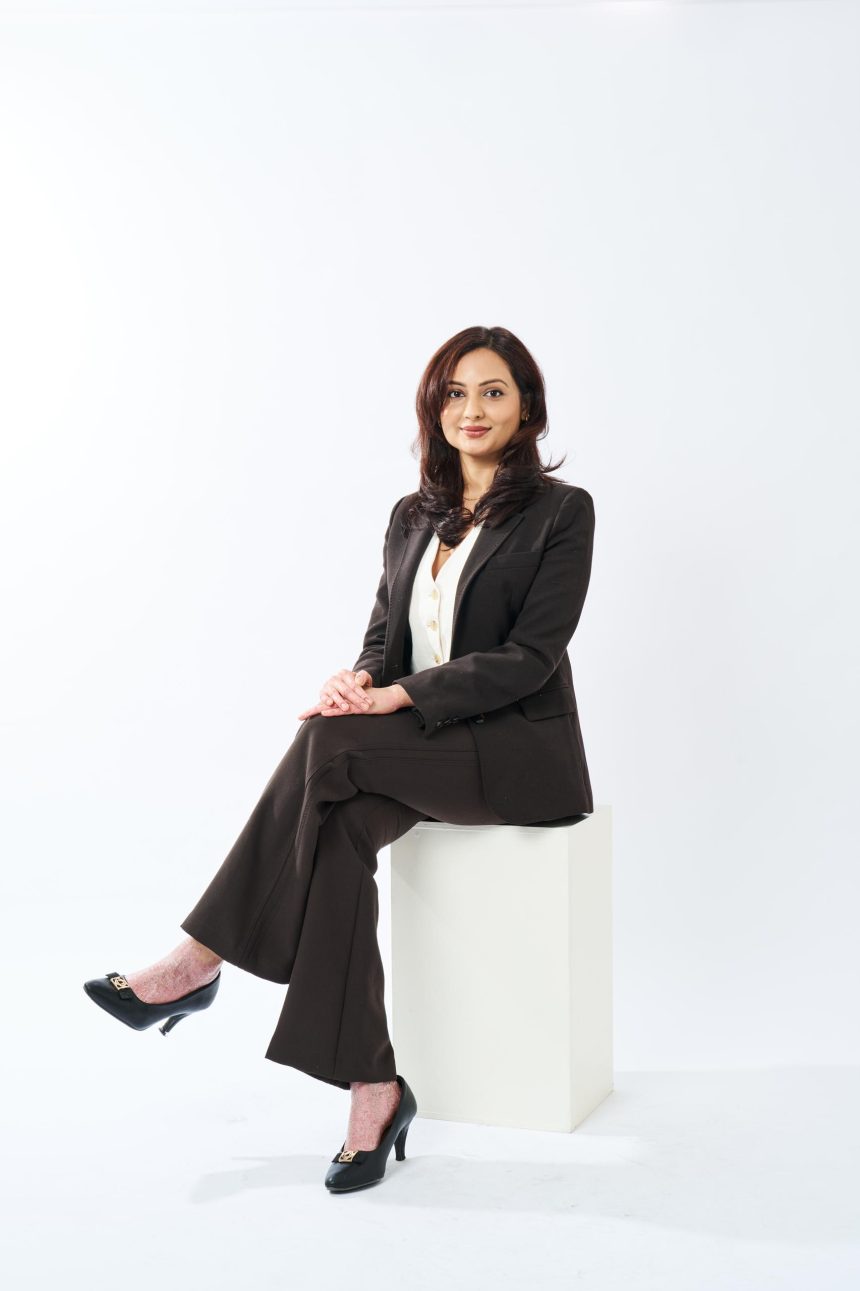
“What is happening?” was the first thought that crossed Reshnu Suri’s mind when she arrived in Chennai to study dentistry in India.
She had stepped out of the airport wearing sunglasses, feeling confident about beginning a new chapter in India. However, that confidence quickly faded as she encountered the heat, the noise, and the unfamiliar surroundings.
To make matters worse, her hostel was located near a fish market.
For Suri, who had left Malaysia alone to pursue a Bachelor of Dental Surgery programme at the Meenakshi Ammal Dental College and Hospital, the experience was a far cry from what she had imagined, especially since she knew little about Chennai and could not speak Tamil.
“Thankfully, Chennai Airport has been revamped since then, and it’s really nice now,” she says. “Back then, though, it wasn’t.”
Yet, what initially felt overwhelming would eventually become one of the most memorable periods of her life. Her five years in India taught her to adapt to unfamiliar surroundings, build lasting friendships, and grow both personally and professionally.
Today, she works as a resident dentist at Pantai Hospital Kuala Lumpur, but Chennai remains a place she still considers home.
Suri never planned to study dentistry in India. But five years in Chennai changed her life in ways she never expected. Source: Reshnu Suri
From dermatology to a dental school in India
Dentistry was not Suri’s first career choice. Fascinated by beauty and skincare, she initially wanted to become a dermatologist. However, having psoriasis on her palms made her question whether patients would trust her as a skin specialist.
“When I was very young, I worried that if I became a dermatologist and had a skin condition myself, patients might lose confidence in me,” she says. “I thought they might not trust me if they didn’t understand that autoimmune diseases often have no cure,” she says.
She began looking for another way to fulfil her goal to help people feel beautiful and confident. “So I wondered what else can I do to still fulfil my desire without my hands being at the forefront?” she says. ” That’s when I thought of dentistry, because I get to wear gloves for my job.”
Her uncle, one of Malaysia’s pioneer dentists, also influenced her decision. Having grown up familiar with his profession, she had someone she could turn to for advice. After speaking with him, she became more confident about pursuing dentistry.
However, she had not planned to study overseas. After completing her pre-university studies in Malaysia, Suri had already secured a place to continue her education locally. That changed when her father spoke to his personal dentist, who recommended a dental college in India.

Dental school in India tested Suri’s patience, challenged her assumptions and shaped who she became. Source: Reshnu Suri
The dentist and his wife had graduated from the same institution, and their children were studying there too. Their family’s experience gave Suri’s father confidence in the recommendation, prompting him to make a decision that would change his daughter’s plans.
“So, overnight, my dad decided, ‘You’re going to India,’” she says.
Suri embraced the idea despite knowing little about Chennai. She had no friends there and could neither speak nor understand Tamil. Looking back, she admits that she had done very little research before agreeing to move.
Still, knowing that Meenakshi Ammal Dental College and Hospital was well regarded in South India gave her some reassurance.
The location also helped ease her worries about moving so far from home. Since Chennai had an airport, travelling back to Malaysia would be relatively convenient. Its large population was another advantage, offering opportunities to gain hands-on clinical experience during her dental training.
Even so, the reality of living in a new country was very different from what she had imagined. Suri remembers arriving in Chennai with confidence, only to have it quickly shaken by her unfamiliar surroundings.
“I remember landing and feeling like I had walked into a completely different world,” she says. “I had my sunglasses on when I came out of the airport, acting very cool and confident. Then I walked out and thought, ‘What is happening?’ The air conditioning at the airport wasn’t working, and everything was incredibly noisy.”
Things became even more daunting when she reached her hostel near Alapakkam Main Road, an area that also had a fish market. For someone arriving alone in a city where she could not speak the local language, it was an overwhelming introduction to life in India.

Suri moved to Chennai to pursue a Bachelor of Dental Surgery at Meenakshi Ammal Dental College and Hospital, despite knowing little about the city or speaking Tamil. Source: Reshnu Suri
Culture shock, academic pressure, and lessons in dentistry
For Suri, the biggest culture shock was not the food or language. It was the difference in how students were treated.
In Malaysia, students commonly complete pre-university studies before entering university, often starting their degrees around the ages of 19 to 21. In India, she found that many students went straight to university after high school, with some entering at 16 or 17.
Despite being older, Malaysian students were expected to follow the same strict rules. Suri initially struggled with an environment in which even yawning during class could be considered disrespectful, and questioning authority was discouraged.
“At first, I found it quite stifling,” she says. “But eventually, I realised it was also incredibly humbling because you arrive with all this baggage about who you are, where you’re from, and what you think you know. Suddenly, it’s an equal playing field. You’re just a student. It really breaks your ego. In a way, it was a humbling experience.”
The academic workload presented another challenge. Dental school demanded constant preparation, practical work, and clinical requirements, leaving little room to relax.
“If I had to describe the dental programme, it would be intense and probably never-ending,” she says. “There was always something to study, something to prepare for, a practical requirement to fulfil, or clinical work to complete.”
Despite the pressure, Suri valued the practical exposure she received. With such a large patient population, students had opportunities to encounter a wide variety of cases. What they learnt from textbooks could be observed and applied in real clinical settings.

A home visit to treat a patient living in a slum area taught Suri an important lesson: dentistry is about treating people, not just their teeth. Source: Reshnu Suri
Even so, adjusting to life in India was not always easy. There were moments when Suri questioned her decision to study there, but she felt a strong sense of responsibility to complete the programme. Dental places were limited, and she knew that accepting her place meant committing to the degree.
“Once you join, you’re taking a seat that someone else could have had, so you’re responsible for paying for the programme no matter what,” she says. “That was my main motivation. I knew that, regardless of how difficult it was, I needed to complete my degree. Somewhere along the way, my motivation became, ‘Study, finish, and leave.’”
Over time, however, her outlook began to change. Rather than focusing on how far she was from home, Suri started to appreciate her life in Chennai. She gradually adjusted to her teachers’ accents, grew to love the local food, and developed a particular fondness for filter coffee and hot dosa.
More importantly, her clinical experiences helped shape the kind of dentist she wanted to become.
One patient who left a lasting impression was a woman living in a slum area. Suri and her team visited the woman’s home to provide treatment. Afterwards, the patient was so grateful that she prepared coffee for them.
The experience reminded Suri that dental treatment was about more than diagnosing a problem or deciding which procedure to perform. Patients also had personal concerns, including whether they could afford treatment or whether they might lose their teeth.
“That particular experience taught me to look at the patient as a person rather than focus solely on their teeth,” she says. “You’re not treating a tooth; you’re treating a human being. That’s something I remember, and I try to practise it every day in my career now.”

From government service in Malacca to running a dental practice in Kuala Lumpur, Suri has explored different ways to practise dentistry. But one ambition kept drawing her forward: working in a hospital and serving the wider community. Source: Reshnu Suri
Returning to Malaysia to pursue her hospital dream
After completing her dental studies, Suri undertook a year-long hospital internship in India before returning to Malaysia in 2016. Although the internship provided valuable practical experience, starting work in a new country still required her to learn different systems, materials, and workflows.
She encourages new graduates not to be too hard on themselves as they enter professional practice. Even with strong academic results, there is always something new to learn, and senior colleagues can be valuable sources of guidance.
Suri began working in Malacca, where government service allowed her to contribute to the community. Later, her partner started a dental practice in Kuala Lumpur, and she joined him. Together, they ran the practice for about seven years.
During this period of her career, Suri decided to expand her clinical skills by pursuing further training in oral implantology. She completed a fellowship at Manipal University College Malaysia, which involved travelling to Malacca to learn how to place dental implants under the supervision of a surgeon and professor.
Despite developing her skills and gaining experience in private practice, Suri still had a long-standing ambition she wanted to pursue: working in a hospital. Eventually, she decided to follow that dream and secured a position at Pantai Hospital Kuala Lumpur.
“The idea of working in a hospital had always been my dream because it meant doing something close to my heart: serving the community,” she says. “So, yes, it’s my dream job at the moment. But I’m also very open to seeing where life takes me.”