Holiday dinners are great — until someone asks you what you’re studying. Then it begins.
“So…what’s your major again?”
“Isn’t it kind of useless?”
“Be honest. Are you ever going to make money?”
The raised eyebrows, the polite scepticism, and inevitable questions (even years after graduating), all circling the same doubt: Is a humanities degree actually worth it?
As upsetting as it may be, it’s a question rooted less in curiosity and more in misconception.
Utsa Bose, an Indian PhD student in History and Philosophy of Science and Technology at the University of Oxford, agrees.
“The thing is, I come from an Asian household, and it’s common to come across these types of questions, where degrees are often viewed through a practical, almost transactional lens,” he shares.
Well, that mindset didn’t come from nowhere.
“Our parents were from a generation where you had to earn quickly and send money back,” Bose explains. “There’s that practical aspect.”
Understanding that context doesn’t mean agreeing with it, but it does help explain why humanities degrees often end up on the “lower” side of education. And yet, the irony is hard to ignore.
We live in a world shaped by stories, politics, culture, and history. These are the very things humanities graduates study, but are still questioned for their value.
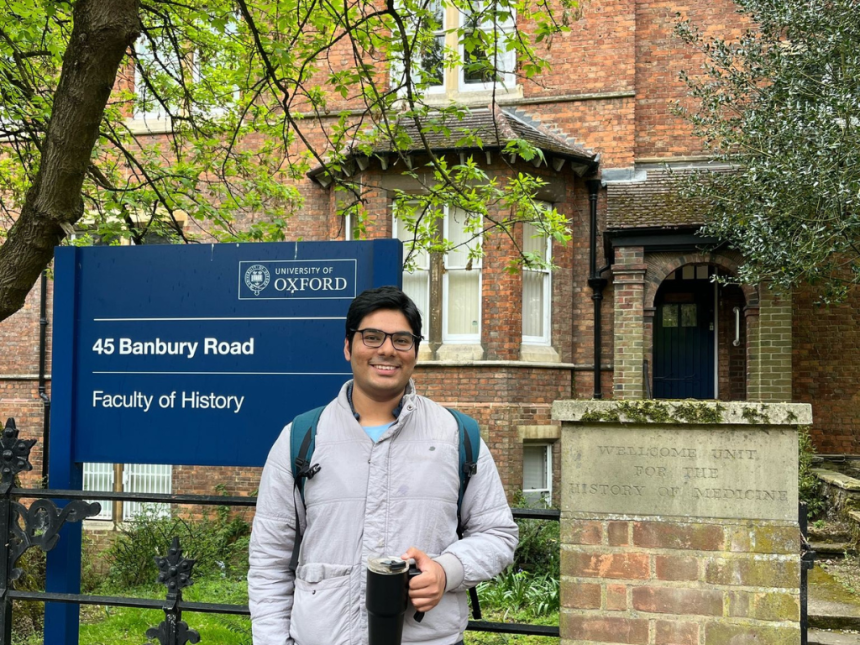
Bose graduated from the University of Oxford with a Master’s in Modern South Asian Studies. Source: Utsa Bose
The real problem: We don’t see enough stories
Being in the humanities field, Bose noticed one thing. It isn’t about unemployability — it’s visibility.
“I didn’t have any role models growing up, especially in my country,” Bose admits. “I didn’t have anyone in my family who did a humanities degree.”
It’s clear that absence plays a significant role in misunderstanding the field. Without clear examples of success, it becomes harder to justify taking the road less travelled.
“We need stories, he says. “If I had five or six people I personally knew who had studied humanities, I could have pointed to them and say, look, there is a tangible future here.”
It’s a fair point. Those in sciences or tech would often refer to Bill Gates, Jeff Bezos, Steve Jobs, or Elon Musk as examples. For those in humanities or history, it’s close to none.
Telling students to “follow your passion” only goes so far when the stakes — financial stability, family expectations, societal pressures — are really real. Inspiration alone isn’t enough; people want proof.
Another issue is resistance to men pursuing a humanities degree. Being a male in the field, Bose noticed it and agrees.
“It’s a problematic sexist aspect to it,” he shares. “I don’t have any males in my family who pursued the field.”
Lucky for Bose, his parents were on board with him studying history. His dad is an academic in science, so for Bose to pursue a career in it was not an issue.
That’s not all; inspiring stories are growing. And sometimes, the impact is quieter but no less profound.
“I feel very privileged that I can go into the archive, find out how people lived before this, and tell their stories,” Bose says. “I think that’s what keeps me motivated.”
Today, he has also become a person his high school juniors cite and aspire to be.
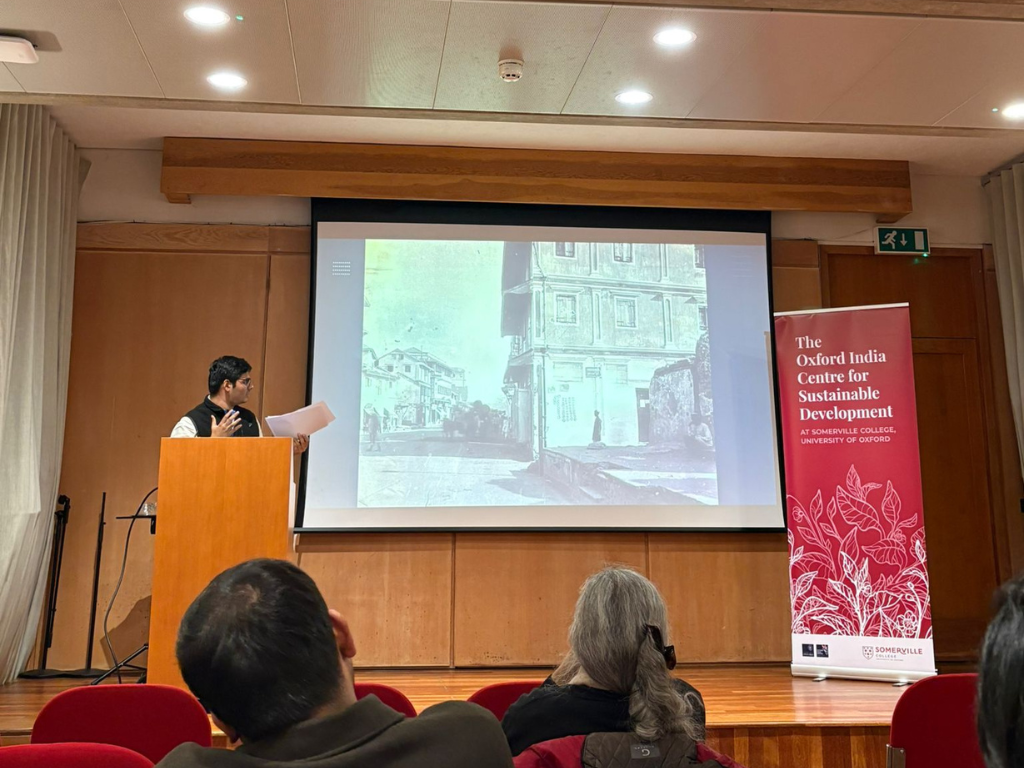
Bose completed his undergraduate degree from St. Stephen’s College, University of Delhi, with a B.A (Hons.) in English. Source: Utsa Bose
Want to pursue a humanities degree? Here’s how to tell your parents
Let’s be honest, this is the part most students want an answer to. But sadly, Bose doesn’t have a straightforward answer. However, the Study International team has some advice to guide you through the process.
Choosing a humanities degree is one thing, and explaining it at the dinner table is another.
First, acknowledge where they’re coming from. As Bose points out, concerns about stability aren’t irrational but shaped by lived experience. Diminishing them outright rarely works.
Instead, reframe the conversation.
Show them outcomes, not just interests. Talk about the industries humanities graduates enter — media, policy, international relations, education, and business. Be specific.
Vague passion is easy to doubt; concrete pathways are harder to argue against.
Second, build your “evidence folder”. This is basically your portfolio. Pursue internships, freelance work, research projects, or even write a blog. Show your parents that you are deeply invested in the field and are actively working towards it. Besides, there are tangible signs that your degree leads somewhere.
Remember, the more visible your trajectory is, the less theoretical or abstract it feels to others.
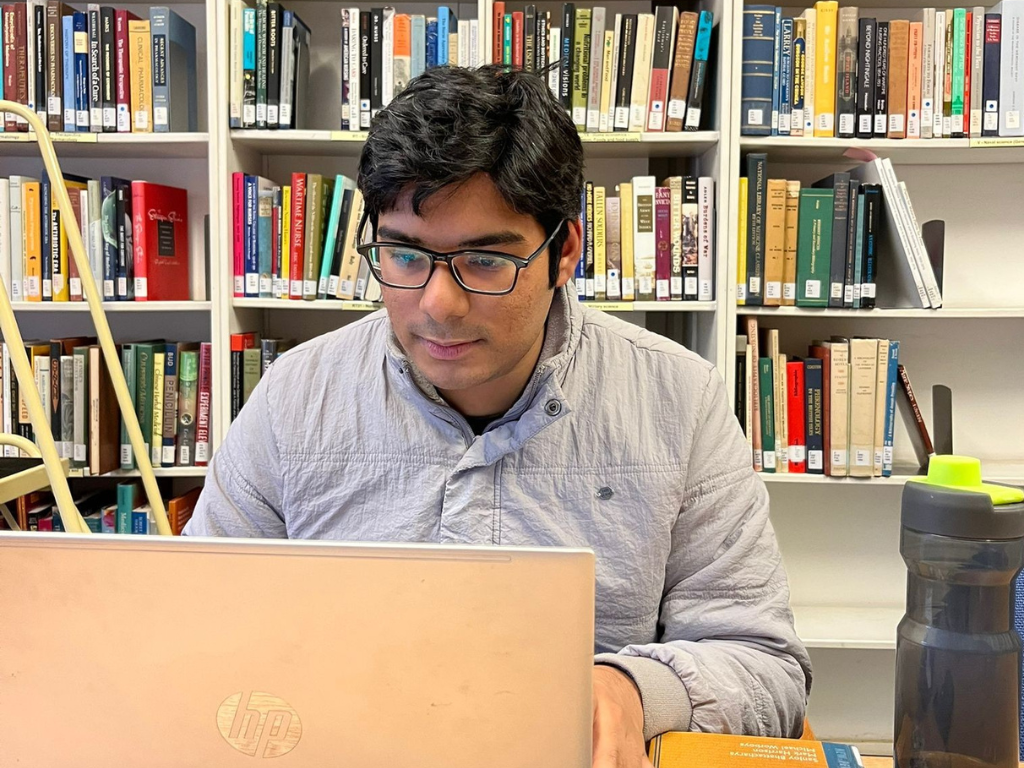
Bose is currently a Working as a Casual Student Ambassador for the Vice-Chancellor’s Colloquium. Source: Utsa Bose
Third, find your examples. As Bose suggests, success stories matter. Whether it’s alumni from your high school, a professor, a family member, or a celebrity, having real people to point to can shift the conversation from “What if” to “Look at this”.
Finally, the hardest part — stand your ground.
“The way I navigated it was basically, it didn’t matter to me what people thought because I liked what I was doing,” Bose says.
We don’t want you pursuing a degree you don’t like and entering a field you’ll end up resenting. But that doesn’t mean ignore reality. It means recognising that a degree, at its core, is a commitment to a way of thinking and that commitment has to come from you.
At the end of the day, every degree carries risk. The job market is unpredictable across fields, even in computer science and engineering fields. It’s our job to try to make the future look a little more certain for them.