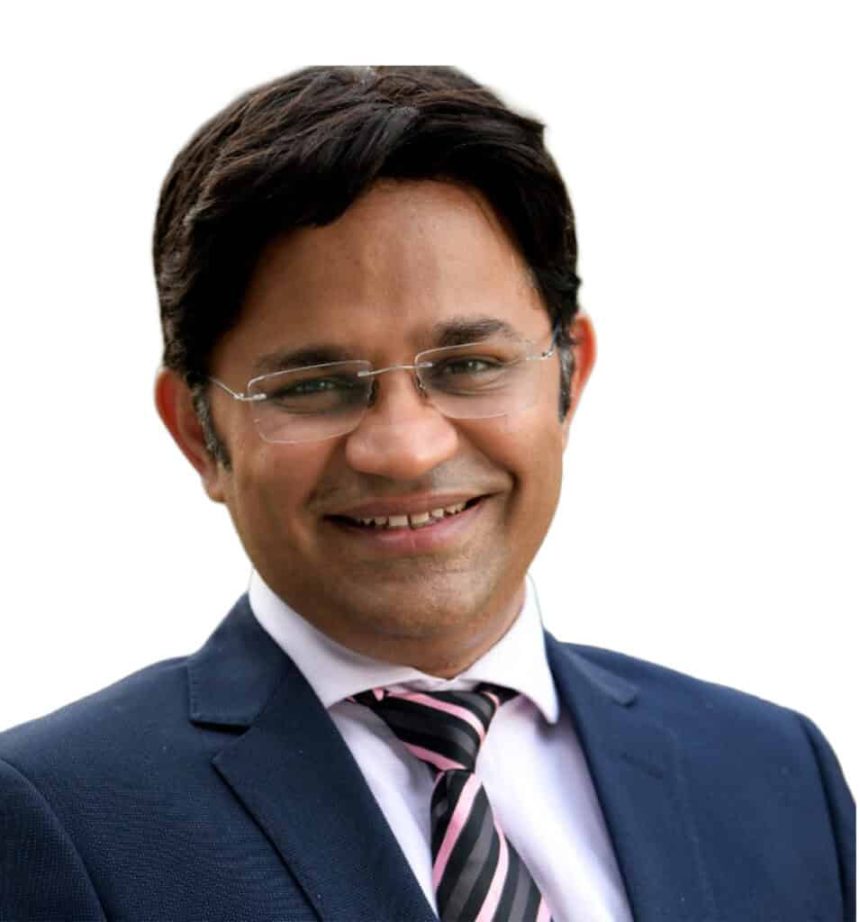
Hitesh Parashar, chief business officer at Credila Financial Services Limited (formerly known as HDFC Credila Financial Services Limited), shares an industry view on why this matters.
Many students look beyond their home countries in search of better education and career opportunities. While these journeys are often told as individual success stories, they are also made possible by less visible supports, such as financing options and institutions, that make these transitions possible.
As of CY24, Indian students constituted about 26% of international students in leading educational hubs globally. An estimated 6,11,000 student visas were issued to Indian students during this period, according to the home affairs offices/education ministries of key education hubs, including the US, UK, Canada, Australia, Germany, UAE, Ireland, and Singapore.
Where mobility creates public value, finance helps explain how that value is made accessible. In CY24, India’s overall education market was valued at approximately ₹1,977 billion, and the overseas education segment at ₹1,266 billion within this.
Though the formally financed overseas education market was only ~10.5%, it was projected to rise at a 20–22% CAGR over the next five years, supported by NBFCs.This suggests that the question is not whether the appetite for higher education abroad exists, but how it is funded. In practical terms, student mobility often depends on whether families can access structured support through scholarships, public schemes, or private financing.
The key question in student mobility is not only how many students go abroad, but how many are able to go at all. Access to international education is often shaped by a student’s socioeconomic background, geographic location, and access to reliable funding.
The key question in student mobility is not only how many students go abroad, but how many are able to go at all
While national outbound student statistics provide only a partial picture, the broader trend suggests that structured education finance can help bridge these gaps, extending opportunities to students who may otherwise be excluded. This highlights its potential as a meaningful enabler of equitable access to global education.
Student mobility, then, is not just about individual ambition or cross-border education choices; it is also part of a larger ecosystem of shared gain. It allows students to access new opportunities, helps institutions and economies benefit from the movement of talent, and strengthens long-term academic and professional connections between countries.
But these gains do not unfold automatically. They depend on whether students are able to access the financial support that makes mobility possible in the first place. Education finance, in that sense, is not simply a funding tool; it is one of the key enablers that helps turn global opportunity into real participation, making the benefits of student mobility broader, more inclusive, and more widely shared.

About the author: Hitesh Parashar, chief business officer at Credila, holds a bachelor’s degree in engineering from Bhavnagar University, Gujarat and passed the examinations in relation to the post-graduate diploma in business management conducted by Institute of Management Technology, Ghaziabad.
He is involved in the strategic and business planning and overseeing the day-to-day sales and distribution for our company. Prior to joining our company, he was associated with Fullerton India Credit Company Limited, ICICI Bank Limited, General Electric Countrywide Consumer Financial Services Limited, and Hindustan Petroleum Corporation Limited.
He has over 20 years of experience in the field of sales, marketing, distribution, and product management.