Naturally curious and intelligent, children are constantly learning, growing, and evolving. All they need are the right opportunities to reach their full potential — just like some of the youngest prodigies in the world.
Among Forbes’s 30 Under 30 isGitanjali Rao, a child prodigy whose inventive mind has created innovations that make a difference, like Tethys, a device designed to detect lead contamination in water.
And then there’sBodhana Sivanandan, a chess prodigy and the youngest person ever to represent England internationally in any sport at just nine years old.
But talents need to be given a chance to grow. If a child does not develop their skills during their formative years, it may be difficult to fully realise their potential in the future.
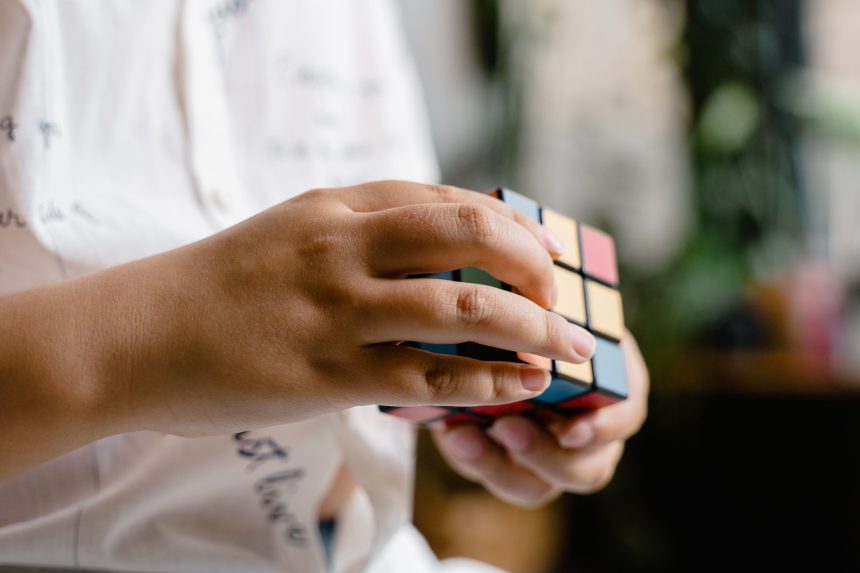
The word “prodigy” comes from the Latin word prōdigium, which originally meant an “omen, portent, or prophetic sign”. Source: MART PRODUCTION via Pexels
11 youngest prodigies in the world
1. Tanishq Matthew Abraham
Completed high school by 10 years old, three associate degrees by 11 years old
Now 21 years old,Abraham is one of the most youngest prodigies in the world.
Starting young, he completed high school at 10 and earned three college Associate Degrees by 11 – all while maintaining a 4.0 GPA. His interest in medical sciences and engineering then led him to a biomedical engineering programme at 13.
Abraham also found time to actively contribute to the scientific community, presenting research at various conferences.
At 14, he authored a review paper on smart bio-inspired vesicles, which was later published in IOP Physical Biology.
2. Johann Heinrich Friedrich Karl Witte
Earned a PhD at 13 years old
Born in July 1800, German jurist Johann Heinrich Friedrich Karl Witte is the youngest prodigy in the world to be awarded a PhD.
At 13 years old, on April 13, 1814, he earned his PhD in philosophy from the University of Giessen in Germany.
And as if that wasn’t impressive enough, he went on to complete another doctorate, this time in law, before his 17th birthday.
By 23, he was already teaching law at the University of Berlin and later became known for his writings on Dante Alighieri.
3. Brigitte Xie
Played Beethoven and invited to perform at Carnegie Hall at four years old,
Born in 2017, Brigitte Xie was only four years old when she was playing Beethoven.
When her father, Tao Xie, signed her up for piano lessons during the COVID-19 lockdown, he had no idea what would come next. “I didn’t expect her to be a prodigy,” he reflects, “but yeah, it turns out it’s amazing.”
Xie’s hard work and natural gift paid off when she became the youngest-ever winner of the Elite International Music Competition. This win earned her a spot to perform at Carnegie Hall in New York, one of the most iconic venues in the world.
Well, almost. COVID-19delayed her debut until November 2022. And her response to this setback? “Can we go to the Disney store, Mom?”
4. Alberto Cartuccia Cingolani
Won 42 first-place awards for playing piano by seven years old
Another one of the youngest prodigies in the world in the music industry is Italian pianistAlberto Cartuccia Cingolani.
Born in 2017, he only started learning the piano in 2020, but you wouldn’t know it from his performance of Mozart’s Piano Sonata No. 16 in C major.
Unlike his same-aged friend Xie, Cingolani grew up in a musically inclined family. His mother is a voice teacher, and his father is a music instructor.
At three years old, his parents introduced him to piano lessons, where it became clear he had a special gift.
Now, with 42 first-place awards to his name, Alberto continues to light up stages worldwide.

Coding is hard; up to 10.7% of computer science majors in 2024 have dropped out of college.
5. Kautilya Katariya
Qualified to become a computer programmer at six years old
In 2020,Kautilya Katariya made headlines by becoming the world’s youngest qualified computer programmer at just six years old.
His journey started when his dad handed him a programming book. “I liked it so much, I finished it in a day.” After that, there was no stopping him.
In just six to seven months, Katariya mastered Python and earned five certifications in AI and Python from IBM.
However, Kautilya didn’t stop at programming. At 10, he tackled A Level maths, earning an A*, all while navigating lockdowns and online learning.

Dr. BalamuraliAmbati finished elementary school in just two years, then middle school in two more years, and high school in two years, graduating when he was only 11. Source: University of Oregon
6. Dr. Balamurali Ambati
Became a medical doctor at 17 years old
Most of us spend our teenage years worrying about exams and hanging out with friends, but Dr. Balamurali Ambati?
In 1995, at 17 years old, he set the Guinness World Record as the world’s youngest doctor, a record he still holds in 2024.
Dr. Ambati is a respected ophthalmologist and the Director of Ophthalmology & Visual Science at the University of Oregon’s Knight Campus.
With over 15 years of experience as a cataract and cornea surgeon, he has developed several ophthalmic devices and was named the world’s top ophthalmologist under 40 by The Ophthalmologist Magazine.
7. Michael Kearney
Earn a bachelor’s degree in anthropology at 10 years old
Michael Kearney holds the Guinness World Record as one of the youngest prodigies in the world to complete a college degree.
Born in Honolulu, Hawaii, Michael was homeschooled by his mother and diagnosed with ADHD at a young age. But he didn’t let that define him.
In 1994, at 10 years and four months, he graduated with a bachelor’s degree in anthropology from the University of South Alabama.
He then continued his academic pursuits, obtaining a master’s in chemistry and computer science from Middle Tennessee State University and Vanderbilt University respectively.
Today, he is a teaching assistant in chemistry at Middle Tennessee State University.
8. Soborno Isaac Bari
Got the perfect SAT score at 11 years old
At just 12 years old, Soborno Isaac Bari is already making waves in the academic world. In 2024, he graduated from Malverne High School on Long Island, becoming the youngest American of South Asian descent to do so.
What’s next for this young genius? A full scholarship to New York University, where he’s set to pursue a degree in Mathematics and Physics.
Bari has an impressive résumé for someone his age. At just four, President Obama sent Bari a letter to recognise his talents in math and science, and when he was seven, he was giving lectures on physics at Mumbai University.
Fast forward to age 11, and he’s still breaking records: he scored a perfect 1500 on the SAT.
9. Bella Devyatkina
Can speak eight languages at four years old
WhenBella Devyatkina was just four, she had already won hearts across the Internet with her extraordinary gift. This bubbly, talented girl from Moscow speaks eight languages: Russian, English, French, Spanish, German, Mandarin, Arabic, and Italian.
And she’s not stopping there, Bella is now learning her ninth language: Greek.
But how did she get to this point? According to her mum, the key is to start early. She introduced Devyatkina to English when she was just two, and it took off from there.
10. Abhimanyu Mishra
Became the youngest chess Grandmaster in history at 12 years old
On June 30, 2021, New Jersey-born Abhimanyu Mishra made chess history by becoming the youngest Grandmaster ever at the age of 12 years, 4 months, and 25 days — breaking a record that had stood for 19 years.
Introduced to chess by his father at age two, Mishra was competing in tournaments by five. He went on to become the youngest-ever expert (2000 USCF rating) at seven, the youngest International Master at ten, and then the youngest Grandmaster in history, surpassing Russian legend Sergey Karjakin.
In September 2025, now 16, Mishra went a step further — defeating reigning World Chess Champion Gukesh Dommaraju in a classical game, becoming the youngest player ever to beat a sitting world champion.
11. Vaibhav Sooryavanshi
Became the youngest IPL centurion in history at 14 years old
Born on March 27, 2011, in Bihar, India, Vaibhav Sooryavanshi is one of the most explosive sporting prodigies the world has ever seen.
The son of a farmer, Sooryavanshi began cricket training at age four, made his Ranji Trophy first-class debut at 12, and signed an Indian Premier League (IPL) contract at just 13 — the youngest player ever to do so — when the Rajasthan Royals acquired him for ₹1.1 crore (around US$2,653,480.50 at the time of writing) at the 2024 mega auction.
On April 28, 2025, aged 14 years and 32 days, he scored 101 runs off 38 balls against the Gujarat Titans, becoming the youngest centurion in IPL history and the youngest to score a century in men’s T20 cricket. The innings featured 11 sixes, and his century came in just 35 balls — the second-fastest in IPL history. He then went on to win the Player of the Tournament award at the 2026 ICC Under-19 World Cup, scoring 175 off 80 balls in the final against England to help India lift the trophy.

A number of prodigies experience burnout, resulting from the immense pressure to maintain early, exceptional success. Source: Keira Burton via Pexels
The truth about being a child prodigy
Life is never smooth sailing, even if you’re one of the youngest prodigies in the world. Gifted children experienceasynchronous development, where while their intellectual abilities are far beyond their age, their social and motor skills lag behind.
This disconnect can leave them feeling out of place and frustrated and without proper understanding and support.
Remember child stars Michael Jackson and Macaulay Culkin who later battled drug dependence?
They’re just like many child prodigies, who suffer fromanxiety, depression, and social difficulties.Aaron Swartz, who co-created RSS (a group of web feed formats used to publish frequently updated works in a standardised format) at 14, is a poignant example.
Despite his early success, Swartz faced huge pressure, especially when his activism led to legal trouble for hacking into JSTOR, a digital library of academic journals, books, and primary sources.
The weight of a potential 35-year sentence and a US$1 million fine, coupled with his ongoing battle with depression, became overwhelming. He tragically took his own life at just 26 years old.
Learning has no age limit, but starting early helps
There is no age restriction to learning; at 83, Marie Fowler received her doctoral degree in divinity, becomingHoward University’s oldest-ever graduate.
But they do say old dogs can’t learn new tricks and studies do suggest that younger children learn better and faster.
Debbie Ravenscroft, senior lecturer in early childhood studies at the University of Chester, shared in an interview that “During childhood, children gradually develop to bridge the gap between their capabilities and the more advanced abilities of adults. Their rapid growth is primarily driven by neuroplasticity, their interactions with adults, environmental factors, and natural curiosity.”
Neuroplasticity refers to the brain’s ability to adapt and rewire itself through experiences. It allows children to learn and unlearn habits, routines, and behaviours.
This process is most active before the age of five when almost everything they experience is new.
Frequently asked questions about youngest prodigies in the world
Who is the most famous child prodigy?
Wolfgang Amadeus Mozart is widely regarded as history’s most famous child prodigy. He was playing songs on the harpsichord at 4 and composing simple music at 5.
By 7 years old, the Mozart family had begun touring Europe to showcase his musical gifts. His combination of early recognition, global cultural impact, and enduring legacy make him the benchmark against which all musical prodigies are measured.
What IQ qualifies someone to be a genius?
There is no single official threshold, but an IQ score of 140 or above is the most widely accepted definition of genius-level intelligence. This is based on a classification rooted in Lewis Terman’s 1916 Stanford-Binet scale.
By that standard, roughly the top 0.5% of the population qualifies. Some researchers set the bar even higher, placing “profound” genius at 160+, which corresponds to approximately 1 in 30,000 people.
But note that IQ is only one dimension of intelligence. Psychologists note that genius-level contributions to a field also require traits like curiosity, drive, and persistence — none of which any IQ test measures.
How rare is a child prodigy?
Extremely rare. While around 6–10% of children are smart enough to be classified as “gifted,” true prodigies — children who perform at an adult expert level before the age of ten — are estimated to appear in roughly one in five to ten million people.
That means that at any given time, there may be only a few hundred genuine prodigies alive in the entire world.
Do child prodigies always become successful adults?
Not necessarily. A 2025 analysis found that most world-class adult performers were not exceptional children, and early brilliance rarely predicts who will become truly elite later in life.
Psychologist Ellen Winner of Boston College, a leading authority on giftedness, has noted that being a prodigy means mastering something that already exists — whereas adult greatness often requires creating something entirely new.
That said, many prodigies do go on to distinguished careers; early excellence is a head start, not a guarantee.
Can a child prodigy’s talent be created through training?
This is one of the most debated questions in developmental psychology. Hungarian educational psychologist László Polgár famously claimed he could turn any child into a prodigy, and he raised all three of his daughters to become elite chess players — with his youngest, Judit, famously regarded as the strongest female chess player in history.
Research on the topic suggests the truth lies somewhere in between: while intense, early practice clearly accelerates development, most experts believe innate neurological factors — including exceptional working memory and rapid pattern recognition — play a foundational role that training alone cannot fully replicate.
Disclaimer: This article was updated on June 24, 2026