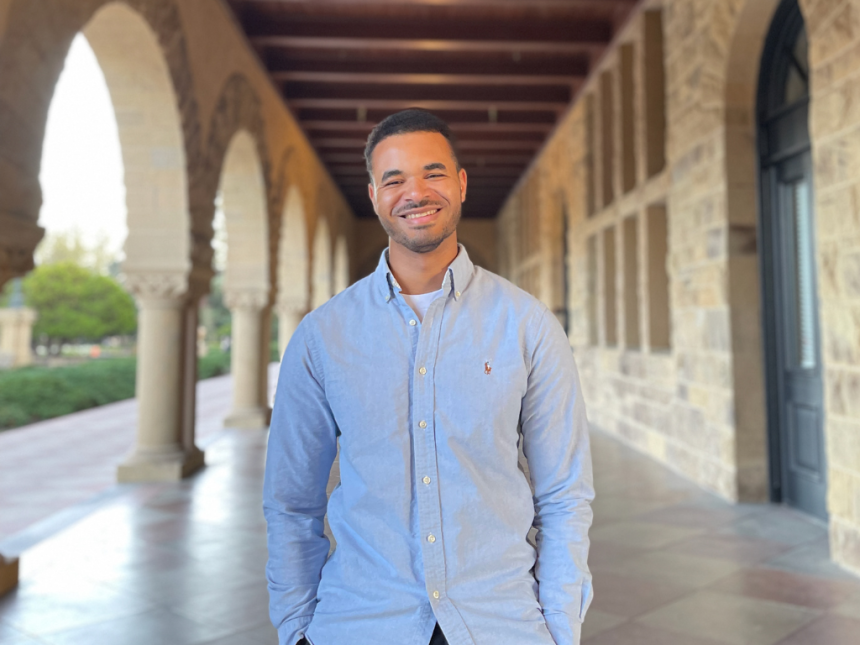
Born and raised in Switzerland, Adani Abutto, an international and Psychology PhD student in the US, did not have the best experience in school.
“Throughout my compulsory education, from kindergarten to high school, I did not enjoy it very much,” he recalls. “We were taught in a particular way, and I kept wondering what they were based on.”
This raised a few questions:
- Were there principles behind how teachers taught us?
- If there were, why were they not working well?
- How can we have thoughts at all?
- How does the brain actually work?
- How can we study something as complex as this in a systematic manner?
Before earning a Psychology PhD, Adani Abutto pursued a Bachelor of Science (BSc) in Psychology at the Zurich University of Applied Sciences. Source: Adani Abutto
Getting a Psychology PhD was the only way to answer these questions
Abutto needed answers. But he took a less conventional route to do so.
Instead of earning a bachelor’s degree after high school, he became a teaching assistant in special education.
“Working with children with learning abilities made me realise how different children are from one another,” he says.
“You can have many children in the same environment and engaging in the same activities, but their experiences are still different. Just like how they perceive the world and process information.”
Abutto then moved on to working as an assistant school teacher at a day care centre. Here, he worked with much younger children.
“I found it fascinating to watch how quickly they grow and learn, and within a week or month, you can see noticeable changes in them,” he says.
Eventually, Abutto realised that all the questions he had could be studied at a much deeper level through a Bachelor of Science (BSc) in Psychology at the Zurich University of Applied Sciences.
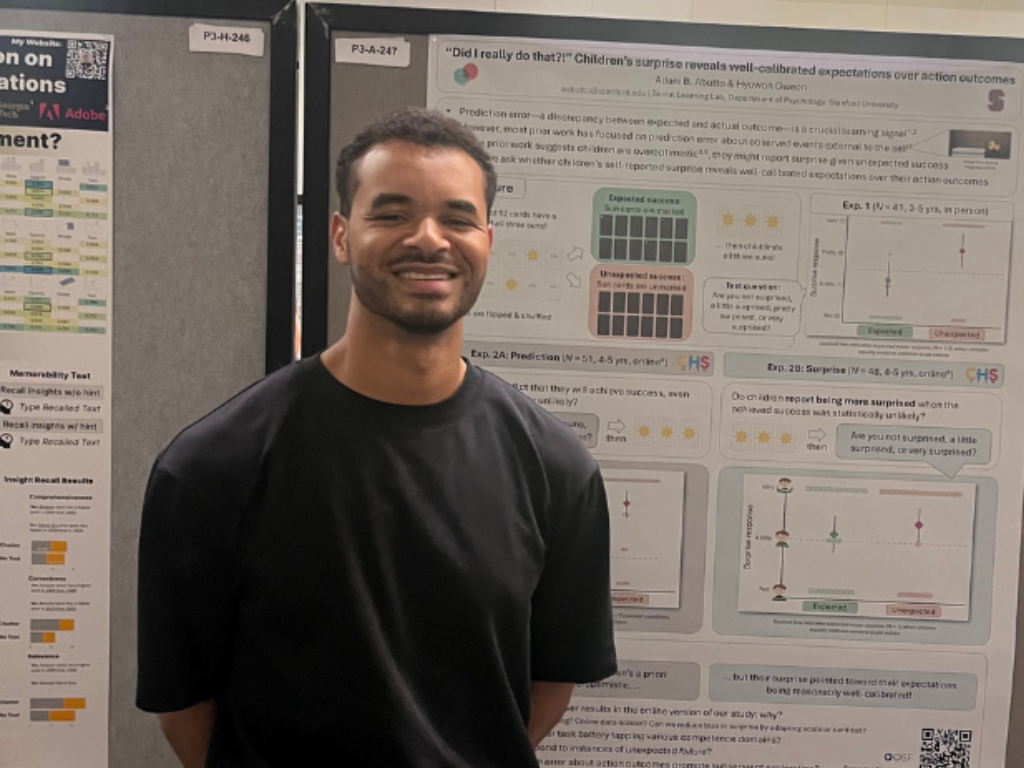
Abutto’s research interests are in Developmental Science, Public Policy, Law, and Psychology. Source: Adani Abutto
While studying, Abutto took up several jobs and internships to truly maximise his time there.
His efforts did not go in vain. He was awarded a Fulbright Fellowship to the US (one of eight scholars) as well as the 2021 Best Undergraduate Thesis Prize at the Psychological Institute, Zurich University of Applied Sciences.
It’s ironic. Here’s someone who started out not enjoying school to excelling in university.
And Abutto wasn’t stopping at just that.
He moved to Germany to complete an MSc in Psychology at the University of Munich. Then, he moved across the pond to pursue an MA in Psychology at Harvard University, the world’s leading university for Psychology.
Today, Abutto is a Psychology PhD candidate at Stanford University, another leading university in the field.
“I find it genuinely fun and intellectually exciting,” Abutto laughs. “I could have gone down the path of being a therapist or teacher, as it involves working closely with people, but doing a Psychology PhD was a step closer to pursuing what I wanted.”
The idea of systematically studying minds and brains resonated with him, and academic research and science seemed the best tools for building an understanding of people and answering broader questions about patterns and generalities across populations.
“Besides, I found research fun,” he admits. “Once I started doing research, I realised I enjoy working with data, reading, and thinking deeply about questions. I learnt that pursuing a Psychology PhD was the right path for me. The idea that I can do something I enjoy while getting paid for it is very motivating.”
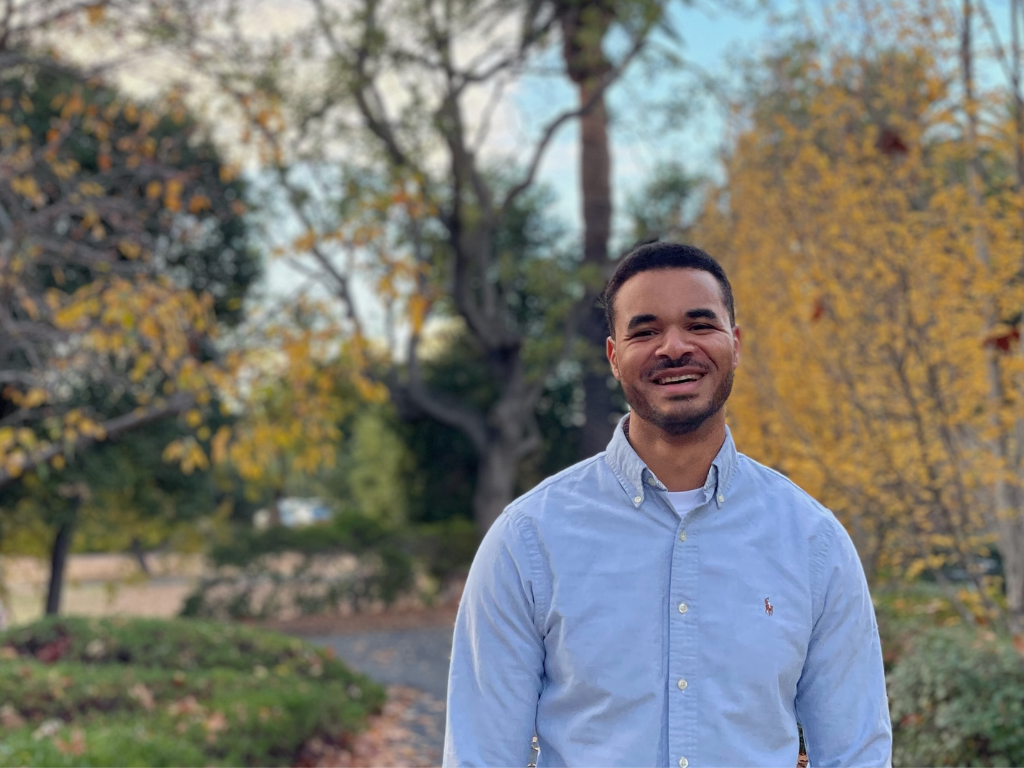
Abutto is completing a Psychology PhD at Stanford University. Source: Adani Abutto
A Psychology PhD was the obvious choice
Being away from family for an extended period of time can be hard, Abutto knows that. He could have continued his Psychology PhD in Europe; however, he noticed something simple, yet important.
“When I read papers, attended lectures, or worked as a research assistant, I kept seeing the same names over and over again,” he explains. “When I looked them up, many of them were based in the US and often at well-resourced universities. It became clear to me that a lot of research I was interested in was happening miles away from home.”
European universities are excellent, and Abutto doesn’t deny that. He has even worked at some, but the PhD structure is different from that in the US and he prefers the latter.
Pursuing a Psychology PhD in the US lets you conduct research as well as attend classes, teach, and receive a relatively stable salary.
Yes, studying in the US now comes with challenges, including costs and logistics, particularly around visas and immigration policies. There’s one that’s often on his mind — uncertainty.
“If you’re doing empirical research — running experiences and collecting data — you never know in advance how your studies will turn out,” Abutto says. “Sometimes, results don’t match your hypothesis, or you find nothing at all.”
He’s making the best out of it as his cohorts and advisors in the US are supportive, kind, and thoughtful. To him, it makes a huge difference.