
Luiza Piletti is not your usual HR specialist. She’s a cool HR specialist.
No, really. A look through her LinkedIn profile will show you what we mean.
“My professional motto is basically: If HR is crying, I fix it. If the data is crying, I fix it. If I’m crying, I automate it.”
She also disclaims on LinkedIn: “I bring my all to work and that entails my weird personality and sense of humor, be advised.”
Her LinkedIn also shares that she has not one but two master’s degrees, the second of which she earned while working a full-time job.
We caught up with the passionate HR exec to learn more about how she balanced work, studan MSc in Data Science and Artificial Intelligence, and “having a lot of fun.”
Piletti graduating from her bachelor’s. Source: Luiza Piletti
About Luiza …
Occupation: Senior HR data analyst
Age: 35
Nationality: Brazilian (half-Italian)
Location: Amsterdam, The Netherlands
Pets: A cat named Jungle

Piletti and peers from her bachelor’s programme in Brazil. Source: Luiza Piletti
A timeline of Luiza’s academic journey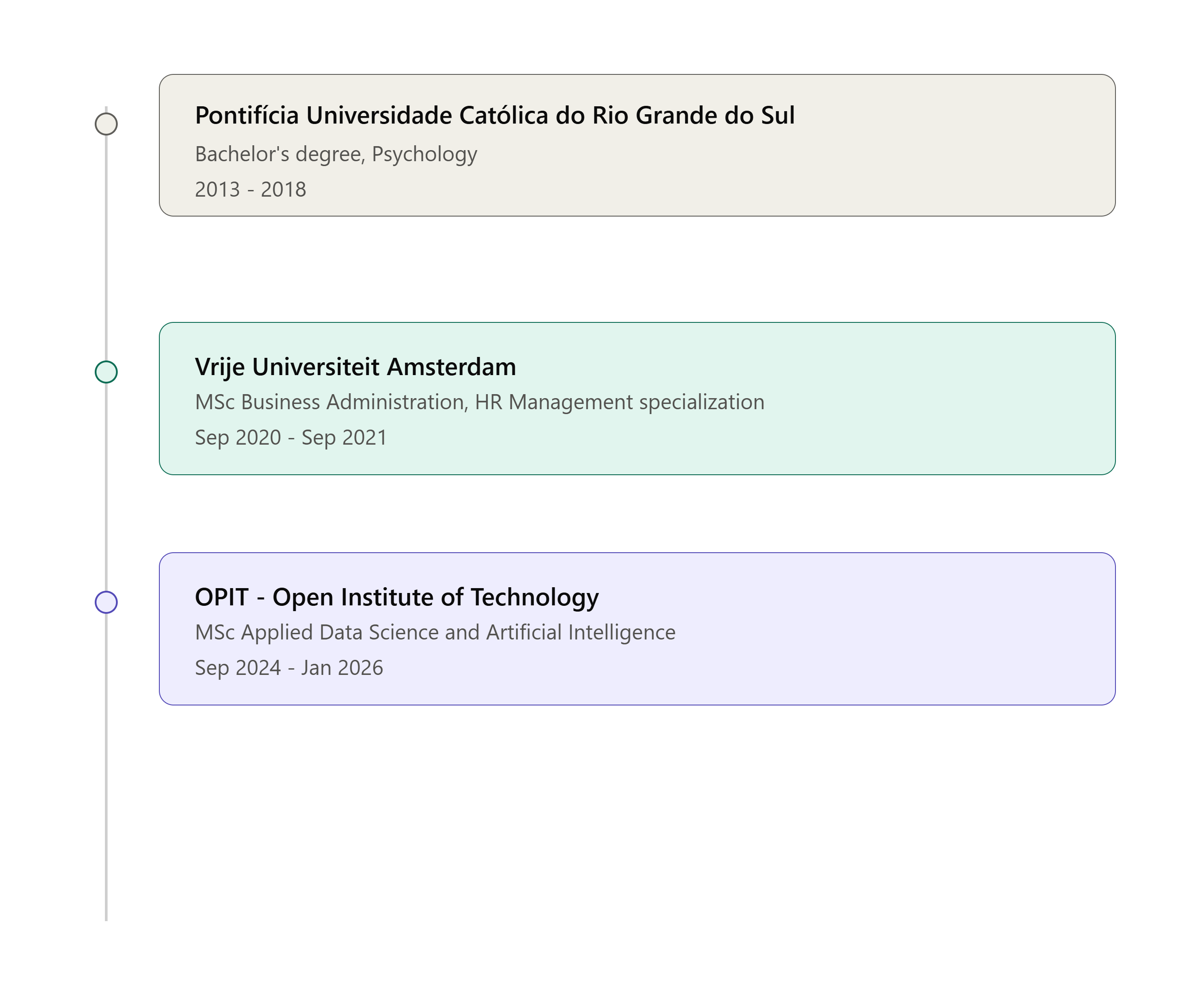
The following interview has been edited for clarity.
A Q&A with Luiza Piletti
Walk me through your academic choices.
I did my bachelor’s in psychology back in Brazil. Throughout my bachelor’s, I really wanted to work in clinical psychology. But during the internships, it became very heavy, even though I loved the subject.
And then I tried HR and really liked it. So it was my big goal to pursue a master’s degree in business with a focus on HR in Europe. So that’s what I did. I packed my bags and came to Europe.
I was accepted into Trinity in Ireland, and I spent nine months there. But an education there is really expensive. I think I could do three or four master’s in the Netherlands for the price of one there.
Plus, the Netherlands stood out as a very international place; everybody speaks English and the education is in English.
I adapted super well to the Netherlands, and ended up staying!
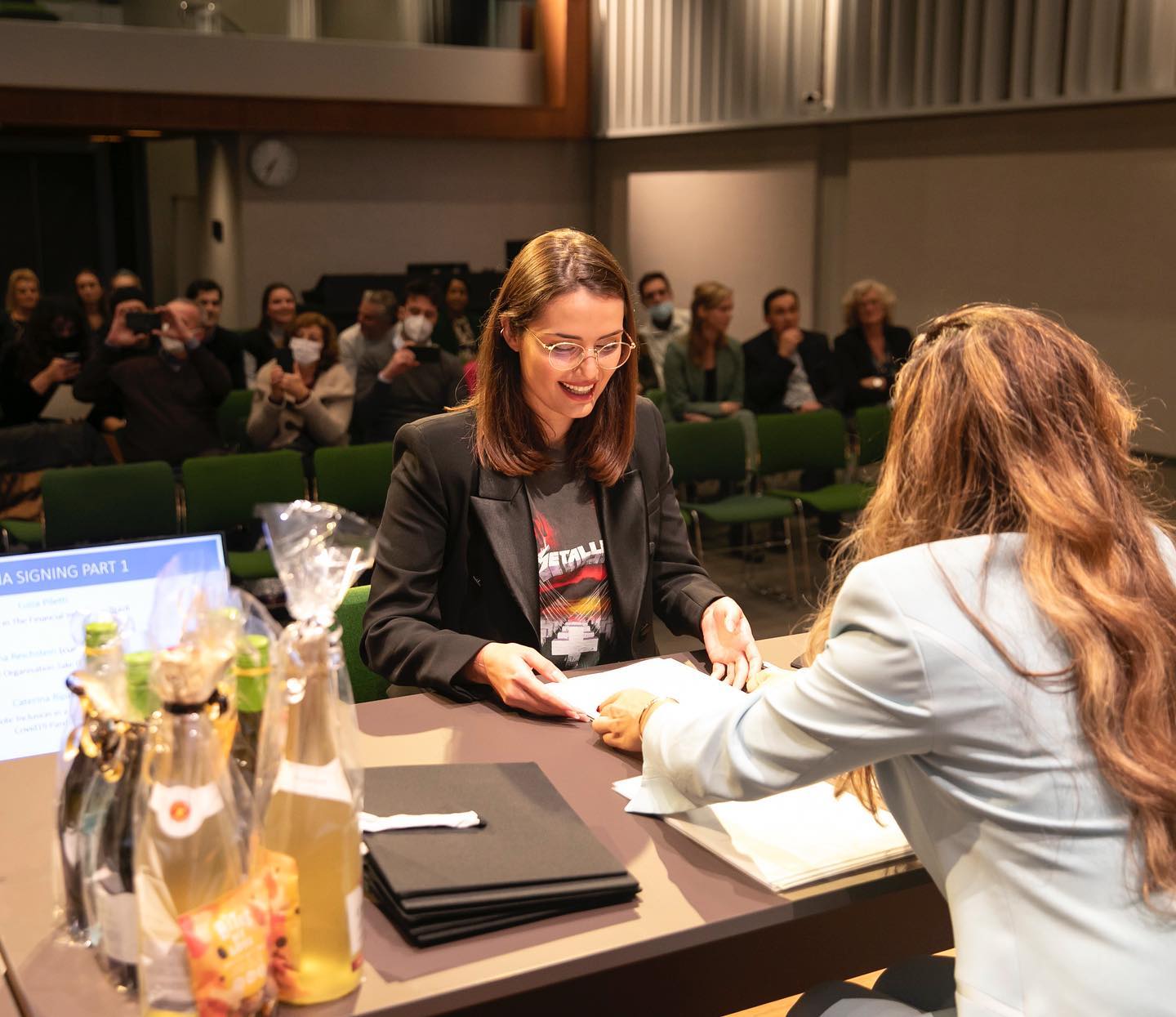
Piletti, pictured above, in a Metallica t-shirt. Source: Luiza Piletti
Was there a difference between the approach to education in Brazil versus in the Netherlands?
In Brazil, we think everything from outside is better, and we fail to appreciate what we have.
I thought a European education would be so much harder. And then I got here, and I was like, wow. It’s the same thing.
The difference is that in Brazil, psychology is five years, and you have semesters. You study the practical side of things and do a lot of internships, but you also also study research and you have more time.
Here [in the Netherlands], it’s the same amount of content but in a shorter time frame, but it’s a bit more intense in that way.
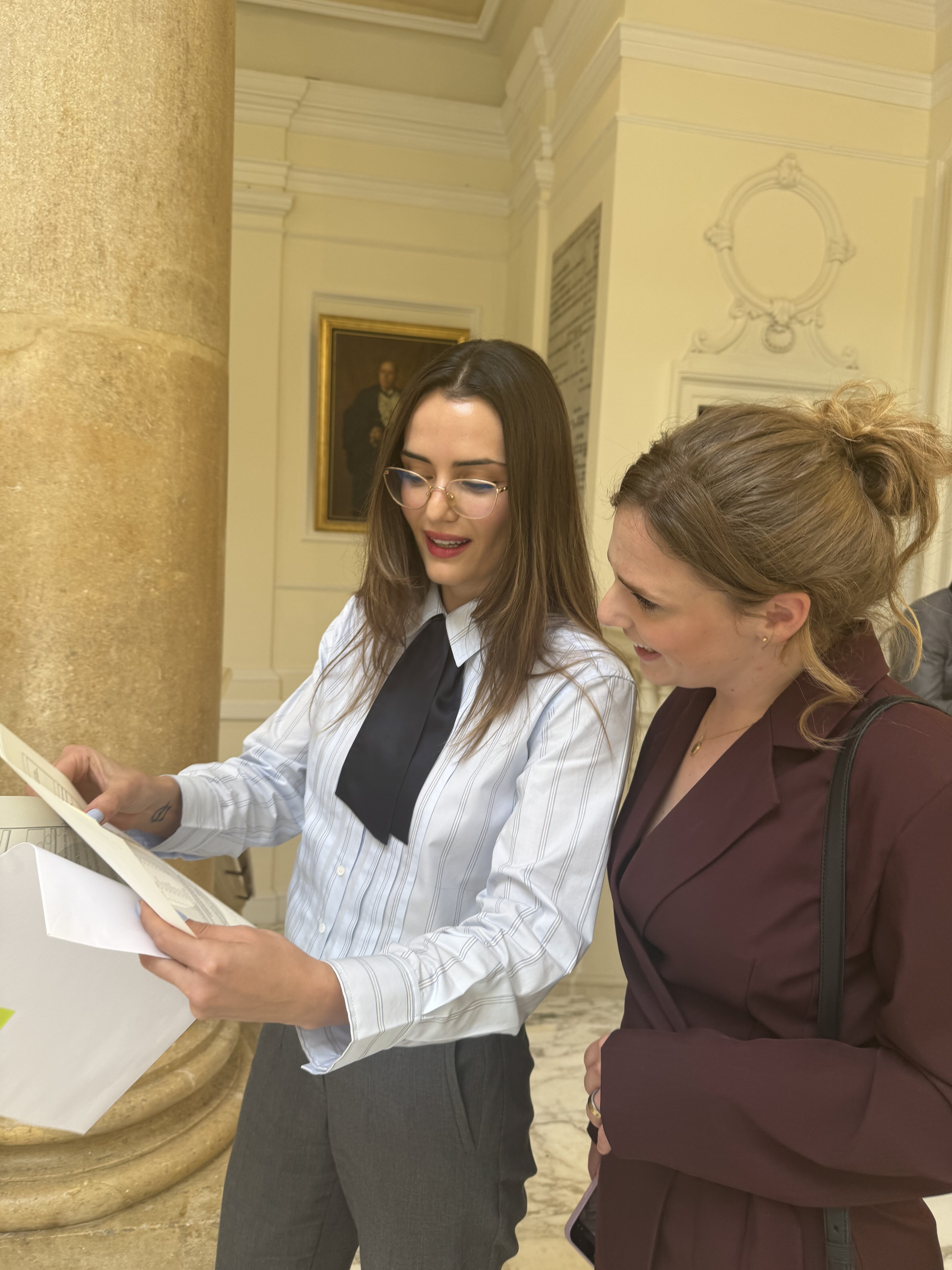
Piletti while completing her master’s degree at Open Institute of Technology. Source: Luiza Piletti
Why did you choose to do a second master’s degree? And why in data science and artificial intelligence specifically?
In my career, I was slowly moving into data. When AI became a thing, I got really hyperfocused on it. I wanted to learn more about it while it was fresh.
That’s when I found out about OPIT, and I signed up for their Master’s of Science in Applied Data Science and Artificial Intelligence, which I just graduated from in January 2026.
At Vrije Universiteit (VU), it was very academic and scientific, that’s why I also wanted a university like OPIT because I wanted the professional, real-life scenarios to be more of a focus than just research and academia. It’s cool, but if you want to work in tech, you need real-life experience and examples.
(And my company was offering tuition assistance, I’m like… I’m going to apply for it. The company pays for education? Great, I love learning. Let’s do a master’s!)
With OPIT being a fully online school, though, how wereyou able to achieve that real-life and practical insights that you were looking for?
Through the professors.
In my previous universities, I had a lot of professors who were great researchers but had little experience, if any, in HR.
But we know that real corporate life and science are different. Some things that look good in research don’t work the same in a political, multicultural, corporate environment.
I wanted to have professors who actually worked in corporate, who have years and years of experience, who have built systems in the past and got their hands dirty. They’re more rounded, more practical, and the assignments’ focus was way more on business cases and things you could implement at work.
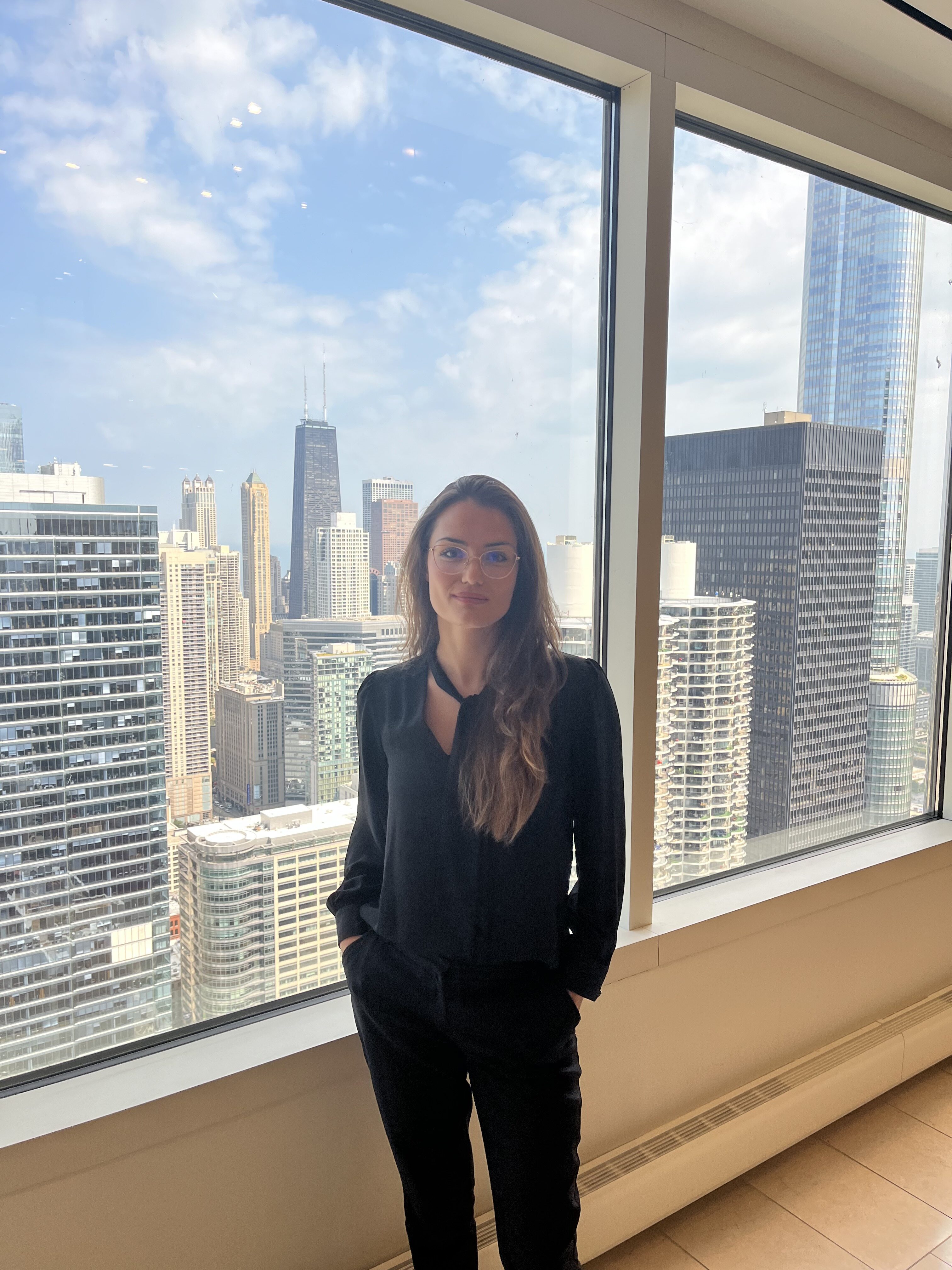
Piletti at the ADM HQ in Chicago. Source: Luiza Piletti
How were you able to balance work with that?
I don’t think I’m a person who balances stuff. I go hardcore, and then I lose my shit, with all due respect.
I had this moment at work where I was losing it, and I was very disappointed in my deliverables. So I was having a bit of a breakdown in front of my boss. And she was like, what are you talking about? You’re doing fine, everything is okay.
And that really helped me. I had a lot of support from work, from all of my stakeholders. My boss was super supportive. She helped me out, even with the app I did for my thesis. She tested it out and gave me her feedback.
Whenever I had a lot going on, she would go through my agenda with me and see which meetings I could sit out of. I wouldn’t have done this if I didn’t have ADM supporting me; that was really the difference.
What about the professors? Were they understanding of students who were balancing a master’s with a professional career?
So, OPIT had this system where if you hand over an assignment late, you will get a penalty. But that still means that you can hand in your assignments, even if it’s late.
In my first master’s, I wanted to get As. But this time, I just wanted to learn. That’s it. So, even if I would have a 30%, 40% penalty, if I learned while I was doing the assignment, and I had fun doing it? That’s good enough.
Whenever I was busy at work and at university, I made use of that rule. I understood I had to be strategic and focus on certain courses. For example, I work in business, and I already have a master’s degree in business. So in those courses, I’m going to do the minimum.
But AI, machine learning, and data science — these are what I want to learn. So I’m going to put all my energy here.
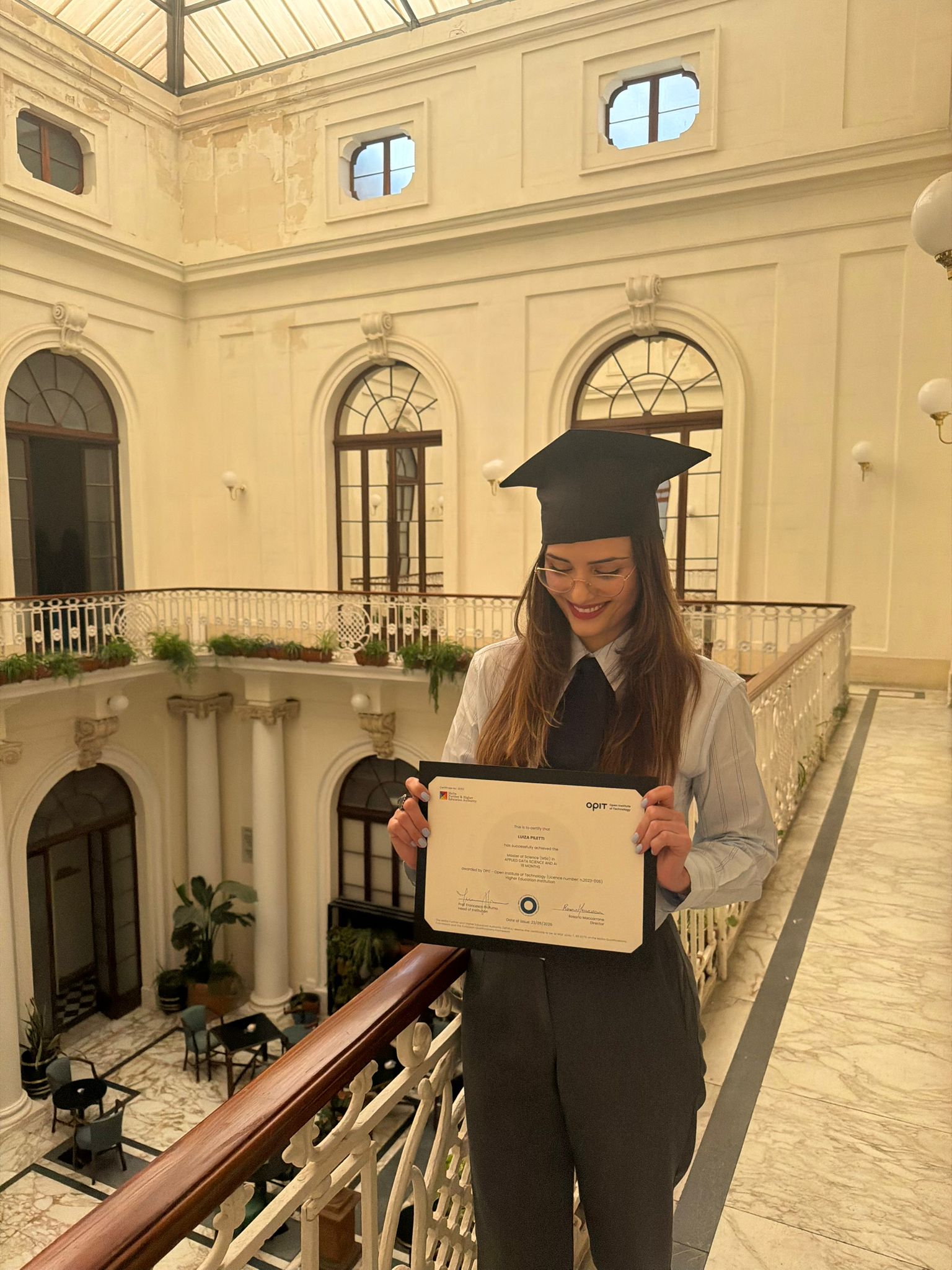
Piletti graduating from her master’s degree at OPIT. Source: Luiza Piletti
Any advice for others who may want to pursue a master’s degree while working?
What worked very well for me was to focus on the fact that I want to learn what I want to learn, and not because I have to, or because somebody is telling me to do this. I moved with curiosity throughout this journey.
I’m 35 years old and I have a full-time job; I cannot put all of my energy into studies. So, be strategic with your energy if you work full-time.
Also, what I did was, absolutely every and any assignment where I can choose what I do, I would do it in HR or human behaviour or mental health. I love to study these topics, so I’m going to have fun while doing this.
I did things my way with subjects that I’m super interested in. For most of my assignments, I was really into them, I was really having fun. That’s what worked for me.