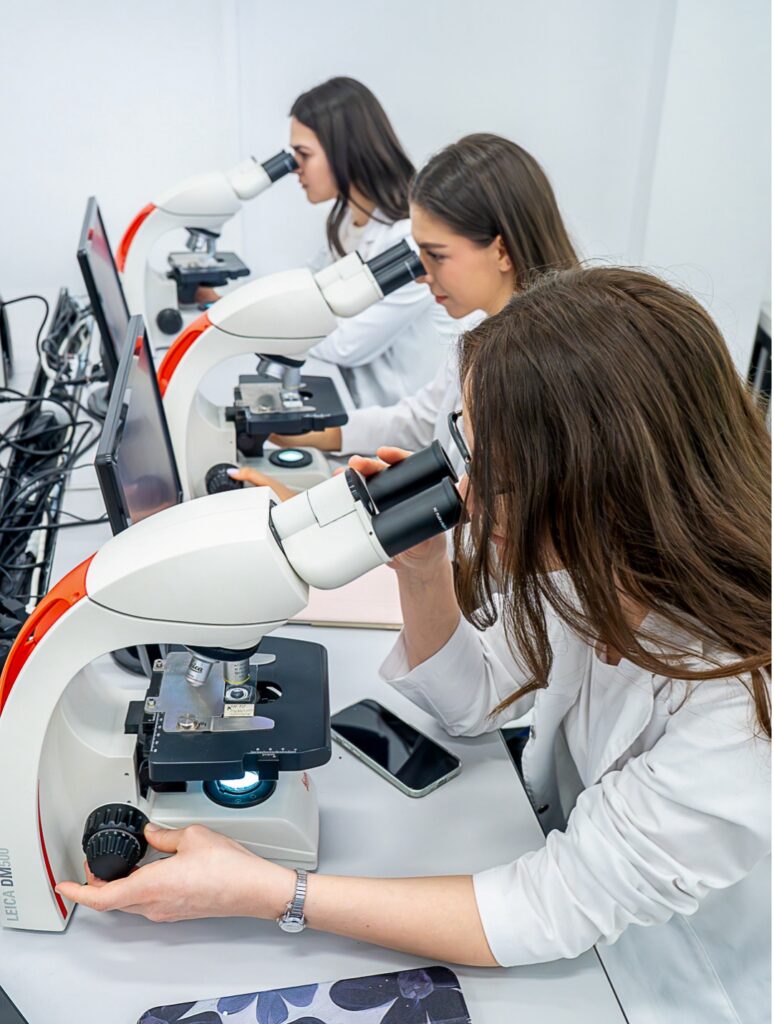
La mulți ani, a Romanian phrase that means “to many years,” is often used during birthdays or anniversaries. When you ask Ben Rosenthal what his favourite phrase is after six years in Romania, studying at “Iuliu Hațieganu” University of Medicine and Pharmacy Cluj-Napoca, this is it. If you’d asked student Maya Shahini instead, she’d say pisică, the word for cat, because it’s cute.
In its current form, the Romanian language has over 150,000 words, and every year, over 26,000 international students like Rosenthal and Shahini will come to choose their own favourites. It’s a rich culture, enriched by a diverse community. UMF Cluj is home to more than 3,000 international students from over 60 nations seeking the knowledge, skills, and global perspective needed to build a successful career in healthcare.
Rosenthal is in his sixth year at the Faculty of Dental Medicine, whilst Shahini is in her third year at the Faculty of Medicine. While they’re both at different stages and pursuing different fields, they share one thing in common: they wanted to study in Romania right from the start.
“I applied to different universities in various countries and thankfully, got acceptances, so this allowed me to really make a choice,” says Shahini. “But Romania really caught my eye, and more specifically, the city Cluj-Napoca, due to its very international and student-friendly environment.”
There are more than 3,500 international students from over 60 nations at UMF Cluj. Source: UMF Cluj
There’s no missing UMF Cluj’s excellent reputation either. Romania, in particular, is extremely well known for its world-class dentistry, with advanced clinics, trained specialists, and personalised care. UMF Cluj, in particular, ranks #2 among of 33 universities in Romania for medicine, according to EduRank. It’s the oldest of its kind in Transylvania, and yet, one of the most modern.
“Practice is very important, and when you choose a university, you have to assess how the clinical activity is going, what frequency, in what year,” says Rosenthal. Especially in dentistry, where students move on to work as soon as they graduate, practice is integral to professional development. Rosenthal’s expectations were high, and after six years, he feels more than satisfied.
“I feel very prepared for professional life,” he adds.
Offering excellent clinical practice for international students are UMF Cluj’s English-taught degrees in medicine, dental medicine, pharmacy, and nursing. Programmes here are designed with a student-centred learning experience in mind, which means access to small-group teaching, clinical exposure from the very first day, cutting-edge research, and international mobility programmes.
This year, UMF “Iuliu Hațieganu” is excited to share an exciting development. The university is expanding by launching its new English-taught medical programme in Novara, Italy, marking its first campus outside Romania. It’s a testament to the university’s position as a leading provider of medical education, allowing students to pursue their degree in a high quality academic and living environment, whilst benefitting from its century-long run of excellence in healthcare.
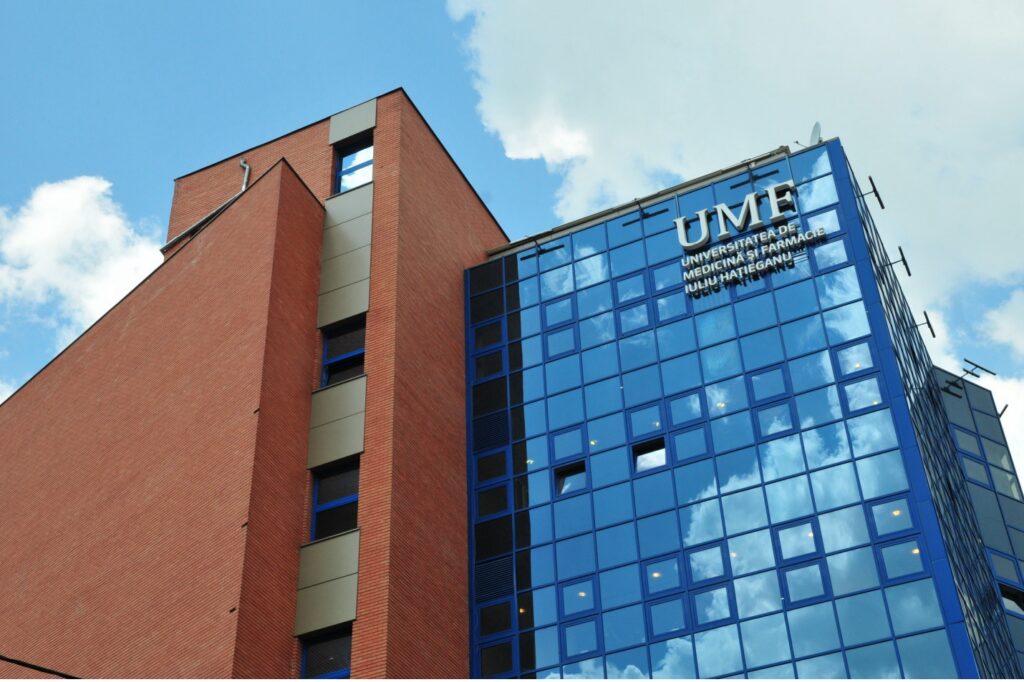
UMF Cluj is the oldest medical institution in Transylvania, Romania. Source: UMF Cluj
No matter which campus, whether in Cluj-Napoca or Novara, the goal remains the same: to equip students with the academic, clinical, and professional competencies to succeed in a global environment.
“I was pleasantly surprised when I came to UMF Cluj. The professors are very interested [in our progress]. They’re very passionate. They like to have interpersonal relations with students and they’re always willing to help out,” says Shahini. “This is really nice because we have an environment in which we have smaller class sizes with smaller groups, so it’s very personal.”
Clinical opportunities are vast, and medical equipment are high-tech. According to Rosenthal, students always receive clear instructions on how each machine works and the requirements. Everything is communicated clearly from the beginning, with rules and with patience.
“There is always availability from friends, from students, from professors. So, you’re not alone in this regard,” says Rosenthal. “Every department has its own sterilisation material, that’s next to the room. So, even physically, it’s very comfortable and convenient.”
While the programmes at UMF Cluj are top-tier, challenging students through a mixture of academic rigour and practical experience, it’s hardly the only thing the university has to offer. Beyond the classroom, students have access to plenty of organisations, activities, and volunteering opportunities, all hosted by the Medical Students Organisation Cluj-Napoca.
Alex Popa, President of the Medical Student Organization (OSM), emphasises that these opportunities are open to everyone.
“Although it is true that some of our projects require speaking Romanian, we have projects that are conducted entirely in English, like exchange, where everyone from all over the world can come to our university for one month of leadership,” he says.
It is through these experiences that students like Shahini got to learn about responsibility and leadership. She was a student representative for different organisations and even serves as president of the English Medical Student Association. Even beyond campus, Cluj-Napoca as a city is safe, multicultural, and home to many cultural, social, and professional opportunities.
“I met a lot of people, and the social life here is great,” says Rosenthal. “It’s the best experience I’ve had in my life, and I will take it with me forever.”
Follow “Iuliu Hațieganu” University of Medicine and Pharmacy on Facebook, Instagram, YouTube, X, and LinkedIn.