The desire to travel, explore, and discover other places, people, and cultures is embedded in humanity’s DNA since our very origins. Travel has always been a driver of change, bringing society forward, fostering new exchanges, insights, and friendships. The modern expression of this ancient passion is the global tourism system. Continuously evolving, changing, and growing, mainstream tourism now enables billions of people each year to travel, experience, learn, and grow.
Moreover, it has become a key component of the world’s economy. The tourism industry contributes 9.8 percent of the global GDP, employs one in nine persons worldwide, and has become a crucial economic cornerstone for destinations and countries all over the planet. And it is still growing. Global Tourism arrivals have been increasing rapidly in recent years. UN Tourism recorded over 1.52 billion arrivals in 2025, making it, despite tourism inflation and geopolitical challenges, the record year in the post-pandemic Era. Those numbers are expected to reach 1.8 billion in 2030, with a comparatively even higher impact in Asia. Raising the question about existing and future consequences for tourism destinations around the planet.
At a time when tourism continues to impact and change environments, societies, and cultures, maybe it’s time for all tourism stakeholders to question their understanding of the system. Destinations should ask what their long-term goal in tourism is. Is the measurement of successful tourism increasing visitor numbers? Or should it be measured in things like rural infrastructure development, the promotion and preservation of cultural identity, and natural wonders?
Travelers might ask whether they have the right to travel as often and wherever they want, as long as there is an affordable offer. Does the rule of the free market, the right to buy without consequences, free them from the burden of responsibility in tourism?
If we, as tourists, are part of the tourism system, are we also part of the problems and challenges it causes? Do we maybe have a responsibility after all, as well as rights, given that tourism is supposed to be a driver of change?
And indeed, the impacts of tourism can be observed all over the world. The increasing flows of travelers put pressure on scarce resources, living conditions of locals, and vulnerable cultural assets of the mainstream destinations.
Destination management plays a crucial role in balancing economic stability, ecological preservation, and the protection of local integrity and cultural identity. Consequences of insufficiently managed destinations are, for example, gentrification, as can be found in Barcelona; biodiversity loss (an example of a destination); or economic leakages, as can be observed in Thailand or the Maldives.
In the long term, poor destination management can lead to cultural and environmental degradation, which in turn diminishes the authenticity and beauty of a place that made people want to visit in the first place.
Turning the Sails
But emerging destinations are also exposed to the threats posed by rapid, uncontrolled tourism growth. Especially countries that, due to their unique natural and cultural assets, could tap into the market’s future growth, hold as much responsibility as potential. They have the opportunity to learn from the extreme examples around the world and design their tourism destinations more wisely at an earlier stage.
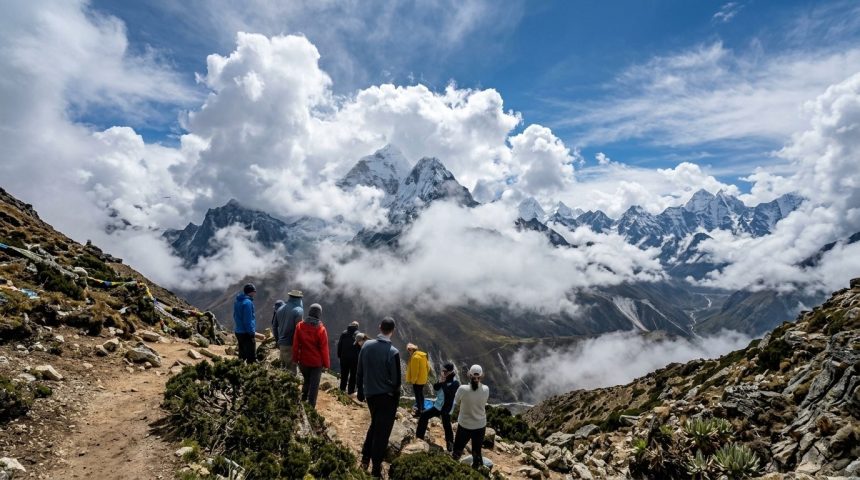
Nepal might just find itself in such a position. With the Himalayan mountain range, holding fourteen 8000+ meter summits, including the “roof of the World,” Mount Everest, as well as wild jungles home to rare species such as the Bengal tiger and the Indian rhino, the country’s natural diversity matches that of its people. As of 2021, 142 ethnic groups speaking over 124 languages are living in Nepal.
This unique mosaic of cultural diversity and natural wonders makes Nepal an internationally renowned travel destination. And yet many places remain unknown to the majority of international visitors. This concentrated flow of travelers, combined with the expected growth in tourism numbers, is putting increasing pressure on resources and local communities in Nepal’s mainstream destinations.
Numbers equal Value?
As of today, the main indicator of tourism’s success and challenges in Nepal is still measured by the number of tourist arrivals. Although a great part of the challenge might not lie in the number of travelers itself, but in the distribution of tourism flows. While Nepal registered 1.5 million visitors in 2025, over three-quarters of arrivals were accounted for by the Kathmandu Valley, Pokhara, Lumbini, Chitwan, or the Everest Region. So, in the face of increasing future tourism arrivals, how can visitors in Nepal be wisely redistributed?
To address this challenge, government institutions plan to promote and invest in alternative destinations such as the lesser-known trekking regions of Manaslu, Kanchenjunga, and Dolpo to ease pressure on the Everest and Annapurna regions in the future. There are also debates about reforming trekking permits to mitigate the comparatively high demand during peak seasons. Similar plans to develop infrastructure and train staff are being made in the south to create alternatives to mainstream destinations such as the Chitwan National Park.
Although these will help redirect travelers and avoid potential overcrowding at mainstream destinations, they do not necessarily determine the traveler profile.
When considering the future of its tourism management, Nepal might ask itself: what kind of traveler does it want to host? Is a high-value visitor a visitor who spends the most money but might compromise their openness to discovering the culture and trade comfort for real experiences? Or is it a person who values the environmental integrity and cultural identity of a place? What kind of visitors will bring more long-term value to Nepal?
If Nepal’s Goal is to shift from a high-spending tourist to a conscious traveler with responsible values, it might ask not only which destinations to invest in but also what kind of tourism.
Community Tourism – if value remains at the source
If tourism services, from accommodations to experiences, are provided by locals, the revenue generated stays in the destination and enhances the place’s resilience, prosperity, and integrity. Beyond that, the locals are not only providers of services and hosts of visitors but also active managers of their destination.
But community tourism is more than only economically empowering. Its very principle differs from the traditional business model. Rather than starting with the question: “What service can best serve the visitor?” it asks: “What and how is the host ready to share?” It starts as a conversation, allowing community members to set boundaries and express their own ideas about how to share their way of life with visitors. The guest meets the host on equal footing in a safe environment, enabling a respectful and meaningful exchange not primarily between two cultures but between two people.
Many members – one Mind
Furthermore, in many inspiring examples of community tourism around the world, it has been shown that if the destination thrives, its environment will too. Be it in Volcanoes National Park in Rwanda, in Refugio Caiman in Brazil, or in Pemuteran Bay in Indonesia, tourism-generated incentives helped preserve and regenerate delicate environments in those destinations. Community Homestay Network (CHN) in Nepal follows a similar model. Of the money that stays in the community, 80% goes directly to the community member, while 20% is pooled into a communal fund, which is used for the benefit of the community.
Attitude-Behaviour-Gap
Modern travelers are seeking meaning and authenticity in their journeys rather than only relaxation. At the same time, there is a growing concern about leaving a positive impact on the destinations.
So, if the benefits of community tourism meet the growing demand of global travelers, why isn’t it done on a larger scale? Why don’t governments and tourism operators redistribute the mainstreams of visitor flows to local entrepreneurs and use tourism as a catalyst to empower their people, preserve their heritage, and protect their environment? And why are tourists themselves not choosing community-based options more often? Of course, there are many reasons for this gap between attitude and behavior. One lies in the challenge of successful communication.
Authenticity’s many faces
Even though many travelers claim to seek more authentic experiences, there can be a gap between what visitors imagine authenticity to be and the experience of a new culture.
For example, while travelers think they seek “real” local encounters, they still take a certain level of comfort, hygiene, and safety for granted. Also, the image of an authentic experience might be influenced by media, stories, and stereotypes in the traveler’s mind, which do not always align with reality.
So, the question of how community tourism should be presented is complex. It is easy to romanticize and idealize, and challenging to capture the level of depth and individuality of the individuals and their stories in a truthful and dignified manner.
Building a Conversation
Beyond the challenge of communication, establishing a successful community tourism model takes time, training, and resources. While in community tourism it is for the locals to decide how and where to set the boundaries of services, it is still necessary to meet certain standards of hygiene, comfort, and accessibility to attract travelers. As mentioned earlier, the process resembles more of a conversation in which the traveler’s expectations meet the personal boundaries of the community members. Both are respected, and on this middle ground, community tourism is developed. This process, however, requires time, local willingness, and external expertise.
CHN has collaborated with Communities across Nepal for over a decade to establish resilient, professional local Businesses that provide high-quality services to travelers while empowering community members and protecting their dignity and cultural identity.
While communities provide their expertise in traditions and handicrafts, knowledge of the land, and stories of their heritage, CHN contributes language training, traveler profiles, hygiene standards, and greater access to the global market.
CHN communities also learn from each other. With over 20 years of experience in community tourism, there are already many well-established and successful examples that can guide and inspire sister communities through peer-to-peer exchanges.
Beyond that, CHN’s effort also proves that Mainstream tourism and community tourism can align and complement each other. For example, redirecting trekkers in the Himalaya to local villages that lie very close to the main track yet are still largely invisible to most visitors. Not only eases the pressure on overcrowded places but also supports local communities and allows travelers to explore the culture of the people (add Link to Khunde Blog, once it’s on the website) in whose homeland they’re trekking.
Evolution of Travel
The drive to discover new places and to go beyond borders and boundaries has guided us throughout our millennia-old history and has been a crucial contributor to the progress toward forming the global society we are today. In this modern form, travel still has the potential to bridge cultures, foster mutual understanding, and drive economic growth.
Tourism is a unique way to share Nepal’s cultural diversity, breathtaking natural wonders, and warm hospitality with millions of visitors each year, and create exchanges that let hosts and guests learn, understand, and grow together.
However, the increasing visitor flows demand a rethinking of distribution and overall management to preserve the very things that make up Nepal’s cultural identity and natural beauty. Community Tourism can be a powerful tool in facing these future challenges. It could help redistribute tourists, ease pressure on the mainstream destination, and empower local communities while preserving their natural and cultural assets.
The tourism system is changing and evolving by the day. But we are all part of it, and if we want it to change for the better, we should start. As tourists, we have the privilege of choosing our destination and services while traveling. This makes it our responsibility to do so wisely. To walk a path that will enable future generations to experience the same feelings and life-changing moments as we had the opportunity to.