Most students count down the days to graduation. The moment their programme ends, they move on. So when a student not only stays but spends the next many years at the same university, earning a PhD and eventually joining the faculty, you have to wonder what that institution has that others simply do not.
For Bianca Grottenegg, that place is Graz University of Technology (TU Graz).
Originally from Italy, she arrived as an international student enrolled in a Master’s degree programme in Electrical and Electronics Engineering (EEE), and never quite left. She went on to complete her PhD there and has since taken on a professorship in Electrical Measurement and Sensor Systems at the same university. That kind of loyalty to an institution does not happen by accident.
“My decision to choose TU Graz was strongly influenced by its excellent reputation in engineering, as well as Graz’s character as a vibrant and welcoming student city,” Grottenegg says. “The combination of high academic standards, strong industry connections, and an international atmosphere made it an ideal place to study and grow.”
That atmosphere is something you will feel the moment you arrive on campus. TU Graz is home to nearly 13,000 students from over 100 nations, and the energy that comes from such diversity is hard to replicate. You are preparing to lead project groups and technical discussions on a global stage alongside people from completely different corners of the world.
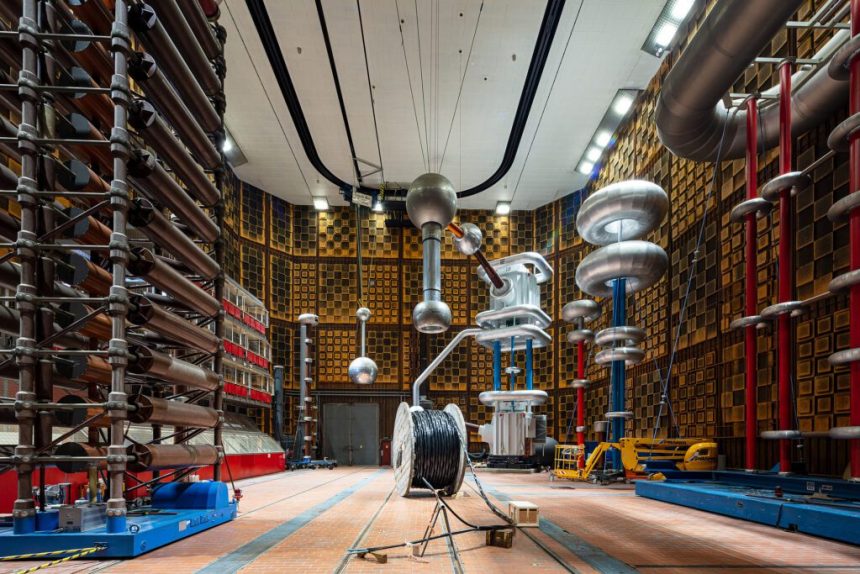
Electrical engineering students at Graz University of Technology benefit from outstanding technical infrastructure. Source: Graz University of Technology
It is that expansive outlook which shapes the EEE Master’s programme itself. Run by the Faculty of Electrical and Information Engineering and taught entirely in English, the programme is designed to be a high-tech launchpad where students master the technologies driving both the global energy transition and the digital revolution. Rather than building factual knowledge alone, it teaches you how to apply scientific methods so that when you enter the workforce, you already know how to develop innovative solutions systematically.
Part of what makes that possible is the programme’s flexibility. There are five specialised majors: Power Engineering, Electronic Systems and IC Design, Sensing, Control and Artificial Intelligence, Automation Systems Engineering, and Wireless Networks and Communication Systems. This means you can move directly into focused roles in renewable energy, autonomous systems, or chip design without spending your first years on the job figuring out where you fit.
There is little need to find your way through cutting-edge equipment either. Tte faculty comprises 12 institutes that are leading in Austria across applied and theoretical fields, the facilities reflect that standing. From the Nikola Tesla Laboratory for high-voltage testing to anechoic rooms used to test electronic devices for interference, these are the calibre of facilities you get to work in alongside researchers on projects that feed directly into your coursework.
“The programme provides a strong theoretical foundation while consistently linking it to practical applications through projects and laboratory work,” Grottenegg says. “This hands-on approach, combined with exposure to real-world engineering challenges, was especially valuable and helped me develop a deep and applied understanding of the field.”
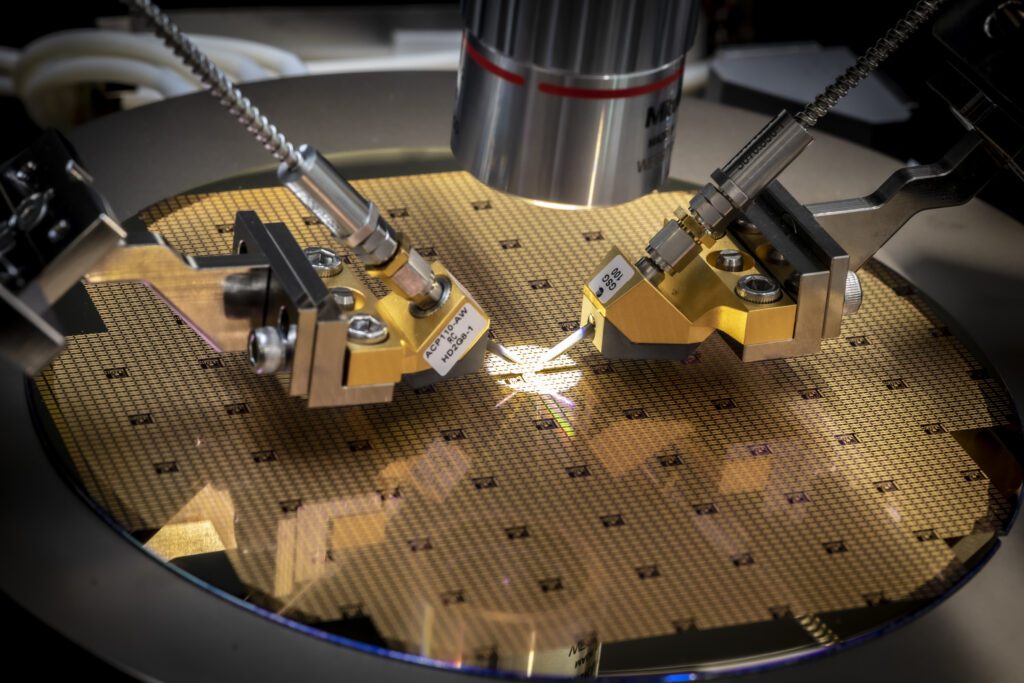
In this master’s programme, you will study electrical and electronics engineering applications while analysing problems and creating innovative solutions across energy, mobility, networks, industry, and circuits. Source: Graz University of Technology
What makes that kind of learning stick, though, is having the right support around you. The student-to-faculty ratio at TU Graz is favourable, which means you are not just a number. Lecturers are accessible and supervision is personalised, so you are never left to navigate things alone. Instead, you will be consistently encouraged to take on challenges and grow through them. “Faculty members are approachable and supportive, and the structure of the programme helps students navigate both their academic journey and their professional development,” Grottenegg says. “This environment encourages students to take on challenges and grow with confidence.”
That confidence quickly becomes useful, especially given TU Graz’s close ties to industry. The university has built strong partnerships with major players in the semiconductor, energy, and automotive sectors, many of which are based in and around Graz. Companies like NXP, Infineon, Andritz, Siemens, and AVL offer internship and career networking opportunities that are hard to find at institutions without such regional connections. There is even the option to pursue a Double Degree Programme with the Technical University of Darmstadt, specialising in energy-efficient and sustainable microelectronics, where you get to study at both institutions and walk away with a degree from each.
For all that TU Graz offers academically, the city surrounding it deserves equal mention. Graz sits in the heart of Europe, which means weekend hikes in the Alps are just as accessible as a trip to the Adriatic coast in Italy or Croatia. It is a place that makes it easy to decompress after a demanding week without having to travel far to do it.
“The city offers an excellent balance between focused academic work and a vibrant social environment,” Grottenegg says. “Its international community and high quality of life make it easy to connect with others and feel at home, even as a student coming from abroad.”
Follow Graz University of Technology’s Faculty of Electrical Engineering and Information Technology on Facebook, Instagram, and YouTube.