Centuries ago, architecture was learned through apprenticeship, where masters passed down their craft to pupils.
However, that changed when the demand for architects who could bring ideas to life with artistic flair and technical precision started rolling in, inspiring the foundation of some of the earliest architecture programmes.
The first of these was the Academy of Architecture in Paris, founded in 1671. The Royal Academy in London followed suit.
Fast forward to today, architecture schools have continued to grow and change, adopting technologies like 3D modelling and concepts like sustainability, keeping alive a legacy of creativity and engineering that all started centuries ago.
7 of the best architecture schools in the world
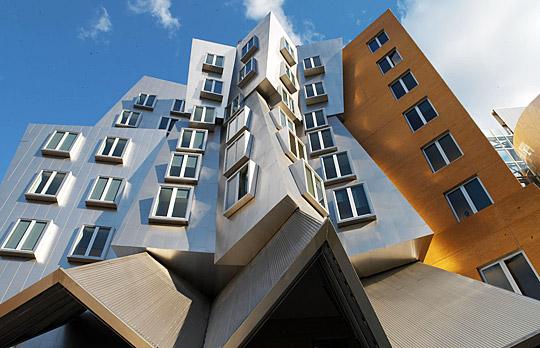
Ray and Maria Stata Center for Computer, Information, and Intelligence Sciences, Building 32. Source: Andy Ryan via MIT
1. ETH Zurich
Fees: 4,380 Swiss Franc (US$5,578.19) per year
Located in the heart of Zurich, Switzerland, ETH Zurich is listed as the fourth-best architecture school in the world according to QS World University Rankings. The university is home to four Pritzker Architecture Prize winners, with one of them appointed as an Emeritus Professor of Architecture and Design.
Here, you will not only be surrounded by the beautiful scenery of Zurich, but also by its Romanesque, historicism, and modern architecture.
It’s worth noting that the bachelor’s degree is mainly taught in German, though some courses are taught in English. The university also offers a master’s degree for those looking to expand their knowledge and learn how to handle larger-scale assignments independently.
Bachelor’s degree admission requirements:
- German language proficiency certificate
- GCSEs (mathematics, a science, and a foreign language)
- A-Levels (AAA in mathematics, a science, and a foreign language)
- IB (38 out of 42 points, HL in mathematics, science, and a foreign language)
2. Politecnico di Milano
Fees: 3,893.04 euros (US$4,529.77) per year
Politecnico di Milano (Polimi) is ranked Italy’s top university in the QS World University Rankings 2025 and seventh in architecture worldwide.
Studying in Italy will benefit international students as it has a strong architectural heritage. Madhuli, a student from India, says, “Being an architect, I was aware of Italy’s rich architectural heritage, which provides an unparalleled backdrop to immerse myself in the science of architecture.”
To be accepted by Polimi, you’ll be required to pass the “ARCHED” test, a compulsory admission test. The programmes are conducted in both English and Italian.
Polimi also offers several master’s degrees, such as architectural design and history, building engineering, landscape architecture, and management of built environment.
Bachelor’s degree admission requirements:
- A-Levels (minimum passing grade for three subjects)
- IB (at least 24 points in six subjects, with 12 obtained at HL)
3. National University of Singapore
Fees: 22,750 Singapore dollars (around US$17,770) per year
The National University of Singapore is the only Southeast Asian university to make the QS World University Rankings for Subject (Architecture), making it one of the best architecture schools in the world.
As part of the programme, you’ll learn about the approaches and methods for reading and conceptualising space, defining purpose, and exploring atmospheres to create meaningful spaces.
NUS offers specialised master’s degrees in landscape architecture, urban planning, integrated sustainable design, and architectural conservation as well.
However, getting accepted to NUS can be an uphill task, as its acceptance rate is typically less than 10%.
Bachelor’s degree admission requirements:
- GCSEs: Pass in Maths
- A-Levels: AAA/A or ABB/B (Pass in chemistry, mathematics, or physics; OR pass in Additional Maths)
- IB: Pass in SL Chemistry, Mathematics, or Physics
4. Manchester School of Architecture
Fees: 32,000 pounds sterling per year (around US$42,712)
As an innovative collaboration between the University of Manchester and Manchester Metropolitan University, the Manchester School of Architecture has more than 100 years of experience in the field.
Located in central Manchester, you’ll be surrounded by its contemporary and innovative architectural scene, reflecting its history as the world’s first industrial city.
Courses at MSA include modules addressing global issues relating to architecture, technology and environment integration, architectural ethics, and architectural ecosystems, all validated by the Architects Registration Board (ARB) and RIBA.
Manchester School of Architecture offers bachelor’s and master’s degrees, including specialised fields such as urbanism and landscape architecture.
Bachelor’s degree admission requirements:
- GCSEs (Mathematics and English, Grade C or four)
- A-Level (BBB, a mixture of science or maths and humanities or arts)
- IB (32 over 42, with 5,5,5 in HL subjects)
- English language certification
5. University College London
Fees: 35,400 pound sterling for international students (around US$47,260).
The history of UCL’s Bartlett School of Architecture dates back to 1841, when it became the first British university to appoint a chair of architecture, making The Bartlett School the first school in its field in the UK.
Over the past two decades, Bartlett students have earned more RIBA medals than any other institution, with many graduates now holding influential roles in leading practices worldwide.
UCL takes pride in its faculty and is home to world-renowned professors such as architectural historian Reyner Banham and Archigram co-founder Sir Peter Cook. The school hosts guest lecturers, including award-winning Norman Foster and Lord Richard Rogers.
Master’s programmes are available at UCL, and there’s a wide selection of specialisations such as architectural computation, architectural history, landscape architecture, and cinematic and videogame architecture.
Bachelor’s degree admission requirements:
- GCSEs (English and Mathematics at grade C or four)
- A-Levels (AAB, no specific subjects)
- IB (36 out of 42, no specific subjects)
- Comprehensive portfolio of creative work
6. Massachusetts Institute of Technology
Tuition: US$66,720 per year
Some may not associate architecture with MIT, but here’s a fun fact: it’s ranked second on QS World University Rankings by Subject 2025 for Architecture & Built Environment.
Nestled in Cambridge, Massachusetts, MIT has seen several world-renowned architects walk through its halls.
Its buildings were even built by some of them, such as William Welles Bosworth for its Maclaurin Buildings, IM Pei for the Green Building, and Frank Gehry for its Ray and Maria Stata Centre.
Alongside two undergraduate majors, MIT also offers master’s and PhD degrees for those looking to take the next step in both their educational and professional careers.
Bachelor’s degree admission requirements:
- It is not listed; however, taking as many AP classes as possible, such as physics and mathematics, is recommended.
7. Tsinghua University
Fees: 30,000 Chinese yuan (US$4,375.92) per year
Tsinghua University offers a five-year Bachelor of Architecture programme that focuses on architectural design, history, and technology, while integrating traditional Chinese principles with more modern, sustainable, and digital methods.
They aim to prepare students to be competent, productive and innovative architects.
It ranks #7 in the world in the latest QS World University Rankings by Subject (Architecture & Built Environment) and is recognised as the top architecture programme in China.
Bachelor’s degree admission requirements:
- Official academic transcripts (in English or Chinese)
- High school diploma/graduation certificate
- Standardised test results (e.g., SAT, ACT, A-Level, IB)
At a glance: The best architecture schools in the world & how much it costs
| School | Country | Tuition per year (for international students) |
| ETH Zurich | Switzerland | ~US$5,578.19 |
| Politecnico di Milano | Italy | ~US$4,529.77 |
| National University of Singapore | Singapore | ~US$17,770 |
| Manchester School of Architecture | UK | ~US$42,712 |
| University College London | UK | ~US$47,260 |
| Massachusetts Institute of Technology | US | US$66,720 |
| Tsinghua University | China | ~US$4,405.35 |
Is it important to go to architecture school?
Attending the best architecture schools means you’ll be well-prepared to build the next best building for the upcoming generation.
Take Frank Gehry (Pritzker Prize winner) and Maya Lin (designer of Washington D.C.’s Vietnam War Memorial), for example. In 2016, they were both awarded the Presidential Medal of Freedom by former President Barack Obama for their career achievements.
But before they made their way through the architectural scene, Gehry and Lin attended the best architecture schools in the world.
Gehry attended the University of Southern California (USC), a place where he built connections and met Raphael Soriano, a well-known architect, with whom he apprenticed at Victor Gruen Associates while completing his programme.
Lin went to Yale University. There, as part of her programme’s independent study course on funerary architecture, she joined the Vietnam Veterans Memorial competition with the support of her professors and peers.
An important thing to note is that both Gehry and Lin attended NAAB-accredited programmes.
Is it important to attend an accredited programme?
The National Architectural Accredited Board (NAAB) is an agency that evaluates architecture programmes across the US and ensures they meet a certain standard in preparing students to enter the field. The UK equivalent is the Royal Institute of British Architects (RIBA), Canada has the Canadian Architectural Certification Board (CACB), Australia has the Architects Accreditation Council of Australia, and so forth.
But must you join an accredited programme?
Well, in the US, most of the 55 licensing boards require candidates to hold degrees from a NAAB-accredited programme.
For those looking to pursue a career in the UK, attending an accredited school is compulsory. You’ll need to complete a three-part Architect’s Registration Board (ARB) qualification, and a way to complete one step of it is to do it through RIBA.
Attending a RIBA-accredited institution will already check off one part of your ARB and RIBA checklist, and you’re one step closer to becoming a qualified architect.
It’s the same for students in Australia. You’ll be required to earn an AACA-accredited architecture programme in Australia and pass the Architectural Practice Exam.
If you don’t pass the requirements set by the Architect’s Registration Board (ARB), you won’t be able to call yourself an architect, and it’s illegal to pursue a career in architecture if you’re not registered.
This is not to say that all non-accredited programmes are terrible and should be overlooked; it’s always best to prepare for your future and minimise any issues that may affect your career.
If you were to attend a non-accredited institution, you may be required to earn an additional degree from an accredited one when getting your architecture license — costing more than you initially planned.
Interestingly enough, the US has more non-NAAB-accredited programmes than accredited ones. Over 800 institutes in the US offer over 1,800 programmes in architecture and related fields, but only 140 institutions offer 176 NAAB-accredited ones.
In the UK, out of the 100 institutes that offer architecture degrees, RIBA has validated only a little over 50 schools of architecture and other course providers.
If you’re enrolled in accredited institutes and programmes, you will stand out from other architecture students.
Disclaimer: This article was last updated on February 27, 2026.