
Cheating scandals are titillating to read about when it’s not about you.
Let’s be real – some of us considered cheating our way to good scores before.
Why not? After all, it’s easy to sneak a peek at a classmate’s test paper or hide your phone somewhere. Why worry about memorising quadratic formulas when you smuggle in tiny answer sheets or write them somewhere on your body?
Except nobody bothers with tiny answer sheets anymore. In 2026, the cheat sheet is using AI to cheat. And this includes not just exams, but also coursework, assignments and essays.
The numbers back this up. The largest study of undergraduate AI use to date, found that two-thirds of students used generative AI in the 2023-24 academic year. Among students who use AI daily, 26% admitted to knowingly submitting AI-generated work when it was not allowed. Across the pond, nearly 7,000 UK university students were caught in proven cases of AI cheating in the 2023-24 academic year – 5.1 cases per 1,000 students, more than triple from the year before.
Even high schoolers are all in. Pew Research Centre’s “How Teens Use and View AI” report, based on a survey of 1,458 US teens aged 13 to 17, found that just over half have used chatbots for help with schoolwork, and 59% say using AI to cheat is a regular occurrence at their school.
But hey, we at Study International don’t condone cheating, even though students are certainly getting creative with their AI-assisted methods.
TL;DR? Here’s the summary:
- AI has become the preferred tool for students cheating in exams, assignments and coursework.
- AI detection tools remain unreliable and have falsely accused many students, particularly non-native English speakers.
- Universities are responding by redesigning assessments with supervised exams, oral tests and responsible AI use.
The 21st century invented new ways to cheat – then AI made them obsolete
Honestly, cheating is a challenge.
You need good preparation, advanced skills like tiny handwriting or sleight of hand, and, most importantly, the ability to keep a poker face.
The most popular methods include writing on water bottle labels or etching tiny letters on fingernails. Some even staple their cheat sheets on the inner ridges of their caps or tape them to their thighs — all they need to do is pull up their gym shorts or skirt when no one is looking.
But these hardly work anymore.
Now, most exam halls require you to bring a transparent water bottle, put your hands on the desk before your paper, or even conduct bag and clothing checks. Some even ban long-sleeved clothing – students must fold them up to elbow-length – or accessories like caps and watches.
And that’s why students are getting creative.
A Taiwanese Quora user describes how a student in his class would pretend to have a cold during exams and wear a mask. He would then cough for A, sniffle for B, clear his throat for C, and blow his nose for D. And it worked.
Charming, in retrospect. Because the COVID-19 pandemic didn’t just usher in online classes and exams. It handed students a far more powerful accomplice. Why develop sleight of hand when ChatGPT can produce a full essay, solve a set of equations, or draft a lab report in seconds?
Interestingly, the overall rate of cheating may not have exploded the way headlines suggest – students are simply switching methods. The Science study found that while a third of US undergraduates regularly used generative AI on assignments, only 9% had used it to cheat.
Indeed, technology has come far.
What’s stopping you from checking answers on an incognito browser or having your textbook or iPad open while taking an exam online? Some even copy-paste directly from ChatGPT for their assignments or tests – a bold but pretty stupid move.
Cheaters and anti-cheating methods are constantly wrestling for the upper-hand. It’s difficult to know who will prevail.
The detection arms race – and why it’s failing
Cheaters and anti-cheating methods are constantly wrestling for the upper hand.
AI detector tools are now a dime a dozen – although they are known to flag human writing as artificially written. And the evidence on this has gotten damning. A Stanford University study published in the journal Patterns found that seven popular AI detectors flagged 61.3% of TOEFL essays written by non-native English speakers as AI-generated – while showing near-perfect accuracy for essays written by US-born students. If you’re an international student, in other words, you’re far more likely to be falsely accused.
Those false accusations carry real consequences. In 2026, the family of a Palo Alto high schooler filed a civil rights lawsuit after he was accused of AI cheating based on a Turnitin score – a tool whose own documentation acknowledges a variance of plus or minus 15 percentage points, meaning his 76% “AI-written” score could have legitimately meant anywhere from 61% to 91%.
In a separate case, a student claimed he was expelled after faculty compared his exam answers to ChatGPT output – costing him his legal right to remain in the US.
And then there’s the professor who did it to an entire class. In a case that went viral, a Texas A&M-Commerce instructor failed all of his students after pasting their essays into ChatGPT and asking whether it had written them. The problem, as Rolling Stone reported: ChatGPT cannot actually detect AI-generated text. In fact, if you paste any passage from famous novels into it, the AI will even claim authorship of those passages.
Perhaps rather than trying to prevent students from cheating, it’s time for academic institutions to revise their curriculum and testing methods. After all, students cheat because they’re unable to memorise everything before exams or are experiencing pressure to succeed. Yes, well, some may just be plain lazy, too.
All this and more have paved the way for some of the biggest academic cheating scandals.
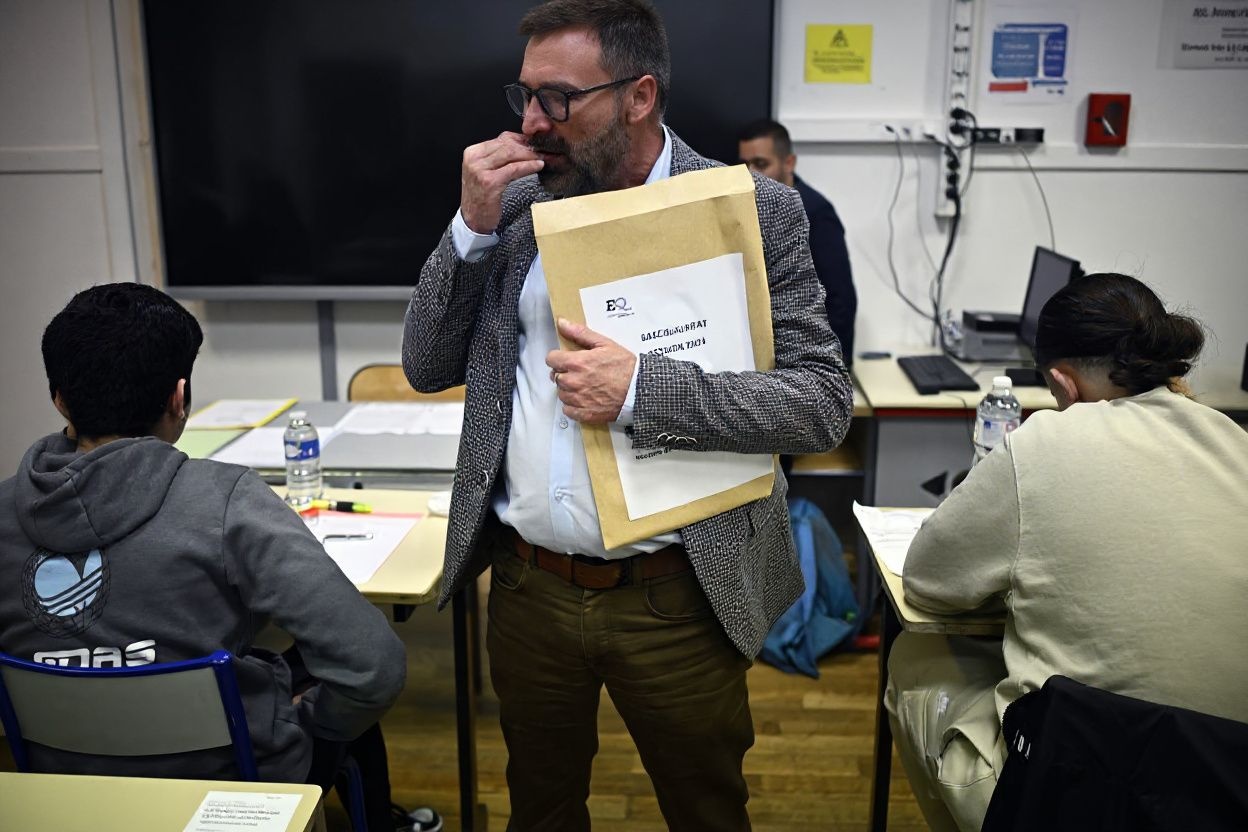
The rise of AI is forcing educators to rethink what meaningful learning looks like.
Large-scale cheating scandals
The Brown University take-home scandal
The largest known AI-enabled academic fraud in Ivy League history unfolded in 2026, when Brown University professor Roberto Serrano discovered that at least 40 students had used ChatGPT to cheat on a take-home mathematical economics exam.
Among the 86 students in his class, the average midterm score was a suspiciously perfect 96. When Serrano ran the exam through ChatGPT, the bot produced an oddly convoluted proof for one question – and that same convoluted argument appeared in exam after exam.
The in-person final told the rest of the story: the class average collapsed to 48 out of 100, and of the 27 students who didn’t bother showing up, 22 had scored a perfect 100 on the midterm. “The empirical evidence of fraud is overwhelming,” Serrano told Spanish newspaper El País.
The scandal has become a flashpoint in a wider debate: Princeton senior and former Honour Committee chair Nadia Makuc says, “As long as people think there is more cheating, it encourages more cheating.”
The Harvard undergrad cheating scandal
In 2012, about 125 Harvard University undergraduates were investigated for plagiarism and other academic misconduct. At that time, it was the most widespread academic cheating scandal known to rock the industry – after all, Harvard is known for its prestige, and cheating wasn’t something that students were known to do.
A teaching fellow noticed suspicious similarities while reading through the students’ take-home exams during the summer. Back then, grades were determined by four take-home exams, and the 2012 exam had a short answer format, which spiked the difficulty. Over half of the submitted papers were suspected to have been involved in potential collaboration – arguments were identically structured.
They then brought the case to the Harvard College Administrative Board, which discovered that over half of the students enrolled in that particular class were guilty of cheating. The students were then forced to withdraw for a year.
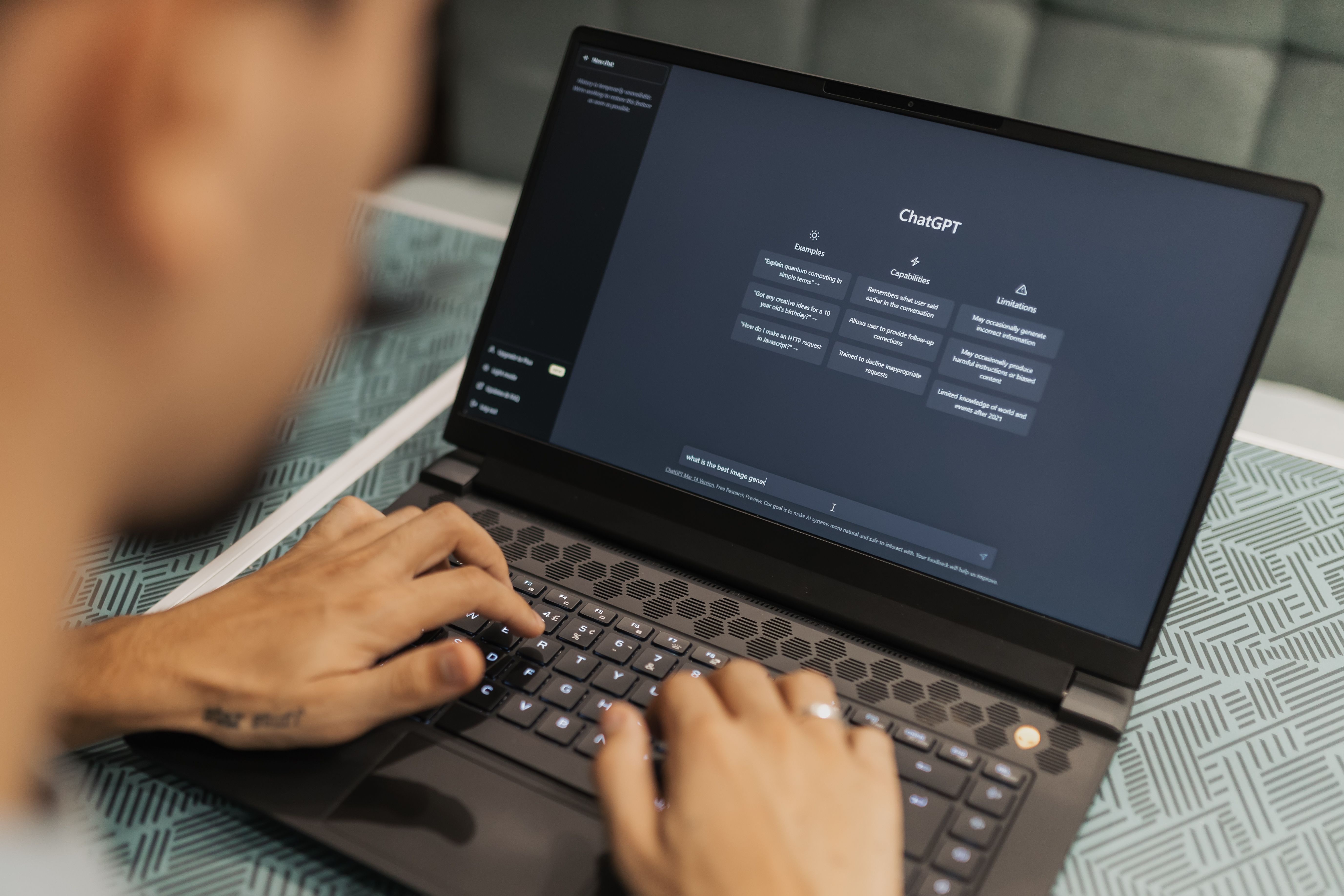
As generative AI becomes more accessible, students are finding new ways to bypass academic rules. Source: Pexels
The Australian university that accused 6,000 students
In 2024, Australian Catholic University (ACU) registered nearly 6,000 cases of alleged academic misconduct across its nine campuses – with about 90% of referrals relating to suspected AI use.
The problem: many of the accused had done nothing wrong. Around one-quarter of all referrals were dismissed after investigation, and the university’s own deputy vice-chancellor conceded that investigations were not always as timely as they should have been.
The human cost was brutal. One final-year nursing student, Madeleine, received an “Academic Integrity Concern” email in the middle of her clinical placement while applying for graduate jobs. It took ACU six months to clear her – during which her transcript read “results withheld,” which she believes cost her a graduate nursing position.
A paramedic student had 84% of his essay flagged as machine-written by Turnitin’s AI detector. To prove his innocence, the student was asked to hand over handwritten notes, typed drafts, and even his internet search histories.
What makes these cases sting more is that the tool driving them was already known to be shaky. Turnitin’s own guidance warns its AI report should not be the sole basis for action against a student, and internal documents showed ACU knew of the tool’s reliability issues for over a year before finally scrapping it in March 2025.
The Chegg epidemic
Students from the University of California Santa Barbara (UCSB) were revealed to have used Chegg and GroupMe to complete assignments and cheat on exams.
Chegg is known as an education and tutoring site offering resources for students.
It also offers a paid service called Chegg Study, where for US$14.95 a month, users could get access to a database of over 40 million textbook and exam questions and answers. Most importantly, users could submit photos of tests and assignments to freelancers in India, who would supply answers in less than thirty minutes.
GroupMe was used as a chatroom and message group to discuss answers and collaborate on tests.
An anonymous third-year sociology major explained that many students use the app to collaborate with other classmates: “One of my classes had really hard quizzes, and we would just ask for the answer to a question in the group chat when we reach the last attempt and get desperate.”
During the pandemic, Chegg’s stock price more than tripled. As Forbes put it – the US$12 billion company was getting rich by helping students cheat their way through COVID-19. But perhaps karma found its way – the company’s stock declined by 46% in 2023 thanks to the widespread usage of ChatGPT and other AI platforms.
The slide never stopped: by 2024, Chegg had announced workforce cuts as it scrambled to compete with the very AI tools that ate its business.
After all, why pay for an outsourced expert when AI could do it in seconds?

More students are turning to AI to complete assignments, essays and even exams.
So what happens now?
Institutions appear to have reached a verdict: if you can’t reliably detect AI, change the exam itself.
Princeton University is ending a 133-year tradition of unproctored testing. From July 1, 2026, all in-person undergraduate exams must be supervised by instructors, after faculty voted in May 2026 to mandate proctors in every exam room, reversing an honour-code practice dating back to 1893.
Handwritten blue book exams are making a comeback across US campuses, alongside a revival of the oldest assessment format of all: the oral exam.
Professors at Cornell, the University of Pennsylvania and NYU are rolling out Socratic-style questioning after noticing students who submit perfect written assignments but can’t explain the material out loud. As Cornell biomedical engineering professor Chris Schaffer says, “You won’t be able to AI your way through an oral exam.”
Others are going the opposite direction – embracing the technology rather than fighting it. The University of Surrey has redesigned its entire curriculum, effective September 2026, to embed AI into every course and assess students’ process over their outputs.
Third-year civil engineering students, for instance, might use AI to help design a building, then verify every AI output by hand calculations. English literature students will submit drafts and revision memos to prove their authorship.
Cornell researcher Rene Kizilcec, who co-authored the landmark Science study, says, “Assessment reform is necessary and urgent.” He and his co-authors expect that as student AI use grows, misuse will grow with it.
Frequently asked questions (FAQ)
Can universities actually detect ChatGPT-written work?
Not reliably. AI detectors (Turnitin, GPTZero) have high false-positive rates, especially for non-native speakers and neurodivergent writers. Turnitin itself says its score shouldn’t be the sole evidence. Schools that build a real case combine the score with writing-style mismatches, inability to explain the content, or missing draft history.
What should I do if I’m falsely accused of AI cheating?
Ask for the specific evidence, not just a percentage score. Pull your draft history from Google Docs revisions or Word track changes to show your process. Check whether the school’s policy even allows the detector score to stand alone as proof. Request a meeting where you walk through how you wrote the piece, and loop in a student advisor before any formal hearing.
Is using AI for university work always cheating?
No. It depends entirely on the course policy, which ranges from fully banned to required for the assignment. The same use, like running ChatGPT to restructure a paragraph, can be fine in one class and a violation in another. When the syllabus doesn’t say, ask the instructor.
Disclaimer: This article was updated on July 9, 2026.