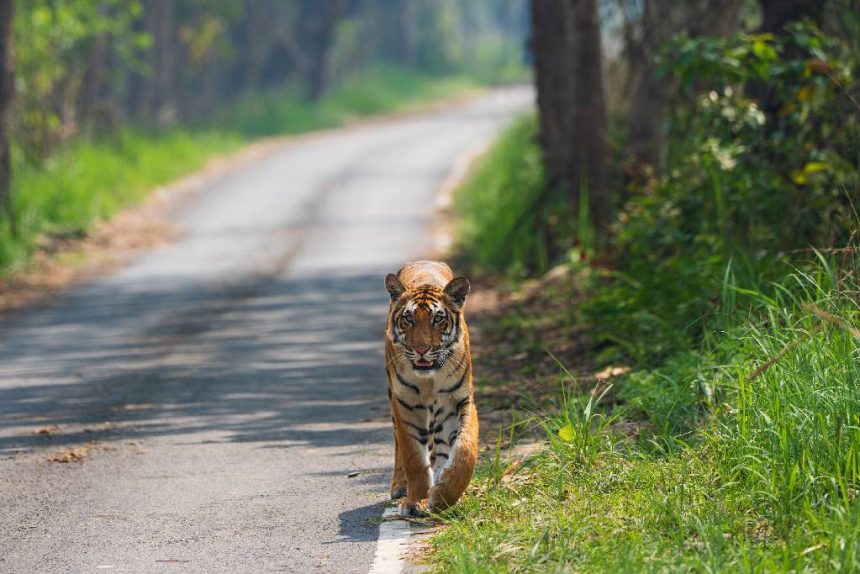
Animals can’t voice their desperation for help as their habitats are being threatened, but the urgency is clear.
More than 175,900 species are currently listed on the IUCN Red List, with over 49,500 species at risk of extinction. In just 40 years, global wildlife has plummeted by 60%.
This situation is not improving, and humans are to blame.
“We are sleepwalking towards the edge of a cliff,” Mike Barret, the Chief Scientist Advisor of WWF, told The Guardian. “This is far more than just being about losing the wonders of nature; it is desperately sad, though. This is now jeopardising the future of people. Nature is not a ‘nice to have’ – it is our life-support system.”
Barret is right.
When species go extinct, it creates an imbalance in the world’s ecosystem and the processes it maintains, such as the food chain or biotic pollination.
This is where specialists, geared up with wildlife conservation degrees, step in to safeguard both the creatures and the ecosystems they call home.
Wildlife conservation starts in our backyard
Many people assume that earning a wildlife conservation degree means travelling to distant places like Africa’s savannahs or the Amazon jungles. However, endangered species may be much closer to home than you think.
International Union for Conservation of Nature (IUCN) told This Week in Asia that more than 4,300 species across Southeast Asia were “critically endangered” or “endangered.” These include tigers, giant catfish, gibbons, pangolins and vultures.
In Europe, endangered species like wild hamsters, Mediterranean monk seals, and angel sharks are facing the threat of extinction.
Pursuing a wildlife conservation degree abroad can expand your understanding of global preservation efforts.
By bringing that knowledge back home, you’re not only contributing to the well-being of your local environment but also helping to protect the endangered species unique to your country.
Wildlife conservation is essential for future generations, and it is a key strategy to protect the environments where wild species live. Source: Sanjeev Kumar Maurya via Pexels
What do you learn from a wildlife conservation degree?
A wildlife conservation degree equips you with the skills to preserve, manage, and study wilderness areas, including plants, animals, fungi, and other forms of life.
This expertise extends to careers in zoological environments, aquariums, and other conservation settings.
You’ll also learn how to assess and protect threatened and endangered species, tackling critical issues such as habitat destruction, poaching, climate change, and the impact of human activity on the planet.
In short, you’ll become a guardian of animals and ecosystems worldwide — a real-life superhero for nature.
A list of key areas of study covered in this degree include:
- Ecology and ecosystems
- Wildlife management
- Biology
- Botany
- Soil science
- Animal nutrition and diseases
- Plant and animal biological diversity

Wildlife conservation goes beyond animals, it helps promote pollination and continuity of native plant species. Source: Mason McCall via Pexels
The careers a wildlife conservation degree can offer you
According to the US Bureau of Labour Statistics, careers in wildlife conservation are projected to grow by 3% to 2% between 2024 to 2034.
With this degree in hand, you have a list of careers to choose from:
Conservation scientist
Conservation scientists work to protect natural resources by managing and restoring habitats, developing conservation plans, and monitoring environmental health.
Around 3,600 job openings for conservation scientists and foresters are expected each year on average. Salaries for conservation scientists typically range from US$99,000 to US$156,000 annually.
Environment consultant
Environment consultants provide expert advice to businesses, governments, and NGOs on how to reduce environmental impact and comply with conservation regulations.
Environmental consulting offers strong career prospects, with an average base salary of US$84,359 a year. Demand for expertise is also growing. The US environment and sustainability (E&S) consulting market surpassed US$25 billion in 2024, marking a 9% year-on-year increase.
Park ranger
A park ranger oversees and protects natural parks and wildlife reserves, engages in public education, and enforces conservation laws.
A career as a park ranger offers promising prospects. More than 336 employers were hiring in just one month, highlighting strong demand across the US. Park rangers also earn an average annual salary of US$57,533.
Wildlife biologist
A wildlife biologist researches animal species, their behaviours, and habitats to inform conservation strategies and understand ecosystem dynamics.
Wildlife biology may not be one of the fastest-growing careers, but it continues to offer steady opportunities. Employment is expected to grow 2% over the next decade (2024-2034), and wildlife biologists in the US earn an average salary of US$63,916 per year.
Wildlife rehabilitation specialist
Wildlife rehabilitation specialists care for injured or orphaned animals, with the goal of rehabilitating and releasing them back into the wild.
Wildlife rehabilitation can be a rewarding career, but it is also a competitive one. While employment for animal caretakers is projected to grow by 16%, many organisations have limited paid positions and instead depend on volunteers and interns.
Having a bachelor’s degree in wildlife biology, ecology, or zoology can significantly strengthen your job prospects. In the US, Quincy, Florida, offers the highest average salary for wildlife rehabilitators, at approximately US$39,837 per year.
Zoologist
Zoologists study animals in captivity and the wild, focusing on species behaviour, health, and breeding, often working in zoos or wildlife sanctuaries.
Demand for zoologists is expected to remain steady, with about 1,400 job openings projected each year between 2024 and 2034. As career opportunities continue to emerge across research, conservation, and environmental management, professionals in the field earn an average base salary of US$116,789 per year in the US.
Biodiversity analyst
Interested in conservation but also love working with technology? As a Biodiversity Analyst, you’ll use Geographic Information System (GIS) and AI-powered mapping to study biodiversity trends and turn complex environmental data into insights that support conservation efforts and smarter land management.
It’s also a career with growing opportunities. Biodiversity Analysts earn US$80,762 a year. Jobs in biodiversity conservation are expected to increase by 8% through 2033, with many positions available in government agencies, scientific consulting firms, and organisations like the US Forest Service.
Environmental AI specialists
Environmental AI Specialists develop machine learning applications that enable conservation organisations to better understand and protect the natural world. Their work ranges from analysing environmental data and monitoring biodiversity to creating AI-powered tools that support conservation planning and decision-making.
As more organisations invest in both sustainability and AI, demand for these skills is rising quickly. Jobs requiring AI expertise are growing nearly eight times faster than the overall job market, while professionals with AI skills also command higher salaries. In the US, Environmental AI Specialists earn an average annual salary of around US$100,142.

36% of reef corals on earth are facing extinction, and it’s important to help preserve their habitat as corals are homes for marine life, providing food and shelter. Source: Emre Kocdemir via Pexels
Indoor jobs to help wildlife conservation
Working in wildlife conservation doesn’t always mean spending your days in zoos, jungles, or wildlife parks.
If the idea of braving mosquitoes and spiders in tropical forests isn’t appealing, don’t worry — there are plenty of roles that keep you away from the great outdoors.
Here are a few examples:
Environmental consultor
Work with private companies or governments to help them assess environmental impact, develop sustainable practices, and comply with wildlife protection laws.
Environmental educator
Work in schools, museums, or community organisations to educate the public about wildlife conservation and sustainability to build environmental awareness.
Government agency worker
Work at governmental agencies such as the US Environmental Protection Agency or the National Fish and Wildlife Foundation to develop and enforce environmental laws, monitor wildlife populations, and design conservation policies.
Non-profit and NGO worker
Work with conservation organisations like The World Wide Fund for Nature (WWF), African Wildlife Foundation, or Oceana to engage with the public in advocating, fundraising, policy development, and education. Research, campaigns, and projects can be part of the job.
Research and academia
Working with universities, research institutions, or conservation organisations to conduct wildlife research, publishing studies, or teaching students about conservation biology and ecology.

Botswana tops the list of countries that are doing the most to protect wildlife. It has the highest conservation land ratios in Africa and more than 25% of its land area is reserved for parks and other reserves. Source: Mark de Jong via Pexels
7 universities with the best Bachelor’s in Wildlife Conservation degrees
1. University of Prince Edward Island, Canada
If you’re looking to immerse yourself in practical, theoretical, and analytical wildlife studies for only US$8,130 a year, the Bachelor of Wildlife Conservation (BWC) at the University of Prince Edward Island, #35 among the best global universities in Canada, is for you. Classes offered range from wildlife health, conservation genetics, and biogeography and macroecology.
To be eligible for the BWC programme, you must attend an accredited North American Wildlife Technology Association (NAWTA) college programme.
2. Bangor University, Wales
Bangor University is ranked in TIME’s World’s Top 400 Universities 2026. Its BSc in Wildlife Ecology and Conservation programme means you’ll be learning things hands-on. You’ll get to travel abroad for class field trips, work at local and international conservation organisations, and learn from the best in the industry.
The three-year programme costs 20,000 pounds (US$26,855) per year.
3. Unity Environmental University, US
Located in Maine, US, the Unity Environmental University, ranked #150-164 out of 170 regional universities in the north, is one of the best universities for environmental science, offering programmes in diverse fields of our natural world.
The BS in Wildlife Conservation degree here emphasises sustainable management of wildlife species through consideration of the applicable social, economic, and environmental concepts. Tuition costs around US$21,920 and can be completed in two and a half to five years.
4. Bath Spa University, UK
If you attend Bath Spa University, #61 in the 2026 Guardian League Table, you’ll see a great variety of birds, including woodpeckers, nuthatches, kingfishers, and even sparrowhawks. It’s a perfect view of the wildlife Bath offers for when you’re enrolled in the BSc in Wildlife Conservation programme.
The programme, accredited by the Royal Society of Biology, allows you the opportunity to study abroad as well as gain hands-on experience in fieldwork and work placements. The tuition here is 18,585 pounds (US$24,955) per year.
5. University of Guelph, Canada
Nestled in Ontario, Canada, the University of Guelph, #546 in QS World University Rankings, offers one of the best wildlife conservation degrees in Canada and the world. The programme will teach you how to protect biological diversity and tackle issues facing wildlife while gaining hands-on experience.
Tuition here is 39,692 Canadian dollars (US$28,027) a year.
6. La Trobe University, Australia
One of the top 1% of universities worldwide, La Trobe University offers a Bachelor of Wildlife and Conservation Biology degree covering areas of science including botany, genetics, and zoology. The university also has an on-campus 30-hectare laboratory Wildlife Sanctuary, allowing for the best hands-on learning experience.
The three-year programme costs 44,000 Australian dollars (US$30,581) per year.
7. University of Plymouth, UK
If you’re fascinated by marine life and want to make a difference, this degree is for you. The University of Plymouth’s (#691 in QS World University Rankings 2027) BSc (Hons) Ocean Science and Marine Conservation gives you hands-on knowledge in ocean science, ecology, and marine policy, opening doors to careers in conservation, sustainability, and research. International students pay 19,200 pounds (US$25,697) per year.
“The exciting aspect of my course was that a typical week was often varied. Sometimes I would be in lectures from 9-6 and others I would be out on the boat completing surveys, or down at the Marine Station carrying out lab experiments,” shares graduate Miranda Soskin.
She is now a Coastal Processes Scientist with Plymouth Coastal Observatory. “My degree helped get me where I am now by developing transferable skills I had gained previously through internships and work and growing my confidence to seek out new opportunities,” Soskin explains. “Communication and networking, independent research and data analysis are the top three skills I have gained from my time at Plymouth.”
6 universities with the best Master’s in Wildlife Conservation degrees
1. University of Sassari, Italy
A Master’s Degree in Wildlife Management Conservation and Control from the University of Sassari comprises courses such as wildlife management, animal conservation genetics, microbial infections and control of infectious diseases, and more.
The postgraduate degree is two years long, including a 12-credit traineeship. Tuition fees vary based on your financial situation, academic merit, and where you’re from.
2. Edinburgh Napier University, Scotland
Edinburgh Napier University is a leading public university in Edinburgh, United Kingdom. It is ranked among the world’s top universities, placing in the #801–850 band in the QS World University Rankings 2027.
Its MSc in Wildlife Biology & Conservation has a 100% overall student satisfaction score — proof that a postgraduate education, while hard, can be all you want it to be and more.
As the first and only programme in Scotland to be accredited by the Chartered Institute of Ecology and Environmental Management, students graduate here well-equipped to step into the world and make their positive mark.
The programme goes on for 12 to 18 months and costs around 22,290 pounds (US$29,924).
3. Massey University, New Zealand
Home to unique wildlife that is unheard of in other parts of the world, New Zealand is the place for you to pursue a Master’s degree in Conservation Biology, specifically at Massey University,#620 in Best Global Universities. Here, you’ll learn to address real conservation management problems and take part in multiple field projects to experience the reality of conservation work in New Zealand.
The programme costs around 69,045 to 119,650 New Zealand dollars (US$$39,840 to US$51,180) to pursue.
4. University of Bristol, UK
In collaboration with the Bristol Zoological Society, the University of Bristol‘s MSc Global Wildlife Health and Conservation programme will allow you to learn from global experts to prepare you for a career as a wildlife professional with the skills and knowledge to deal with a variety of practical situations that professional wildlife biologists face on a day-to-day basis.
The University of Bristol also partners with global conservation organisations to support you in developing and conducting a research project in your area of interest. The organisations include the Cheetah Conservation Fund, Wildfowl and Wetlands Trust, National Wildlife Management Centre, RSPCA West Hatch Wildlife Centre, and more.
Tuition for the one-year programme costs 32,900 pounds (US$43,808).
5. National University of Singapore, Singapore
Climate change and biodiversity loss are some of the biggest challenges facing our planet. If you want to be part of the solution, the National University of Singapore’s MSc in Biodiversity Conservation and Sustainability can help you get there.
Ranked #10 in the world, NUS offers a programme that blends science with practical problem-solving. You’ll build technical skills in areas like data analysis, genetics, remote sensing, GIS, and ecological fieldwork, while also learning how to lead projects, communicate scientific ideas, and develop sustainable solutions. Full programme fees are $52,320 Singaporean dollars (US$40,450).
6. The University of Hong Kong, Hong Kong
From protecting marine biodiversity to promoting sustainable fisheries, today’s conservation challenges require both scientific expertise and practical solutions.
The University of Hong Kong’s Master of Science in Integrative Marine Ecology and Conservation, offered by the world’s #11 university, prepares you for both. Through project-based learning and engagement with industry experts, you’ll develop the critical thinking, problem-solving, and practical skills needed to apply marine ecology in real-world settings.
A broad curriculum covering biodiversity, biogeochemistry, fisheries, seafood trade, mariculture, conservation, and restoration ensures you’ll graduate with a comprehensive understanding of marine ecosystems and how to protect them.
Disclaimer: This article was last updated on July 10, 2026.