

When it comes to choosing where to pursue higher education, the most diverse cities in the world offer something no single-culture destination can: A genuine preview of the globalised world students will graduate into.
From bustling metropolises where over 180 nationalities cross paths on a daily commute, to university towns where campus life spills into a patchwork of cuisines, languages and festivals, these cities turn diversity from a buzzword into a lived, everyday experience.
While diverse cities and schools are great to broaden world views, they tend to be more expensive and sometimes more stressful due to noise population and crowding. Source: Alexander Suhorucov via Pexels
Why you should study in the most diverse cities in the world
Being on a global campus or city that attracts a sizeable multinational crowd allows for your personal and professional development.
For international students, studying in one of these hubs means more than just earning a degree — it means building a global network before you even step into your first job. Classmates become windows into different worldviews, group projects double as informal cultural exchanges, and the city itself becomes a classroom in adaptability and cross-cultural communication.
Places like London and Melbourne are hubs for international students to convene and search for opportunities – the cities are full of global offerings, from food to multinational companies. According to the Complete University Guide, the University College of London (UCL) has thelargest international student body at 52.6%. In Melbourne, RMIT University reportedover 26 thousand international students in 2022.
Big cities are frequent hosts of large-scale events too.
From the Olympics to Oktoberfest, music festivals to national parades, being in one of the most diverse cities in the world makes the whole living abroad experience that much cooler.
And while some universities aren’t located in cities with as much diversity, they offer year-abroad opportunities to give students a taste of what a different location is like. Otherwise, trips to nearby towns are always a go-to weekend plan for many students abroad.
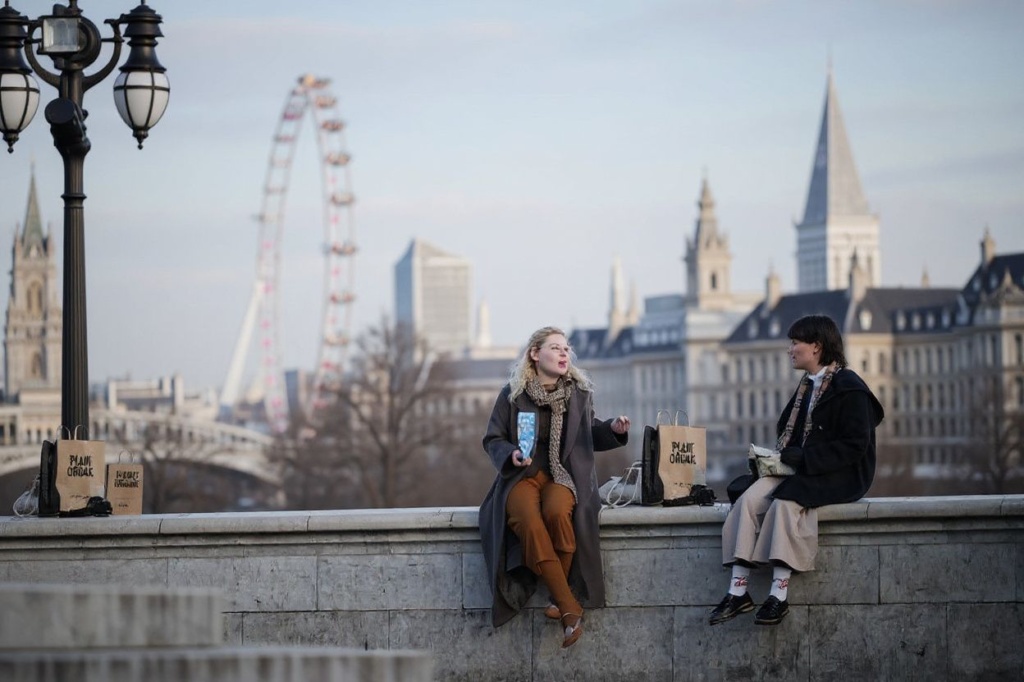
London has been named QS Best Student City 2024, and it’s the fifth time the city has placed first.
10 most diverse cities in the world to study abroad in
1. London, England
Between top-tier higher education institutions and programmes and proximity to multinational companies, it’s little surprise that London ranked first in the QS Best Student Cities 2024 list. As a central hub that opens the doors to Europe, it pulls in more than just students too.
In 2021-2022, of the 679,970 international students studying at UK higher education institutions,179,425 were studying in a university or college in London. China, India, and Nigeria are the top three most popular countries from which international students come.
2. Dublin, Ireland
The capital of Ireland is known for being a student-friendly city. Trinity College Dublin, the University of Dublin, and the Royal College of Surgeons in Ireland are mainstay higher education institutions on the scene and ones that international students flock to.
International students make up13.7% of Ireland’s student population, with more than 19,000 choosing to study in the country. The US, China, and India are the most common countries of origin.
3. New York City, US
The concrete jungle where dreams are made of, New York City is more than just towering skyscrapers and a glitzy representation of the American Dream.
Aside from being the only state in the US with multiple Ivy League schools – Cornell University and Columbia University –, it’s also where students join a multitude of nationalities in the pursuit of higher education.
In 2022-23, New York had126,782 international students in the state.
In the city, New York University hostedover 21,000 international learners from more than 140 countries in 2021-2022, making it home to the most international students of any university in the country.
4. Toronto, Canada
“Diversity Our Strength” is the motto of the city of Toronto, which draws international students to find a place within its universities. It’s Canada’s best student city, ranking #11 on the QS Best Student Cities 2024 list.
In 2022-23, of the807,620 study permit holders with a valid permit in Canada,more than 105,000 international students were studying at the universities located within Ontario. Canadagenerally sees the most students from India, China, and the Philippines.
5. Amsterdam, The Netherlands
With its scenic landscapes and progressive social policies, the Netherlands is a place anyone can enjoy. The country offers a post-study work visa, also called “orientation year”, which is a residence permit that lasts one year, allowing international students to find jobs in the Netherlands or start a business of their own (and with 80% success).
In 2022, the Netherlands hadmore than 122,300 international students. The University of Amsterdam has the highest number of international students, at justalmost 13,800. In general, most non-local undergraduate students came from Germany, and others included Romania, Bulgaria, Poland, and Hungary.
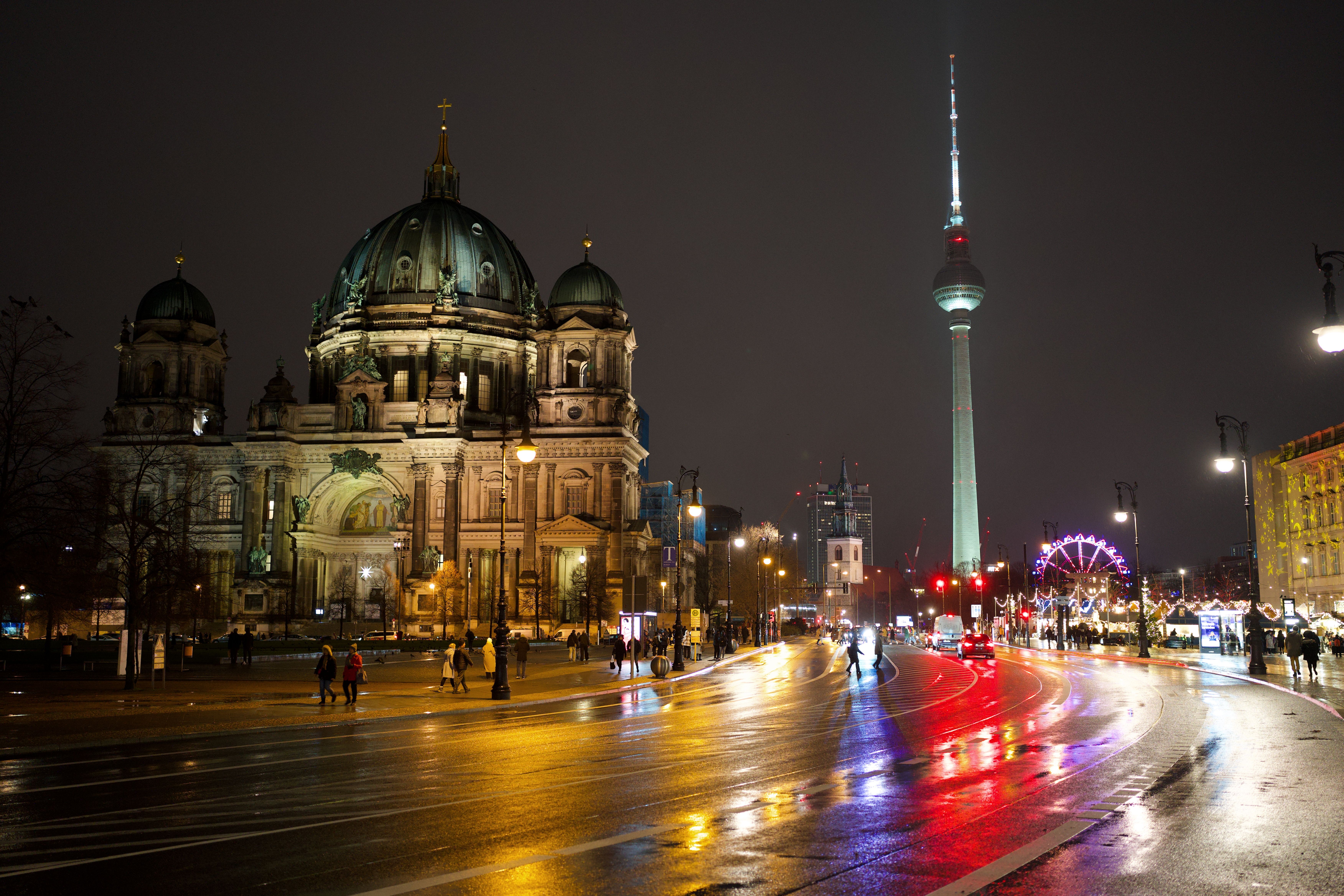
The Berlin Cathedral at night. Source: Abdulmomen Bsruki via Pexels
6. Berlin, Germany
A country that offers tuition-free education for everyone, Germany is an attractive place to pursue an affordable yet quality education. Scholarships for international students are widely available too, creating even more reasons to study here.
In 2022-23, it was reported that the country had458,210 international students, with Berlin universities housingmore than 27,000 of them. Most of the students come from China, India, and Syria.
7. São Paulo, Brazil
The largest higher education market in Latin America, Brazil has its fair share of top-ranked universities. Situated in the heart of the financial and cultural hub is the University of São Paulo, the country’s biggest public university and one of the best in the region.
While São Paulo’s student population mainly consists of Brazilians –3% of enrolled students in the city’s universities are international – the city itself hosts people from all over the world, including Americans, Portuguese, Italians, and those of Latin American countries like Paraguay, Colombia, and Argentina.
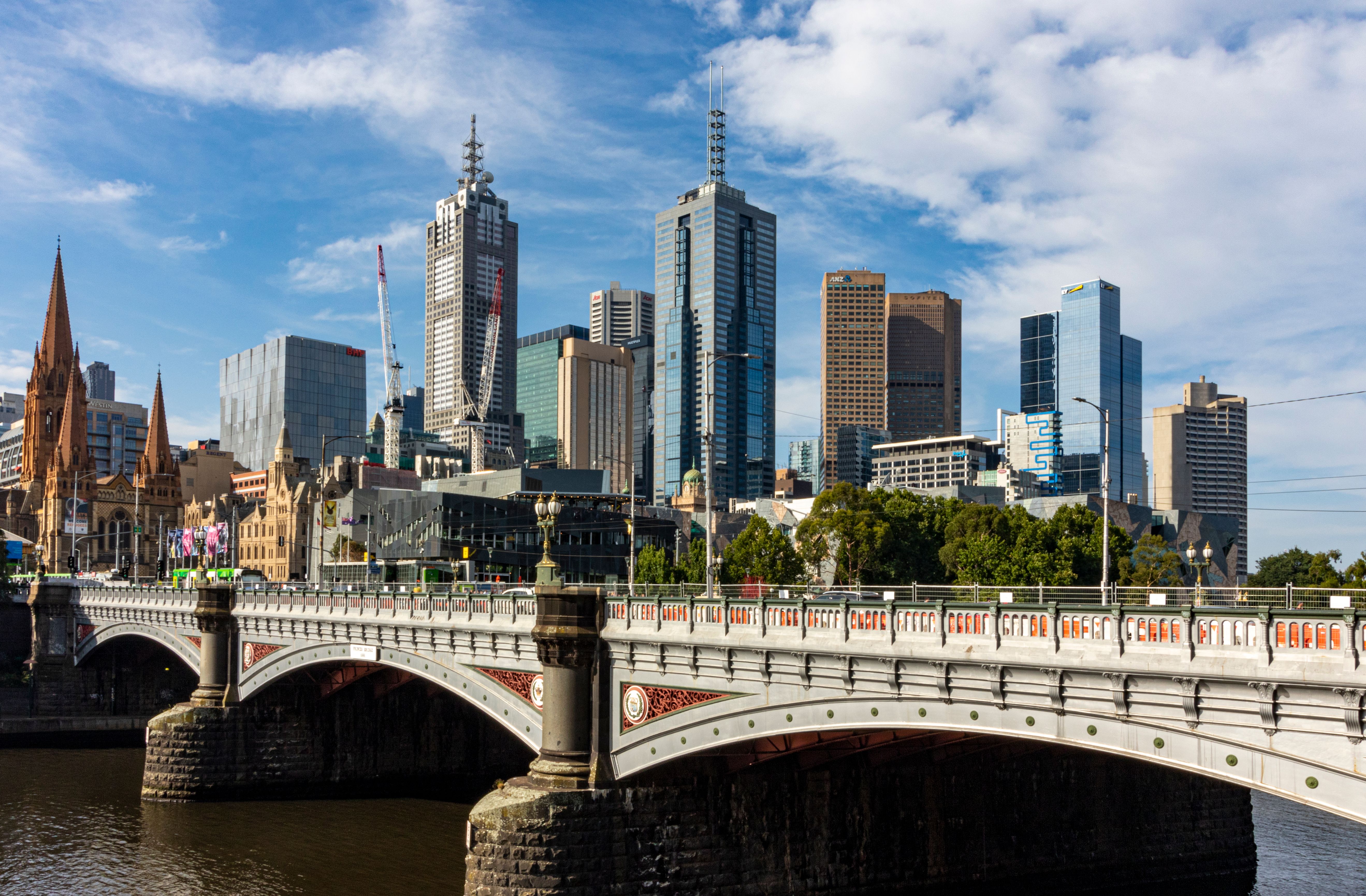
Melbourne is a vibrant multicultural hub where residents speak over 150 languages, represent 160 countries, and practice 80 different faiths. Source: John Simmons via Pexels
8. Melbourne, Australia
Australia’s best student city according to QS Best Student Cities 2024, making it the ninth time it has won the title. Melbourne was noted to be the friendliest city in the world too, so you’ll know that you’re in good hands.
Each year, Melbourne seesmore than 170,000 international students from over 170 countries pursue their higher education on their shores. The top five countries where students come from are China, India, Nepal, Colombia, and the Philippines.
9. Singapore
One of the world’s most expensive andsafest cities (according to The Economist’s Safe City Index), Singapore is small but mighty. The country’s education system has been consistently ranked as one of the best in the world by the Organisation for Economic Co-operation and Development, so it’s no wonder that students find their way to the city-state.
In 2023,QS World University Rankings reported that combined, the National University of Singapore, Nanyang Technological University, and Singapore Management University had more than 17,000 international students. Other autonomous universities do not have the numbers available publicly.
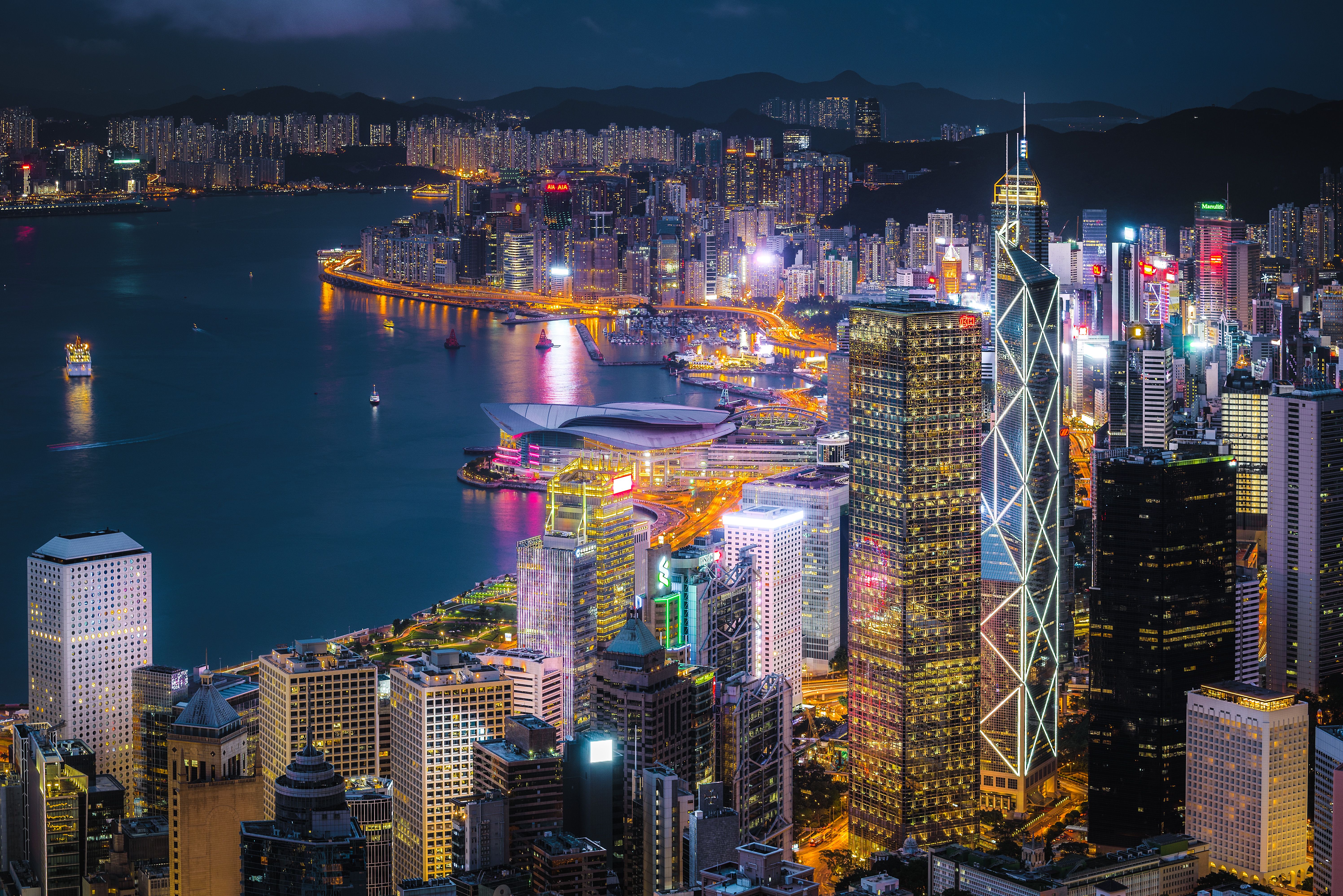
Engineering in Hong Kong is robust, driven by major infrastructure mega-projects, massive smart city initiatives, and strong academic research. Source: Nick Kwan via Pexels
10. Hong Kong
Known as Asia’s World City, Hong Kong is a city that welcomes all to its world-class institutions. Three of the22 local degree-awarding institutions were ranked within the top 50 by the QS World University Rankings, and another two were within the top 200.
Data from the University Grants Committee showed that in 2022-23, Hong Kong had21,709 non-local student enrolments. Most of the city’s international students hail from the neighbouring country of China.
Don’t miss out on the small cities with big personalities
You’ve seen the movies, and you know the drill: small cities, while often less diverse, are full of their own charm.
But life in the big city isn’t for everyone. It can be overwhelming, especially if you’re unused to the sheer amount of activity that happens every day.
Beyond that, bigger cities have their share of issues too, especially concerningliving expenses.
- Higher rent. If you’re in the US, different states havedifferent property taxes – New Jersey’s is the highest of all at 2.23% in 2024, while Hawaii is the lowest at 0.32%.
- Higher cost of groceries. While not always the case, grocery shopping in bigger cities can be more expensive.A report shows the total cost to shop for essential items in London is 22.50 pounds and only 18.12 pounds in Birmingham.
- Higher social spend. To socialise, you need more. So your coffee runs, brunches, and nights out for drinks will usually cost even more in big cities where prices generally lean on the higher side. In Sydney, a pint of beer iscoming up to 20 Australian dollars.
So, while you can get an excellent range of goods, services, and experiences from a bigger, more diverse city, a smaller city has perks.
For one thing, smaller towns usually have a tight-knit community where “everyone knows everyone.” Here, they have the advantage of beingmore nimble and responsive to crises and challenges than cities.
There’s a feeling like you’re a part of a wider community outside your university. From joiningcommunity-led events to having more personalised interactions with people, it all adds to the experience.
Disclaimer: This article was last updated on July 27, 2026.