For nearly 400 years, Harvard offered instruction in languages spoken by only a handful of people on Earth.
But it never did so in Filipino or Tagalog, the language spoken at home by roughly 1.7 million people across the US.
That changed in the fall of 2023, when the university hired its first-ever preceptor (an expert teacher, mentor, or guide) in Filipino languages, closing a gap that student advocates had been pushing to fill for years.
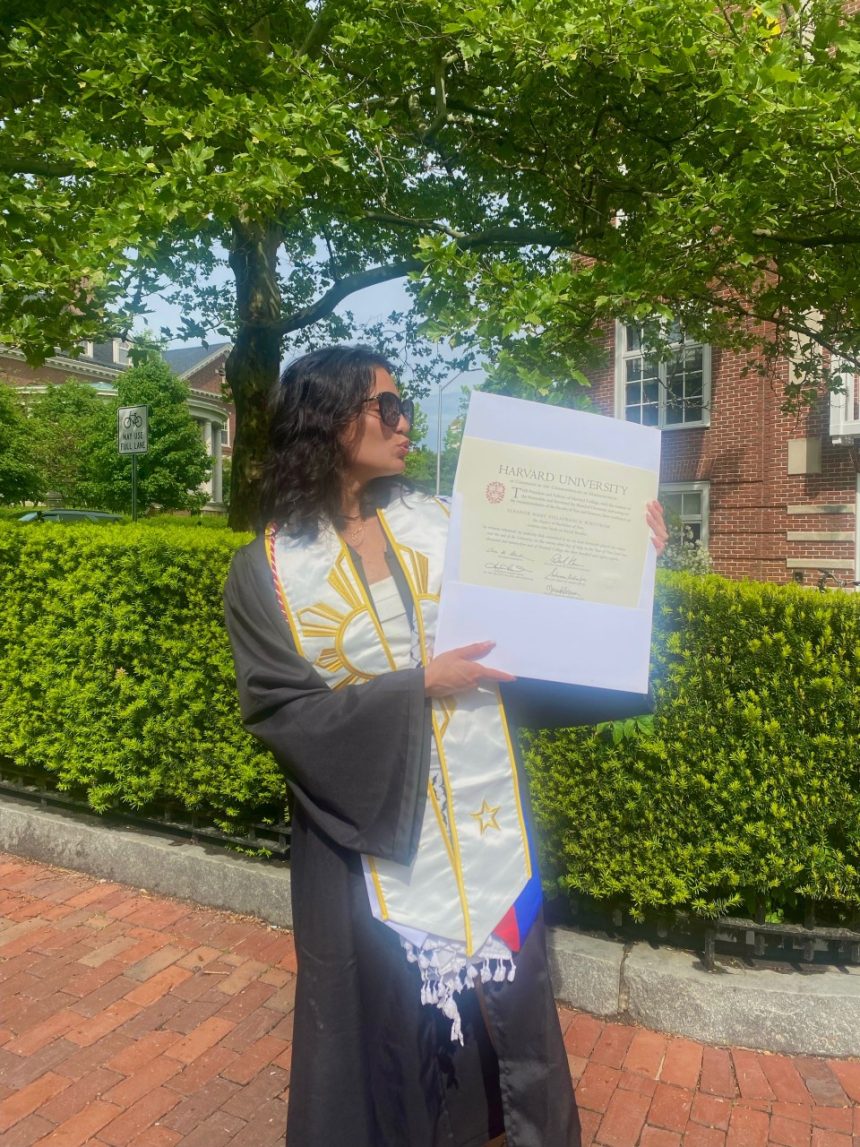
The effort was led in large part by Eleanor Wikstrom, a Filipino American student who, as co-president of the Harvard Philippine Forum, helped organise years of petitions to the administration.
In 2021, Wikstrom wrote an op-ed in the student newspaper criticising the lack of Tagalog course offerings at Harvard, and said she faced pushback for the advocacy, along with questions about the value of learning the language.
As she put it, the campaign was fighting against a historical memory that was actively erasing the importance of the Filipino-American relationship.
Eleanor Wikstrom graduated from Harvard with a degree in social studies. In her years here, she also led a petition for Harvrd to offer the Filipino language as a course. Source: Eleanor Wikstrom
Why it’s important to teach the Filipino language
The numbers make the omission more striking. Filipino, based on Tagalog, is currently the fourth most spoken language in the US, trailing only English, Spanish, and Chinese.
Census figures put the population of Tagalog and Filipino speakers at home somewhere between 1.7 and 1.8 million, concentrated heavily in California, Nevada, Texas, Washington, Illinois, and New York, with especially large communities in the Bay Area, Los Angeles, and Seattle.
Yet unlike Chinese or Spanish, Filipino has historically lacked the institutional scaffolding — weekend heritage schools, widespread university programmes, textbooks — that help second- and third-generation immigrants retain fluency.
Researchers who study heritage language attrition point to a specific colonial legacy. After the US annexed the Philippines in 1899 and ruled it for nearly five decades, English was installed as the language of government, education, and upward mobility, a status it retains today as one of the country’s two official languages alongside Filipino.
That history, advocates argue, helps explain why so many Filipino Americans grow up understanding a language they were never taught to speak with confidence.
Harvard was, in fact, behind many of its peers. Other elite universities — including UCLA and the University of Pennsylvania, where a Filipino programme has run since 1996 — had offered Tagalog for decades. Filipino language classes remain rare even at the college level nationwide, despite the size of the community.
At Penn, current instructors say many students enrol specifically to reconnect with family and heritage rather than to fulfil an academic requirement.
The Harvard course’s arrival set off a chain reaction. Within a year, students at Yale organised their own petition and open letter to administrators, backed by the Yale College Council, pushing for credit-bearing Tagalog instruction after seeing Harvard’s announcement.
A Yale student advocate framed the stakes in personal terms, telling the campus paper that honouring one’s cultural identity is central to the college experience.
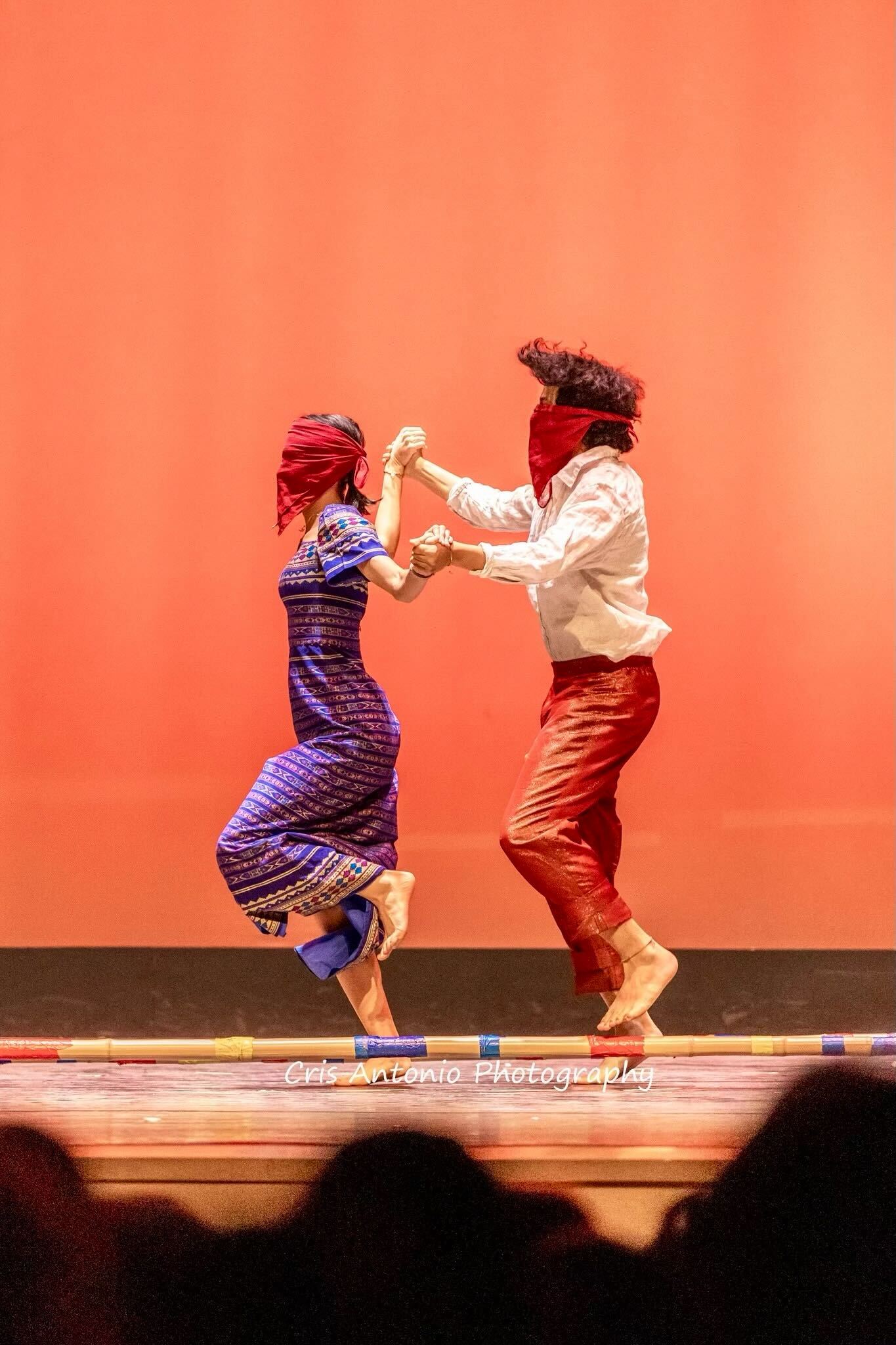
Wikstrom and a dance partner performing Tinikling, a folk dance from the Philippines. Source: Eleanor Wikstrom
Connecting students to the Filipino language and culture
At Harvard, the new courses have gone beyond grammar drills. Instructor Lady Aileen Orsal built a collaboration with the university’s Peabody Museum, where students used items from its collection of roughly 8,000 Philippine ethnographic and photographic materials to create a mini exhibit called “Tahanan,” the Filipino word for home.
Other class projects have paired students with contemporary Filipino and Filipino American authors over video calls, connecting language acquisition to living culture rather than treating Tagalog as a static subject of study.
For students who grew up around the language without ever formally learning it, the course has carried particular weight.
One Harvard student, reflecting on years spent studying Tagalog without being able to speak it fluently, described the course as something Filipino-heritage students had long advocated for and enrolled in at the beginner level despite having grown up around Tagalog speakers.
The funding behind the new position also points to where change ultimately came from: not the university’s own budget, but a donor-backed endowment.
The preceptor role was established through a gift structured so that Filipino language instruction would be permanently guaranteed at Harvard going forward. Alumni fundraising, running in parallel with student op-eds and petitions, proved decisive in a way that institutional advocacy alone had not.