It takes a certain kind of person to face off the most powerful country in the world.
As the top leader of what was for long the most populous country in the world, Xi Jinping is that person. And even in 2026, Forbes has ranked him at the tippy top of its The World’s Most Powerful People list.
Unlike most heads of states, though, the education of Xi Jinping isn’t a typical degree in an expensive business school or the gilded corridors of elite centuries-old universities. Rather, it started from the fields in rural China and what would be considered one of the world’s youngest universities.
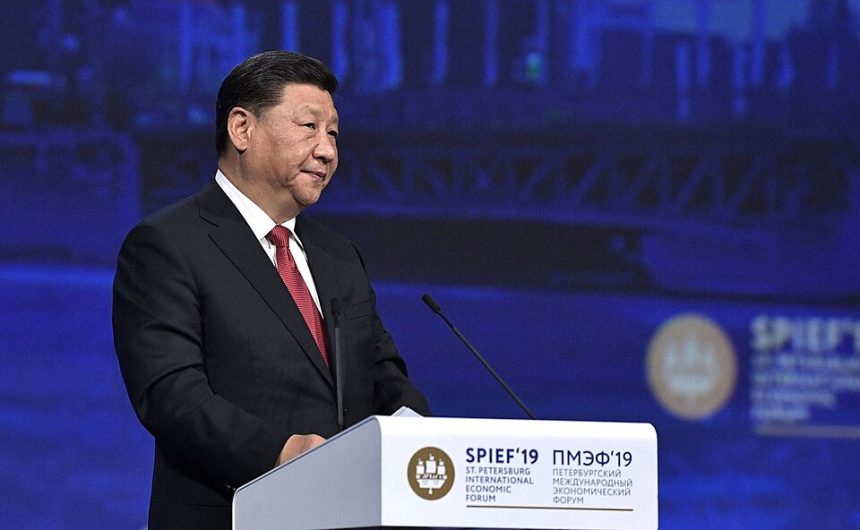
Chinese President Xi Jinping was once a manual laborer in a rural village. Source: Администрация Президента России via Wiki Commons
The early life and education of Xi Jinping
President Xi was just 15 when he was sent to Liangjiahe, a small village located in Shaanxi province, as part of the country’s “down to the countryside movement,” the government’s rustification campaign.
The campaign saw 16 million young Chinese people relocated into rural areas, farming villages, and mountain towns. Most were recent high school graduates, in their late teens or early 20s, while others were veterans of the Red Guard brigades and the Cultural Revolution, which by then was in decline.
For a young President Xi, the son of Xi Zhongxun – who once served as deputy prime minister of China and was an early comrade-in-arms of Mao Zedong – many thought he would rise within the government thanks to his family connections.
But after his father was ousted from power in 1962, he ended up just like any other boy and was forced to stop high school and experience the hardship of rural folks firsthand.
And learn, he did – from 1969 to 1975, President Xi worked as a manual labourer on an agricultural commune in the largely run-down province, living in a cave shelter and going through severe poverty and hunger himself.
It was a far cry from the luxurious residential compound of China’s ruling elite in Beijing, where he spent most of his early life as a “princeling,” as author Alfred L. Chan wrote in “Xi Jinping: Political Career, Governance, and Leadership.”
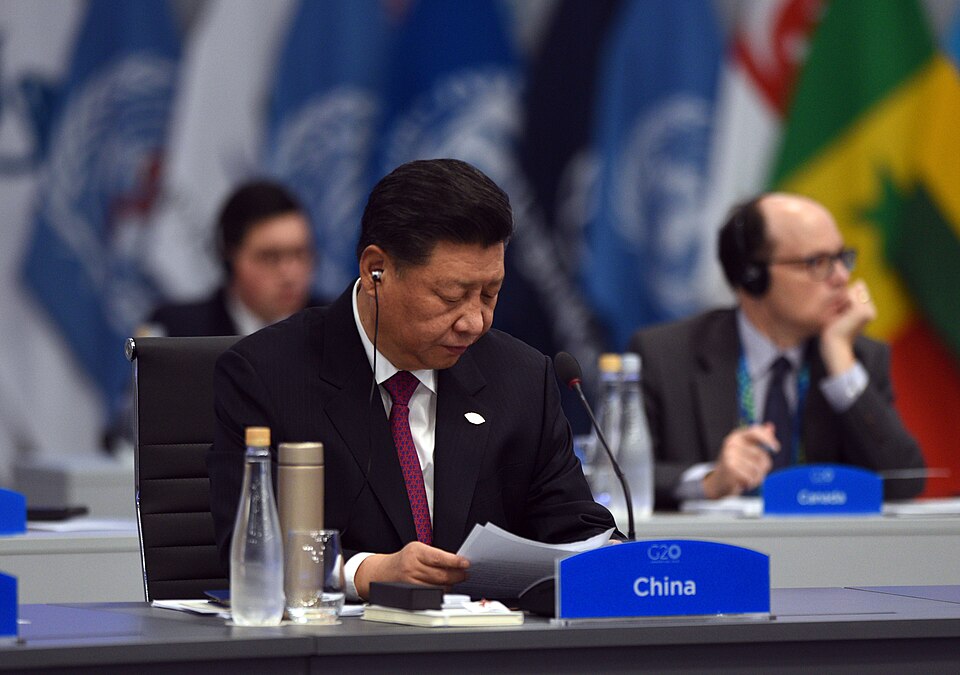
Not many world leaders can claim to have gotten their hands dirty on manual work, but President Xi sure can. Source: Wiki Commons
Even though he never completed high school, the true education of Xi Jinping started from the village where he worked. His good relationship with the village folk paved the way for his eventual rise through the ranks of the Chinese Communist Party (CCP).
In 1974, he became an official party member, serving as a branch secretary.
With this position, he could finally afford to go to university.
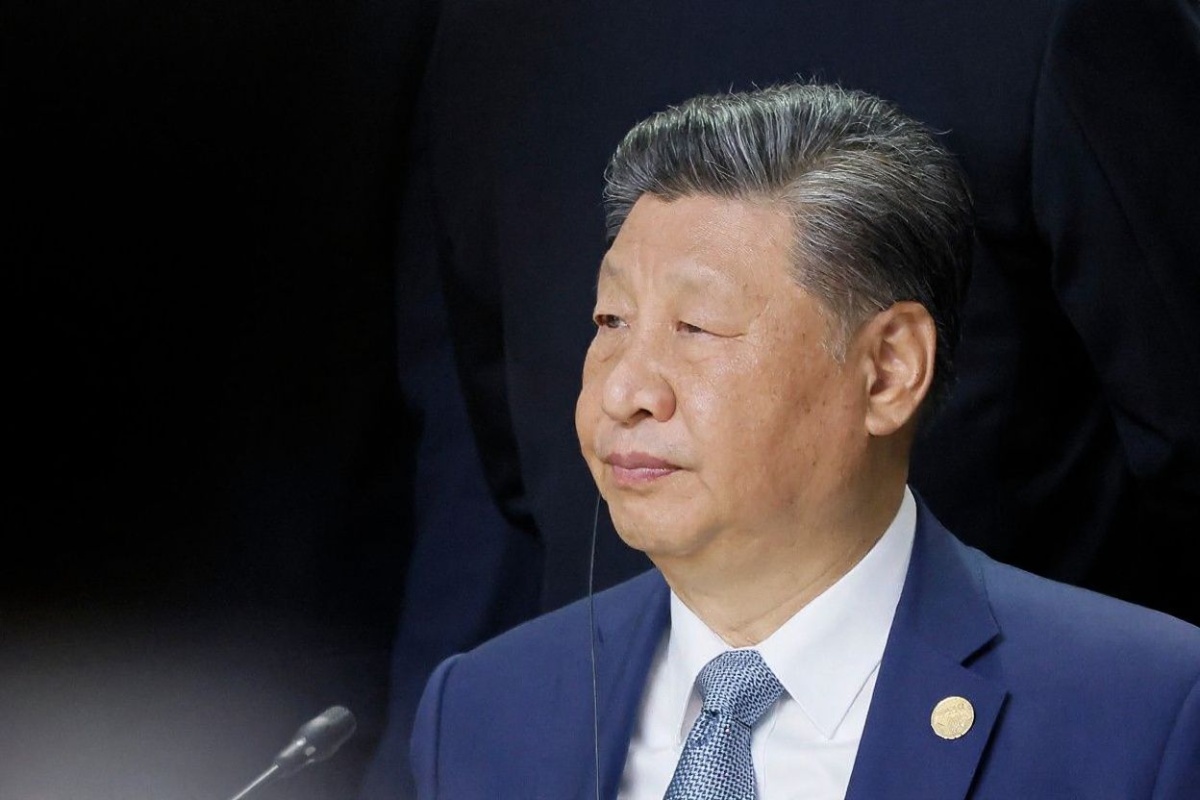 Since stepping into his position, President Xi has helped China make waves like no one has seen before.
Joining the prestigious Tsinghua University
The following year, Xi pursued a degree at Beijing’s prestigious Tsinghua University, which, to this day, is a top-ranked university in Asia offering quality programmes. Chemical engineering, which President Xi pursued, is currently ranked first globally according to US News & World Report.
First established in 1911, Tsinghua University is a relatively young addition to the world of elite universities, but has proven to be a formidable rival against older, prestigious institutions such as the Ivy League. Some even refer to it as the “Harvard of China.”
Similar to Harvard, Tsinghua University is the country’s wealthiest school, with annual revenues reaching 12.36 billion yuan (US$2.7 billion). It is also renowned for its strong research output and top-ranked programmes — the university ranks first globally in nine subjects.
“In China, Tsinghua is seen as a combination of something like Harvard and MIT,” says a commenter on a Reddit post.
After President Xi graduated, the rest is pretty much history.
He rose up the ranks within the CCP, becoming General Secretary in 2012. One year later, he was elected as the country’s president, inheriting an economy struggling with slowing growth, industrial overcapacity, and environmental degradation.
And while he had a lot to work with, his priority had always been education for the people of China. While little to nothing is known about President Xi’s time at Tsinghua, he has shared snippets of advice whenever returning to his alma mater.
“Life is meaningful only when one leads a life with faith, dreams, and endeavours and makes contributions,” he told the students in a public address.
A nation’s progress starts with educating its people
President Xi never forgot his roots. As he rose within the government ranks, he raised funds to build a primary school in Liangjiahe, where he spent his teenage years working.
After the school was completed, he visited frequently to help set up electricity, build bridges, and even bought school supplies, bags, and alarm clocks for the children there.
Since 2012, President Xi has prioritised educational development, establishing and inspecting schools in remote mountainous areas, ethnic regions, and even areas rebuilt after disasters.
“The best house in the village should be the school,” he said. “No matter how difficult the circumstances, we must not let the children suffer. Regardless of how impoverished the situation is, we must not deprive them of education.”
Since his first day in office, President Xi has developed China’s national comprehensive power. He established a programme where over a million teachers were deployed to central and western China to bolster education in less developed areas, and has conducted multiple inspections and extensive field research in person.
“The world will not have a second Harvard, Oxford, Stanford, MIT or Cambridge,” he shared while introducing China’s Education Reform Strategy. “But it does have a Peking University, Tsinghua University, Zhejiang University, Fudan University, Nanjing University, and other well-known Chinese institutions. With these educational institutions, our talent will flourish and our country will be a strong competitor.”
In 2022, he visited Renmin University of China and shared his hopes and expectations for the students. There, he said:
“A nation will be full of hope and have a great tomorrow when its younger generations have ideals, ability and a strong sense of responsibility … Chinese universities, therefore, like China’s media, cultural classes, and think tanks, must support the CCP and development of socialism with Chinese characteristics.”
In recent years, the Xi government has rolled out policies such as “Made in China 2025” to transform the country into a global leader in high-tech sectors. This would reduce China’s reliance on foreign technology imports and allow it to invest heavily in its own innovations.
Schools are a big part of this plan. Xi wants stronger science education in schools, issuing a demand for at least one science teacher in every school with a master’s degree in science, technology, engineering, or mathematics.
He wants to continue the string of success stories that have emerged from China’s science and technology sectors in the past decade.
Success stories coming out of China
Just look at Deepseek, the AI model rivalling the US’s OpenAI, which was made at a fraction of the cost of its rivals. Its founder, Liang Wenfeng, grew up in a tiny village in China’s southern province of Guangdong and is now one of TIME’s 100 Most Influential People of 2025.
Liang graduated from Zhejiang University, which locals believe rivals prestigious institutions like Tsinghua University and Peking University in producing billionaires. Other alumni include Colin Huang Zheng, founder of online shopping giant PDD Holdings, whose personal wealth is estimated at US$34 billion.
The Zhejiang region has also produced another well-known billionaire and entrepreneur, William Ding, also known as Ding Lei. He is the founder and chief executive officer of NetEase – one of the world’s largest online and mobile games businesses – and was formerly known as China’s richest man and the country’s first internet and gaming billionaire back in 2003.
His journey started with a degree in communication technology from the University of Electronic Science and Technology of China.
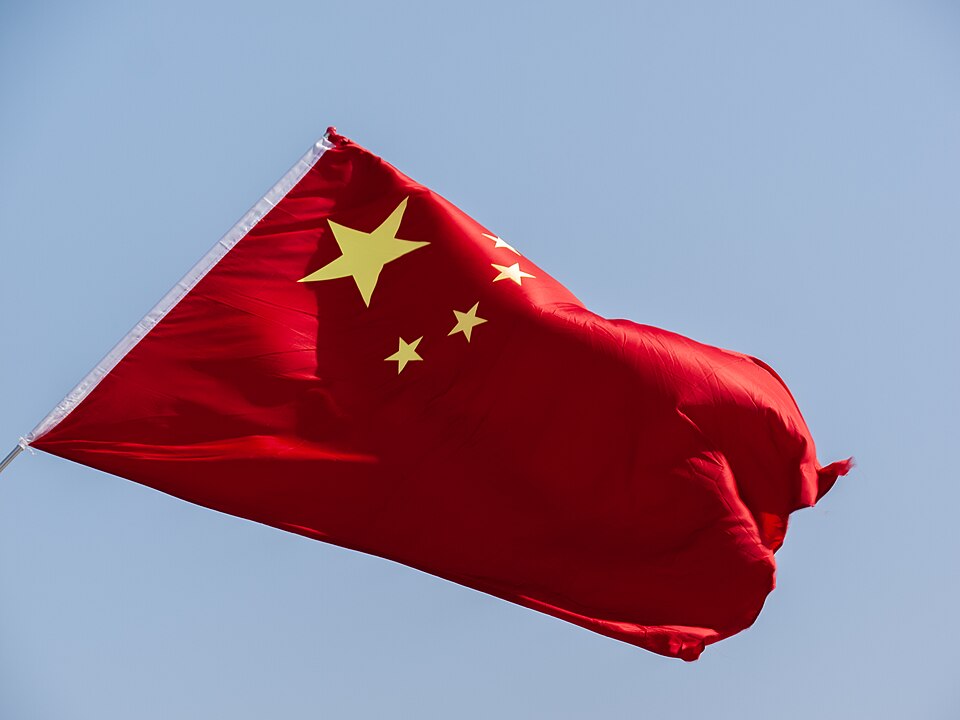
Flag of the People’s Republic of China. Source: Ermell via Wiki Commons
China, the next in line for hot study abroad destinations?
It’s clear by now that many Chinese universities are leading in areas like robotics, AI, new materials, and even pharmaceuticals.
President Xi’s alma mater, Tsinghua University, is ranked 16th globally and holds the top spot among universities in Asia. Peking University ranks 31st globally, and Zhejiang University ranks 51st.
Other universities within the global top 100 are:
- Shanghai Jiao Tong University
- University of Chinese Academy of Sciences
- University of Science & Technology of China
- Fudan University
- Nanjing University
- Huazhong University of Science & Technology
However, while President Xi is known to strongly favour Chinese ideologies, his only daughter, Xi Mingze, was speculated to have studied at Harvard University after completing her undergraduate degree at Zhejiang University.
Little is known about her, and it is believed that she enrolled under a pseudonym to keep her identity a secret. A Chinese local was accused of violating privacy and posting photos and data of President Xi’s daughter, and was then sentenced to 14 years in prison.
She’s also not the only child of a president who went abroad.
Jiang Mianheng, son of former Chinese president Jiang Zemin (1993 to 2003), completed his undergraduate degree in electrical engineering at Fudan University before earning a doctoral degree in electrical and computer engineering from Drexel’s College of Engineering in 1991.
However, there are still those who choose to stay on in China.
Tsinghua is historically a popular choice; Hu Haifeng, son of former Chinese president Hu Jintao (2003 to 2013), graduated from Tsinghua University with a degree in engineering. Li Xiaolin, daughter of former Chinese president Li Xiannian (1983-1988), also graduated from there with a degree in power engineering.
Li Qiang, the eighth and current premier of China — the third-highest ranking in China’s political system, coming only after the general secretary of the CCP and President Xi himself — is also a product of Chinese education. Li and President Xi have a close relationship that dates back to the mid-2000s, when both held party positions in Zhejiang.
He studied agricultural mechanisation at the Ningbo Branch of Zhejiang Agricultural University, did a distance learning course in sociology, and then went back to Zhejiang University for graduate studies in management engineering. Later on, he went abroad to pursue an executive MBA at the Hong Kong Polytechnic University.
Frequently asked questions about the education of Xi Jinping
What did Xi Jinping’s wife study?
Peng Liyuan, Xi Jinping’s wife, is known for her ability to sing Yu oper a excerpts at a young age, she enrolled in the China Conservatory of Music, studying under famous singer Jin Tielin. She then pursued a master’s degree in acoustics at the same institute, becoming the first master’s graduate in folk vocal music trained in China. Her work for music, culture, and global health advocacy has granted her several honorary doctorates from:
- Macao Polytechnic Institute
- Massey University, New Zealand
- Juilliard School for the Performing Arts
“This honour is not given to me alone, it is also a recognition of Chinese folk music and a reflection of the closer cultural ties between Chinese and Americans,” Peng said at the Juilliard award ceremony. “I hope the cooperation between art schools and organisations in the two countries will be deepened in the future.”
Did Xi Jinping get a post-graduate degree?
He completed a part-time, in-service graduate program in Marxist theory and ideological and political education at Tsinghua University’s School of Humanities and Social Sciences from 1998 to 2002, earning a Doctor of Law degree.
Did Xi Jinping ever work as an engineer?
While President Xi has a degree in chemical engineering, he never pursued a career in the engineering field. Following his graduation, he went straight into politics and party administration.
Disclaimer: This article was last updated on July 28, 2026